March is the month locals quietly recommend. Santiago Chile in March averages 28.6°C by day and 11.4°C at night with under a millimetre of rain, which is summer weather by any standard, but the city underneath those numbers has changed completely: the holidays are over, the kitchens have reopened, the cultural season has restarted and the wine valleys are picking.
If you can choose your dates freely, this is the strongest case in the Santiago calendar alongside October. You get January’s warmth without January’s shutdown, the vendimia in the valleys around the city, Lollapalooza at Parque O’Higgins, and air that is still clear of the winter inversion. For the year in context, see the best time to visit guide, and for the underlying figures, Santiago weather by month.
Santiago in March at a glance
| Question | Answer |
|---|---|
| Average high | 28.6°C / 83°F |
| Average low | 11.4°C / 53°F |
| Rainfall | About 0.9 mm, effectively dry |
| Daylight | Sunset near 20:00 early in the month, earlier by the end |
| Crowds | The city is fully back at work |
| Prices | Easing from the summer peak |
| Big events | Lollapalooza Chile, mid-month; harvest festivals in the valleys |
| Closures | Museums on Monday, as always |
| Best hours outdoors | Before noon and after 17:00 |
| Best day trips | Wine valleys at harvest, the Cajón del Maipo, the coast |
The single most important thing about March is that it is a transition month in the best sense. Early March still feels like summer, with hot afternoons and long evenings. By the last week the nights are noticeably cooler, the first autumn colour shows in the plane trees, and the light turns golden earlier in the day.
What is the weather like in Santiago in March?
Warm and dry, easing off summer’s peak. The 1991-2020 normals for Santiago Pudahuel give a March mean maximum of 28.6°C and a mean minimum of 11.4°C, with roughly 0.9 mm of rain across the month. Statistically it is the third warmest month of the year, behind January and February by less than two degrees.
Three practical differences from February. Nights drop further, so the 17-degree daily swing feels more pronounced and an evening layer becomes non-negotiable rather than merely advisable. Daylight shortens quickly, with sunset moving from around 20:00 at the start of the month toward 19:15 by the end. And the first weather systems of the season can appear late in March, usually as wind and cloud rather than real rain.
| March detail | Figure |
|---|---|
| Mean maximum | 28.6°C / 83°F |
| Mean minimum | 11.4°C / 53°F |
| Approximate rainfall | 0.9 mm |
| Typical day-night swing | About 17°C |
| Andes visibility | Usually good; haze builds late in the month |
The air is still clean in March. Santiago’s winter inversion, which traps smog in the basin and hides the Andes from May to August, has not set in, though the first hazy mornings often appear toward the end of the month as temperatures fall and the air begins to settle.
What March fixes: the city goes back to work
Everything that frustrates a January or February visitor is repaired in March. The Chilean school year starts in the first week, families return from the coast, offices refill, and the restaurants that closed for the summer put their chairs back out.
What comes back:
- Neighborhood restaurants. The family kitchens in Ñuñoa, Barrio Italia, Providencia and Barrio Brasil reopen through the first half of the month. By mid-March the food scene is running at full capacity.
- The cultural calendar. Theatre, concert and gallery seasons restart. GAM, Matucana 100, the Teatro Municipal and the independent venues all return to full programming.
- Tour operators and language schools, back on normal schedules.
- A working city. Cafés with laptops, markets at full tilt, and the ordinary street life that January removes.
What comes with it:
- Traffic and a busier Metro. Rush hour returns, and Line 1 between 08:00 and 09:00 is no longer the serene experience it was in February. Peak fares apply 07:00 to 08:59 and 18:00 to 19:59 at CLP 895.
- Restaurant reservations matter again. The places that were half empty in February book out on Thursday and Friday nights.
- Higher demand around Lollapalooza weekend, which pushes accommodation prices up mid-month.
The trade is strongly in March’s favour for most visitors. You lose empty museums and gain an entire city.
When is the wine harvest around Santiago?
March is when Chile picks. The country’s vendimia season runs between February and May, and the harvest festivals in the valleys around Santiago cluster in March, which makes this the single most interesting month of the year for a winery visit near the capital.
Chile’s official tourism body highlights three valleys in particular:
- Colchagua, with Santa Cruz as its epicentre, holds its harvest festival every March, with tastings from more than 20 local wineries, music, food and crafts. Its wine route links 13 historic wineries. Colchagua is a long day trip or an overnight from Santiago.
- Casablanca, between Santiago and Valparaíso, runs harvest celebrations in the February to May window with grape stomping, local cuisine and tastings from more than 20 wineries. It is the easiest valley to combine with a coastal day.
- Curicó, in the Maule region, also holds its festival every March, with tastings, parade floats and the traditional crowning of a harvest queen, connecting 15 wineries across several towns.
Exact dates and ticket prices are published by each festival closer to the time rather than a year ahead, so confirm before building a trip around a specific weekend.
Closer to the city, the Maipo Valley estates pick through March without staging a single large public festival. What they do instead is run harvest-season tours and events. Cousiño Macul’s traditional tour costs CLP 25,000 and its premium tour CLP 40,000; Santa Rita’s Clásico is CLP 31,000; Undurraga’s Sibaris is CLP 29,500 with English departures at 10:00 and 15:00 (checked September 2026). The wine tours guide covers which estates suit which kind of day, and how to reach each one.
The honest verdict on harvest visits: they are busier and more expensive than the same tour in June, and worth it anyway. Seeing fruit come in, smelling fermentation and tasting from tank is a different experience from a standard cellar walk, and it only happens now.
Lollapalooza and the March events calendar
Lollapalooza Chile takes over Parque O’Higgins in mid-March, with the 2027 edition running 12, 13 and 14 March. Three-day general passes ranged from CLP 168,000 for the Early Bird allocation to CLP 294,600 at Preventa 2, including service charges (checked September 2026).
That weekend reshapes the city. Accommodation tightens and prices rise, the Metro runs heavy toward Parque O’Higgins station on Line 2, and touring artists play sideshows at the Movistar Arena and the Teatro Caupolicán in the days either side. If you are not attending, it is a weekend to be somewhere other than the park’s surroundings; if you are, the Lollapalooza visitor guide covers passes, transport and the late-night problem when the Metro closes at 23:00.
The rest of the March calendar is quieter but genuinely active:
- The theatre and concert seasons restart, with full programmes at GAM, Matucana 100 and the Teatro Municipal.
- Harvest festivals across the valleys, as above.
- University term begins, which fills Barrio Brasil, Ñuñoa and República with students and reopens the bars that serve them.
- Sporting fixtures return to full schedules as the football season runs.
The events and festivals guide covers the annual pattern, including which months have fixed dates worth planning around and which do not.
The best things to do in Santiago in March
March is the month with the fewest constraints. Mornings are comfortable rather than urgent, afternoons are warm but no longer punishing, and evenings are long enough for a full night out without the January heat.
Do the hills properly. Cerro San Cristóbal on foot is realistic again in March, particularly before 11:00. The teleférico runs Tuesday to Sunday 10:00 to 19:45 and is closed Monday, from CLP 2,630 return (about USD 2.75). Cerro Santa Lucía keeps summer hours of 07:00 to 20:30 Tuesday to Sunday, opening at 12:00 on Monday, until the clocks and the season shift.
Eat everywhere. This is the practical difference between March and the two months before it. Barrio Italia, Ñuñoa, Lastarria, Bellavista and the market cocinerías are all fully open, and the produce is excellent: the last of the summer stone fruit, the first autumn vegetables, and grapes everywhere. The food and restaurants guide covers the neighborhoods.
Use the cultural season. Museums run Tuesday to Sunday and close Monday, as always. The Precolombino costs CLP 12,000 for foreign visitors, the Museo de la Memoria is free, and the new season’s exhibitions open in March rather than January. The museums and culture guide has the full list.
Go to the valleys. Harvest is the month’s signature experience, whether that means a full festival weekend in Colchagua or a half-day at a Maipo estate 45 minutes from the centre.
Walk the neighborhoods. The plane trees start turning late in the month, and Parque Forestal, Barrio Italia and the Providencia side streets are at their best in the first autumn light.
What to eat in March
March is the best eating month of the Santiago year, because it combines late-summer produce with a food scene that has just come back from holiday. Early March still carries the summer dishes; by the end of the month the autumn ones arrive.
What is at its peak:
- Late stone fruit and the first table grapes, which fill La Vega and every corner stall through the month.
- Pastel de choclo and humitas, both built on fresh corn, which runs out as March closes. This is the last month to eat them properly.
- Porotos granados, the summer bean, corn and squash stew, on the same schedule.
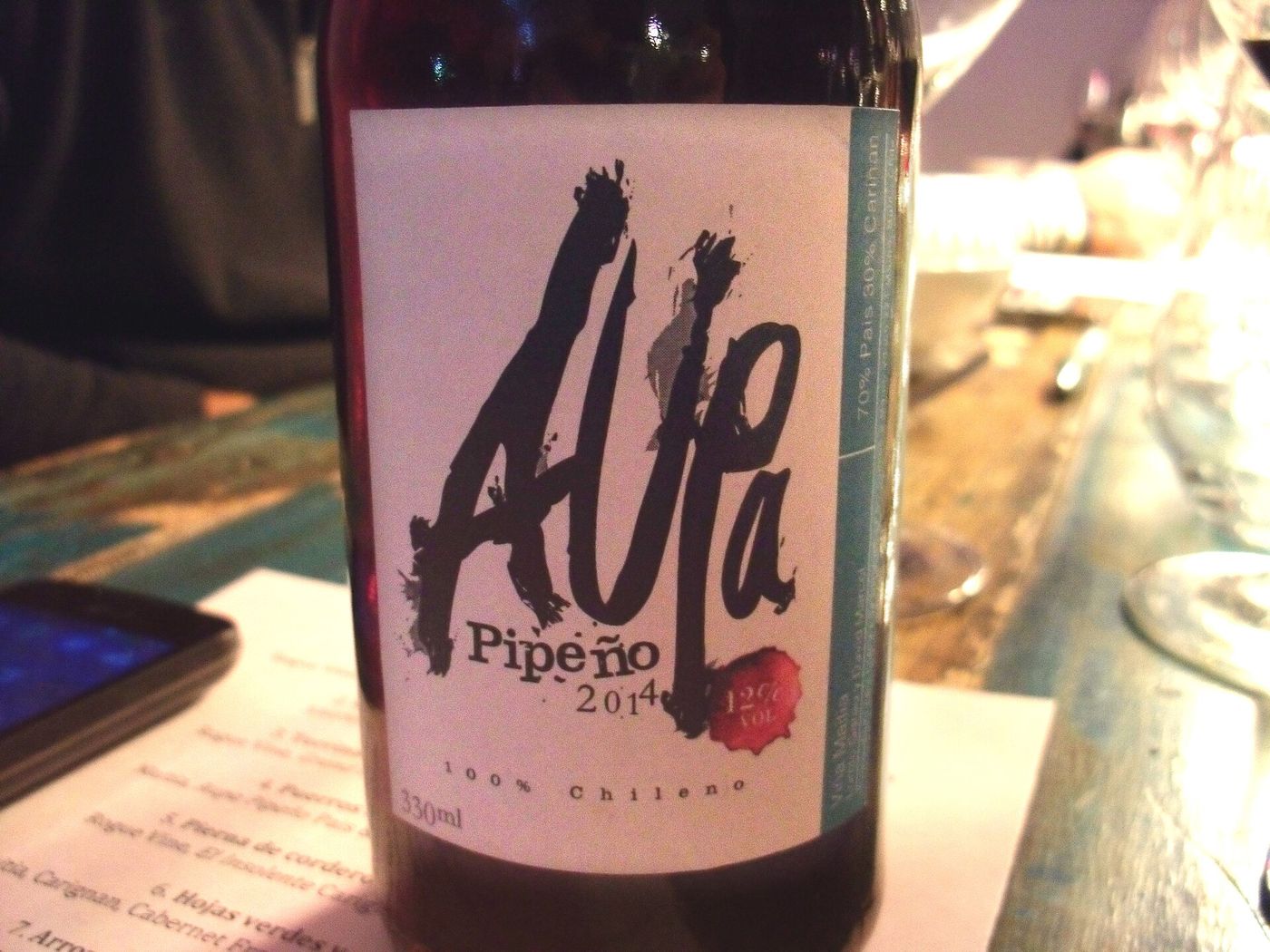
- New-season wine culture. Harvest means tank samples, young pipeno and a general national preoccupation with what this year’s fruit is like.
- Seafood, excellent year-round thanks to the cold Humboldt Current, and best from the Mercado Central’s edge counters rather than the central hall where the touts work.
The practical change from February is simply that everything is open. Barrio Italia’s courtyards, Nunoa’s plazas, the Lastarria and Bellas Artes blocks and the market cocinerias are all running normally, and reservations matter again on Thursday and Friday nights. The food and restaurants guide covers the neighborhoods in detail.
One March-specific tip: many restaurants launch their autumn menus in the second half of the month, so the same kitchen can be a different experience on 5 March and 28 March.
How to shape a March day
More loosely than in January or February. The afternoon block that summer forces indoors is workable in March, which means a normal sightseeing rhythm mostly applies.
- 08:00 to 12:00. The main outdoor block. Hills, markets, the centro, the free walking tour from Plaza de Armas at 10:00.
- 12:00 to 15:30. Lunch, and the menú del día is still the best value meal in the city. Early March afternoons are hot enough to justify an indoor stop; late March afternoons are not.
- 15:30 to 18:00. Museums, galleries or a neighborhood walk. This is the block that summer removes and March hands back.
- 18:00 to 20:00. Sunset. It arrives around 20:00 at the start of the month and closer to 19:15 by the end, so the hill window moves earlier as March goes on.
- 20:30 onward. Dinner, at the normal Chilean hour, in a city where the restaurants are actually open.
The one seasonal adjustment: the daily swing is at its widest in the autumn months, so a 28°C afternoon really does become an 11°C night. Carry the layer.
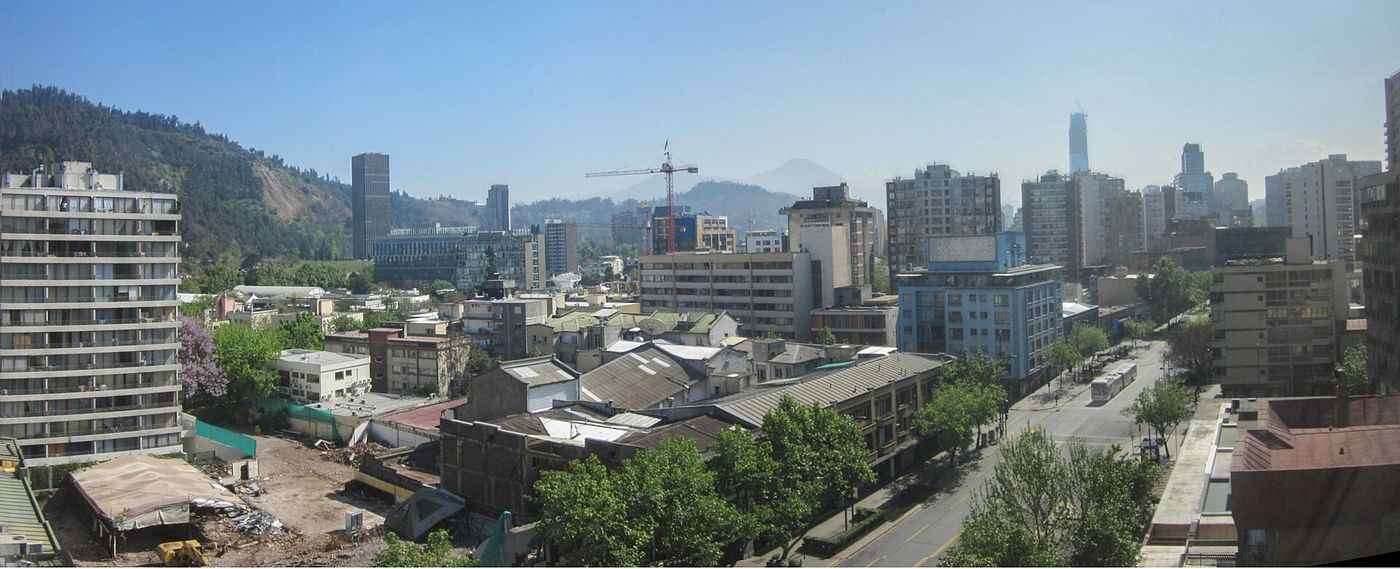
Day trips in March
The best month of the year for day trips from Santiago, for three reasons: the valleys are picking, the mountains are still clear of snow, and the coast has warmed slightly without the February crowds.
Wine valleys. Maipo is 45 to 90 minutes away, Casablanca sits between the city and the coast, and Colchagua is a long day or an overnight. Harvest season runs through the month.
The Cajón del Maipo. The canyon is at its best before the autumn cold arrives. The road to the Embalse El Yeso, closed to private vehicles from April to August, is still open in March; the park runs Thursday to Monday 08:00 to 18:00 with last entry at 11:00 and an adult fee of CLP 3,450 (checked September 2026). This is the last comfortable month to go independently.
The coast. Valparaíso and Viña del Mar are 1.5 to 2 hours by bus from Terminal Pajaritos or Alameda at roughly CLP 4,900 to 6,180 one way. March is the quiet reward after February’s crowds, with warm water by Chilean standards and hills you can walk without melting.
Parque Nacional La Campana. The park’s summit trail to Cerro La Campana runs 7 km and takes around eight hours return, and the standard winter closure begins in June. March is inside the season, though conditions and closures change; check with CONAF before committing.
The Andes. Farellones and the ski areas are hiking country in March, at 2,400 m and above. The Andes and outdoors guide covers the routes and the day trips guide covers the logistics of each direction.
Is March a good time to visit Santiago?
Yes. On weather, access and what is actually happening, March is one of the two strongest months in the Santiago year, alongside October. It gives you summer temperatures, a fully functioning city, harvest season in the valleys and a cultural calendar that has just restarted.
The honest balance:
| March is good for | March is less good for |
|---|---|
| Food-led trips, with everything reopened | Anyone wanting empty museums |
| Wine and harvest experiences | Budget travel around Lollapalooza weekend |
| Comfortable all-day sightseeing | Swimming, as pool seasons end mid-month |
| Clear Andes views before the winter haze | Skiing, which is three months away |
| Long evenings, easing heat | Anyone who dislikes any heat at all |
Compared with its neighbours, March holds most of February’s warmth while removing the shutdown, and it sits ahead of April on temperature while trailing it slightly on autumn colour and quiet. If your priority is food and wine, March. If it is cool air and golden light, April.
For how the months line up across the year, see Santiago in February for the month before, and the timing pillar for the full comparison.
A week in Santiago in March
March is the easiest month to fill a week, because nothing about the weather forces your hand. This version assumes a Saturday arrival and works around the Monday museum closures and one harvest day.
- Saturday: centro on foot. The historic core is flat and walkable, and a March afternoon is warm rather than punishing. Finish in Lastarria, where the terraces run late.
- Sunday: hills and markets. Cerro Santa Lucia early, the Mercado Central at midday, then the teleferico up Cerro San Cristobal for sunset around 20:00.
- Monday: neighborhoods. Museums, the zoo and the teleferico close. Spend it in Barrio Italia and Nunoa, both fully reopened after the summer, with a long lunch in the middle.
- Tuesday: museums. The Precolombino, the Museo de la Memoria or Bellas Artes, with the new season’s exhibitions open rather than the summer’s leftovers.
- Wednesday: harvest day. A Maipo Valley estate 45 to 90 minutes out, ideally with a tasting and lunch. Book ahead in harvest season.
- Thursday: the Cajon del Maipo. The last comfortable month for the Embalse El Yeso road before the April closure to private vehicles.
- Friday: the coast or Colchagua. Valparaiso is 1.5 to 2 hours west and quieter than in February; Colchagua is a long day south if the harvest festival weekend lines up.
The itineraries pillar has three and five-day versions of the city, and the things to do round-up covers what to prioritise on a first visit.
What March costs
Slightly less than the summer peak on accommodation, and identical on everything else. Attraction prices, transport and restaurant prices do not move seasonally in Santiago, so the March saving is concentrated in beds, with the exception of Lollapalooza weekend.
| Item | Price (checked September 2026) | USD approx. |
|---|---|---|
| Metro, off-peak | CLP 735-815 | 0.77-0.86 |
| Metro, peak | CLP 895 | 0.94 |
| bip! card for buses | CLP 1,550 | 1.63 |
| Teleférico return | From CLP 2,630 | 2.77 |
| Funicular return, weekday | CLP 2,250 | 2.37 |
| Museo Precolombino, foreign visitor | CLP 12,000 | 12.63 |
| La Chascona | CLP 11,000 | 11.58 |
| Cousiño Macul traditional tour | CLP 25,000 | 26.32 |
| Santa Rita Clásico tour | CLP 31,000 | 32.63 |
| Undurraga Sibaris tour | CLP 29,500 | 31.05 |
| Embalse El Yeso park entry | CLP 3,450 | 3.63 |
| Bus to Valparaíso, one way | CLP 4,900-6,180 | 5.16-6.51 |
Converted at CLP 950 to USD 1. Two March-specific notes on cost. Harvest tours and festival weekends are the most expensive version of a Chilean winery visit, so book ahead if the dates matter. And the mid-month Lollapalooza weekend lifts central accommodation prices sharply, which is worth avoiding or embracing deliberately rather than by accident.
The trip cost guide has the full picture including beds and sample budgets.
What to pack for March
Summer clothing with a genuinely warm evening layer. March’s 17-degree daily swing is the widest practical planning problem of the month, and the nights get cooler as it progresses.
- Breathable shirts and light trousers for the day, shorts for early March if you want them.
- A real sweater or jacket for evenings, heavier than you would carry in January.
- SPF 50, a hat and sunglasses. The sun is still strong through the month.
- Walking shoes with grip, since March is the month the hills become comfortable again.
- Closed shoes for winery visits, where cellars are cool and floors are wet.
- A light waterproof for the last week, when the first systems of the season can arrive.
The full seasonal list, including the dress codes that matter in the eastern neighborhoods, is in the packing guide.
Safety and practicalities
Nothing about March changes Santiago’s ordinary safety picture. Official advisories describe pickpocketing and distraction robbery as common, with phone snatching the usual method, concentrated in the centro, around Plaza de Armas and on the approaches to Cerro Santa Lucía.
March-specific notes:
- Festival crowds. Lollapalooza weekend concentrates large crowds at Parque O’Higgins and on the Metro. Keep bags zipped and in front of you, and plan the trip home before the headliners finish.
- Late fire season. Central Chile’s wildfire season runs December to March. It rarely affects the city directly but can close foothill roads or fill the basin with smoke on hot, windy days.
- Wine and driving. Chile enforces strict drink-driving limits. If a harvest day involves tastings, use a tour, a driver or public transport rather than a rental car.
- Emergency numbers. Police 133, medical 131, fire 132.
The safety guide has the full picture, including the scams that catch visitors year-round.
March by traveller type
March is the month with the fewest bad fits. The only travellers it disappoints are those who came for snow or for an empty city.
| Traveller | March verdict |
|---|---|
| First-time visitor | Excellent. Everything is open and the weather is comfortable |
| Food and wine trips | The best month of the year, with harvest in the valleys |
| Couples | Excellent. Warm evenings, full restaurant scene, day trips at their best |
| Families | Good. Heat has eased and the school-year city is calmer than the holiday one |
| Solo travellers | Good. Hostels are quieter than January and the city is livelier |
| Museum and culture trips | Very good. New seasons open in March rather than January |
| Hikers and outdoors | Excellent, and the last month for independent high-valley trips |
| Skiers | The wrong month entirely; the season starts in June |
| Budget travellers | Reasonable, except around Lollapalooza weekend |
The travel styles guide covers what changes for each kind of trip regardless of season, including budgets and the right neighbourhood to base yourself in.
Five March mistakes worth avoiding
- Booking mid-month without checking Lollapalooza. The festival weekend lifts central accommodation prices and fills the Metro toward Parque O’Higgins. Fine if you are going, expensive if you are not.
- Turning up at a winery in harvest without a booking. March is the busiest month in the valleys, and the estates that take walk-ins in June do not in March.
- Assuming a museum is open on Monday. It is not, in any month. The teleferico and zoo close then too.
- Packing for summer only. An 11.4C night follows a 28.6C afternoon, and the gap widens as the month goes on.
- Driving after a tasting. Chile enforces strict drink-driving limits. Use a tour, a driver or the Metro-plus-local-transport route to Pirque instead.
How a Chilean winery day actually works
Most visitors get the shape of this wrong, so it is worth spelling out. A Maipo Valley estate visit is a scheduled tour rather than a drop-in tasting room, it runs 60 to 120 minutes, and it usually ends with a tasting of three or four wines rather than a free pour.
The pattern at the estates closest to Santiago:
- You book a time slot, in English where the estate offers it. Undurraga runs English departures at 10:00 and 15:00, for example.
- The tour walks the vineyard and the cellar, which in March means seeing fruit arriving and fermentation underway rather than an empty winery.
- The tasting is included in the tour price, with premium tiers pouring older or reserve wines. Cousino Macul’s traditional tour is CLP 25,000 and its premium tour CLP 40,000; Santa Rita’s Clasico is CLP 31,000; Undurraga’s Sibaris is CLP 29,500 (checked September 2026).
- Lunch is separate and often needs its own booking, particularly in harvest season.
- Getting there is the part to plan. Pirque is reachable on Metro Line 4 to Plaza de Puente Alto plus a short local hop; Buin and Talagante need a transfer or a tour; Colchagua needs a full day or an overnight.
Two honest notes. First, the estates nearest the city are the most commercial, and a Casablanca or Colchagua day gives a better sense of Chilean wine country at the cost of two extra hours in transit. Second, harvest season means working wineries, so tours can be shortened or rerouted around whatever the cellar is doing that day. That is a feature rather than a problem, but it does mean March is the wrong month to expect a leisurely, uninterrupted cellar walk.
For the full comparison of valleys, estates and how to reach each one, see the wine tours guide.
Autumn arrives: what changes by the end of March
The month does not end the way it starts. By the last week the sun sets around 19:15 rather than 20:00, the nights are cool enough for a jacket rather than a sweater, and the plane trees along Parque Forestal and through Barrio Italia have begun to turn.
What that means in practice:
- The hill window moves earlier. A sunset teleferico trip that worked at 19:30 on 3 March needs to be 18:45 by 30 March, and the teleferico’s last run is at 19:45 regardless.
- Outdoor dinners get chillier. Terrace heaters appear in the last week of the month.
- The light improves. Lower sun angles give the city its best photographic light of the year, and the first autumn colour arrives.
- The first haze appears. As temperatures drop, the basin starts to hold air, and the earliest hazy mornings of the season show up.
- Mountain roads begin closing. The Embalse El Yeso route shuts to private vehicles from April, and higher trails start their winter schedules.
If your dates span the month boundary into April, expect the character to keep shifting the same way: cooler, quieter, more golden, with the year’s widest gap between afternoon and dawn.
Accessibility and getting around in March
March is the easiest month of the year to move around Santiago on foot, which matters more than any single accessibility feature. Afternoons are warm rather than dangerous, the evenings are long enough to do things after 18:00, and the winter rain that closes Cerro Santa Lucia has not started.
The practical picture:
- The Metro runs 06:00 to 23:00 Monday to Friday, from 06:30 on Saturday and 07:30 on Sunday and holidays. Fares run CLP 735 to 895 depending on the hour, with peak pricing 07:00 to 08:59 and 18:00 to 19:59 now that the city is back at work. Contactless bank cards work on the Metro but not on RED buses, which still need a bip! card at CLP 1,550.
- The centro is flat, and the museum cluster around Plaza de Armas, the Precolombino and La Moneda sits within a few level blocks.
- The hills are not. Cerro Santa Lucia is stone stairs throughout; Cerro San Cristobal is a real climb. The funicular runs Tuesday to Sunday 10:00 to 18:45 and Monday from 13:00, at CLP 2,250 return on weekdays, and the teleferico runs Tuesday to Sunday 10:00 to 19:45 from CLP 2,630 return. Both are closed Monday.
- Traffic returns in March, so a taxi across town at 18:30 is slower than the Metro by a wide margin.
For step-free routes, lift-equipped stations and which cultural venues publish accessibility information, see the accessible Santiago guide. For fares, cards and transfers in full, see getting around Santiago.
Frequently asked questions
Is March a good month to visit Santiago?
One of the two best, alongside October. March keeps summer warmth at 28.6°C by day while the city returns to full operation after the holidays, the wine valleys pick, and the cultural season restarts. It is the strongest month of the year for anyone travelling for food and wine.
When is the wine harvest in Chile?
The vendimia runs between February and May, with the festivals near Santiago concentrated in March. Colchagua holds its festival at Santa Cruz every March, Curicó runs its own, and Casablanca celebrates within the wider window. Exact dates are published closer to the time each year.
Does it rain in Santiago in March?
Barely. The derived monthly figure is about 0.9 mm, which makes March effectively dry. The first real systems of the season usually arrive in late April or May, though the last week of March can bring wind and cloud without much actual rain.
Do I need to book wineries in advance in March?
Yes. Harvest is the busiest season in the valleys around Santiago, and the estates that accept walk-ins in the quiet months run on reservations through March. Book the tour and, if they offer one, the lunch at the same time.
Is the weather reliable enough for outdoor plans in March?
Almost entirely. The month averages under a millimetre of rain, and a washed-out day is rare. The one caveat is the last week, when the season’s first systems can bring wind and cloud, usually without much rain behind them.
Is Lollapalooza Chile in March?
Yes, mid-month. The 2027 edition runs 12, 13 and 14 March at Parque O’Higgins, with three-day passes from CLP 168,000 at the Early Bird stage. It lifts accommodation prices across the city that weekend, which matters even if you are not going.
Is March too late to visit the Cajón del Maipo?
No, it is one of the best months. The road to the Embalse El Yeso closes to private vehicles from April to August, so March is the last month for an independent trip. The park runs Thursday to Monday with last entry at 11:00 and an adult fee of CLP 3,450.
How does March compare with April in Santiago?
March is warmer at 28.6°C against April’s 25.7°C, with a fully open city and harvest season. April is quieter, has the best autumn colour and the widest day-night swing, and sees the first air-quality restrictions of the year. Both are excellent; March is the better month for food and wine.
The Maipo Valley’s own harvest festivals fall at the end of the month rather than the middle. Isla de Maipo’s fiesta ran 28 and 29 March in 2026, free to enter, with more than a dozen wineries and close to a hundred stallholders in the town centre. Our guide to the Maipo Valley wine harvest festivals covers that one plus Buin and Pirque, and how to combine a festival with an estate visit.
Sources
- Dirección Meteorológica de Chile: climate normals, Santiago Pudahuel 330021
- Dirección Meteorológica de Chile: climate normals, Quinta Normal 330020
- Chile Travel: Chilean harvest festivals
- Lollapalooza Chile: official site
- Viña Cousiño Macul
- Viña Santa Rita
- Viña Undurraga
- CONAF: Parque Nacional La Campana
- Teleférico Santiago
- Metro de Santiago: fares and hours
- Santiago Turismo: municipal visitor information
- Visit Santiago: official visitor site
Image credits
| Photo | Credit |
|---|---|
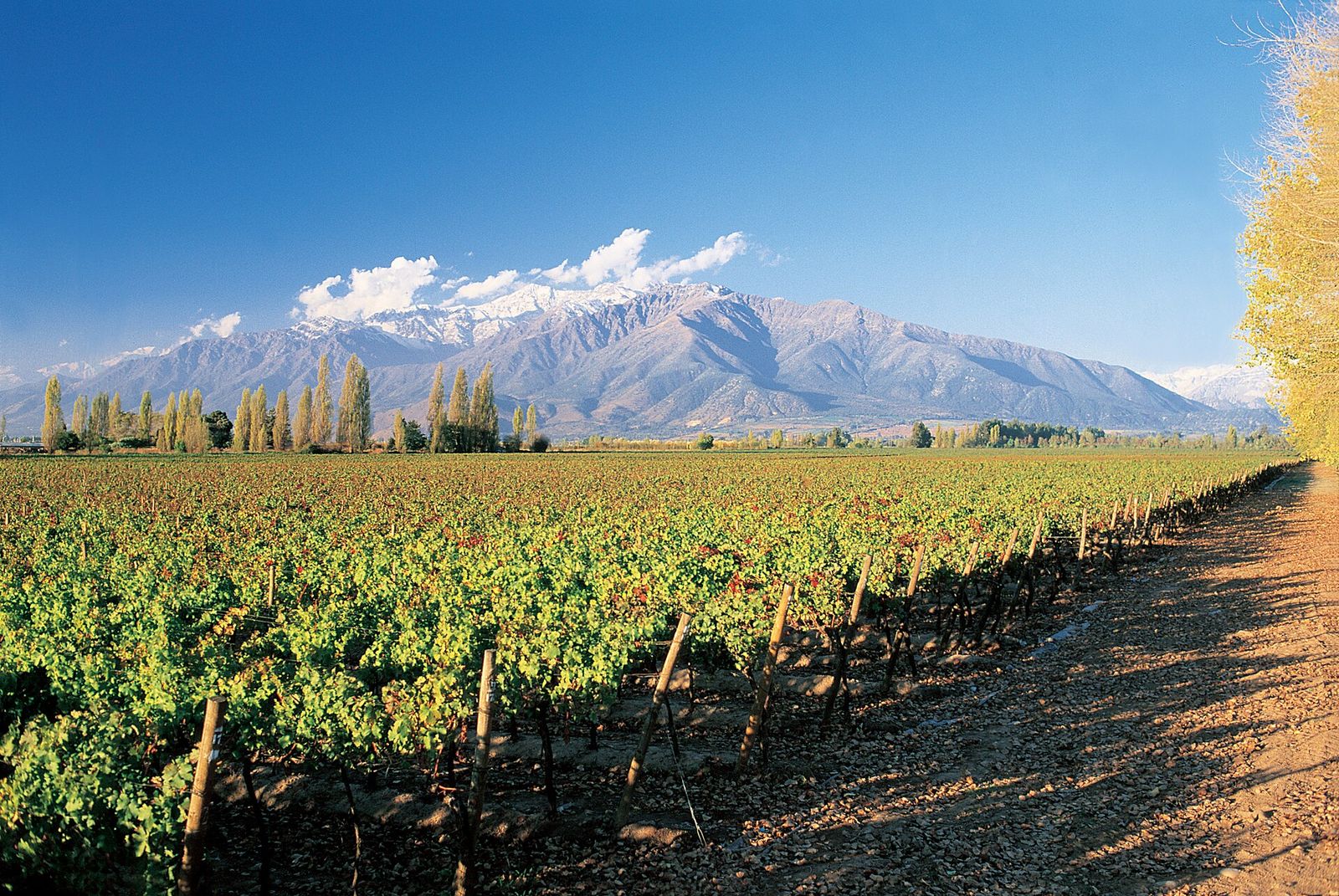
| Maipo Valley vineyard (top of page) | Fsanchezs, CC BY-SA 3.0, via Wikimedia Commons |
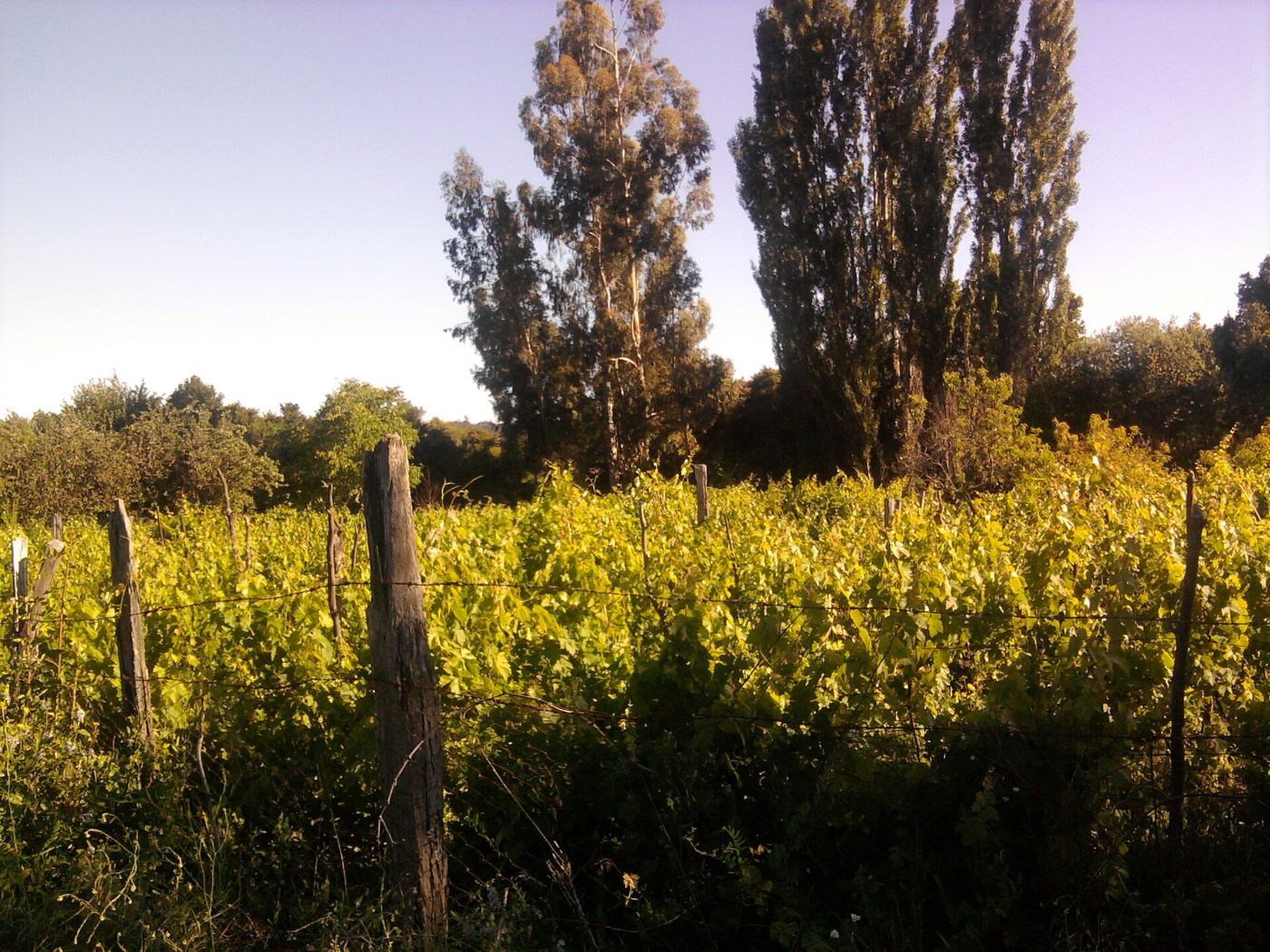
| Vineyards at Colliguay | Emilio2010bv, CC BY-SA 3.0, via Wikimedia Commons |
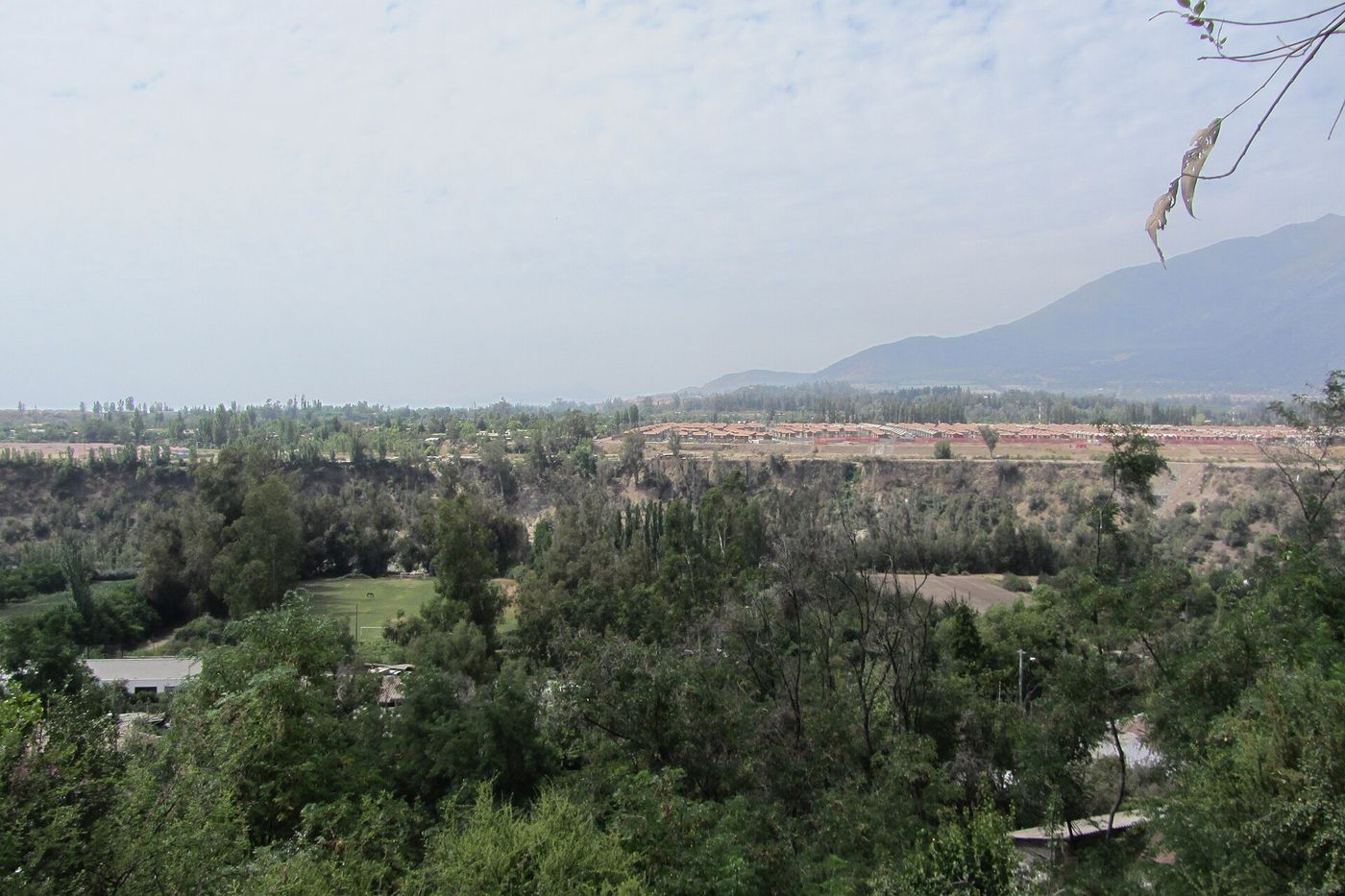
| Pirque, Maipo Valley | Stephen Chip from Boca Raton, Florida, United States, CC BY 2.0, via Wikimedia Commons |
| Chilean pipeno | Alvaro M. Tello, CC BY-SA 4.0, via Wikimedia Commons |
| Avenida Providencia | Estudiante1969, CC BY-SA 4.0, via Wikimedia Commons |
| Road through Pirque | Nelson Pérez, CC BY-SA 3.0, via Wikimedia Commons |