Is Santiago Chile safe is the right question with a boring answer: yes for most visitors, with a real and rising street-crime problem that ordinary precautions handle. Below is what four governments were saying in September 2026, the scams they name, which areas matter, and what to do in a protest or an earthquake.
The honest framing is this. Violent crime against tourists in Santiago is rare. Phone snatching, bag theft and distraction robbery are common and getting more common, and the people they happen to are usually doing one specific thing: walking down a busy central street with a phone in their hand. Almost everything else on this page is detail around that one sentence.
The risks, ranked by how likely they are to affect you
| Risk | Likelihood | Severity | What handles it |
|---|---|---|---|
| Phone snatching | High | Low-medium | Keep it in your pocket on the street |
| Pickpocketing in crowds | High | Low | Bag in front, nothing in back pockets |
| Distraction theft | Medium | Medium | Step away from anyone who spills something on you |
| Taxi overcharging | Medium | Low-medium | Counter-booked taxi or an app |
| Drink spiking | Low-medium | High | Watch your glass in Bellavista and Suecia |
| Being caught near a protest | Medium | Medium | Avoid Plaza Baquedano on Friday afternoons |
| Armed mugging | Low | High | Do not resist; hand it over |
| Earthquake | Low per trip, certain eventually | Variable | Know the drill; the buildings are good |
| Express kidnapping | Very low | High | Do not take unbooked cars late at night |
| Violent crime against tourists | Rare | High | Nothing specific; it is rare |
The pattern in that table is the useful part: the high-likelihood risks are all property crimes with low severity, and the high-severity risks are all low-likelihood. That is a normal profile for a large Latin American capital and a considerably better one than several of Santiago’s regional peers.
Is Santiago safe for tourists?
Broadly yes. Violent crime against visitors is rare, the city is well policed in the areas tourists use, and the Metro, hotels and restaurants present no unusual risk. What has genuinely worsened is street theft: phone snatching, bag theft and distraction robbery in the centro and at tourist viewpoints. Ordinary big-city habits handle almost all of it.
Three things make Santiago feel safer than its statistics suggest, and one thing makes it feel less safe than it is.
Safer: the city is well lit and well used in the areas visitors frequent; the Metro is modern, busy and staffed; and Chilean institutions work, which means that when something does go wrong there is a functioning police force, a functioning health system and functioning insurance paperwork.
Less safe: the aftermath of the 2019 estallido social left visible damage, boarded-up frontages and heavy graffiti in parts of the centro and around Plaza Baquedano, and it reads as menace to visitors when much of it is scar tissue. The streets in question are usually perfectly ordinary in daylight.
What the official advisories say
Four governments, checked on 17 September 2026. Advisory language changes, so re-check your own government’s page before you travel; these are the positions as of that date.
| Government | Level | Reason given |
|---|---|---|
| United States | Level 2, Exercise Increased Caution | Crime |
| Canada | Exercise a high degree of caution (updated 17 September 2026) | “ongoing demonstrations, civil unrest and crime” |
| United Kingdom | No blanket advisory against travel | Pickpocketing and mugging described as very common; armed muggings increasing in Santiago |
| Australia | Advice issued; check before travel | Crime and demonstrations |
The specifics the advisories name, which is the part most guides skip:
- Canada lists petty crime in Santiago, Valparaíso, Viña del Mar, Calama, Concepción, Villarrica and Iquique, and specifically at “popular tourist areas, including lookouts”, airports, transit stations, shopping malls and restaurants. It states that “armed assaults and robberies have increased in recent years”, names Bellavista, Barrio Lastarria and the area around Cerro Santa Lucía among the higher-risk Santiago neighborhoods, and warns about express kidnappings in which victims are forced to withdraw cash from ATMs.
- The UK FCDO describes distraction robbery, the liquid-spill scam, airport taxi fraud, and luggage theft “at the airport terminal and from the baggage carousel after arrival”. It says drinks have been spiked in nightclubs and bars “particularly in the Suecia and Bellavista areas of Santiago”, and warns of “a risk of violent protest in Santiago and other Chilean cities, particularly on Friday afternoons”, involving tear gas and water cannon.
Note what those two lists have in common: the named neighborhoods are the ones visitors go to. That is not a reason to avoid them. It is a reason to understand that Cerro Santa Lucía and Lastarria are where tourists are, and therefore where people who target tourists are.
The crimes that actually affect visitors
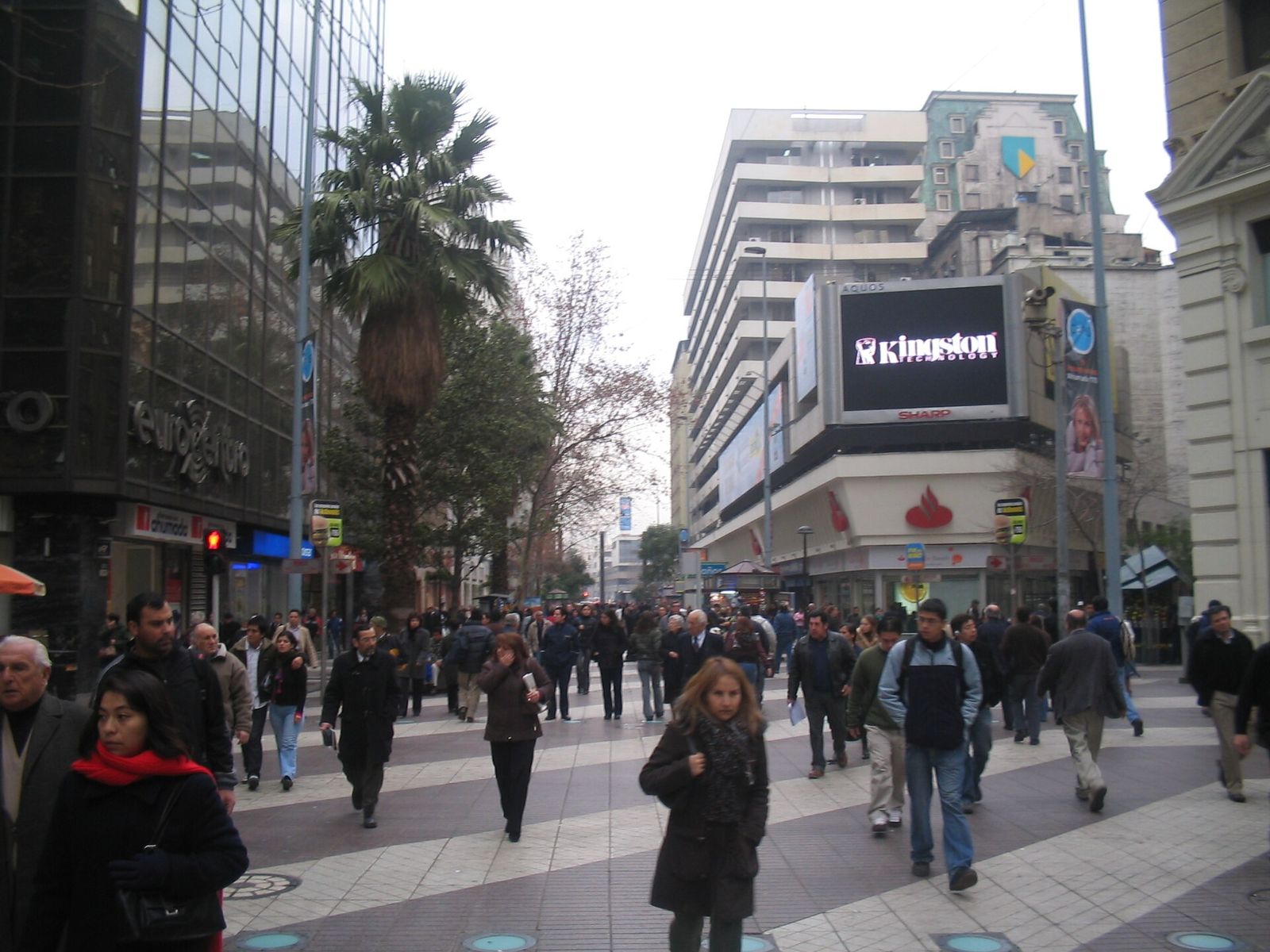
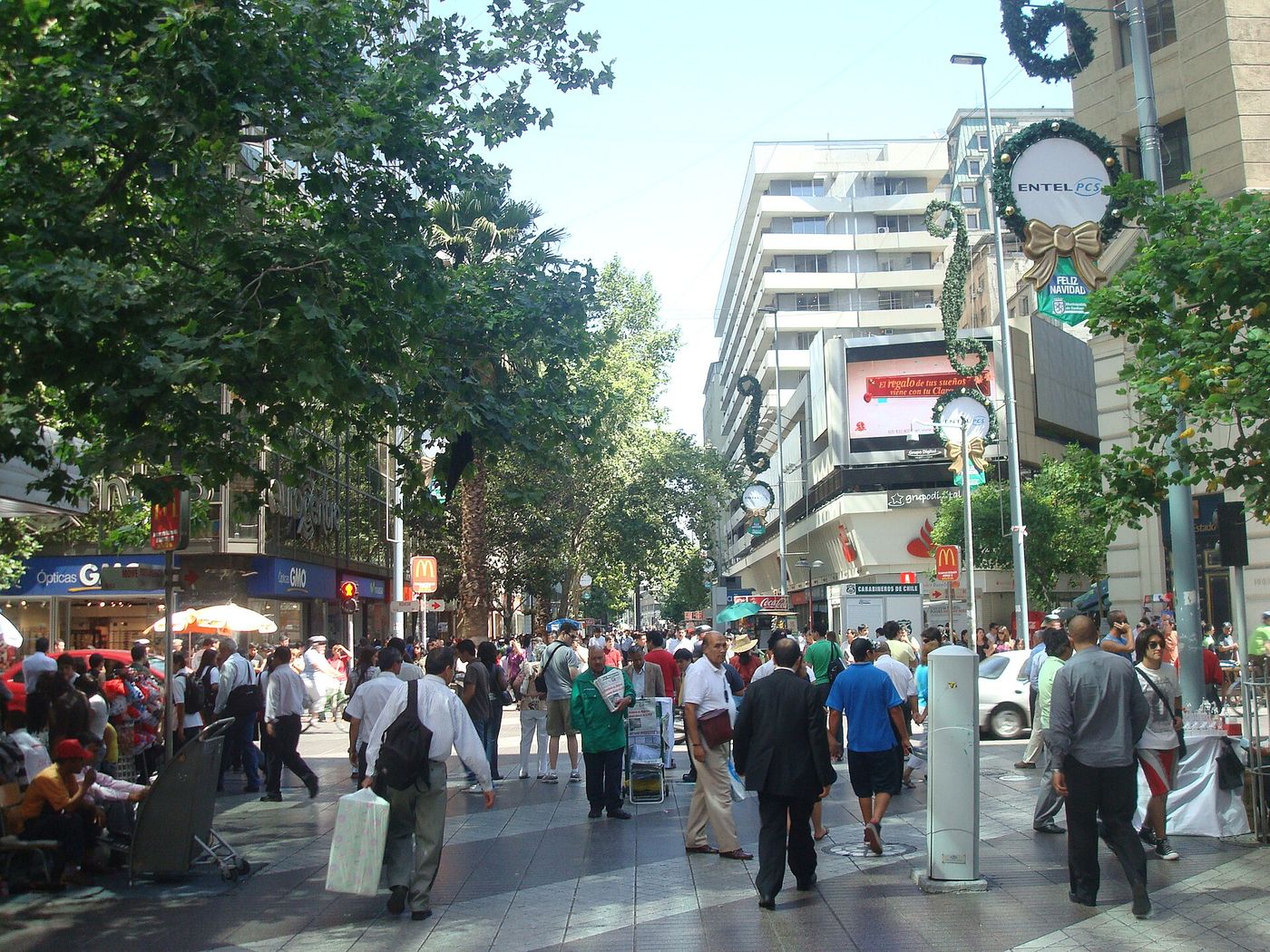
Phone snatching is the single most common incident. The recurring patterns are a grab from the hand at a street crossing, a grab from a restaurant table on a terrace, and a snatch from a motorbike. The fix is dull and effective: do not walk along Ahumada, Estado or the Alameda with your phone out, and do not leave it face-up on an outdoor table.
Pickpocketing happens in crowds: the Metro at peak, the Plaza de Armas, Mercado Central, the queue for the funicular, La Vega. Wear a daypack on your front. Everybody in Santiago does this and nobody thinks it looks odd.
Bag theft in restaurants is common enough that many Chilean restaurants provide a hook or a chair strap. Do not hang a bag on the back of your chair and do not put it on the floor by your feet.
Armed mugging is the serious one, and it is rare against visitors, but the FCDO notes it is increasing. If it happens, hand over what is asked for immediately. Nothing you are carrying is worth a confrontation, and the overwhelming majority of these incidents end with a lost phone and nothing else.
Express kidnapping, flagged by the Canadian advisory, involves forcing a victim to withdraw money from ATMs or make transfers. It is very rare, it is overwhelmingly associated with unbooked cars taken late at night, and booking transport through an app or a counter removes almost all of the exposure.
Scams, specifically
The named ones, from official guidance and from what recurs consistently:
- The liquid spill. Something is spilled on your jacket or bag. A helpful stranger appears with a tissue. A second person takes your bag while you are distracted. Response: step back sharply, refuse help, keep both hands on your belongings, walk away.
- The distraction pair. One person asks directions, drops something, or starts an argument nearby; the second one works. Same response.
- Airport taxi fraud. The FCDO cites the extreme version: unlicensed drivers charging “5,000,000 CLP instead of 50,000 CLP” by exploiting confusion over the number of zeros. Response: book at a counter inside the terminal and pay there, or use an app. Never accept an approach in the arrivals hall.
- Luggage theft at the airport, both in the terminal and from the carousel. Response: never leave bags unattended, and check the tag on the bag you take off the belt.
- The broken meter. A street taxi driver says the meter is broken and quotes a flat fare, usually two or three times the real one. Response: get out and take another, or use an app.
- Dynamic currency conversion. A card terminal offers to charge you in your home currency at a 3-7% markup. It is legal and it is not in your favour. Response: always choose pesos.
- The ATM shoulder-surf. One person distracts, another reads your PIN. Response: use ATMs inside bank branches, supermarkets or Metro stations, in daylight, and cover the keypad.
- Counterfeit notes. Rare but not unknown, particularly in change from street vendors. Chilean notes are polymer with clear windows; the CLP 10,000 and 20,000 are the ones to glance at.
Two scams aimed specifically at foreigners. The first is the false accusation: someone claims you damaged their property or bumped their car, and an accomplice arrives to mediate for a cash settlement. Do not settle anything in cash on the street; offer to call Carabineros, which ends it. The second is the fake police officer asking to check your wallet or your passport for counterfeits. Real Carabineros wear a recognisable green uniform, work in pairs, and do not inspect tourists’ cash. Ask to go to a station.
And one that is not a scam. Street vendors, car-window jugglers at traffic lights and the people who offer to watch your parked car for a few hundred pesos are part of ordinary Santiago life, not a threat. A small coin is normal and refusing is fine.
What areas should you avoid in Santiago?
Nowhere a visitor is likely to go is off-limits in daylight. After dark, take more care around Estación Central and the western end of the Alameda, the blocks west and south of the Plaza de Armas, Pío Nono in Bellavista late at night, and the outer southern and western comunas, which have nothing for visitors anyway.
| Area | Daytime | After dark | Notes |
|---|---|---|---|
| Lastarria / Bellas Artes | Fine | Fine | Busy with restaurant traffic to midnight |
| Providencia | Fine | Fine | Residential and quiet |
| Las Condes / Vitacura | Fine | Fine | The lowest-risk areas in the city |
| Ñuñoa | Fine | Fine | Lively around the plaza |
| Santiago Centro (east of Bandera) | Fine, watch your phone | Quiet, empty | Empties after 20:00 rather than turning dangerous |
| Centro west of Bandera | Watch your phone | Avoid walking | Bleak and empty at night |
| Plaza de Armas | Fine, pickpockets | Thin out | Classic crowd-theft location |
| Cerro Santa Lucía | Fine | Closed | Named by both US and Canadian guidance for theft |
| Bellavista | Fine | Care after 01:00 | Drink spiking specifically flagged |
| Barrio Brasil / Yungay | Fine | Take a taxi home | Yungay named for pickpocketing |
| Estación Central | Care | Avoid | Transport hub; the classic bag-theft environment |
| La Pintana, Lo Espejo, outer south | Not a visitor area | Avoid | No reason for a tourist to be there |
Two qualifications. First, “avoid” here means “do not walk through it at 02:00 with a rucksack”, not “do not enter”. Second, the named tourist areas appear on advisory lists precisely because tourists are there; Lastarria being on Canada’s list does not make Lastarria more dangerous than an unlisted suburb, it makes it more visited.
A note on how to read that table. Crime in Santiago is not evenly distributed by comuna in the way visitors imagine. The homicide and violent-crime statistics that drive Chilean political debate are concentrated in outer comunas that no tourist has any reason to visit, and they tell you almost nothing about your own risk. The crimes that affect visitors are property crimes committed where visitors congregate, which is the exact opposite geography. A safety map built from citywide crime data will point you away from the centro and toward Las Condes, and that is a reasonable conclusion reached for the wrong reason.
Is Santiago safe at night?
In the areas visitors use, yes, with the obvious caveats. Lastarria, Providencia, Barrio Italia, Ñuñoa, Las Condes and Vitacura are all fine to walk in the evening. The centro is quiet rather than dangerous after 20:00 because it empties. Take a taxi rather than walking long distances after 23:00, especially leaving Bellavista.
The specific night-time rules that matter:
- Take a car after 23:00. The Metro closes at 23:00, dinner finishes later, and a CLP 6,000 ride-hail is the cheapest insurance available in this city.
- Book it rather than flag it. Official guidance from multiple governments is consistent on this: use an app or have the restaurant call one.
- Watch your drink. Drink spiking is specifically named in the Suecia and Bellavista nightlife areas. Do not leave a glass unattended and do not accept a drink from a stranger.
- Do not walk the Alameda at night. It is the main artery, it is wide, poorly populated after dark and it is where the phone-snatching statistics live.
- Know your address in Spanish, with the comuna. Street names repeat across comunas, and “Merced 300” means nothing to a driver without knowing whether you want Santiago Centro or Ñuñoa.
Public transport and the Metro
The Metro is one of the safer places in Santiago: busy, lit, staffed, camera-covered. The risk on it is pickpocketing in crowded carriages, concentrated on Line 1 at peak and at the busiest central stations.
Habits that work: daypack on the front, phone in a pocket rather than in your hand near the doors, and a moment’s attention as the doors close, which is when the grab-and-run happens.
RED buses are fine and less used by visitors. Colectivos, the shared taxis, are licensed, routine and used by everyone; they are not a risk. Street taxis are metered and generally honest, with the broken-meter scam as the exception.
Stations to note. Baquedano is the focus of political demonstrations and can close at short notice; when it does, trains run through without stopping. Estación Central and the terminals attached to it are the classic environment for luggage theft. For fares, hours and how the system works, see getting around Santiago.
Arriving: the airport, in one paragraph
The single highest-risk moment of a Santiago trip is the arrivals hall, not because it is dangerous but because you are tired, disoriented and carrying everything you own. Do three things: book transport at a counter inside the terminal or through an app rather than accepting an approach; never leave a bag unattended, including at the carousel; and pay in pesos, not dollars. The detail is in our Santiago airport guide.
Solo travelers and women travelers
Santiago is a common destination for solo travelers and is generally straightforward. Chilean street harassment exists and is comparable to other large Latin American cities: comments and looks rather than anything more, and less than in several neighbouring capitals.
Practical points that come up repeatedly:
- The transport rule is the same but more so. Book cars rather than flagging them, particularly at night, and share the trip in the app.
- Bellavista and Suecia are the two nightlife areas where drink spiking is officially flagged. Go, and watch your glass.
- Accommodation with 24-hour reception matters more for a solo traveler than for a couple, especially with a late arrival.
- 1455 is Chile’s national helpline for violence against women, and it is staffed.
- Hostels and group tours are well established here, and the free walking tour from the Plaza de Armas at 10:00 and 15:00 is a straightforward way to meet people on day one.
None of this is Santiago-specific advice so much as large-city advice. The city does not require a different posture from Madrid or Mexico City; it requires the same one, consistently.
Hostels, hotels and your belongings. Room safes in Chilean hotels are standard above the budget level and worth using for the passport, the tourist card and the second card. In hostels, use a padlocked locker. The most common loss reported by visitors is not a street robbery at all; it is something left in a dorm or a shared apartment. Apartment rentals have no front desk and no safe, which is worth weighing if you are carrying anything valuable.
Protests: Plaza Baquedano and the calendar
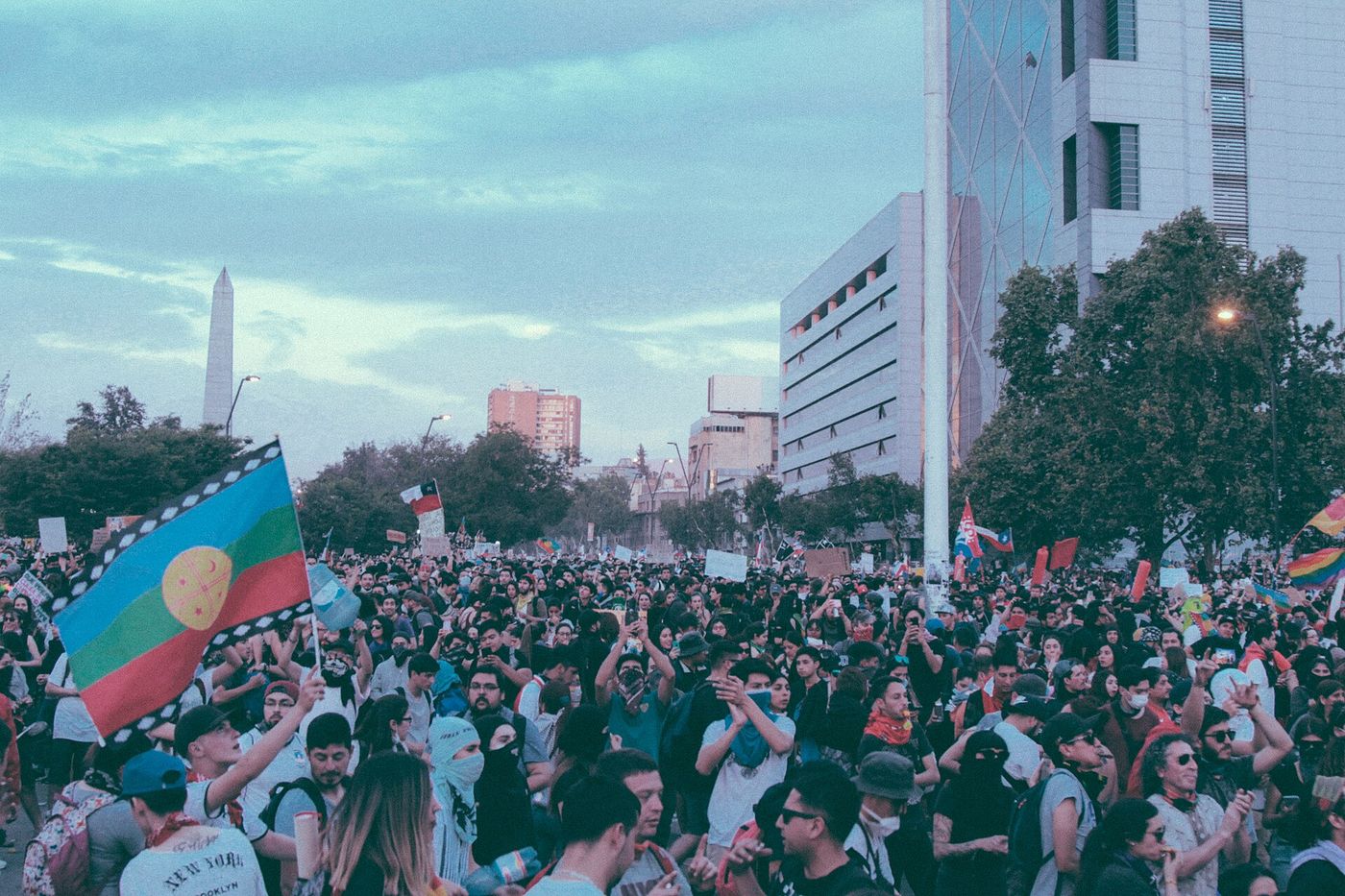
Chile has an active protest culture, and Santiago’s demonstrations are concentrated in a predictable place and on predictable dates. This is manageable information, not a reason for anxiety.
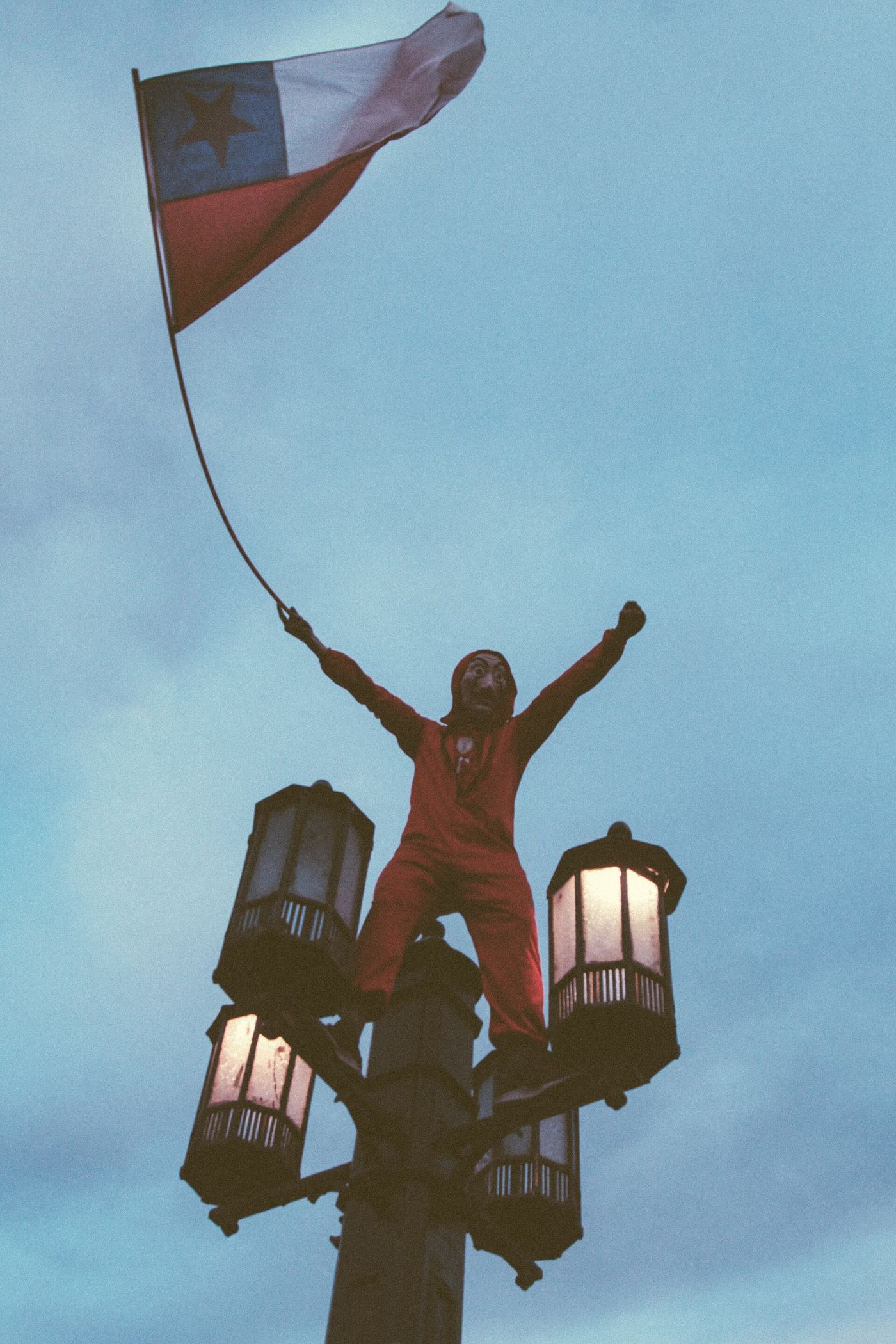
The place. Plaza Baquedano, also called Plaza Italia and, since 2019, Plaza Dignidad by protesters, at the junction of the Alameda and Providencia. Marches typically run along the Alameda from there toward La Moneda.
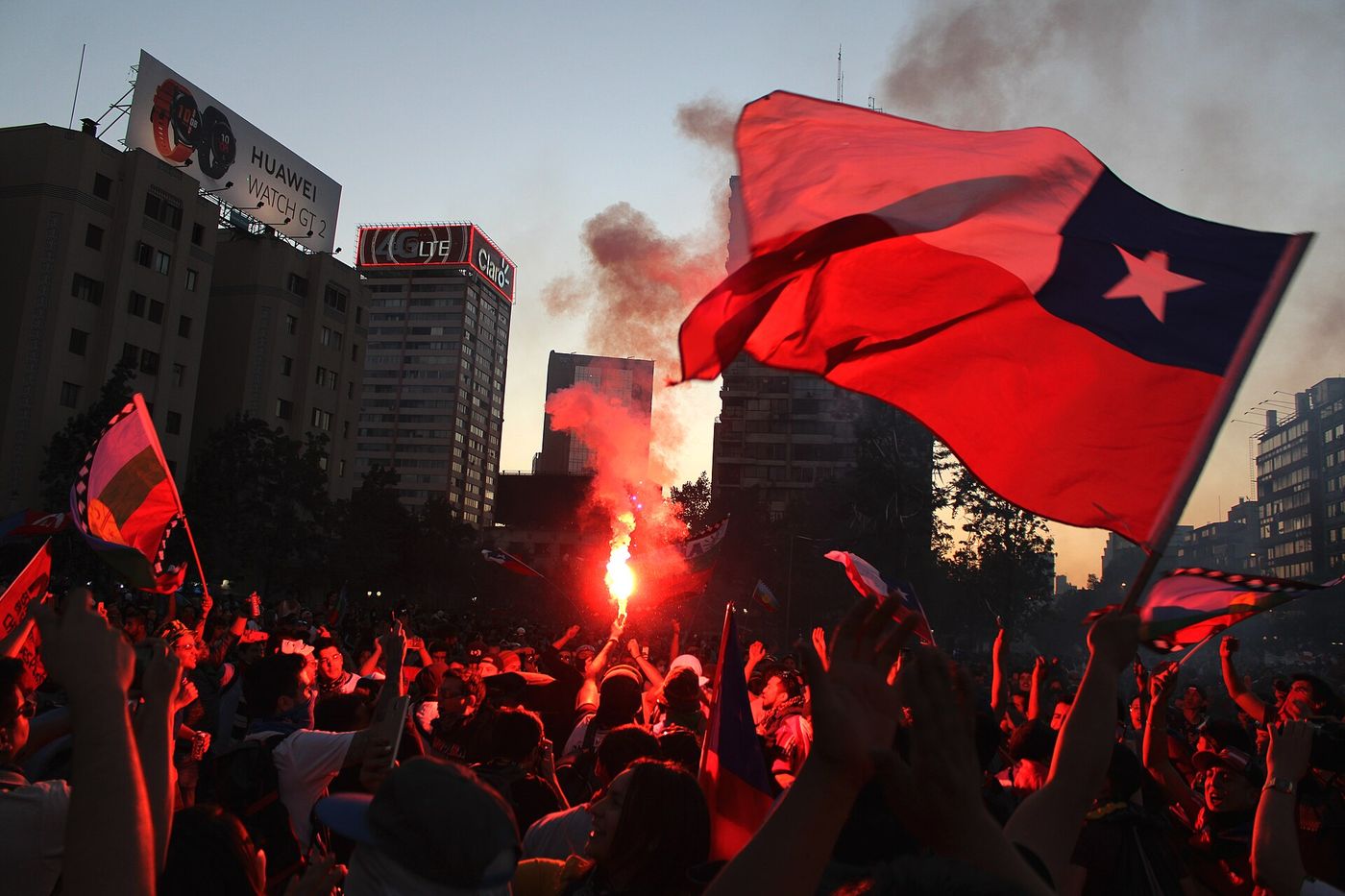
The dates. Canadian government guidance names 29 March (Day of the Young Combatant), 1 May (Labour Day), 11 September (the anniversary of the 1973 coup) and 18 October (the anniversary of the 2019 estallido) as major protest dates. The FCDO adds that there is a risk of violent protest particularly on Friday afternoons.
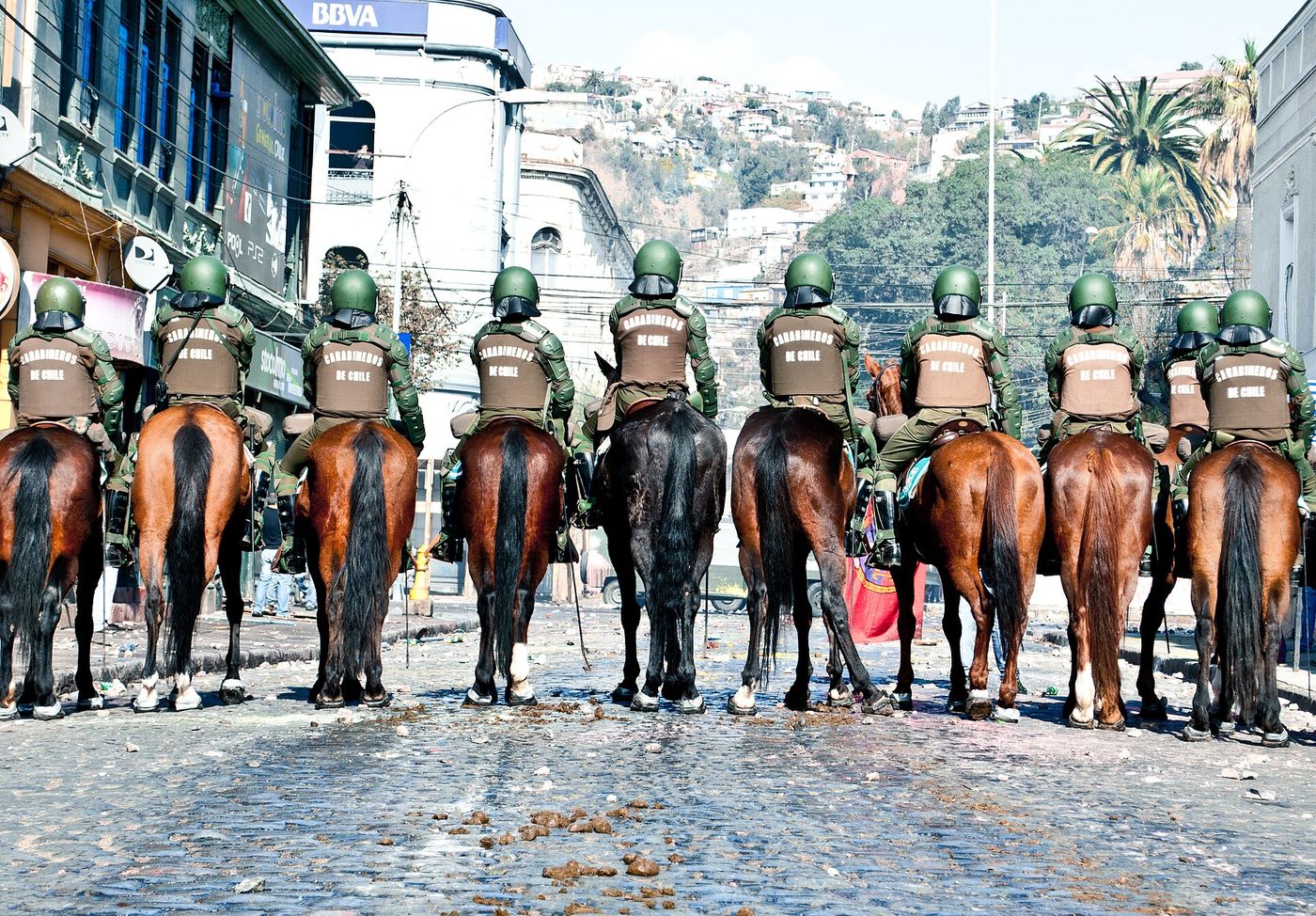
What actually happens. Most demonstrations are peaceful. A minority end with Carabineros deploying tear gas and water cannon, generally after dark and generally around Plaza Baquedano itself. Tear gas drifts several blocks, which is the most likely way a visitor is affected.
What to do:
- Check local news or ask your hotel before going to the centro on a named date or a Friday afternoon.
- If you see a march forming, walk away from it, not around it and not through it.
- If you are caught in tear gas, move upwind and uphill, do not rub your eyes, and go indoors. Shops will usually let you in.
- Do not photograph Carabineros in a confrontation. It attracts attention you do not want from both sides.
- The Metro closes affected stations without warning. Have a walking route in mind.
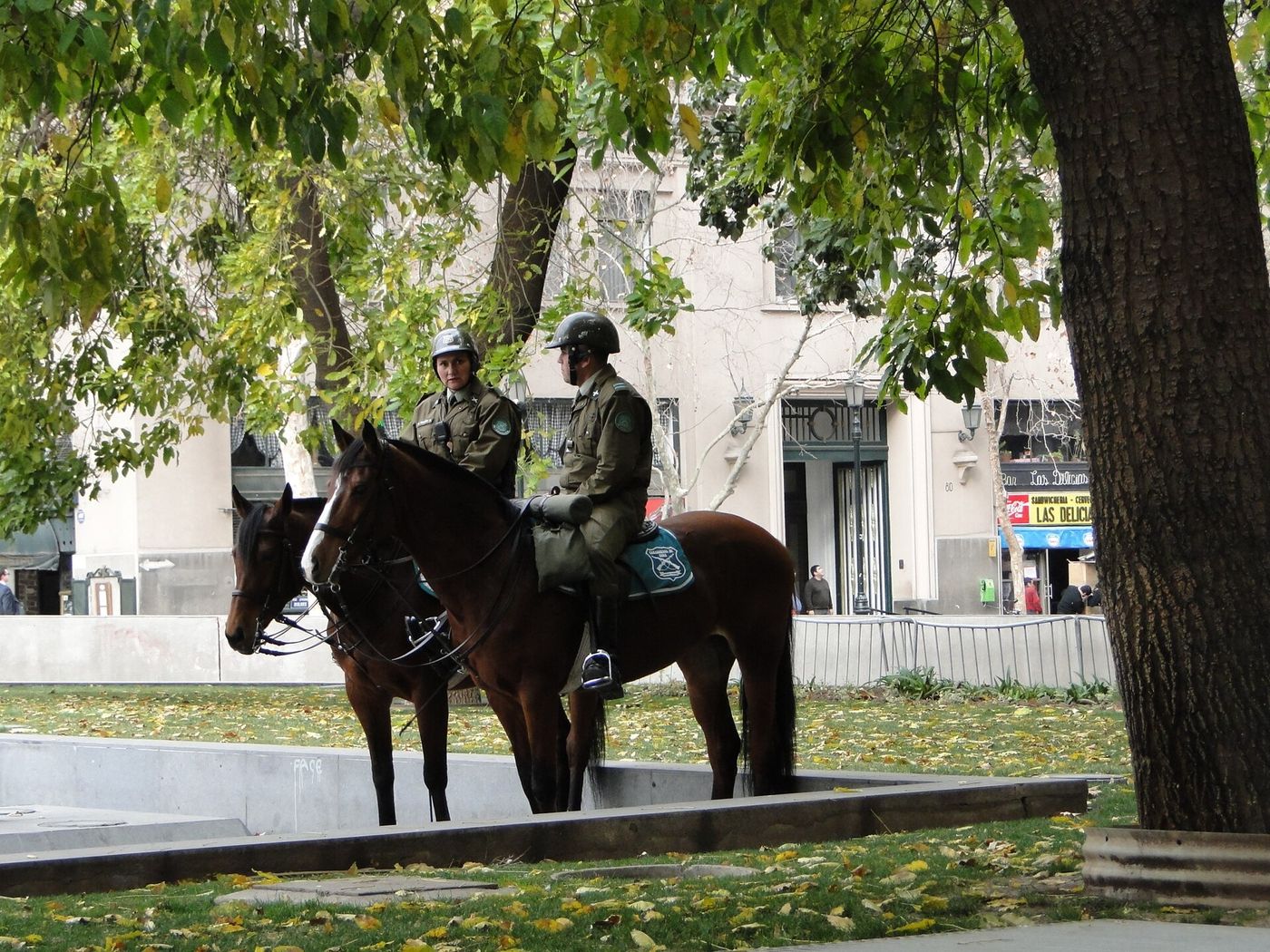
One thing worth knowing about the Carabineros. Chile’s police are, by regional standards, professional, disciplined and not corrupt at street level, and the institution takes crimes against tourists seriously because tourism matters to the economy. They are also a militarised force with a contested record in protest policing, which is a live political argument in Chile and not one a visitor needs to have an opinion about. For your purposes: they will take your report, they will not ask you for money, and you should not offer any.
Earthquakes: what to actually do
Chile is one of the most seismically active countries on earth and Santiago will feel tremors. Most visitors who stay a week feel nothing; some feel a small one and are startled. The important context is that Chile has the strictest seismic building code in Latin America and among the strictest in the world, rigorously enforced since the 1960s and tightened after the magnitude 8.8 earthquake of 2010. Modern Santiago buildings are built to move.
In a building: drop, cover, hold on. Get under a sturdy table or against an interior wall away from windows. Do not run outside during the shaking, which is when falling glass and masonry cause injuries. Do not use lifts.
Outside: move away from buildings, walls and power lines, and stay there.
In the Metro: trains stop automatically; stay on board and follow staff instructions.
Afterwards: expect aftershocks. Check for gas leaks. Your hotel will have an evacuation point and Chilean hotel staff are genuinely well drilled on this, far better than in most countries.
Tsunami: not a Santiago risk, since the city is 100 km inland at 570 m. It is a real risk on the coast. If you are in Valparaíso, Viña del Mar or on any beach and you feel an earthquake strong enough that standing is difficult, move inland and uphill immediately without waiting for an official warning. Evacuation routes are signed throughout the Chilean coast.
SENAPRED, the national disaster agency, sends emergency alerts to Chilean mobile networks, so a local SIM or a roaming connection will receive them.
Wildfire, volcanoes and air quality
Wildfire. Canadian guidance notes that bush and forest fires are common from December to March, particularly between the Valparaíso and Araucanía regions. Santiago itself is not usually at risk, but smoke from regional fires occasionally reaches the city and the coastal areas near Valparaíso have suffered catastrophic fires in recent years. Check conditions before driving into the countryside in high summer.
Volcanoes. Chile has roughly 500 active volcanoes, per the same source, but none of them threaten Santiago. The monitored ones are in the south: Villarrica, Osorno, Llaima, Calbuco. Relevant if you continue south, not for a city visit.
Air quality is the underrated health issue. Between June and August a temperature inversion traps particulates in the Santiago basin, and the authorities declare alertas, preemergencias and occasionally emergencias ambientales, which restrict industry and older vehicles and advise against outdoor exercise. Anyone with asthma or a respiratory condition should check the daily index published by the environment ministry and carry their medication. For most healthy visitors it is an inconvenience and an aesthetic loss rather than a hazard. The seasonal detail is in our guide to the best time to visit Santiago.
Health, medical care and pharmacies
Chile’s private healthcare is excellent, expensive, and concentrated in the eastern comunas. The large private clinics, the clínicas, are the ones foreign insurers deal with, and they will expect payment or a guarantee from your insurer up front.
Pharmacies are widespread, and Chilean pharmacists handle minor complaints competently. Cruz Verde, Salcobrand and Ahumada are the main chains, and several run 24-hour branches in the central comunas, listed under farmacias de turno.
Travel insurance is not optional here. A straightforward private-hospital admission in Santiago runs into thousands of dollars. Check that your policy covers the activities you plan: skiing, hiking above 2,500 m and rafting in the Cajón del Maipo are commonly excluded from basic policies.
Vaccinations. Canadian guidance lists routine vaccines, hepatitis A and COVID-19 as recommended. There is no yellow fever requirement for Chile. Dengue and chikungunya appear in the guidance as risks, though not in Santiago itself, and rabies is a consideration only for wildlife contact.
Altitude is worth a line. Santiago at 570 m is not an issue. Embalse El Yeso above 2,500 m and the ski resorts near 3,000 m are, particularly on a same-day trip from the city.
Tap water is safe. It is hard and mineral-rich, and some visitors have an unsettled stomach for a day, which is a mineral issue rather than contamination.
If something happens
Report a theft at a Carabineros station, which is where you get the constancia or denuncia your insurer will require. There are stations throughout the central comunas, and the Plaza de Armas area has one used to dealing with tourists. Take your passport. Nobody is likely to recover your phone, but the paperwork is the point.
Lost or stolen passport: report it to Carabineros, then contact your embassy. Most embassies in Santiago are in Las Condes, Providencia or Vitacura. You will need the police report, photographs, and time; emergency travel documents typically take a day or more, and you will also need to see the PDI about your immigration record before departure, particularly if you lost your tourist card with it.
Medical emergency: 131, or go directly to a private clinic if you are able. Public urgencias are free at the point of care in an emergency but slower.
If you are arrested, you have the right to contact your embassy. Chilean police are professional and corruption at street level is genuinely rare, which is unusual in the region and worth knowing: do not offer a bribe to a Carabinero, because it is a serious offence and it will be treated as one.
Emergency numbers
| Service | Number |
|---|---|
| Carabineros (police) | 133 |
| Ambulance / medical (SAMU) | 131 |
| Fire (Bomberos) | 132 |
| Maritime rescue | 137 |
| Violence against women helpline | 1455 |
| PDI (investigations police) | 134 |
Those numbers are from Canadian government guidance, checked 17 September 2026, and are consistent with Chilean official sources. They work from any phone, including without credit. Save 133 and 131 before you travel.
Money, cards and small precautions
- Withdraw from ATMs inside branches, supermarkets or Metro stations, in daylight, and cover the keypad.
- Carry one card and leave the other in the hotel safe. Splitting payment methods is the single most effective anti-theft habit.
- Carry a photocopy or phone photo of your passport and tourist card, and leave the originals in the safe unless you need them for a booked visit.
- Do not carry large amounts of cash. Cards are accepted almost everywhere, and the places that are not, market stalls and street food, want small notes anyway.
- Keep the tourist card safe. Losing it means a PDI queue before you can leave the country.
A short, practical checklist
Everything above compressed into things you can actually do.
Before you go. Buy travel insurance that covers the activities you plan, including skiing and any hiking above 2,500 m. Photograph your passport and save it somewhere you can reach without your phone. Register with your government’s traveller service if it offers one. Save 133 and 131 in your contacts.
On arrival. Book transport at a counter or through an app, never from an approach. Photograph the white tourist card the moment you clear immigration. Put your passport and one card in the hotel safe.
Every day. Phone in a pocket on the street. Daypack on your front in crowds. One card on you. Bag on your lap or a hook in restaurants, never on the chair back. Pay in pesos.
Every night. Book a car after 23:00. Watch your drink in Bellavista and Suecia. Know your address with the comuna.
If something goes wrong. Hand it over without resisting. Report to Carabineros for the paperwork your insurer needs. Contact your embassy for a lost passport, and the PDI for a lost tourist card.
How Santiago compares
Context is what most safety pages withhold, and it is the part visitors actually want.
Santiago is meaningfully safer than Caracas, Bogotá or São Paulo on almost every measure, and broadly comparable to Buenos Aires or Mexico City for the kind of property crime that affects visitors. It is less safe than it was ten years ago, which Chileans will tell you about at length and which the rising advisory language reflects. It is more institutionally functional than any of its regional peers: the police work, the hospitals work, the insurance paperwork works, and street-level corruption is genuinely rare.
Compared with European capitals, the difference is mostly one of frequency rather than kind. The distraction scams described above are the same ones worked in Barcelona and Rome. What is different is the phone snatching, which happens at a higher rate here and is the one thing a visitor from northern Europe or North America is most likely to be unprepared for.
The practical translation: bring the habits you would use in Barcelona, apply them more consistently, add the rule about not walking with your phone out, and you have covered the realistic risk.
The limits of this advice
Two honest caveats, because a safety page that pretends to certainty is not useful.
Advisories change, and so does the situation. Everything on this page reflects official guidance as it stood on 17 September 2026. Chile’s protest calendar, crime trends and advisory levels all move. Check your own government’s page before you travel; it is the only source that carries any authority for your insurance and your consular support.
Statistics do not describe individual experiences. The overwhelming majority of visitors to Santiago have no incident of any kind. A small number have a phone taken and a very small number have something worse, and no amount of preparation reduces either number to zero. What preparation does is move you out of the most-targeted category, which in Santiago is almost entirely defined by walking down a central street with a phone in your hand.
For the planning context around all of this, see the Santiago travel guide, and for choosing a base with these areas in mind, where to stay in Santiago.
Frequently asked questions
Is Santiago, Chile safe for tourists in 2026?
Broadly yes. The US rates Chile Level 2, Canada advises a high degree of caution, and the UK notes no blanket warning against travel. Violent crime against visitors is rare; phone snatching, pickpocketing and distraction theft in the centro and at viewpoints are common and rising.
What areas of Santiago should tourists avoid?
Nowhere visitors go is off-limits in daylight. After dark, avoid walking around Estación Central, the western Alameda and the blocks west of the Plaza de Armas, and take a taxi rather than walking home from Bellavista. The outer southern and western comunas have nothing for visitors.
Is the Santiago Metro safe?
Yes. It is busy, lit, staffed and camera-covered, and violent incidents are rare. The risk is pickpocketing in crowded carriages, mostly on Line 1 at peak. Wear a daypack on your front and keep your phone away from the doors as they close.
What are the main scams in Santiago?
The liquid-spill distraction robbery, the distraction pair, airport taxi fraud with inflated fares, luggage theft at the airport and the baggage carousel, the “broken meter” taxi, dynamic currency conversion on card terminals, and ATM shoulder-surfing. All are named in official UK or Canadian guidance.
Is Santiago safe at night?
In the areas visitors use, yes. Lastarria, Providencia, Barrio Italia, Ñuñoa, Las Condes and Vitacura are fine in the evening. The centro empties after 20:00 rather than becoming dangerous. Take a booked car rather than walking after 23:00, especially from Bellavista, where drink spiking is specifically flagged.
What should I do in an earthquake in Santiago?
Drop, cover and hold on: get under a sturdy table or against an interior wall away from glass, and stay inside until the shaking stops. Do not use lifts. Chile’s building code is among the strictest in the world and modern Santiago buildings are designed to move.
What are the emergency numbers in Chile?
Police (Carabineros) 133, ambulance 131, fire 132, maritime rescue 137, the violence-against-women helpline 1455, and the investigations police (PDI) 134. They work from any phone. These are from Canadian government guidance checked on 17 September 2026.
Are protests dangerous for tourists in Santiago?
Most are peaceful, and they are geographically predictable, centred on Plaza Baquedano and the Alameda. A minority end in tear gas and water cannon after dark. Avoid demonstrations entirely, be cautious on Friday afternoons and on 29 March, 1 May, 11 September and 18 October, and expect Metro stations to close without notice.
Most of the incidents visitors report here happen at night, in a handful of identifiable places, and they follow a predictable shape — drink spiking in the bar districts, fare fraud in street taxis, phone snatching outside venues. Our guide to Santiago nightlife covers going out with those risks factored in rather than ignored.
Sources
- US Department of State — Chile travel advisory
- UK FCDO — Chile safety and security
- UK FCDO — Chile entry requirements
- Government of Canada — Chile travel advice
- Smartraveller Australia — Chile
- Carabineros de Chile
- Policía de Investigaciones de Chile (PDI)
- SENAPRED — national disaster prevention and response
- Centro Sismológico Nacional, Universidad de Chile
- SERNAGEOMIN — volcano monitoring
- CONAF — forest fire information
- SINCA — air quality index
- Ministerio de Salud de Chile
- Servicio Nacional de Migraciones
- SERNATUR
Image credits
| Photo | Credit |
|---|---|
| Paseo Ahumada (top of page) | Usuario:Carlos yo, CC BY-SA 2.5, via Wikimedia Commons |
| Paseo Ahumada, Santiago Centro | Carlos yo, CC BY-SA 4.0, via Wikimedia Commons |
| Demonstration in Santiago | Valecorteselastra, CC BY-SA 4.0, via Wikimedia Commons |
| Night demonstration, Santiago | José Miguel Cordero Carvacho, CC BY-SA 4.0, via Wikimedia Commons |
| Protester with Chilean flag | Valecorteselastra, CC BY-SA 4.0, via Wikimedia Commons |
| Mounted Carabineros cordon | Davidlohr Bueso from Santiago, Chile, CC BY 2.0, via Wikimedia Commons |
| Carabineros on patrol | Manuel Cañón P., CC BY-SA 3.0, via Wikimedia Commons |