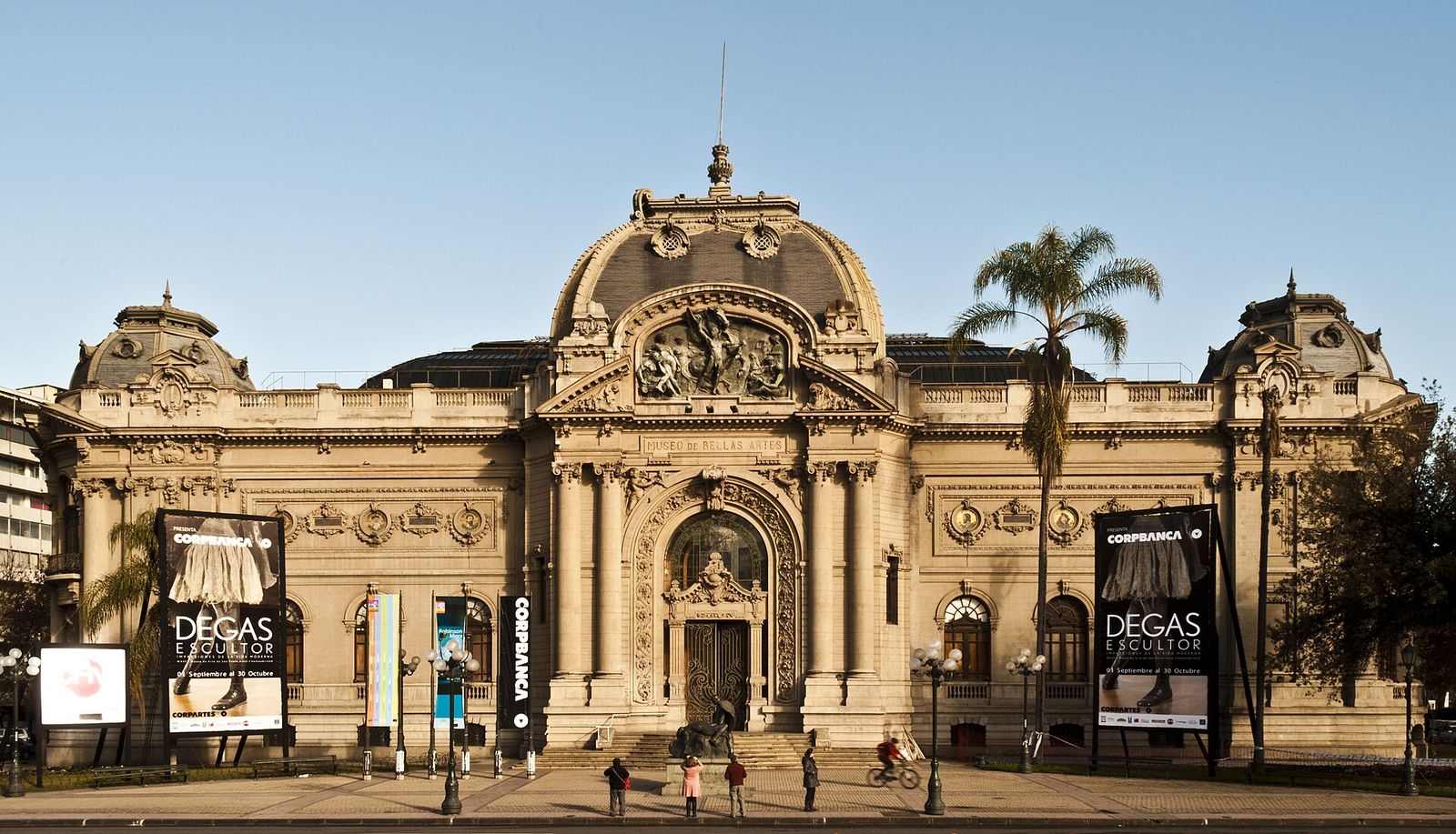
The best museums in Santiago Chile are the Museo Chileno de Arte Precolombino for the depth of its collection, the Museo de la Memoria y los Derechos Humanos for the weight of its subject, and the Museo Nacional de Bellas Artes for the building as much as the art. All three sit within a few Metro stops of each other, two of the three are free, and every one of them closes on Monday — which is the single most important thing to know before you plan a cultural day here.
Santiago museums at a glance
Hours and prices below were checked in September 2026 against each institution’s own site. Chilean museums change hours seasonally and close for public holidays, so confirm before a long trip across the city.
| Museum | Hours | Price | Time needed | Metro |
|---|---|---|---|---|
| Museo Chileno de Arte Precolombino | Tue–Sun 10:00–18:00, last entry 17:15 | CLP 12,000 foreign visitors | 2 h | Plaza de Armas |
| Museo de la Memoria y los Derechos Humanos | Tue–Sun 10:00–18:00, last entry 17:30 | Free | 2–3 h | Quinta Normal (L5) |
| Museo Nacional de Bellas Artes | Tue–Sun 10:00–18:30 | Free | 1–1.5 h | Bellas Artes (L5) |
| MAC Parque Forestal | Tue–Sun 10:30–17:30 | Free | 45 min | Bellas Artes (L5) |
| Museo Nacional de Historia Natural | Tue–Sat 10:00–17:30, Sun 11:00–17:30 | Free | 1.5 h | Quinta Normal (L5) |
| La Chascona (Neruda’s house) | Tue–Sun 10:00–18:00, to 19:00 Jan–Feb | CLP 11,000 | 1 h | Baquedano (L1/L5) |
| Centro Cultural La Moneda | Exhibitions Tue–Sun 10:15–18:45 | Several galleries free | 1.5 h | La Moneda (L1) |
| Museo de la Solidaridad Salvador Allende | Tue–Fri 10:00–18:00, Sat–Sun 11:00–18:00 | Not published online | 1.5 h | República / Toesca |
| MAVI UC | Tue–Sun 10:00–18:00 | CLP 2,000 | 1 h | Universidad Católica (L1) |
| GAM | Plazas daily 09:00–21:00; galleries closed Mon | Free to wander | 1 h | Universidad Católica (L1) |
| Cementerio General | Daily 08:00–17:00 | Free | 1–2 h | Cementerios (L2) |
Two closures worth knowing before you plan anything. The Museo Histórico Nacional on the Plaza de Armas has been closed since 2 August 2026 for an expansion expected to run about three years — it is still listed as a top attraction in guidebooks and on aggregator sites, and people walk to it and find the doors shut. And nearly everything in this table closes on 1 January, 1 May, 18–19 September and 25 December.
If you would rather plan by area than by institution, the museums cluster tightly and our Santiago neighborhoods guide maps which barrio holds what.
Which museum should you visit if you only have time for one?
The Museo de la Memoria y los Derechos Humanos. It is free, it is well designed, and it is about the thing most visitors actually want to understand about Chile. If you would rather look at objects than confront recent history, make it the Museo Chileno de Arte Precolombino instead — the finest collection of its kind on the continent.
Those two answer different questions. The Precolombino tells you what was here for four thousand years before the Spanish arrived. The Memoria tells you what happened between 1973 and 1990 and why the country still argues about it. Between them you get more of Chile than any ten attractions on a hop-on bus route.
Which museum matches what you are interested in?
Santiago’s collections are specialised enough that picking by subject beats picking by ranking.
| If you care about | Go to | Cost | Why |
|---|---|---|---|
| Indigenous America | Museo Chileno de Arte Precolombino | CLP 12,000 | Best collection of its kind on the continent |
| Recent political history | Museo de la Memoria | Free | The defining Chilean museum experience |
| Chilean painting | Museo Nacional de Bellas Artes | Free | 1910 palace, strong temporary programme |
| Contemporary art | MAC Parque Forestal, MAVI UC | Free / CLP 2,000 | Local and Latin American work |
| Twentieth-century masters | Museo de la Solidaridad Salvador Allende | Ask at the desk | Picasso, Miró, Matta, and an extraordinary backstory |
| Natural history and dinosaurs | Museo Nacional de Historia Natural | Free | Whale skeleton, 1875 building, good for children |
| Literature and poetry | La Chascona | CLP 11,000 | Neruda’s Santiago house, hour-long visit |
| Architecture | GAM, CCLM, the Cementerio General | Free | Three eras of Chilean building in one day |
| Design and photography | Centro Cultural La Moneda | Several galleries free | Rotating programme across six spaces |
| Social history | Cementerio General | Free | Two centuries of Chile in one walled city |
The pattern worth noticing: the free museums are not the consolation prizes here. Bellas Artes, MAC, the Memoria and Natural History are four of the city’s best institutions and none of them charges, which is unusual for a capital of this size.
Museo de la Memoria y los Derechos Humanos
Free, Tue–Sun 10:00–18:00 with last entry at 17:30, Metro Quinta Normal on Line 5 (checked September 2026). Allow two to three hours; most people stay longer than they planned.
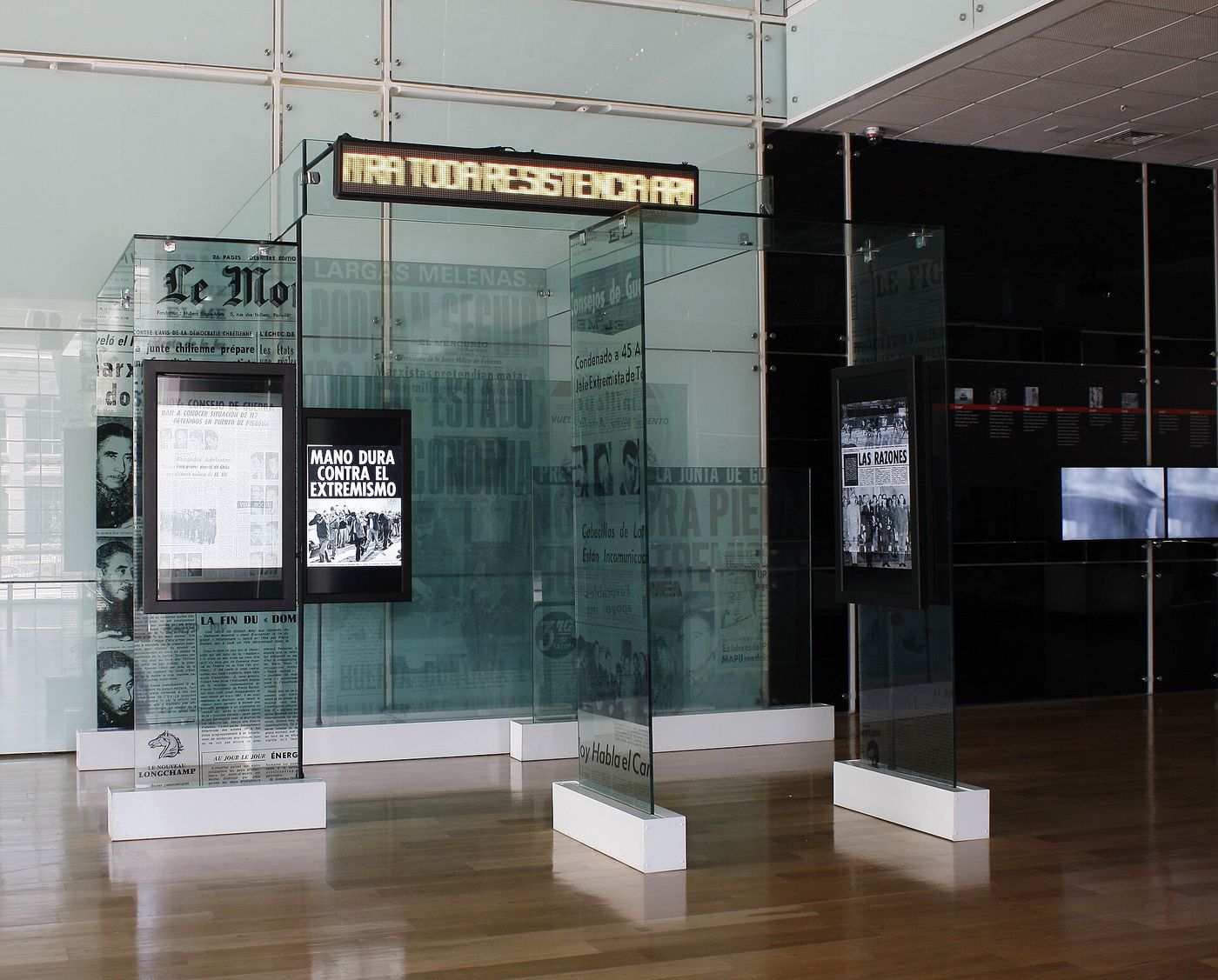
The museum documents the human rights violations committed under the military government between 1973 and 1990 — the coup, the disappearances, the detention centres, the international solidarity campaigns and the eventual return to democracy. It does this with photographs, letters, recorded testimony, court documents and a wall of portraits of the dead and disappeared that runs several storeys high.
How to approach it. The permanent exhibition is largely chronological across three floors and is designed to be walked in order. Signage is in Spanish, with an English audio guide available; take it, because the detail carries the meaning. Some of the testimony is very hard, and there are rooms dealing explicitly with torture. There is no sensationalism in the presentation, but there is no softening either.
With children. Older teenagers, yes, with a conversation beforehand. Younger children, no — and the museum’s own signage says so more diplomatically.
Pair it with. The Museo Nacional de Historia Natural in Quinta Normal park, two minutes’ walk away and free, if you want something lighter afterwards. Or simply walk in the park, which is what most people need.
One note on framing: Chileans hold genuinely different views about this period, and you will meet people who dispute the museum’s emphasis. Treat it as a national conversation still in progress rather than a settled matter, and be careful about how you raise it with people you have just met.
Museo Chileno de Arte Precolombino
Tue–Sun 10:00–18:00 with last admission at 17:15, closed Monday. Foreign visitors were charged CLP 12,000 (about USD 13) on the museum’s tickets page in September 2026, against CLP 3,000 for residents — the site is inconsistent about this, so check what you are being charged at the desk.
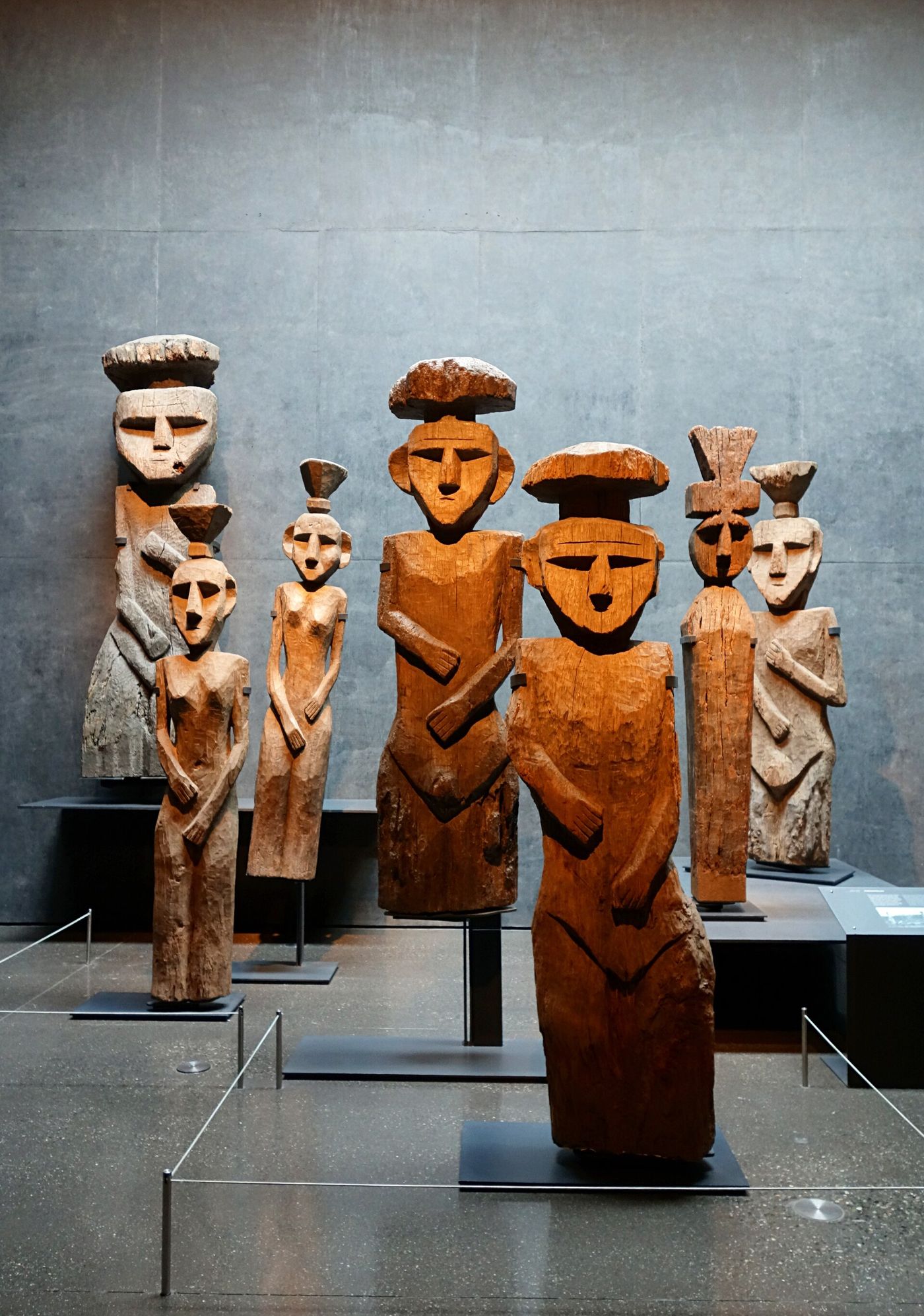
The collection covers the Americas from Mesoamerica to Patagonia: Chinchorro mummies from the Atacama that predate the Egyptian ones, Mapuche silverwork, Andean textiles that are among the finest surviving anywhere, Moche ceramics, Rapa Nui carvings. The Chile Antes de Chile gallery in the basement is the best single room, organised by region rather than chronology.
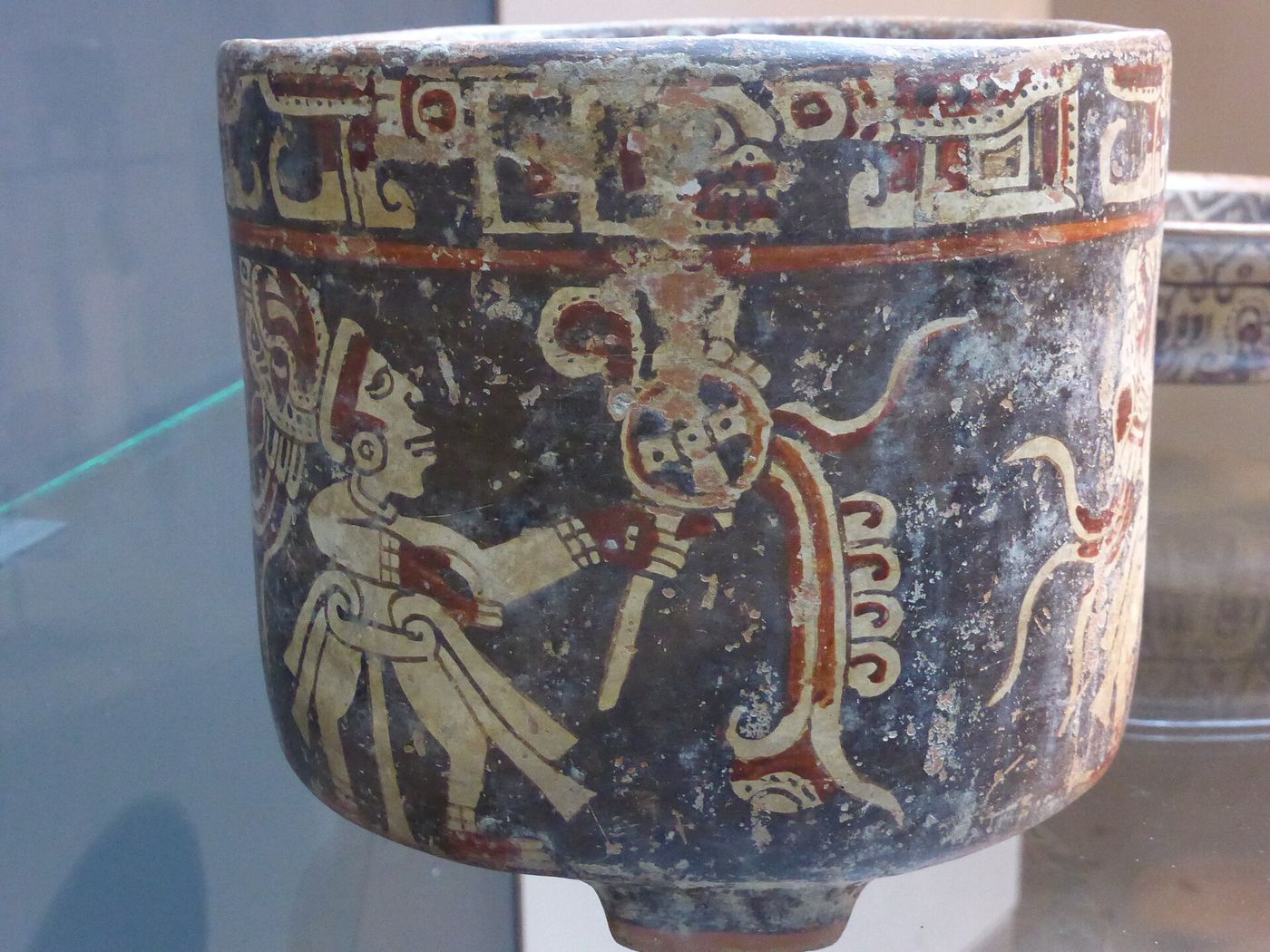
Is it worth CLP 12,000? For most visitors, yes — this is a genuinely world-class collection in a beautifully restored colonial customs house, and two hours here teaches you more about the continent than a week of churches. If you are travelling on a tight budget and have already committed to a paid Neruda house, this is the better of the two.
Practical points. The building is two minutes from Plaza de Armas. The labelling is bilingual and unusually good. Photography rules vary by gallery. It is small enough to see properly in two hours and dense enough to reward three.
The free museums: Bellas Artes, MAC, Natural History
Santiago has an unusually generous free museum offering, and three of the best cost nothing.
Museo Nacional de Bellas Artes occupies a 1910 palace in Parque Forestal with a spectacular glass-roofed central hall — the building alone justifies the visit. The permanent collection covers Chilean painting and sculpture from the colonial period onwards, and the temporary shows are frequently better than the permanent hang. Tue–Sun 10:00–18:30, free.
MAC Parque Forestal, the Museum of Contemporary Art, shares the same building through a different entrance and is run by the Universidad de Chile. It was founded in 1947 and shows contemporary Chilean and Latin American work. Tue–Sun 10:30–17:30, free. The two together make a comfortable two-hour morning.
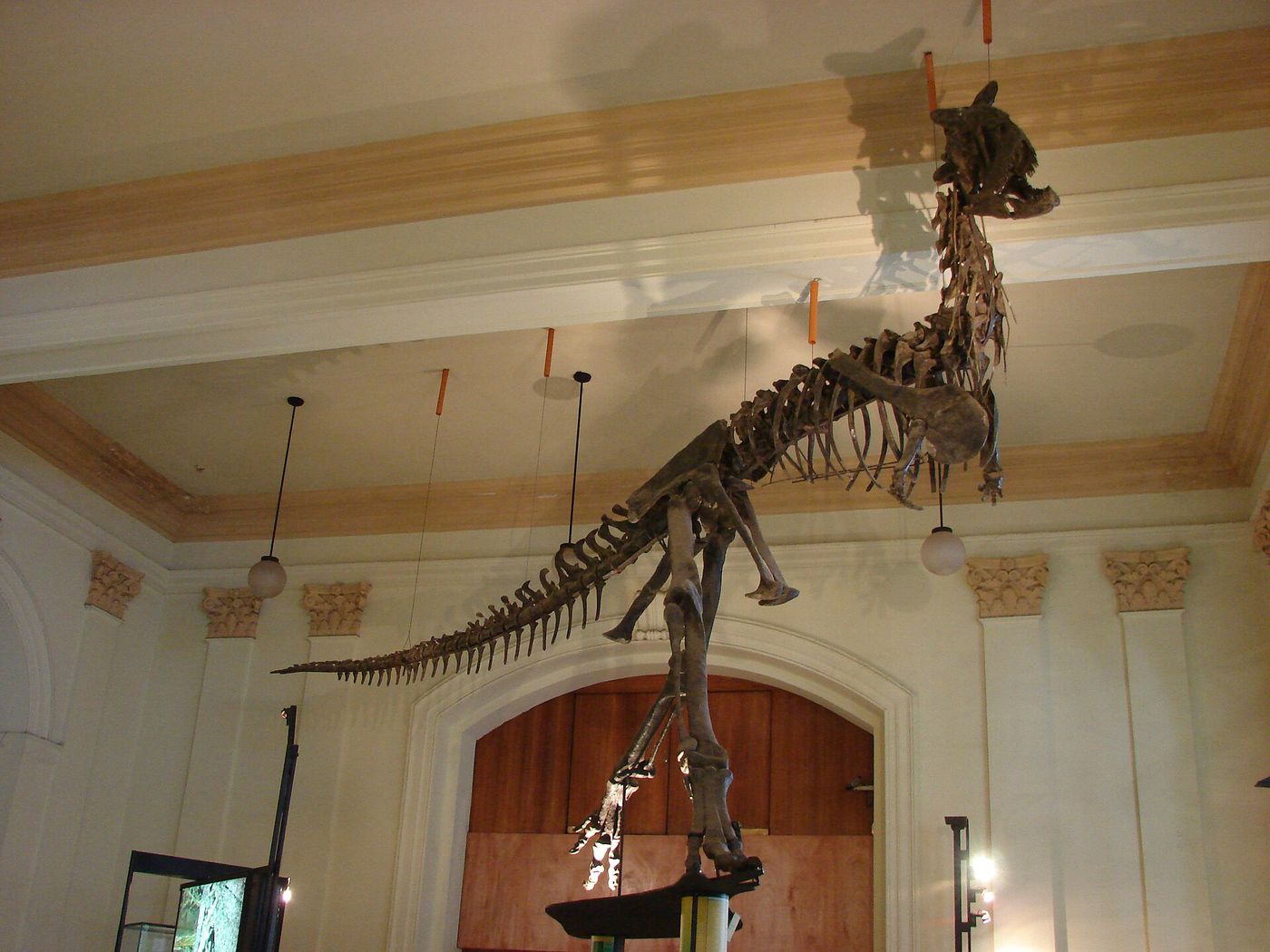
Museo Nacional de Historia Natural sits in Quinta Normal park in a neoclassical building from 1875 — the blue whale skeleton in the main hall is the thing children remember. Tue–Sat 10:00–17:30, Sun 11:00–17:30, free. The second floor was closed in September 2026, which cuts the visit down somewhat; ask at the entrance before committing an afternoon.
All three close on Monday.
La Chascona and the Neruda question
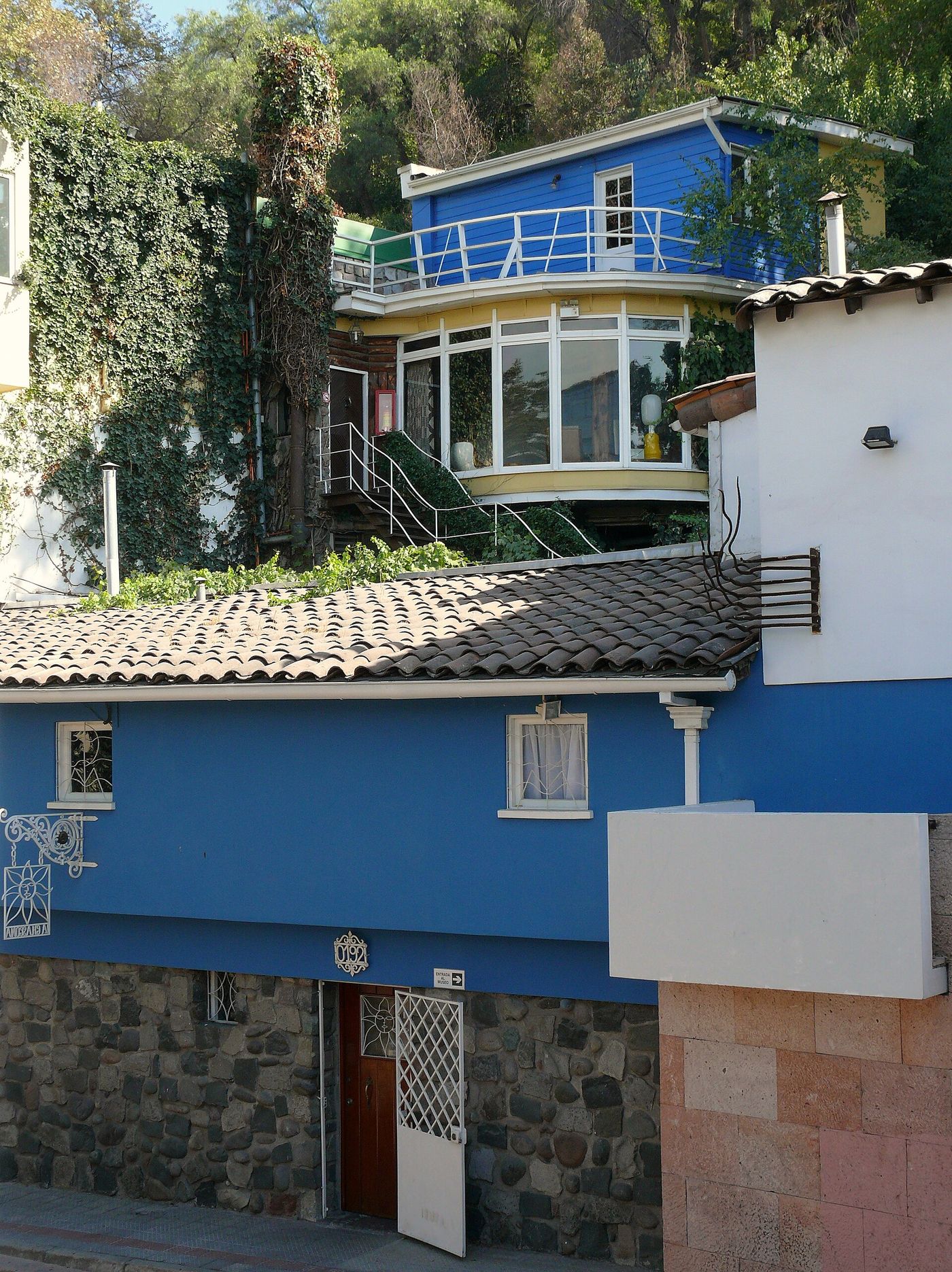
Pablo Neruda built three houses, and Santiago has one of them. La Chascona sits at the foot of Cerro San Cristóbal in Bellavista, named for the wild hair of Matilde Urrutia, the woman he built it for while still married to someone else. It is Tue–Sun 10:00–18:00, extended to 19:00 in January and February, at CLP 11,000 (about USD 12), with an audio guide in six languages and no advance booking needed. In September 2026 it was discounted to CLP 4,500 on Tuesdays (all checked September 2026).
The house is the point: built like a ship in sections up a hillside, with a dining room designed to look like a cabin and a bar Neruda ran himself. The audio guide is good and the visit takes about an hour.
The honest verdict: one Neruda house is enough. If your trip also takes in Valparaíso or Isla Negra, skip this one and see La Sebastiana or the Isla Negra house instead — both are larger, better sited and tell the same story with more room. La Chascona is the smallest of the three and the most urban. If Santiago is your only stop, it is a pleasant hour and worth the money on a discounted Tuesday.
The Neruda estate is complicated in other ways too. He was a Nobel laureate, a communist senator, a diplomat, and by his own written account a man who committed a rape in Ceylon in the 1920s. Chilean feminist groups have campaigned against the naming of public spaces for him. The house museums do not engage with this much. You may want to know it before you go.
Centro Cultural La Moneda and the palace above it
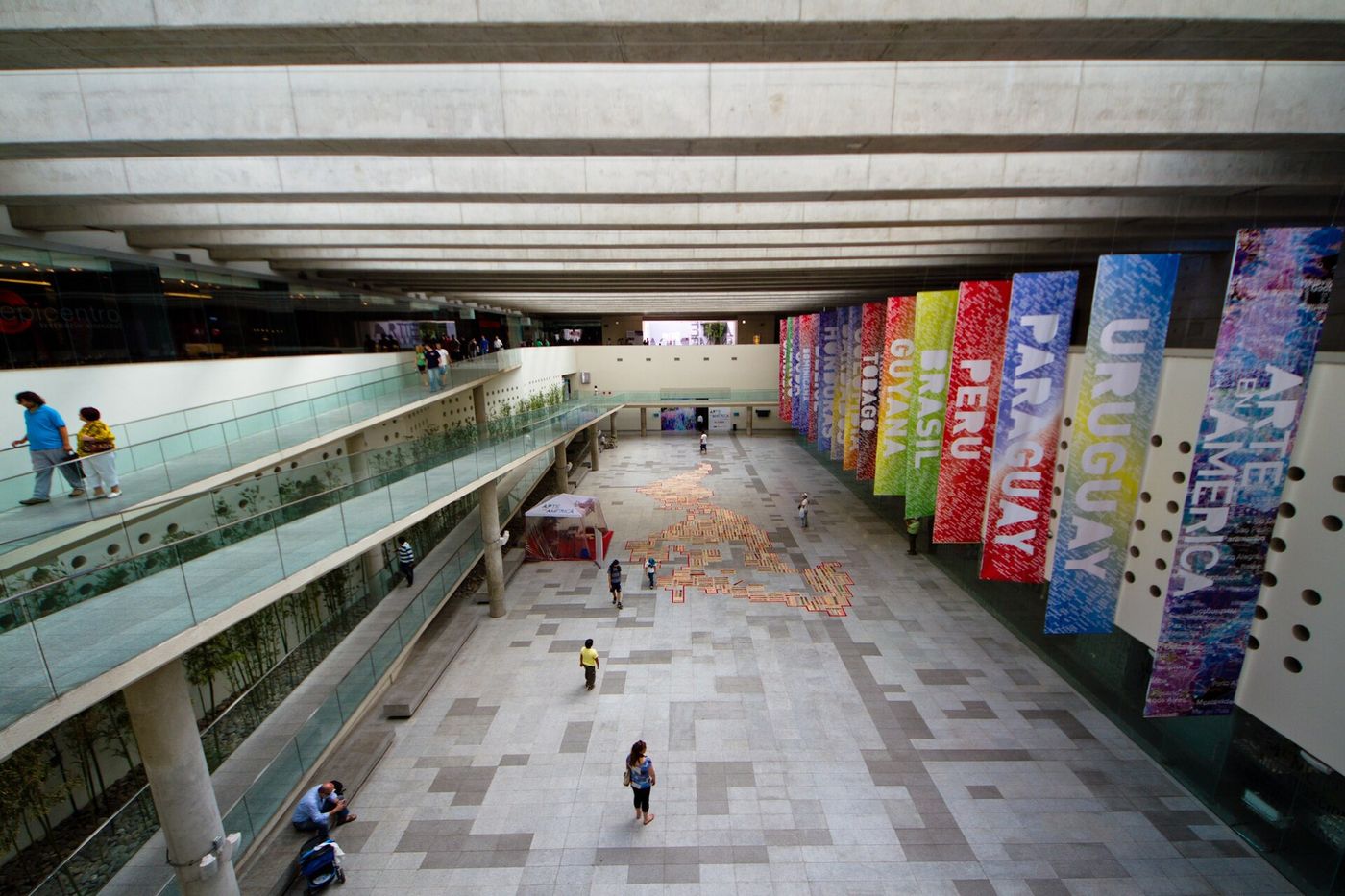
Beneath the Plaza de la Ciudadanía in front of the presidential palace, the Centro Cultural La Moneda is the city’s most active exhibition space. Galleries run Tue–Sun 10:15–18:45, with shops and restaurants open daily 10:00–19:00. It closes on 1 January, 1 May, 18–19 September and 25 December.
Its programme runs several exhibitions at once across separate galleries, and a good number of them are free — in the 2026 season the Andes, Cero, Patrimonio, Fotografía and Diseño galleries were all showing free exhibitions, with paid shows in the Sala Pacífico and Sala Andes. Check what is on before you go rather than what it costs; the quality varies more than the price does.
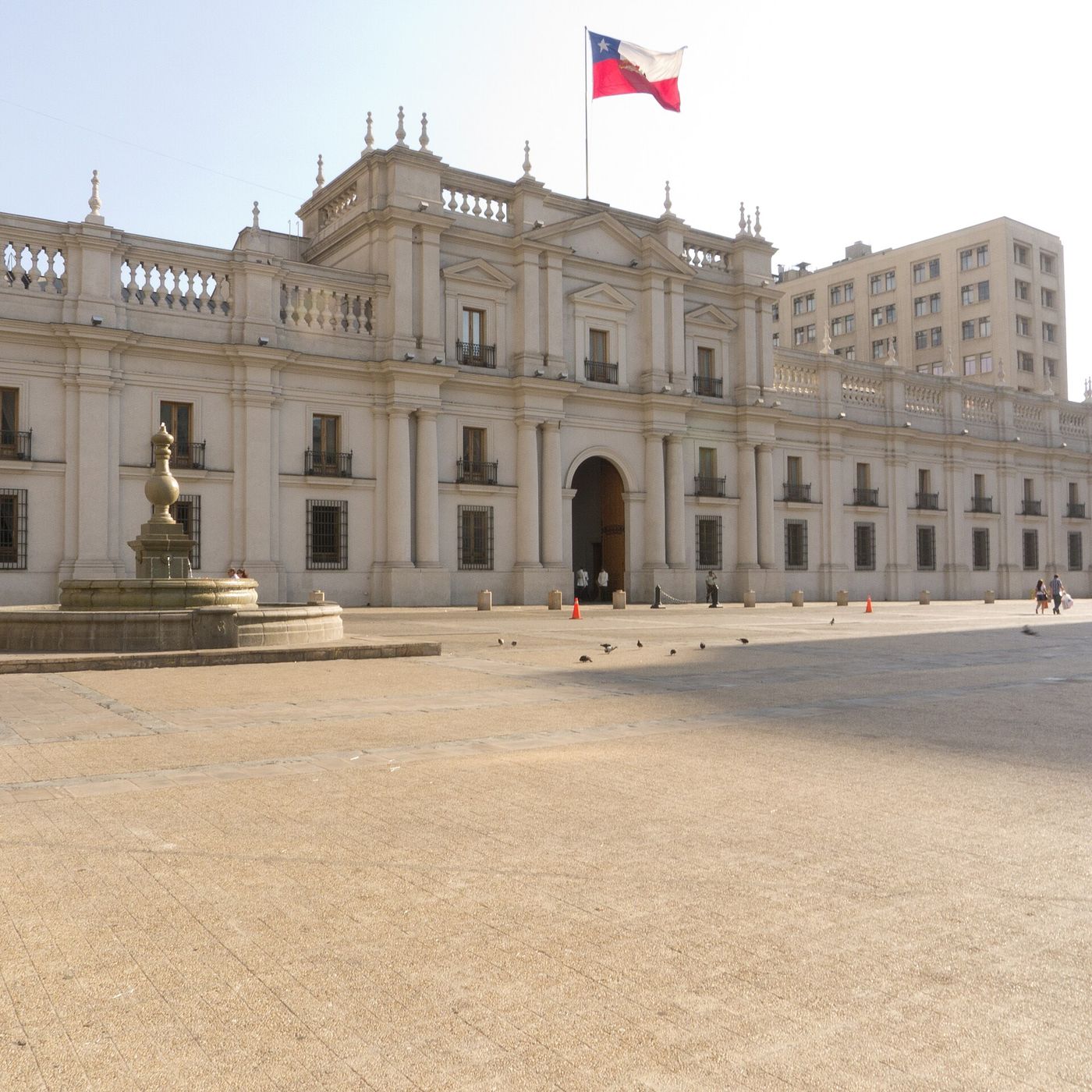
Palacio de La Moneda itself, directly above, offers free guided visits. You must register in advance at visitaspatrimonio.presidencia.cl, bring photo ID and arrive fifteen minutes early. The changing of the guard takes place at 10:00 on alternate days in the Plaza de la Constitución — in 2026 on even-numbered dates in February, March, June, July, September and October, and on odd-numbered dates in January, April, May, August, November and December. It can be cancelled without notice.
This is also where Salvador Allende died on 11 September 1973 when the palace was bombed. The building was restored and the history is not hidden, but it is not foregrounded either; the Museo de la Memoria is where that story is told.
Which museums are open on Monday?
Almost none. The Cementerio General (daily 08:00–17:00), the GAM’s outdoor plazas (daily 09:00–21:00), Centro Cultural La Moneda’s shops and restaurants, and the Cerro Santa Lucía and Parque Metropolitano hills. Every major museum in this guide closes on Monday, and so do the teleférico and the zoo.
This catches out an enormous number of visitors, so it is worth planning around deliberately. A good Monday in Santiago looks like this:
- Morning: Mercado Central and La Vega Central, both open, both better in the morning anyway.
- Late morning: walk the historic centre — Plaza de Armas, the Cathedral, Paseo Ahumada, Iglesia San Francisco, and the París-Londres cobbled loop.
- Afternoon: Cerro Santa Lucía, or the Cementerio General, which is genuinely one of the city’s great sights and open every day.
- Late afternoon: Barrio Italia’s open half, or Barrio Yungay’s murals.
- Evening: Bellavista or Lastarria for dinner.
Note that the funicular up Cerro San Cristóbal runs a reduced Monday schedule from 13:00 and closes entirely on the first Monday of the month, while the teleférico does not run on Mondays at all. If the plan is the hill, walk it.
What about the cultural centres and the street?
Santiago’s cultural life is not all in museums, and some of the best of it is free and outdoors.
GAM (Centro Gabriela Mistral) on the Alameda is a vast concrete and weathered-steel complex built for a 1972 UNCTAD conference, later used by the military government, and now the city’s main performing arts centre. The outdoor plazas are open daily 09:00–21:00 and are a good place to sit; the galleries close on Monday. There is usually something on — theatre, dance, exhibitions, a book fair in the concourse.
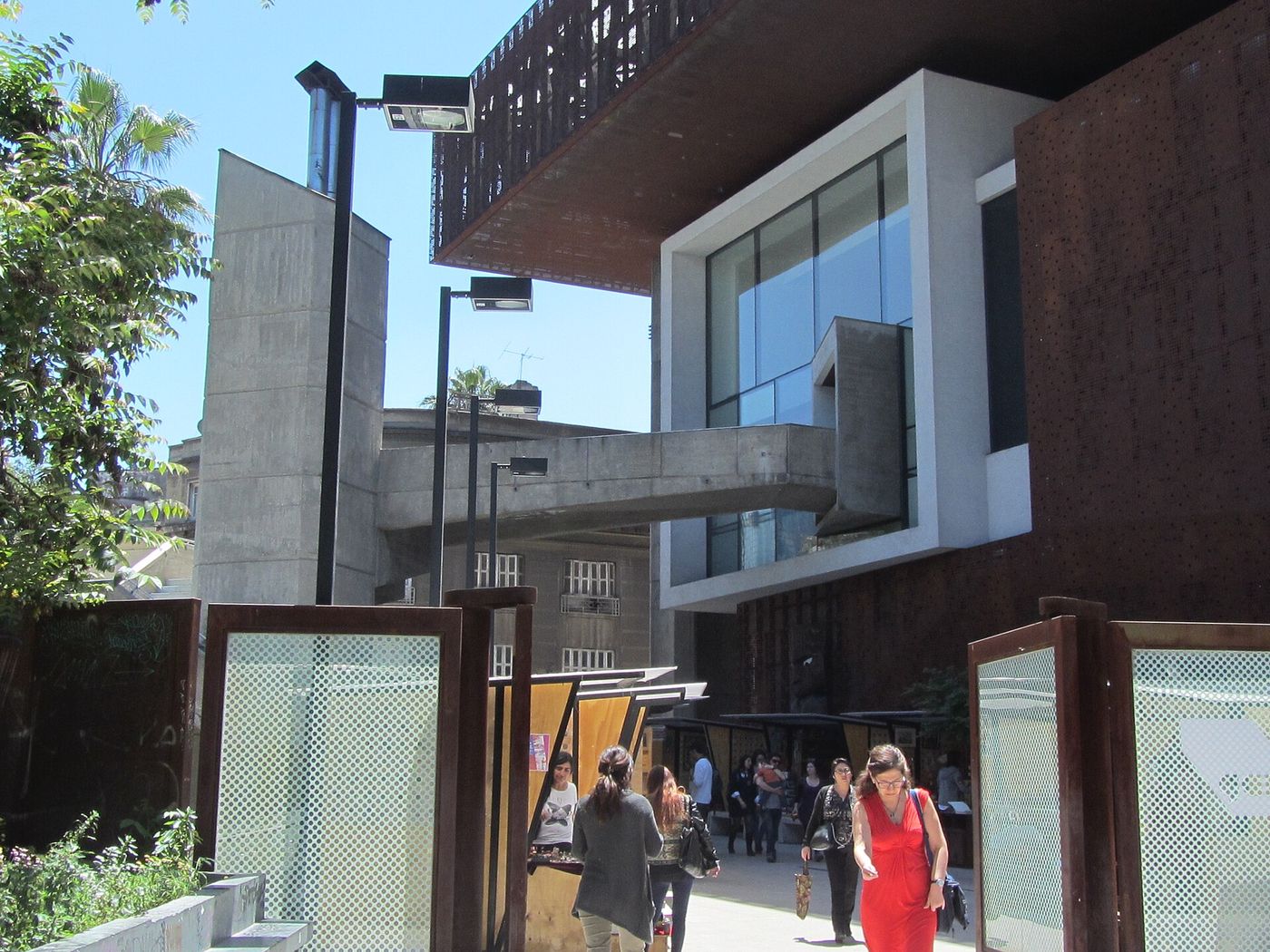
MAVI UC in Lastarria is a small, sharp contemporary art museum, Tue–Sun 10:00–18:00, CLP 2,000 (about USD 2), free on the last Sunday of the month. An hour, and a good one.
Museo de la Solidaridad Salvador Allende near Metro República holds an extraordinary collection — works donated by Picasso, Miró, Tàpies, Matta and hundreds of other artists in solidarity with Allende’s government, then hidden, exiled and reassembled after the dictatorship. Tue–Fri 10:00–18:00, Sat–Sun 11:00–18:00. The museum does not publish ticket prices on its site, so bring cash and ask. The story of the collection is as interesting as the collection.
Street art is a genuine cultural attraction here rather than a consolation prize. Barrio Yungay, Barrio Brasil, Bellavista and the walls along the Mapocho carry large-scale commissioned murals as well as the usual tagging. It is free, it is everywhere, and a walking tour of Yungay’s murals is a better use of two hours than several ticketed museums.
Cementerio General, open daily 08:00–17:00, Metro Cementerios on Line 2. Presidents, poets, a memorial to the disappeared, and mausoleum avenues that function as a record of Chilean social history. It is not morbid; it is one of the most rewarding walks in the city, and it is open on Mondays.
The churches and buildings worth stopping for
Not everything cultural in Santiago has a ticket desk, and some of the best of it is architecture you walk past.
Iglesia y Convento de San Francisco on the Alameda is the oldest surviving building in the city, begun in the 1580s, with adobe walls thick enough to have survived four centuries of earthquakes. The attached Museo Colonial holds a series of fifty-four 17th-century paintings on the life of Saint Francis — one of the largest and best-preserved colonial painting cycles in South America. The cloister garden is a genuinely peaceful place five metres from a six-lane road.
The Catedral Metropolitana on the Plaza de Armas is free, open through the day, and worth ten minutes for the scale of the nave and the marble work. It is a working cathedral, so be quiet during services.
Correo Central, also on the Plaza de Armas, is the old post office with a glass-roofed hall inside — go in, look up, leave.
Estación Mapocho, at the north edge of the centre, is a 1910s railway terminus turned cultural centre, with an iron and glass vault that was fabricated in Belgium and shipped over. There is usually a book fair, a concert or an exhibition in it.
GAM’s exterior, mentioned below, is a piece of political history as much as architecture: built in under a year for a 1972 international conference, appropriated by the military government as its headquarters after 1973, burned in 2006, and rebuilt as a public cultural centre.
Barrio Concha y Toro and París-Londres are two small 1920s pockets of Bauhaus, Art Deco and neo-colonial housing that take twenty minutes each and cost nothing.
Street art: the free museum
Santiago’s mural scene is serious work rather than decoration, and in Barrio Yungay and Barrio Brasil it is the reason to walk the streets at all. Yungay’s residents run an active heritage movement that has commissioned large-scale pieces on gable ends and corner shops, and the result is a neighbourhood-sized outdoor gallery. Bellavista has a denser, scrappier version of the same thing, with Neruda’s face on a good proportion of the walls.
Three routes that work:
- Yungay, starting at Plaza Yungay and working outward along Compañía and Libertad. Allow ninety minutes. Combine it with the Museo de la Memoria, ten minutes’ walk west.
- Bellavista, along Constitución, Dardignac and the lanes towards Pío Nono. Thirty minutes, and it pairs with La Chascona.
- The Mapocho embankment, where large commissioned works face the river along stretches of the Parque de los Reyes.
Guided street art walks exist and are usually good value, because the context — who painted it, what it refers to, which pieces are political — is the part you cannot get from looking. If you would rather do it alone, go in daylight and keep your phone in a pocket rather than in your hand; these are ordinary working neighbourhoods, not curated tourist zones.
How much should you budget for museums?
Less than almost any comparable capital. Santiago’s major national museums are free, and the paid ones are modest by European or North American standards.
| If you visit | Cost (CLP) | Approx. USD |
|---|---|---|
| Memoria + Bellas Artes + MAC + Natural History | 0 | 0 |
| Precolombino (foreign visitor) | 12,000 | 13 |
| La Chascona | 11,000 (4,500 on discounted Tuesdays) | 12 (5) |
| MAVI UC | 2,000 | 2 |
| CCLM paid exhibition | Varies by show | — |
| A full week of culture, paying for two ticketed sites | ~25,000 | ~26 |
Converted at roughly CLP 950 to USD 1, checked September 2026. Free entry also tends to come with free temporary exhibitions, which is unusual — the MNBA in particular runs major shows at no charge.
Two money notes. Small museums do not all take cards, so carry cash. And the resident-versus-foreigner pricing at the Precolombino is not a scam; it is standard practice at several Chilean cultural institutions and is applied openly.
A two-day culture itinerary
If museums are the point of your trip, this is the sequence that works, built around the Monday closures and the walking distances.
Day one, the centre. Start at the Precolombino at 10:00, when it opens and before the groups arrive. Walk to Plaza de Armas and the Cathedral, then south to La Moneda for the Centro Cultural, with lunch in the CCLM restaurants or at a picada on Calle Nueva York. In the afternoon walk east through Parque Forestal to the Museo Nacional de Bellas Artes and MAC, then finish in Lastarria — MAVI if you still have appetite, GAM’s plazas if you do not. Dinner in Lastarria or Bellavista.
Day two, the west. Metro Line 5 to Quinta Normal. Museo de la Memoria first, at opening, while you are fresh — it is not a museum to attempt tired. Walk into Quinta Normal park for lunch and the Museo Nacional de Historia Natural if you want it. In the afternoon, walk the Barrio Yungay murals, or take Line 2 to Cementerios for the Cementerio General. Finish with La Chascona in Bellavista if Neruda matters to you, or skip it and go up the hill instead.
Do not try to do the Memoria and the Precolombino on the same day. They are both demanding in different ways and the second one gets a tired visitor.
Our Santiago itineraries guide sets out the broader trip structures, and things to do in Santiago covers the non-museum attractions these pair with.
How accessible are Santiago’s museums?
Better than the city’s pavements, which is a low bar but a real improvement. The newer and recently renovated institutions — the Museo de la Memoria, Centro Cultural La Moneda, GAM — were built or rebuilt with step-free access, lifts and accessible toilets. The 19th and early 20th-century buildings are more mixed: Bellas Artes has a lift but the grand entrance is up steps, and the Museo Nacional de Historia Natural’s upper floors are harder work.
The things that most often cause trouble:
- Getting there. Pavements in the historic centre are uneven, and kerb cuts are inconsistent. Not every Metro station has a lift; check the station rather than the line.
- Old buildings. The Precolombino occupies a converted colonial customs house. It has been adapted, but circulation is tighter than a purpose-built museum.
- La Chascona. Built up a hillside in stepped sections. It is not step-free and cannot easily be made so.
- Cobbles. Lastarria, París-Londres and Barrio Concha y Toro are all cobbled.
Most institutions will help if you call ahead, and several offer free entry for a companion. Ask specifically rather than generally: “is there a lift to the second floor” gets a more useful answer than “are you accessible”.
Practical tips for visiting
A handful of things that make a museum day in Santiago go better.
Go at opening. Chilean museums fill up from late morning with school groups, particularly the Memoria and the Natural History museum. Arriving at 10:00 buys you an hour of relative quiet.
Carry cash. The free museums cost nothing, obviously, but the smaller paid ones do not all take foreign cards reliably, and the Museo de la Solidaridad does not publish prices at all.
Bags. Larger museums ask you to check backpacks. Cloakrooms are free and usually quick, but they close before the museum does.
Language. English labelling is good at the Precolombino and the Memoria, patchy at Bellas Artes, and largely absent at the smaller institutions. Audio guides are worth the money where they exist.
Photography. Generally allowed without flash, but the rules change by gallery and by temporary exhibition. Look for the sign rather than assuming.
Timing around the closures. Monday is the dead day. The second dead period is 18–19 September, when the country stops for Fiestas Patrias and almost every institution in this guide shuts. The first week of January and the days around 25 December are also thin.
Pace. Santiago’s museums are small and concentrated rather than vast. Two in a day with a long lunch between them is a much better experience than four in a forced march — and the things to do in Santiago guide has the parks, markets and hills that make good breaks between them.
What is not worth it?
The house rule applies here too, so, plainly:
- The Museo Histórico Nacional. Closed since August 2026 for roughly three years. It is still in every guidebook. Do not walk there.
- Three Neruda houses. One is enough unless you have a specific literary interest. If you are also going to Valparaíso, save it for La Sebastiana.
- Paying for a museum pass. Santiago does not have a pass worth buying, because the best museums are already free.
- A guided museum tour at the Precolombino. The labelling is excellent and bilingual. Save the money.
- Doing four museums in a day. The city’s museums are small and intense rather than sprawling. Three is a full day; two plus a walk is a better one.
- The Sala Pacífico show sight unseen. CCLM’s paid exhibitions vary considerably in quality. Look at what is actually on before buying.
How does Santiago compare as a museum city?
Honestly: it is not Mexico City or Buenos Aires, and it does not pretend to be. What Santiago has is a small number of genuinely excellent institutions rather than a deep bench, and two of them — the Precolombino and the Memoria — are as good as anything on the continent in their fields.
Where it wins. Cost, first: four of the best museums here are free, which is not true of Buenos Aires or São Paulo. Concentration, second: you can walk between six worthwhile institutions in the centre in a morning, which you cannot do in Mexico City. And a specific strength in pre-Columbian material and in human rights memorial work, both of which are world class.
Where it falls short. There is no encyclopaedic museum on the scale of the Museo Nacional de Antropología. The Museo Histórico Nacional, which would have been the country’s narrative museum, is closed until roughly 2029. Several collections are housed in buildings that constrain what can be shown. And the temporary exhibition programme, while active, is smaller than in cities with more international loan traffic.
What that means for a trip. Give Santiago’s museums a day and a half rather than three days, and spend the surplus on the things this city does better than its neighbours — the hills, the Cajón del Maipo, the Maipo Valley wineries. Culture here is a strong supporting act rather than the headline. Our Santiago itineraries guide balances those against each other by trip length.
One last piece of context worth carrying into any of these buildings. Chile’s cultural institutions are young in their current form, several of them rebuilt or reopened since the return to democracy in 1990, and they carry the arguments of that period visibly. The Memoria is the obvious example, but the Solidaridad collection, the GAM building and even the framing at La Moneda are all shaped by it. That is what makes museum-going here more interesting than the collection sizes would suggest.
Frequently asked questions
Are museums free in Santiago?
Many of the best ones are. The Museo de la Memoria, Museo Nacional de Bellas Artes, MAC and the Museo Nacional de Historia Natural all charge nothing, as do several galleries at Centro Cultural La Moneda. The main paid exceptions are the Precolombino at CLP 12,000 for foreign visitors and La Chascona at CLP 11,000.
Are Santiago museums open on Monday?
Almost all of them close on Monday, along with the teleférico and the zoo. The exceptions are outdoor and free: the Cementerio General, GAM’s plazas, Cerro Santa Lucía, Parque Metropolitano and the markets. Plan Monday as a walking, market and cemetery day.
How much is the Precolombino museum?
Foreign visitors were charged CLP 12,000, about USD 13, on the museum’s tickets page in September 2026, with CLP 3,000 for residents. The site has been inconsistent about this, so confirm at the desk. It is open Tuesday to Sunday, 10:00 to 18:00, with last admission at 17:15.
Is the Museum of Memory worth visiting?
Yes, and it is the one museum in Santiago most worth making time for. It is free, thoughtfully designed, and it explains the period of Chilean history that shapes the country’s present. Allow two to three hours, take the English audio guide, and do not attempt it at the end of a long day.
Which Neruda house should I visit?
If Santiago is your only stop, La Chascona in Bellavista. If you are also seeing Valparaíso, go to La Sebastiana instead; if you are heading to the coast, Isla Negra is the best of the three. Visiting all three in one trip is repetitive — they tell a very similar story.
Do Santiago museums close for holidays?
Yes, and comprehensively. Expect closures on 1 January, 1 May, 18 and 19 September for Fiestas Patrias, and 25 December. The Fiestas Patrias closure is the one that catches visitors out, because it shuts most of the city for two days in the middle of a popular travel week.
How long do you need for Santiago’s museums?
Two days covers the essentials properly: the Precolombino and the Parque Forestal museums on one day, the Museo de la Memoria and the west of the city on another. One day means choosing between pre-Columbian art and recent history. A week allows the smaller collections — MAVI, the Solidaridad, the Cementerio General.
Where are Santiago’s museums located?
Mostly in two clusters. The historic centre around Plaza de Armas and La Moneda holds the Precolombino and the Centro Cultural La Moneda; Parque Forestal and Lastarria hold Bellas Artes, MAC and MAVI. The Museo de la Memoria and the Natural History museum are together in the west at Quinta Normal on Line 5.
Two of the museums above are genuinely good with children — the free Museo Nacional de Historia Natural in Quinta Normal and, for older ones, the Precolombino — while the Museo de la Memoria is not appropriate for younger visitors. For the full family picture, including the interactive science museum that is the best wet-day answer in the city, see our guide to Santiago with kids.
Two calendar notes worth carrying into any museum plan here. Every institution on this page closes on the major public holidays, including 18 and 19 September. And the last weekend of May is Día de los Patrimonios, when hundreds of normally closed buildings open free of charge. Our events and festivals calendar covers the dates and the booking windows.
Access varies sharply across these institutions. The Museo de la Memoria, Centro Cultural La Moneda and GAM are modern, lifted and step-free; Bellas Artes and the Precolombino are partly adapted; La Chascona, built in stepped sections up a hillside, is not. Our guide to accessible travel in Santiago goes through them one by one.
The city’s cultural calendar peaks in January, when the Festival Internacional Teatro a Mil takes over GAM, the independent spaces around Matucana and dozens of plazas across the comunas. If your trip lands in the Chilean summer, our Santiago a Mil festival guide explains how the programme is structured, what costs nothing, and how to pick shows that work without fluent Spanish.
Sources
- Museo Chileno de Arte Precolombino
- Museo de la Memoria y los Derechos Humanos
- Museo Nacional de Bellas Artes
- Museo de Arte Contemporáneo (MAC)
- Museo Nacional de Historia Natural
- Fundación Pablo Neruda — La Chascona
- Centro Cultural La Moneda
- Museo de la Solidaridad Salvador Allende
- Centro Gabriela Mistral (GAM)
- MAVI UC — Museo de Artes Visuales
- Visitas Patrimonio — Palacio de La Moneda tours
- Cementerio General de Santiago
- Visit Santiago — cultural spaces
- Chile Travel — historic centre
Image credits
| Photo | Credit |
|---|---|
| Museo Nacional de Bellas Artes (top of page) | SebasGZ, CC BY-SA 3.0, via Wikimedia Commons |
| Museo Chileno de Arte Precolombino | Velvet, CC BY-SA 4.0, via Wikimedia Commons |
| Museo de la Memoria y los Derechos Humanos | Unknown authorUnknown author, CC BY-SA 3.0, via Wikimedia Commons |
| Maya-Ulua vessel, Museo Precolombino | CARLOS TEIXIDOR CADENAS, CC BY-SA 4.0, via Wikimedia Commons |
| Museo Nacional de Historia Natural | Jason Quinn, CC BY-SA 3.0, via Wikimedia Commons |
| La Chascona | Marcelo Ois Lagarde, CC BY-SA 3.0, via Wikimedia Commons |
| Palacio de La Moneda | AndreaJS, CC BY-SA 3.0, via Wikimedia Commons |
| Centro Cultural La Moneda | Rodrigo Pizarro from Santiago, Chile, CC BY-SA 2.0, via Wikimedia Commons |
| Centro Gabriela Mistral (GAM) | Rodrigo Fernández, CC BY-SA 4.0, via Wikimedia Commons |