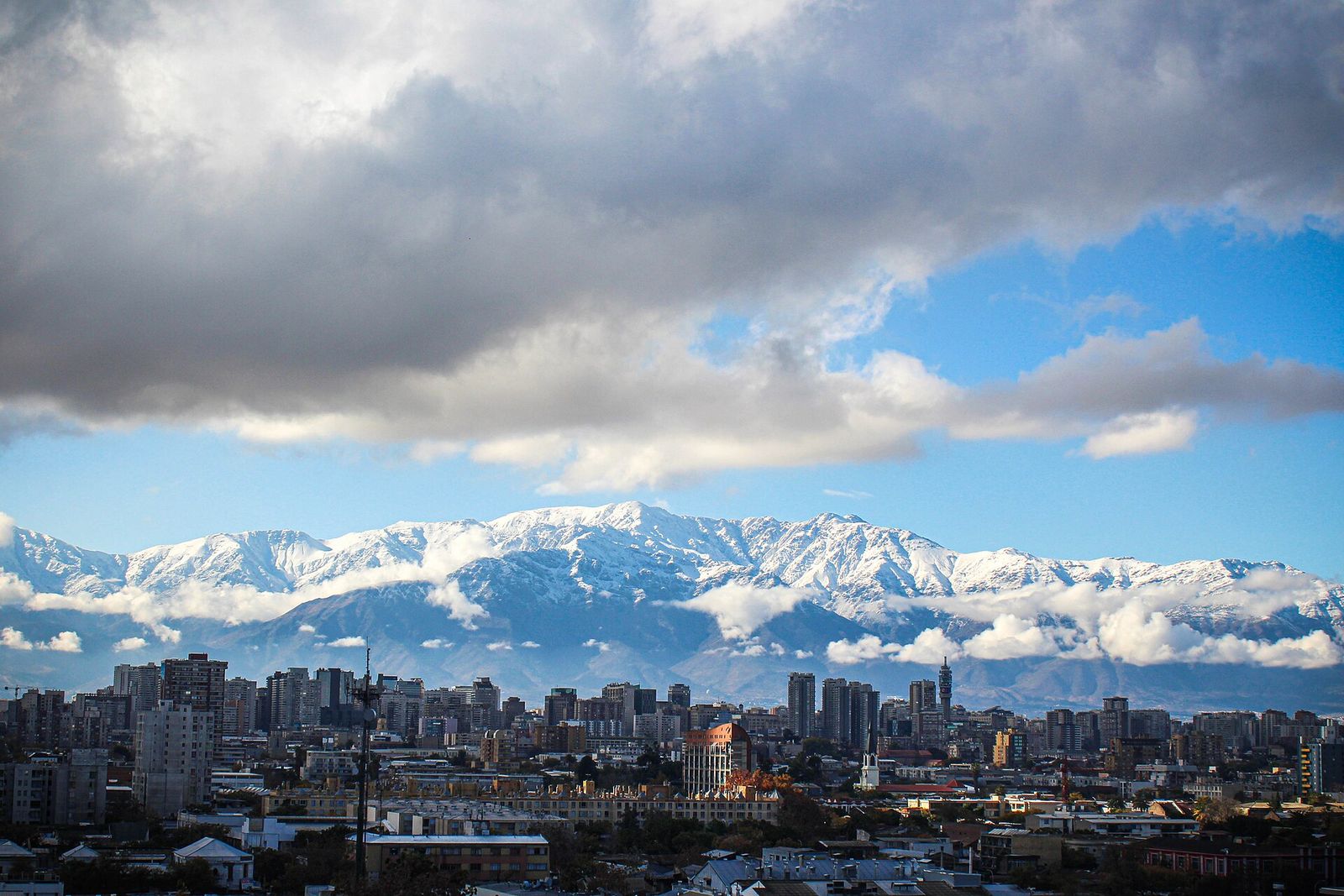
Santiago has a dry Mediterranean climate with hot, rainless summers and cool, damp winters. Santiago Chile weather by month runs from a January average high of 30.2°C (86°F) down to 14.6°C (58°F) in August, and almost all of the year’s 219 mm of rain falls between May and August. The other eight months are close to dry.
Those numbers come from the Dirección Meteorológica de Chile’s 1991-2020 normals for the Pudahuel station, next to the airport on the city’s western edge. They are the official baseline, and they are also only half the story: the basin traps winter smog, the Andes disappear for weeks at a time, and a 30°C average in January hides plenty of 35°C afternoons. This page gives you the data first and the consequences second. For the “when should I go” decision itself, the best time to visit guide weighs weather against crowds, prices and events.
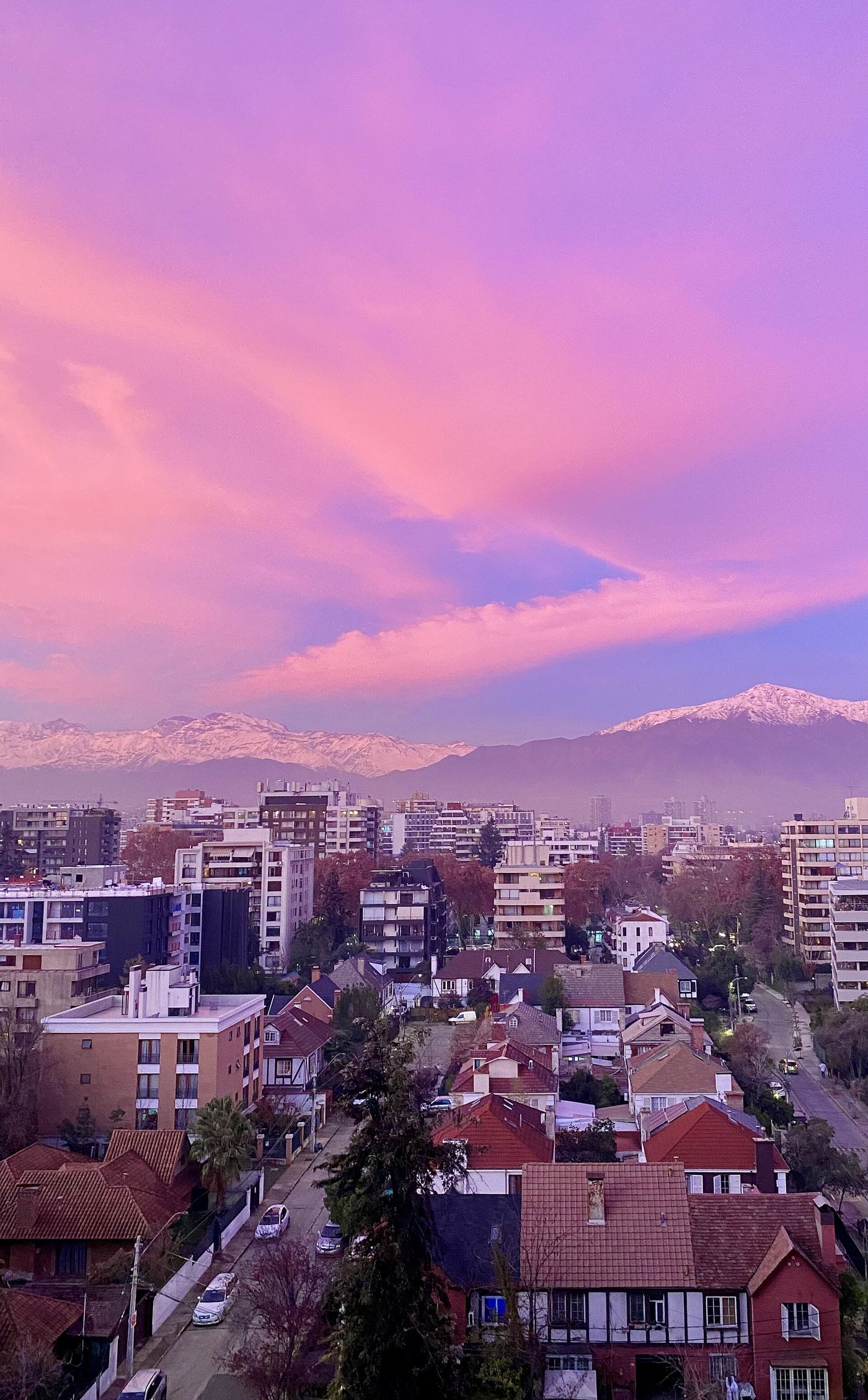
Santiago weather by month at a glance
| Month | Avg high | Avg low | Rain (approx.) | What it means |
|---|---|---|---|---|
| January | 30.2°C / 86°F | 12.4°C / 54°F | ~0 mm | Peak heat, zero rain, locals on holiday |
| February | 30.1°C / 86°F | 13.0°C / 55°F | ~0.3 mm | Same heat, emptier city, many kitchens shut |
| March | 28.6°C / 83°F | 11.4°C / 53°F | ~0.9 mm | Warm days, cool nights, harvest season |
| April | 25.7°C / 78°F | 9.5°C / 49°F | ~3.9 mm | The quiet sweet spot, first haze appears |
| May | 21.7°C / 71°F | 5.2°C / 41°F | ~12.9 mm | Rain starts, smog season starts with it |
| June | 17.3°C / 63°F | 3.9°C / 39°F | ~33.9 mm | Cold mornings, grey skies, ski lifts open |
| July | 15.0°C / 59°F | 3.5°C / 38°F | ~66.8 mm | Wettest month by a wide margin |
| August | 14.6°C / 58°F | 3.0°C / 37°F | ~38.3 mm | Coldest month on the normals, still wet |
| September | 18.5°C / 65°F | 4.9°C / 41°F | ~33.5 mm | Unstable, windy, Fiestas Patrias |
| October | 20.3°C / 69°F | 6.5°C / 44°F | ~16.7 mm | Clear air, green foothills, best all-round |
| November | 23.7°C / 75°F | 8.3°C / 47°F | ~8.3 mm | Warm and reliable, pre-summer |
| December | 27.6°C / 82°F | 11.1°C / 52°F | ~3.7 mm | Hot, dry, city still working |
Temperatures are Dirección Meteorológica de Chile 1991-2020 normals for Santiago Pudahuel (station 330021). The rainfall column is derived from the same page’s cumulative annual series, which totals 219.2 mm, so treat those figures as approximate monthly shares rather than published monthly normals.
Three things jump out of that table. Summer is not just dry, it is effectively rainless for three months. The temperature swing between day and night is enormous all year, often 18°C in summer, which is why evenings need a layer even in January. And August, not July, is the coldest month by mean maximum and mean minimum alike.
Summer in Santiago: December, January, February
Summer is hot, cloudless and completely predictable. Days run 28-30°C on average and regularly push past 34°C, nights drop to 11-13°C, and rain is close to a rounding error. The sun at 33° south with thin, dry air is strong from mid-morning to late afternoon, and shade is the difference between a good day and a bad one.
Plan summer days around the heat rather than against it. Do hills, markets and walking tours before 11:00, spend 13:00 to 17:00 indoors, in a park with trees or in a pool, and let the city come back to life after 19:00 when the terraces fill. Santiago’s summer evenings are the best thing about the season: 20°C at 21:00, long light until nearly 21:30 in January, and everyone outside.
December
Averages of 27.6°C by day and 11.1°C at night, with about 3.7 mm of rain across the whole month. December is summer without February’s emptiness: the city is still working, the Andes still carry snow on the high peaks, and the days are the longest of the year. Cerro San Cristóbal in the evening is at its best, and the outdoor season for the Parque Metropolitano pools is beginning. Christmas week goes quiet on the 24th and 25th, and prices start climbing as Chilean holidays approach.
What December is good for: everything outdoors, late. The Parque Metropolitano pools open for the season, terraces run until midnight, and the hills hold light past 21:00. What it is bad for: the 25th, when the city shuts almost completely, and the last week, when Chilean families start leaving and some kitchens close behind them. Pack for 27°C afternoons and 11°C nights in the same day, and book anything involving a table.
January
The hottest month, at 30.2°C average highs and essentially no rain. January is also when Santiago empties: Chileans head for the coast, and while that thins the traffic, it also closes neighborhood restaurants for weeks. Midday hill walks are genuinely unwise, and the shade-free stretches of Cerro Santa Lucía turn punishing. Water, hats and a plan that respects the afternoon matter more here than in almost any other month. Air is clean, evenings are long, and the Andes are clear.
January is also festival month. Teatro a Mil, the international theatre festival, takes over venues across the city, and La Chascona extends its hours to 19:00 through January and February (checked September 2026). If the heat is beating you, the standard local answer is to leave: the coast at Valparaíso and Viña del Mar runs far cooler, and the Cajón del Maipo gains altitude fast. Both are day trips, and both are covered in the day trips guide.
February
Statistically identical to January at 30.1°C and 13.0°C, but socially different. The first half of February is the deepest part of the Chilean holiday, and closures are at their peak. The second half refills as schools go back around the end of the month. If you want an empty, hot, cheap-feeling city with fewer queues at the museums that stay open, this is it. If you want the full restaurant scene, wait.
February’s other quirk is that the city’s calendar thins out along with its restaurants. Fewer concerts, fewer gallery openings, more empty parks. For a first visit built around museums, hills and food halls, that is no loss, and the Metro at 09:00 in February is the most comfortable it gets all year. For anyone hoping to eat their way through Barrio Italia, check which places are closed before you build a day around them.
Autumn: March, April, May
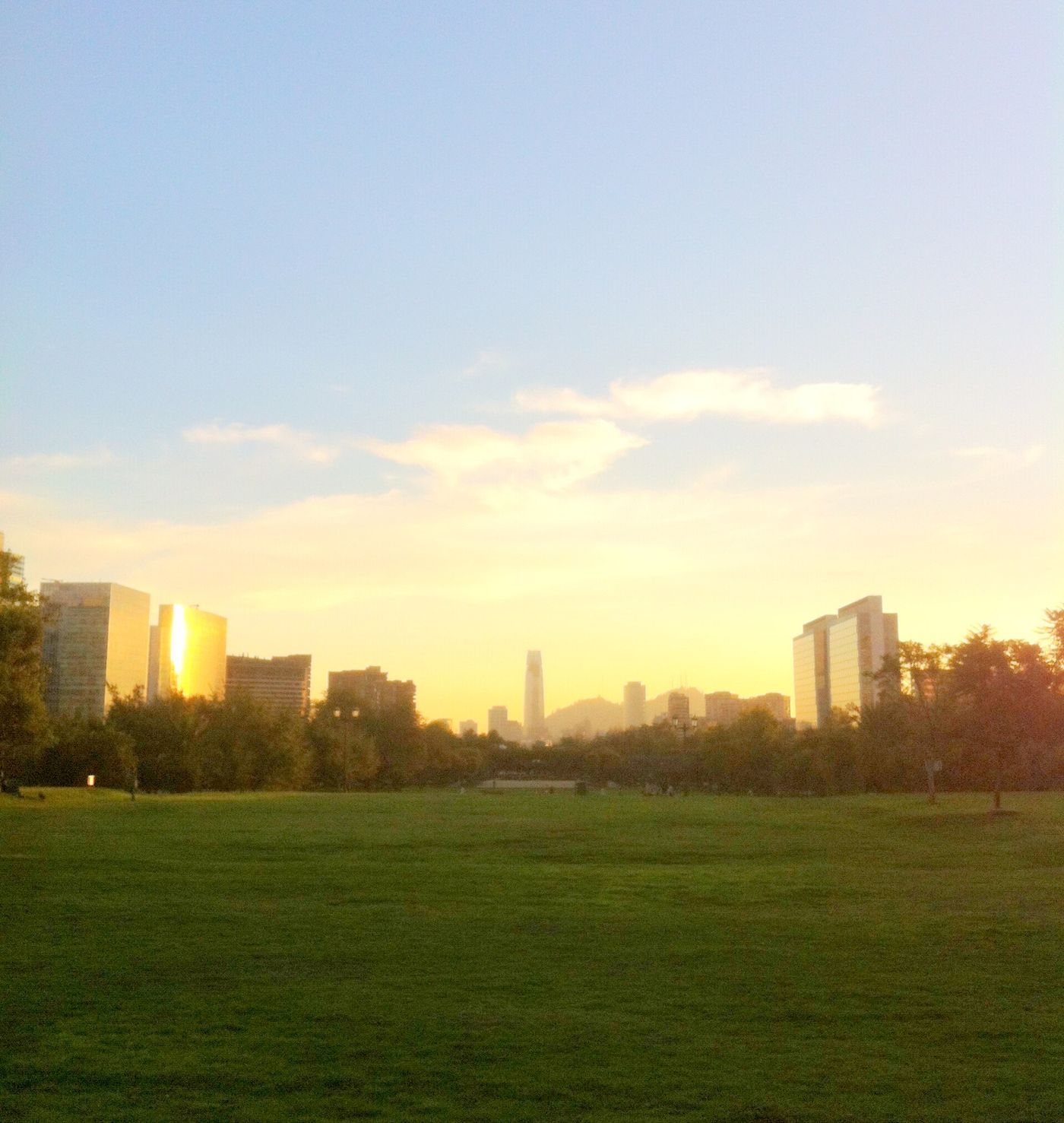
Autumn is the season locals quietly recommend. March still runs 28.6°C by day with almost no rain, April eases to 25.7°C, and May is the pivot month at 21.7°C when the first real fronts arrive. Daytime temperatures are comfortable, the light turns golden, and the plane trees along Parque Forestal and Barrio Italia go yellow through April and May.
Autumn is also harvest season in the valleys around the city. Vineyards pick between roughly late February and April depending on the variety and the year, which makes March and April the most interesting time to visit a Maipo Valley estate, and the busiest. The wine tours guide covers which estates run harvest events and which just carry on with the standard tour.
March
Averages of 28.6°C and 11.4°C with about 0.9 mm of rain. March is summer’s temperature with the city back at work: restaurants reopen, cultural programs restart, and the first cool nights arrive at the end of the month. One of the best months overall if you want warmth without February’s shutters. The air is usually still clean; the haze that defines winter typically doesn’t set in until April or May.
March is also the month the city’s events calendar restarts. Lollapalooza Chile runs in Parque O’Higgins in March, with the 2027 edition scheduled for 12 to 14 March (checked September 2026), and the wine valleys hold harvest events through the month. Hotel prices track those weekends closely. If you want March weather without March crowds, aim for the first half.
April
Averages of 25.7°C and 9.5°C, about 3.9 mm of rain. April is the quietest excellent month in Santiago: warm afternoons, cold mornings, autumn color, low crowds. The gap between day and night is at its most extreme, so a 25°C afternoon can be followed by a 9°C walk home. Vehicle restrictions and winter air-quality management typically begin around this point in the year, and the first properly hazy mornings appear.
April is also when the mountain roads start closing behind you. The vehicle route to the Embalse El Yeso in the Cajón del Maipo is shut to private cars from April to August (checked September 2026), and Parque Nacional La Campana normally closes its upper trails for winter from June. If Andes hiking is the point of your trip, April is the last comfortable month to do it independently, and the Andes and outdoors guide explains which routes stay open.
May
Averages of 21.7°C and 5.2°C, about 12.9 mm of rain. May is the hinge. Fronts start arriving from the Pacific, the Andes get their first serious snow, and the basin begins trapping pollution on still, cold mornings. On the day after a storm, May delivers the single best view of the year: clean air, fresh snow low on the cordillera, and a sky that makes every photograph look staged. On the other days it can be grey and flat.
Practically, May is the month to carry a compact umbrella and check the forecast each morning rather than plan a week in advance. Museums, which close on Monday almost without exception, become the backbone of a rainy day, and Cerro Santa Lucía shuts entirely when it rains. The upside is that hotel rates fall away from the summer peak and the city feels like itself again.
Winter: June, July, August
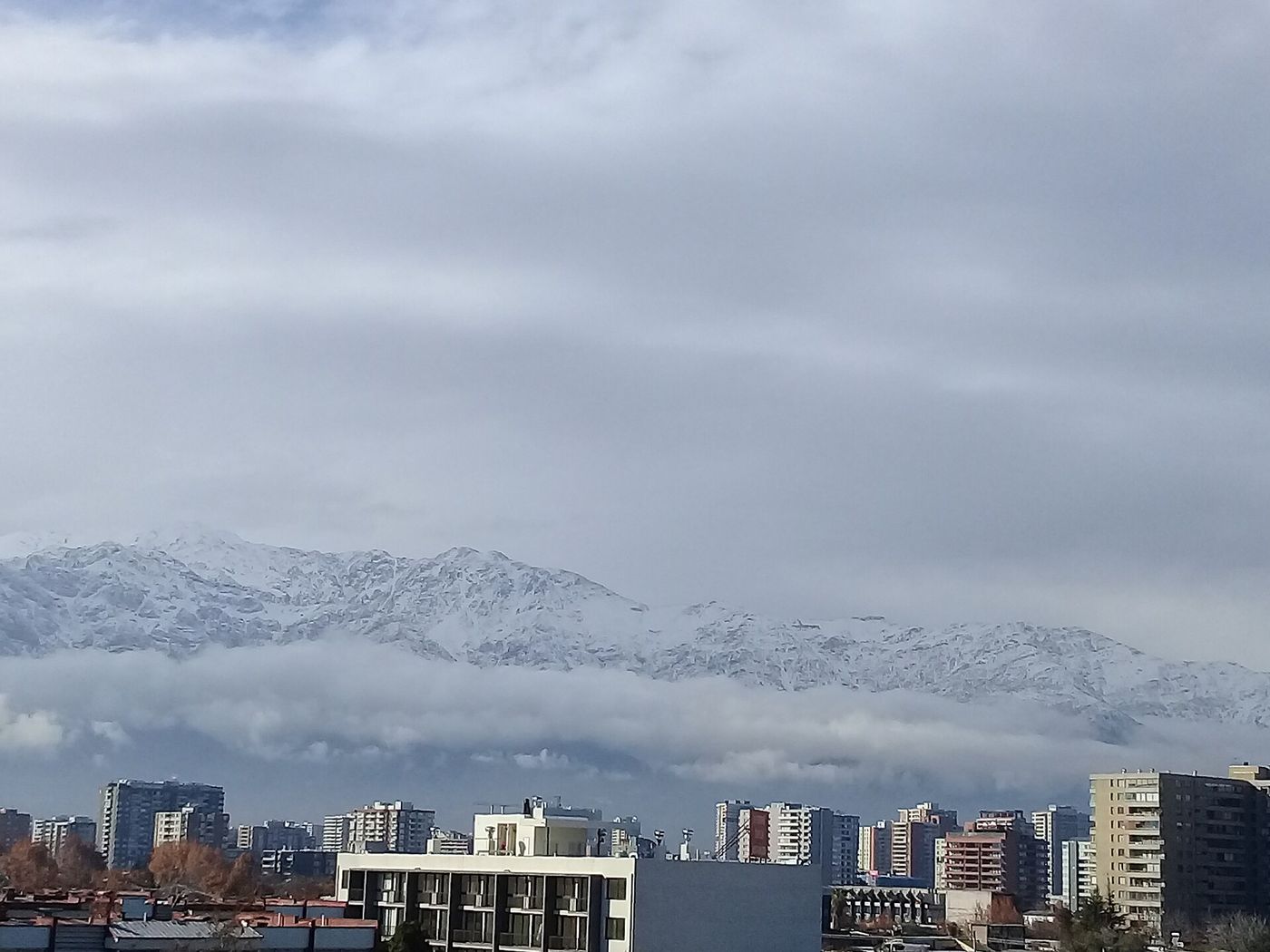
Winter in Santiago is mild by North American or Northern European standards and unpleasant in its own specific way. Averages run 14.6-17.3°C by day and 3.0-3.9°C at night, so frost is common at dawn and snow on the city floor is rare. What makes it hard is not cold but stagnation: cold, still air sits in the basin under a lid of warmer air above, and everything the city emits stays put.
Roughly 63% of Santiago’s annual rainfall lands in these three months, concentrated in a handful of frontal systems rather than spread as drizzle. A wet July is two or three multi-day storms, not twenty damp days. Between the storms, expect grey mornings, hazy afternoons and invisible mountains.
Housing here is built for summer, not winter. Many older apartments and small hotels have no central heating, single glazing and cold tile floors, and a 3°C night feels colder indoors than the number suggests. Ask about heating before you book anything cheap in June, July or August.
June
Averages of 17.3°C and 3.9°C, about 33.9 mm of rain. The ski season above the city usually opens in June, which makes this the first month when a Santiago base plus a day in the Andes is realistic. In the city, expect cold mornings, mild afternoons and rising haze. Days are short, with sunset near 17:45 in late June, so plan indoor afternoons and accept the early dark.
June’s other feature is that it is the first month when the city’s indoor culture earns its reputation. The free Museo de la Memoria, the Precolombino, Bellas Artes and the Centro Cultural La Moneda all run full programs, and the food scene moves to long lunches and cazuela. If you are booking accommodation this month, ask specifically about heating, because plenty of otherwise good places have none.
July
Averages of 15.0°C and 3.5°C, and about 66.8 mm of rain, the wettest month of the year by a wide margin. July is Chilean winter school holidays, so the ski centers are busy and families are out. It is the best month for skiing near the city and the worst for Andes photography from the city, since the cordillera spends most of the month behind cloud or smog. See the skiing guide for how the Farellones road and transfers work in peak season.
In the city, July rewards a plan built around interiors and a willingness to move when the sky opens. Rain typically comes in one or two significant systems, and the 24 hours afterward are the clearest of the entire winter. Watch for that window, then go straight up Cerro San Cristóbal. Sunset is around 18:00 by late July, so the light returns quickly once the month turns.
August
Averages of 14.6°C and 3.0°C, about 38.3 mm of rain. On the normals, August is the coldest month in Santiago, which surprises visitors who expect July to hold that title. Snow depth in the mountains usually peaks now, and late-August storms can be strong. On the other hand, the earliest almond and plum blossoms appear in the last week, and the first genuinely warm afternoons sneak in.
August is the last month of the ski season for most visitors, and the most reliable one for snow depth. In the city it is also the cheapest month to travel: low season rates, thin crowds at the museums, and short queues everywhere. The trade-off is daylight, smog and a 3°C dawn. Take the layers seriously and treat any clear afternoon as a bonus to be used immediately.
How bad is Santiago’s winter smog?
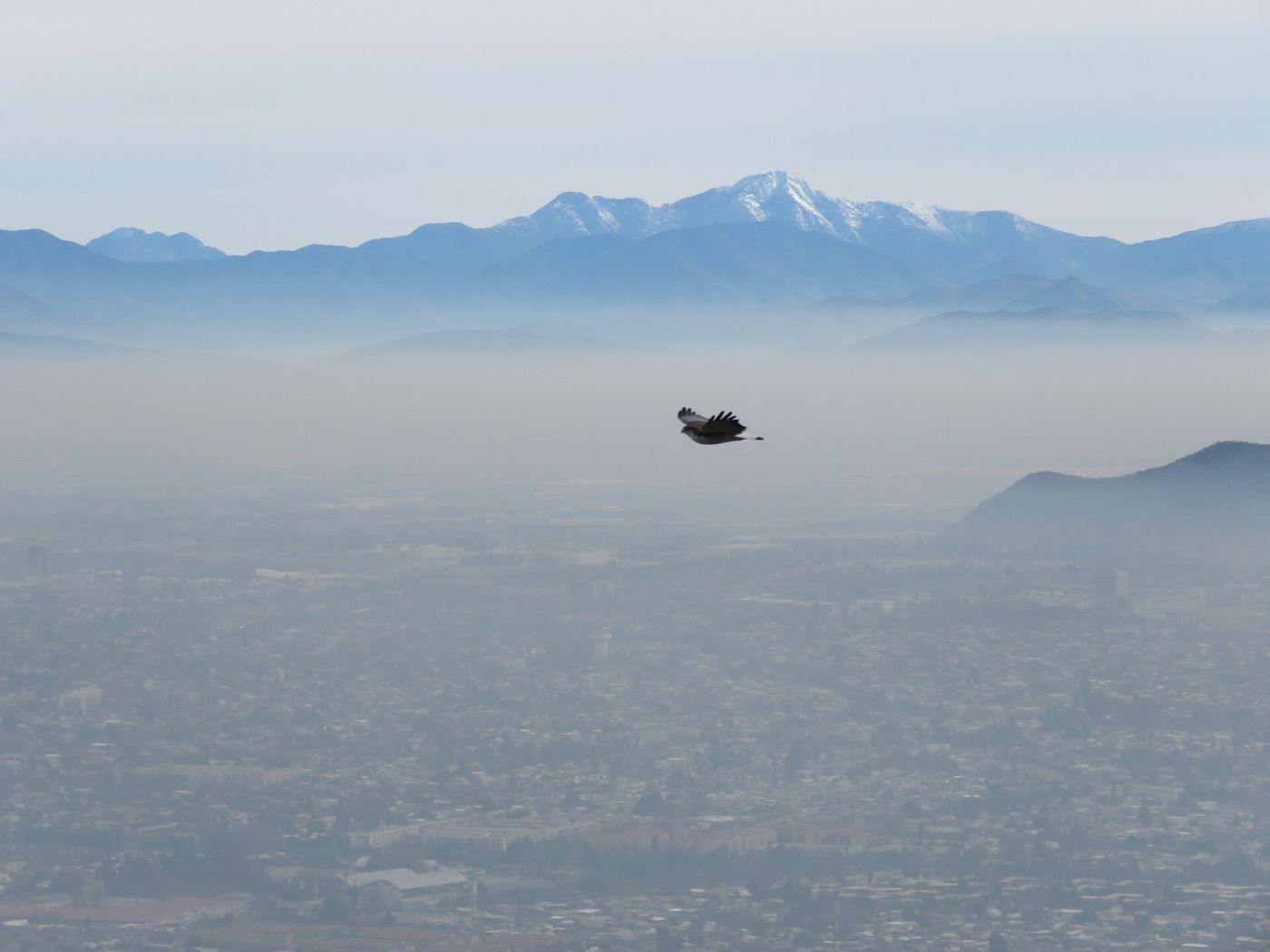
Bad enough to change plans. Between roughly May and August, cold, still air traps particulates in the basin, and authorities issue day-by-day air-quality alerts with restrictions on wood burning and some vehicle use. Visibility drops, the Andes vanish, and sensitive groups feel it within hours.
This is the single most underreported thing about Santiago weather. The city sits in a bowl with mountains on three sides and almost no wind for weeks at a time in winter. Cold air pools at the bottom, warm air sits above it, and the lid holds. The result is a haze that can reduce the Andes, 40 km away and 4,000 m high, to a faint suggestion.
What it means in practice:
- If you have asthma or a heart condition, check the day’s category before planning a run or a long walk, and treat the worst mornings as indoor mornings.
- If you are here for views, the day after a front passes is the one to go up Cerro San Cristóbal. The air clears with rain and wind, and stays clear for a day or two.
- If you are driving, expect restrictions by license plate digit on declared episode days, and check before you take a rental out.
- If you are here in summer, none of this applies. Wind and heat keep the basin ventilated, and January skies are genuinely clean.
Episodes are announced daily rather than scheduled, so the only reliable approach is checking on the morning. Nothing about this makes a winter trip pointless: museums, food, wine and skiing are all unaffected. It just means winter is the wrong season to build a trip around mountain views. The Andes and outdoors guide has the trips that still work in the cold months.
When are the Andes actually visible from Santiago?
Best odds run from late September through December and again in March and April. Clear air follows rain and wind, so the day after a winter front is often spectacular, while long, still stretches in June, July and August can hide the cordillera for a week or more at a time.
There is a rhythm to this that locals plan around. A front comes through, the city gets scrubbed, and for 24 to 48 hours the Andes stand up behind the skyline with fresh snow. Then the air settles and they fade. Photographers who want the classic shot of the Costanera tower against snow peaks should watch the forecast for a passing front in May, June or August, then go up the hill the next morning.
In spring and autumn the effect is more reliable but less dramatic: clean air most days, snow retreating up the peaks as summer approaches. By late January the high peaks keep only patchy snow, so the “city plus snowy Andes” photograph is really an April-to-November proposition.
| Month | Andes visibility | Snow on the peaks |
|---|---|---|
| December to February | Good, hazy at times | Patchy, high only |
| March to April | Very good | Returning by late April |
| May to August | Poor to fair, excellent after storms | Heavy |
| September to November | Excellent | Heavy, melting from October |
Which month has the best weather in Santiago?
October and April, for opposite reasons. October brings clean spring air, 20.3°C days, green foothills and snow still on the peaks. April holds summer warmth at 25.7°C with autumn color, cold mornings and the lowest crowds of the year. March and November are close behind.
The honest ranking, weather only:
- October for clarity and mountain views, with enough warmth for long days outside.
- April for warm afternoons, autumn color, harvest season and quiet streets.
- March for near-summer heat with the city fully open again.
- November for dependable warmth before the summer heat gets serious.
- December for heat, long evenings and a working city.
- January and February for pool weather and empty streets, if you can handle 30°C.
- May and September for high variance: outstanding after a storm, flat otherwise.
- June, July and August only if you are here to ski, or you care more about museums and restaurants than about the sky.
Weather is one input among several. Prices, school holidays, festivals and closures all move independently of the thermometer, and the best time to visit Santiago pillar puts them together. The events and festivals guide covers the fixed dates that trump weather entirely, including 18 and 19 September, when nearly everything closes.
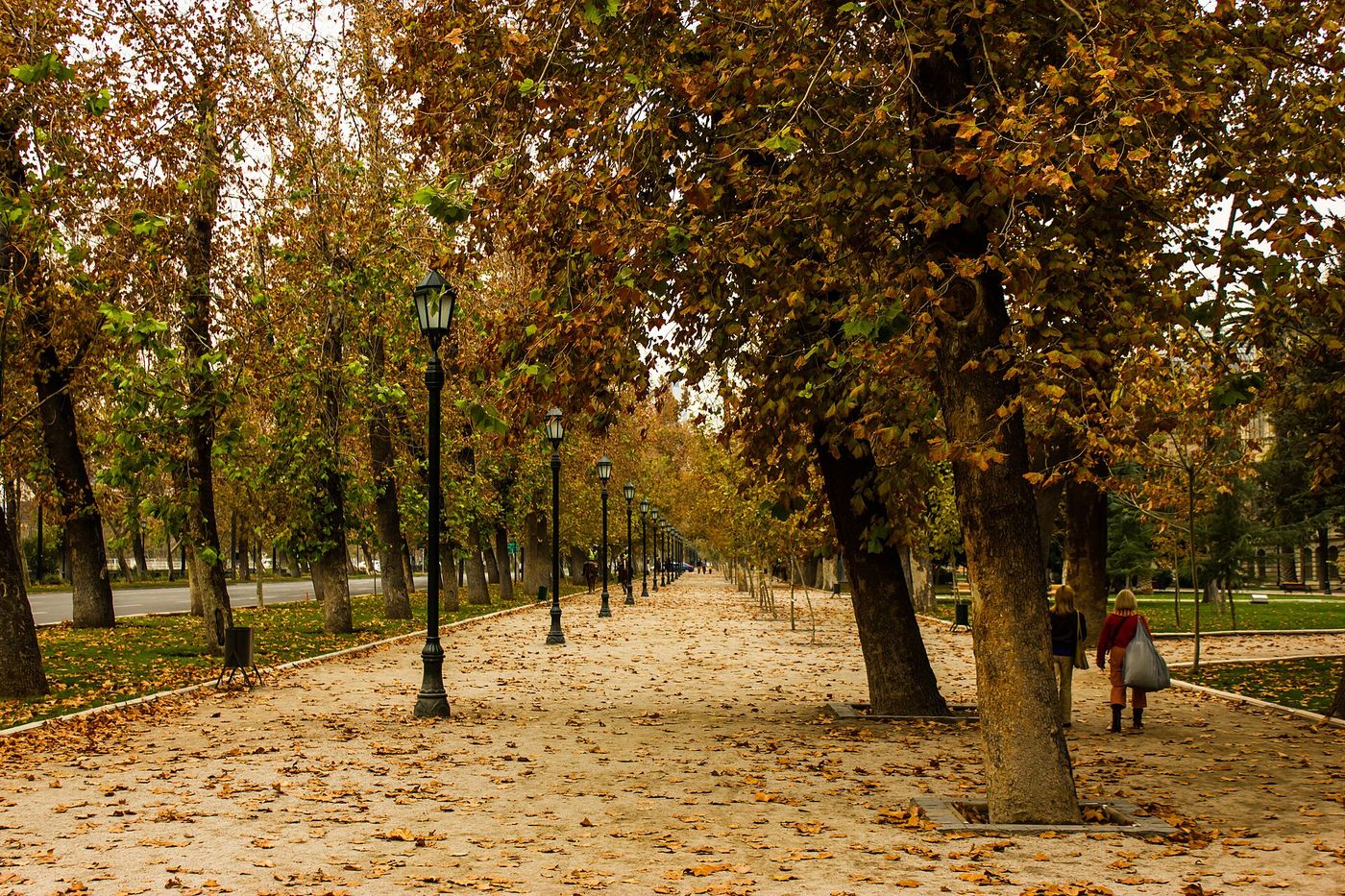
Spring: September, October, November
Spring is the fastest-changing season here. September averages 18.5°C by day and 4.9°C at night with around 33.5 mm of rain, still wet enough for real storms. October settles at 20.3°C and drops to about 16.7 mm, and November reaches 23.7°C with 8.3 mm, essentially the start of the dry season.
The basin’s air clears as the wind returns, the foothills turn green for their short window, and the almond, plum and jacaranda blossom sequence runs from late August into November. Anyone planning day trips should note that this is also the season when the Cajón del Maipo roads and the coastal valleys look their best, before summer bleaches everything.
September
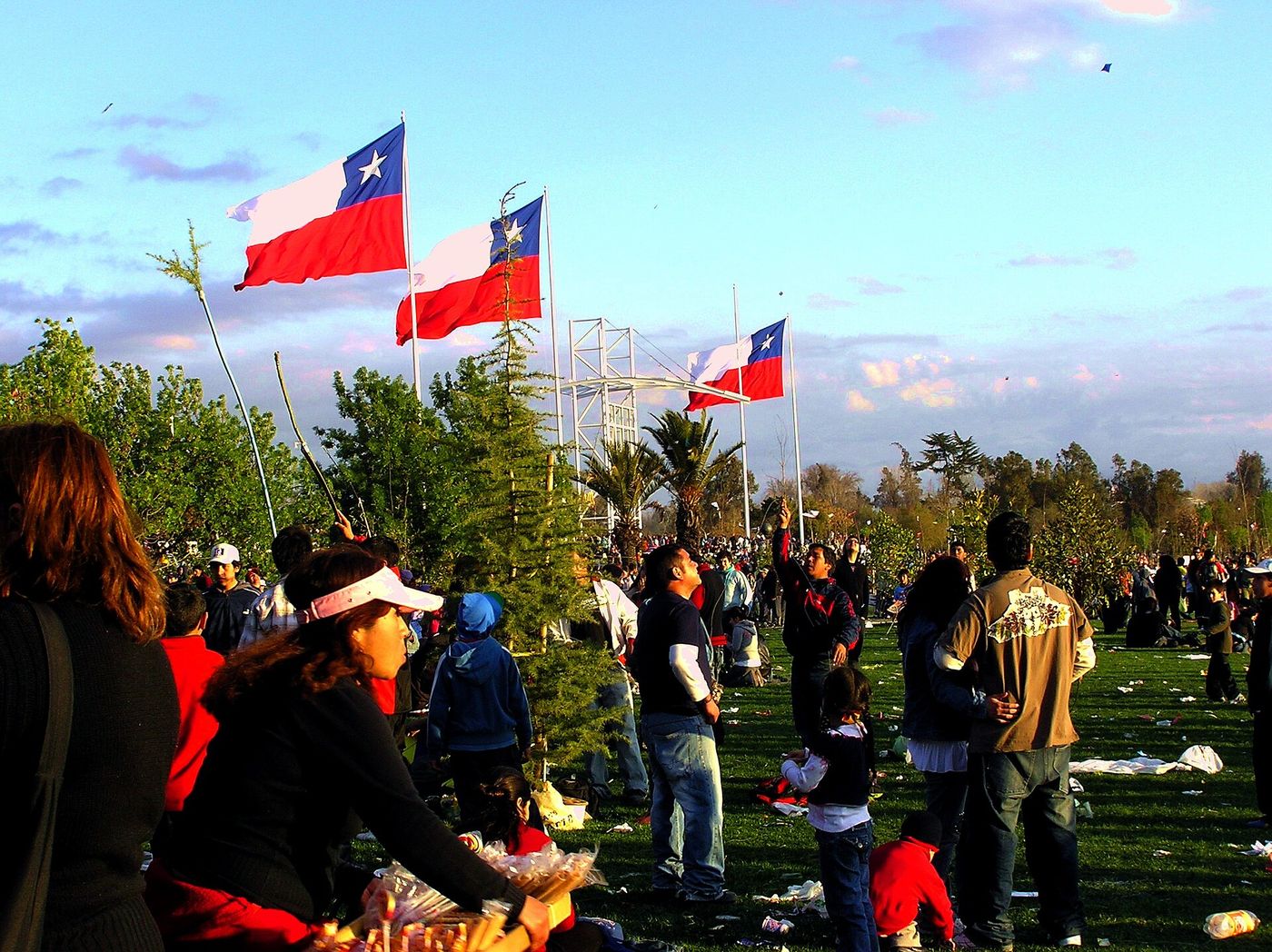
Averages of 18.5°C and 4.9°C, about 33.5 mm of rain. September is unstable: warm afternoons, cold nights, sudden storms and strong wind. It is also the month of Fiestas Patrias on 18 and 19 September, when the city empties into fondas, nearly everything closes for two days, and flights and buses fill. Kite flying season is genuinely a thing here, helped by the same wind that makes the weather erratic.
Plan around the 18th and 19th rather than through them. Museums, most restaurants and many attractions close for both days, transport fills, and the city relocates to fondas in the big parks. It is a genuinely good time to be here if you want the cultural experience, and a frustrating one if you came for the standard sightseeing list. The events and festivals guide covers what actually stays open.
October
Averages of 20.3°C and 6.5°C, about 16.7 mm of rain. The best all-round month in Santiago. Clean air, comfortable days, cold enough nights to keep the wine cellars happy, and the Andes still white above green foothills. Hiking around the Cajón del Maipo works well before the heat, and day trips to the coast stop being cold. Book ahead, because Santiaguinos know this too.
October is also the month with the widest range of viable plans. Wineries are between pruning and growth with comfortable tasting weather, the foothills are green enough for real hiking, the coast is warming, and the city’s cultural season is in full swing. If you only get one week in Santiago and can choose when, this is the week to take.
November
Averages of 23.7°C and 8.3°C, about 8.3 mm of rain. Reliable, warm, dry and long-evening weather without January’s intensity. Jacarandas flower in the eastern neighborhoods, outdoor dining is fully back, and the pools open. The only downside is that the green foothills have started going brown, which is a small price for an almost guaranteed dry week.
November is the last month before the summer exodus begins, which makes it the sweet spot for anyone who wants warm weather and a fully functioning city. Rooftop bars reopen, the Parque Metropolitano pools prepare for the season, and evening light stretches past 20:30. Expect strong sun at midday even when the air feels mild, because the UV climbs faster than the thermometer does at this latitude.
How Santiago’s weather compares with the coast and the mountains
Santiago sits at about 570 m in a basin between the coastal range and the Andes, and that geography produces three completely different climates within two hours of the city. Getting this wrong is the most common day-trip mistake visitors make.
The coast, 1.5 to 2 hours west. Valparaíso and Viña del Mar are cooled by the Humboldt Current and the camanchaca, the low coastal fog that sits over the shoreline on summer mornings. When Santiago hits 30°C in January, the coast is often in the low 20s with grey skies until midday. That makes it the standard local escape from the heat, and a poor choice for a beach day in anything but the warmest weeks. Pack a jacket for a coastal day trip even in summer.
The Cajón del Maipo and the valleys, 1 to 2 hours southeast. The canyon climbs steadily, so mornings are colder, afternoons can be hotter in the lower stretches, and the temperature drops fast after sunset. A rough rule of thumb across the region: every 1,000 m of altitude takes about 6°C off the air temperature. The road to the Embalse El Yeso is closed to private vehicles from April to August (checked September 2026), which turns a summer drive into a guided winter trip.
The ski areas, 50 km east. Farellones, El Colorado and Valle Nevado sit between roughly 2,400 m and 3,000 m, where winter means real snow rather than Santiago’s rain. The season generally runs from June into September; in 2026, El Colorado still had most of its runs open in mid-September (checked September 2026). In summer the same road gives you hiking at altitude while the city bakes.
| Same day, three places | Typical summer afternoon | Typical winter morning |
|---|---|---|
| Santiago city (570 m) | Hot and dry, 30°C | Cold, hazy, around 3°C at dawn |
| Coast at Valparaíso (sea level) | Cool and often foggy, low 20s | Mild, damp, windy |
| Farellones and the ski areas (2,400 m+) | Cool, strong sun, thin air | Snow, well below freezing |
The practical consequence: check the forecast for the place you are going, not the city you are sleeping in. A Santiago forecast tells you very little about the Cajón del Maipo, and nothing at all about the coast.
What the monthly averages don’t tell you
Averages hide four things in Santiago: the daily swing, the heat spikes, the microclimates and the fact that rainfall arrives in bursts. Each one changes what you pack and how you plan a day far more than the headline number does.
The daily swing. A January day that averages 30.2°C by afternoon drops to 12.4°C overnight, a range of nearly 18°C. Santiago is a layers city in every season. The single most common visitor mistake is leaving the hotel at 14:00 in a t-shirt and walking back at 22:00 cold.
The spikes. The average is not the ceiling. Summer heat waves routinely put afternoons in the mid-30s, and those days come with high UV and real risk on exposed hills. Treat 30.2°C as a baseline, not a maximum.
The microclimates. These normals come from Pudahuel, on the flat western edge near the airport. Central stations such as Quinta Normal typically run a little warmer, and the precordillera neighborhoods that climb toward the mountains, including Lo Barnechea and upper Las Condes, are cooler, wetter and see snow more often than the city floor. Staying at 900 m is a different winter from staying at 500 m.
The bursts. July’s 66.8 mm does not arrive as a month of drizzle. It comes in two or three frontal systems, each lasting a day or two, with clear or grey gaps between them. This matters for planning: a rainy forecast in winter usually means one washed-out day, not a washed-out week. It also means Cerro Santa Lucía, which closes when it rains, is a same-day decision rather than a seasonal write-off.
| Planning question | The number to use |
|---|---|
| What jacket for July? | 3.5°C at dawn, not the 15.0°C average high |
| Can I hike in January? | Yes, before 11:00; treat the afternoon as 35°C |
| Will it rain on my April trip? | Almost certainly not; ~3.9 mm falls all month |
| Do I need heating in the room? | June to August, yes, and ask before booking |
| Best odds for a clear Andes photo? | October, or the morning after a winter storm |
For what all of this means in a suitcase, see the travel styles guide for how different trips weight comfort against luggage, and the things to do round-up for the indoor options that carry a wet winter afternoon.
Is Santiago getting drier?
Central Chile has been running through an unusually long dry stretch since around 2010, and the numbers on this page already reflect it. The 1991-2020 normals include those years, so the 219 mm annual figure is drier than the baseline older guidebooks quote. If you read 300 mm or more somewhere, it is probably an older normals period rather than an error.
For a visitor, the drought shows up in four places. Reservoir levels in the Cajón del Maipo, including the Embalse El Yeso, swing more than they used to, and the turquoise-water photographs that sell the trip depend on a good year. Snowpack varies sharply season to season, which is why ski centers publish opening dates late and why September skiing is possible in one year and impossible in the next. Wildfire risk runs from December to March across central Chile, occasionally closing roads and filling the basin with smoke from fires well outside the region. And hotels take water conservation seriously, so the towel card in the bathroom is not decoration.
None of that makes planning harder in practice. It does mean treating any single year’s weather as a range rather than a promise, particularly at the shoulders of the ski season and for anything that depends on a full reservoir. Check conditions close to your dates instead of assuming the averages will hold, and build one flexible day into a mountain-heavy itinerary.
The other side of a drying climate is that Santiago’s dry season is very dependable. If you want a fortnight without rain, November through March delivers it about as reliably as anywhere on earth. The planning risk in this city is heat, altitude and air quality, not washed-out afternoons.
Frequently asked questions
What is the coldest month in Santiago, Chile?
August, on the official normals. Its mean maximum of 14.6°C and mean minimum of 3.0°C both sit below July’s 15.0°C and 3.5°C. July is wetter, which is why it feels worse, but August is colder. Frost at dawn is normal in both months, and snow on the city floor is rare.
How much does it rain in Santiago?
About 219 mm a year, which is very little. Roughly 63% of it falls in June, July and August, with July alone near 67 mm. December through March are effectively rainless, totaling under 5 mm between them. Rain arrives in a few multi-day fronts rather than as regular drizzle.
Does it snow in Santiago?
Snow reaches the city floor only rarely, and when it does the city stops. The mountains are a different story: the ski centers above Farellones, about 50 km east, typically run from June into September, and in 2026 El Colorado still had most of its runs open in mid-September (checked September 2026).
Is Santiago’s summer too hot for sightseeing?
Not if you shift your hours. January and February average 30°C by day and can top 35°C, but mornings before 11:00 and evenings after 19:00 are comfortable. Museums, the Metro and shopping centers are air-conditioned. The mistakes are midday hills and unshaded plazas between 13:00 and 17:00.
When is the smog worst in Santiago?
May to August, with June and July usually the worst. Cold, still air traps particulates in the basin, and daily air-quality categories trigger wood-burning and vehicle restrictions. Rain and wind clear it quickly, so the day after a front is reliably clean. Summer is not affected.
How long is daylight in Santiago in summer and winter?
Long summer evenings and short winter afternoons. In late December the sun sets around 21:00 with usable light until about 21:30, which is why Santiago eats late. In late June sunset comes near 17:45. Chile runs daylight saving time from September to April, which stretches the summer evenings further.
What should I wear in Santiago in each season?
Layers year-round, because the day-night swing runs up to 18°C. Summer needs sun protection, a hat and something warm for the evening. Winter needs a real coat for 3°C mornings plus rain protection for July. Spring and autumn sit between the two, with cold mornings and warm afternoons in the same day.
Once you know which month you are dealing with, the suitcase follows from it. Our guide to what to pack for Santiago Chile turns these normals into an actual list, season by season, including the layer most people forget in summer and the reason a July trip needs a thermal base layer for indoors as much as outdoors.
January’s heat is also the month’s main cultural window, because Teatro a Mil schedules its outdoor productions for the late afternoon and evening once the worst of the 30C afternoon has passed. Our Santiago a Mil festival guide sets out how to shape a festival day around the temperature, and what else stays open in the emptiest month of the Santiago year.
January is the month the averages hide the most, because a 30.2C afternoon and a 12.4C night belong to the same day and the city runs on a split schedule to cope. Our guide to Santiago Chile in January covers what stays open during the Chilean summer holiday, which restaurants shut for a month, and how to build a day around the heat rather than against it.
March’s reliability is why Santiago’s biggest music festival sits there: 28.6C by day, 11.4C at night and under a millimetre of rain across the whole month make an outdoor event close to weatherproof. If those are your dates, our Lollapalooza Chile visitor guide explains what three days in an unshaded park actually requires.
February’s numbers barely move from January’s, which is exactly why the month gets misread: the difference is not the temperature but the number of open doors. Our guide to Santiago Chile in February covers the summer shutdown, the institutions that keep published hours through it, and how to use an emptied capital rather than fight it.
Sources
- Dirección Meteorológica de Chile: climate normals, Santiago Pudahuel 330021
- Dirección Meteorológica de Chile: climate normals, Quinta Normal 330020
- Dirección Meteorológica de Chile: servicios climáticos
- Ministerio del Medio Ambiente: calidad del aire
- SINCA: Sistema de Información Nacional de Calidad del Aire
- Parque Metropolitano de Santiago
- Teleférico Santiago
- El Colorado: estado de la montaña
- Ski Portillo: season and tickets
- Visit Santiago: official visitor site
- Santiago Turismo: municipal visitor information
Image credits
| Photo | Credit |
|---|---|
| The Andes after rain (top of page) | Vanevalverdes, CC BY 4.0, via Wikimedia Commons |
| Winter sunset toward the cordillera | Nbendersky, CC BY-SA 4.0, via Wikimedia Commons |
| Parque Araucano at sunset | Gonzalo Baeza, CC BY 3.0, via Wikimedia Commons |
| Smog over the Santiago basin | TiagoLubiana, CC BY-SA 4.0, via Wikimedia Commons |
| Santiago in autumn | Michael Tieso, CC0, via Wikimedia Commons |
| Parque O’Higgins in September | Gillermo Adolfo, CC BY 3.0, via Wikimedia Commons |
| Winter cloud over the city | Leogamcan, CC BY-SA 4.0, via Wikimedia Commons |