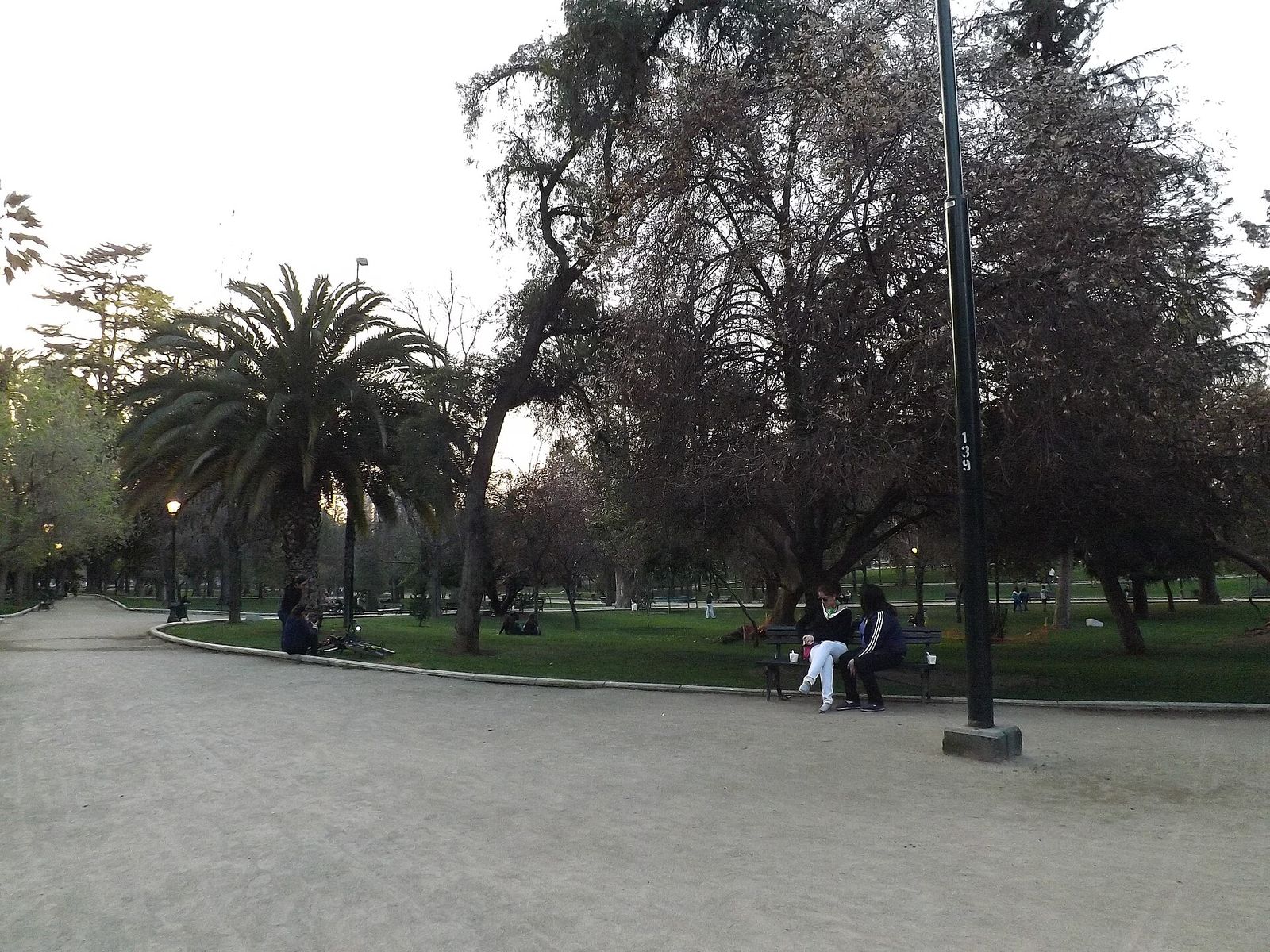
February is Santiago at its emptiest. Santiago Chile in February averages 30.1°C by day and 13.0°C at night with almost no rain, statistically identical to January, but the city behind those numbers is different: the Chilean summer holiday is at its deepest, a large share of neighborhood restaurants are shut, and the people who normally fill the streets are at the coast.
That makes February a genuinely good month for anyone who wants quiet museums, an easy Metro and cheap flights into a hot, dry capital, and a frustrating one for anyone whose trip is built around eating. This page sets out exactly what closes, what stays open and how the month compares with January. For the wider calendar, see the best time to visit guide, and for the raw climate data, Santiago weather by month.
Santiago in February at a glance
| Question | Answer |
|---|---|
| Average high | 30.1°C / 86°F |
| Average low | 13.0°C / 55°F |
| Rainfall | About 0.3 mm, effectively none |
| Daylight | Sunset near 20:45 early in the month |
| Crowds | The emptiest month for locals |
| Prices | High season, though easing from January |
| Main event | The Viña del Mar song festival, on the coast |
| Closures | Many restaurants for weeks; museums on Monday |
| Best hours outdoors | Before 11:00 and after 18:00 |
| The city refills | Late February, as the school year approaches |
The month has two halves. Until roughly the third week, Santiago is a summer town with the shutters down. After that, families return, kitchens reopen, and the city starts behaving like a working capital again in time for the March school year.
What is the weather like in Santiago in February?
Hot and dry, the same as January within a fraction of a degree. The 1991-2020 normals for Santiago Pudahuel give a mean maximum of 30.1°C and a mean minimum of 13.0°C, with roughly 0.3 mm of rain across the whole month. Nights are marginally warmer than January’s and days marginally cooler.
In practice, that difference is invisible. What you feel instead is the accumulated dryness of a long summer: the foothills are brown, the air carries dust, and the city has not seen meaningful rain since around May. Afternoons in the mid-30s are common, the UV is strong, and the shade shortage that defines Santiago’s plazas and hills applies exactly as it does in January.
| February detail | Figure |
|---|---|
| Mean maximum | 30.1°C / 86°F |
| Mean minimum | 13.0°C / 55°F |
| Approximate rainfall | 0.3 mm |
| Typical day-night swing | About 17°C |
| Andes visibility | Good, with some afternoon haze |
Two useful consequences. First, evenings remain the best part of the day, with the temperature dropping sharply after sunset and terraces filling from 21:00. Second, the mountains are visible. The winter inversion that hides them from May to August does not operate in summer, so February mornings deliver the classic view of the Andes above the skyline.
The February shutdown: what actually closes
This is the defining feature of the month and the thing no weather page tells you. Chile takes its summer holiday in January and February, and small, owner-run businesses close for two to four weeks at a stretch. In February the effect peaks, particularly in the first two weeks.
What tends to close:
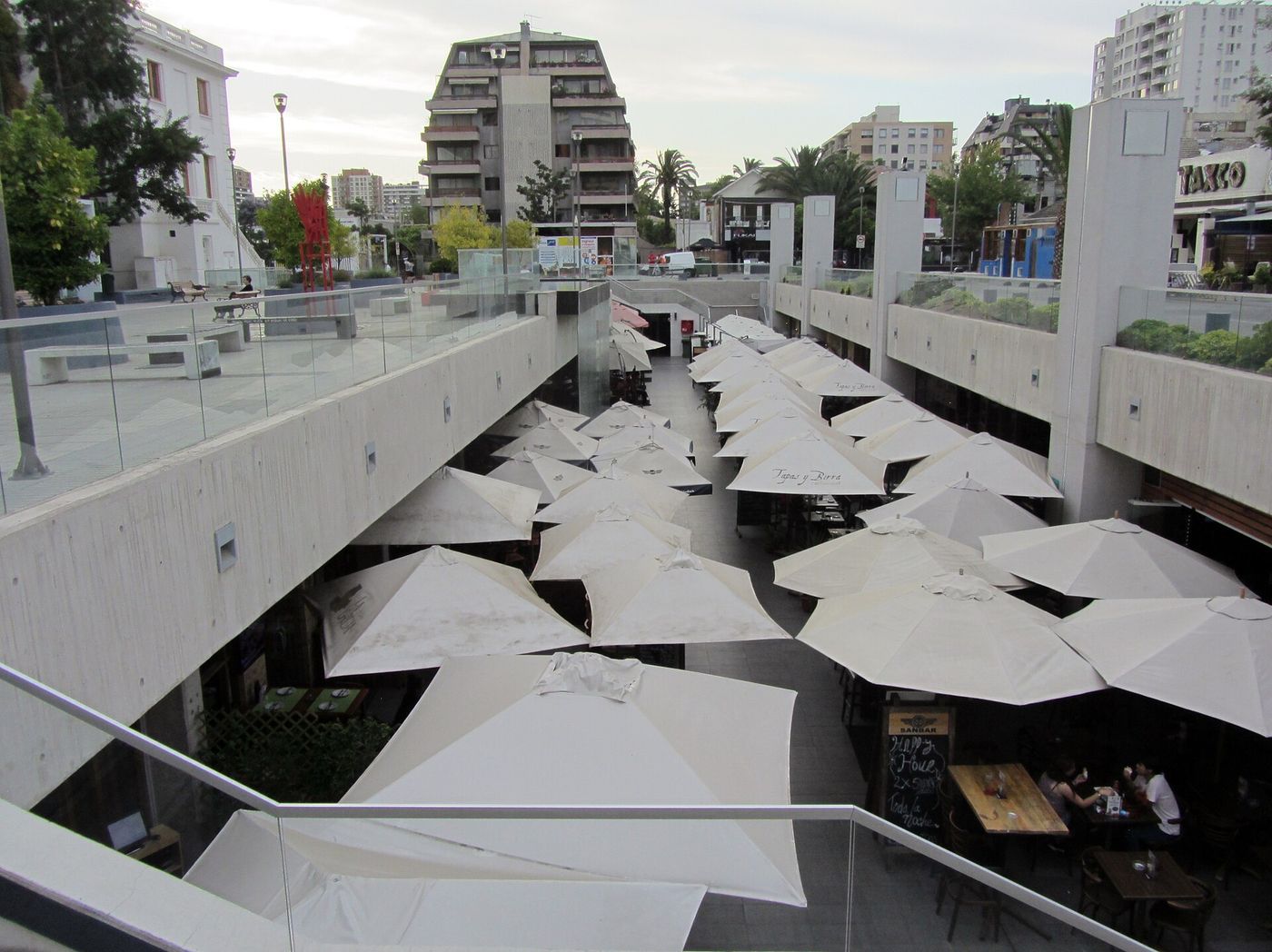
- Neighborhood restaurants. Family-run places in Ñuñoa, Barrio Italia, Providencia and Barrio Brasil close with a handwritten sign and no online update. This is the biggest practical impact on a visitor’s day.
- Small cafés, bakeries and specialist shops. The same pattern, often for the whole month.
- Independent galleries and small cultural venues. Many run reduced summer programmes or close entirely until March.
- Some tour operators and language schools, which run skeleton schedules until the school year starts.
- Offices and services. Not relevant to a holiday, but it explains why the Metro is so quiet at 08:30.
What does not close:
- The Metro, running 06:00 to 23:00 Monday to Friday, from 06:30 on Saturday and 07:30 on Sunday and holidays, at CLP 735 to 895 per ride.
- The major museums, Tuesday to Sunday, including the free Museo de la Memoria and Museo Nacional de Bellas Artes.
- La Chascona, which keeps extended hours to 19:00 through January and February at CLP 11,000 (about USD 11.60, checked September 2026).
- Parque Metropolitano, daily 06:00 to 19:00, with the teleférico Tuesday to Sunday 10:00 to 19:45 from CLP 2,630 return and the funicular Tuesday to Sunday 10:00 to 18:45.
- The markets. Mercado Central runs Sunday to Thursday 07:30 to 17:00, Friday to 20:00 and Saturday to 19:00; La Vega Central runs roughly Monday to Saturday 07:00 to 17:00.
- Shopping centers and supermarkets, which operate normally and are air-conditioned.
All hours checked September 2026. The workable approach is to build your days around the institutions that keep published hours, and treat any specific restaurant as a same-day question. Booking platforms and map listings are unreliable in February because owners rarely update them before closing for three weeks.
The best things to do in Santiago in February
The month rewards a simple strategy: do the outdoor things early and late, use the quiet to see the indoor things properly, and accept that food requires more planning than usual.
Museums without queues. February is the best month of the year to visit Santiago’s museums, because the Chilean audience is away. The Museo Chileno de Arte Precolombino runs Tuesday to Sunday 10:00 to 18:00 with last entry at 17:15, at CLP 12,000 for foreign visitors. The Museo de la Memoria is free, Tuesday to Sunday 10:00 to 18:00. The Museo Nacional de Bellas Artes is free and rarely busy. The museums and culture guide covers the rest.
Hills at the right hour. Cerro Santa Lucía runs 07:00 to 20:30 Tuesday to Sunday in summer, opening at 12:00 on Monday, and it is free. Cerro San Cristóbal is best done by teleférico or funicular rather than on foot in February heat. Both are excellent at 08:00 and punishing at 14:00.
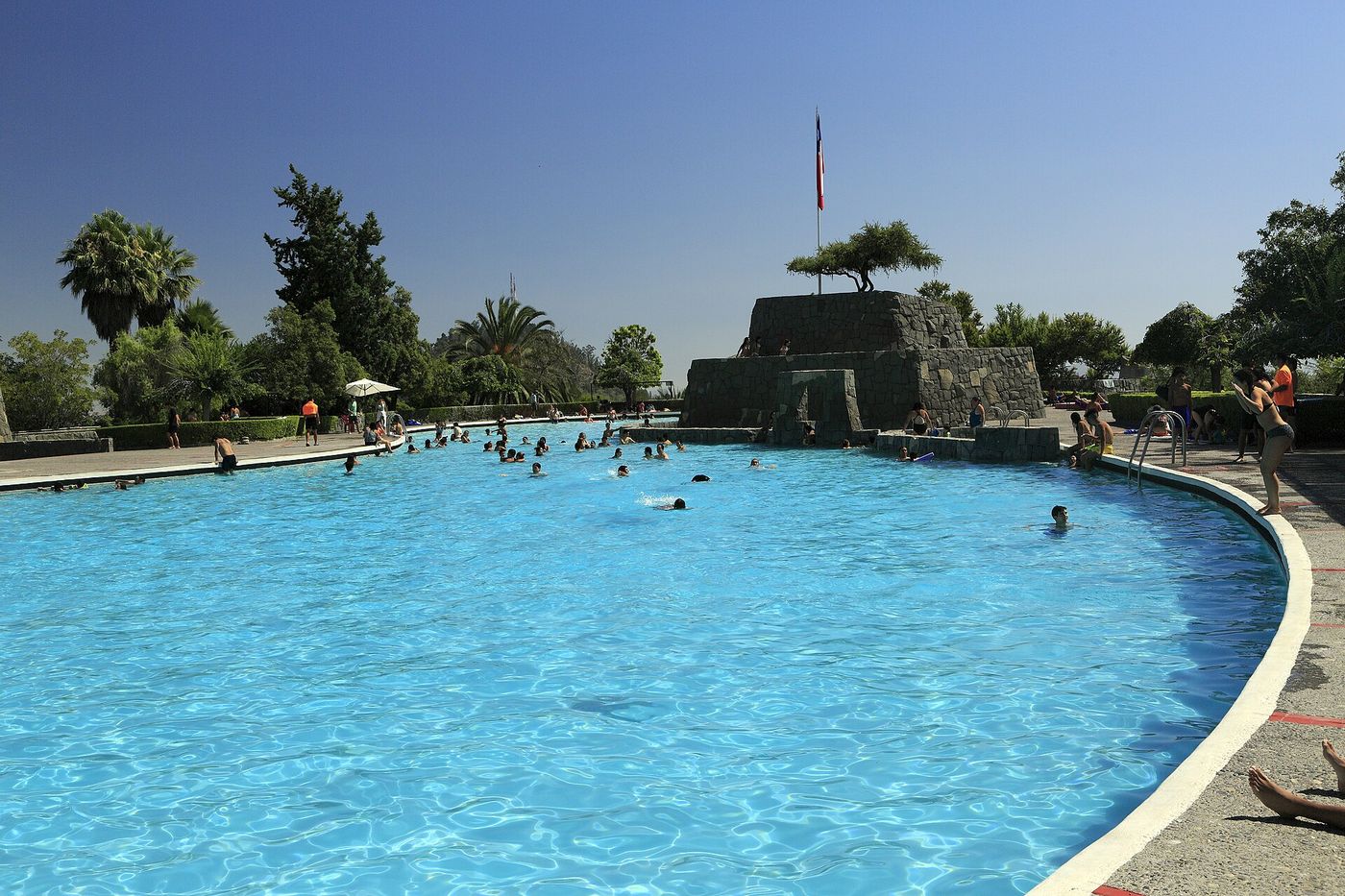
Water. The Parque Metropolitano pools run their summer season into March, and a hotel or apartment pool is the single most valuable amenity you can book for this month.
The markets in the morning. February is deep in Chilean fruit season, and La Vega is at its best before 10:00. The Mercado Central’s edge counters serve the same fish as the central hall without the touts working the aisles.
Long evenings. Sunset lands near 20:45 in early February, and the terrace scene in Lastarria, Bellavista and Barrio Italia carries the night even with individual places closed. The nightlife guide covers the areas that stay reliably open.
What to eat when half the kitchens are closed
February’s food problem is solvable, but it requires changing where you look rather than what you order. The places that close are the small, owner-run kitchens that make Santiago interesting the rest of the year. The places that stay open are the ones with staff rotas: hotel restaurants, market counters, the busier central districts and the malls.
Where to eat reliably in February:
- The Mercado Central’s edge counters, which run through the summer on the market’s published hours and serve the same fish as the central hall without anyone steering you to a tablecloth.
- La Vega and the surrounding cocinerias, cheap, busy and open six days a week, and at their best before 11:00.
- Lastarria and Bellas Artes, where the tourist trade keeps kitchens open through the holidays.
- Bellavista, which runs on evening and weekend volume and stays open accordingly. Patio Bellavista operates Sunday to Wednesday 10:00 to 01:00 and Thursday to Saturday 10:00 to 03:00.
- Hotel restaurants and shopping centers, dull but dependable, and air-conditioned at the hour you most want it.
What to order while the produce is at its peak: pastel de choclo and humitas, both built on fresh summer corn; porotos granados, the summer bean and squash stew; stone fruit, grapes and melon from any market stall; and mote con huesillo, the husked wheat and dried peach drink sold from street carts all summer. Chilean seafood is excellent year-round thanks to the cold Humboldt Current, and February is a good month for ceviche.
One habit that solves most of the month: check whether a specific restaurant is open on the day, by phone or in person, rather than relying on listings. Owners close for three weeks without updating anything online. The food and restaurants guide covers the neighborhoods in full.
Where Chileans go in February, and whether you should follow
The coast, mostly. Viña del Mar, Valparaíso, Reñaca, Algarrobo and the beach towns along the central coast fill with Santiago families through February, and the roads west jam at weekends and around public holidays.
Whether to follow depends on what you want. The Pacific here is cold year-round because of the Humboldt Current, so this is not a swimming holiday in the Caribbean sense. What the coast offers is air temperature 8 to 10 degrees below the city, sea breeze, and a completely different kind of evening.
| Destination | Time from Santiago | Why go in February |
|---|---|---|
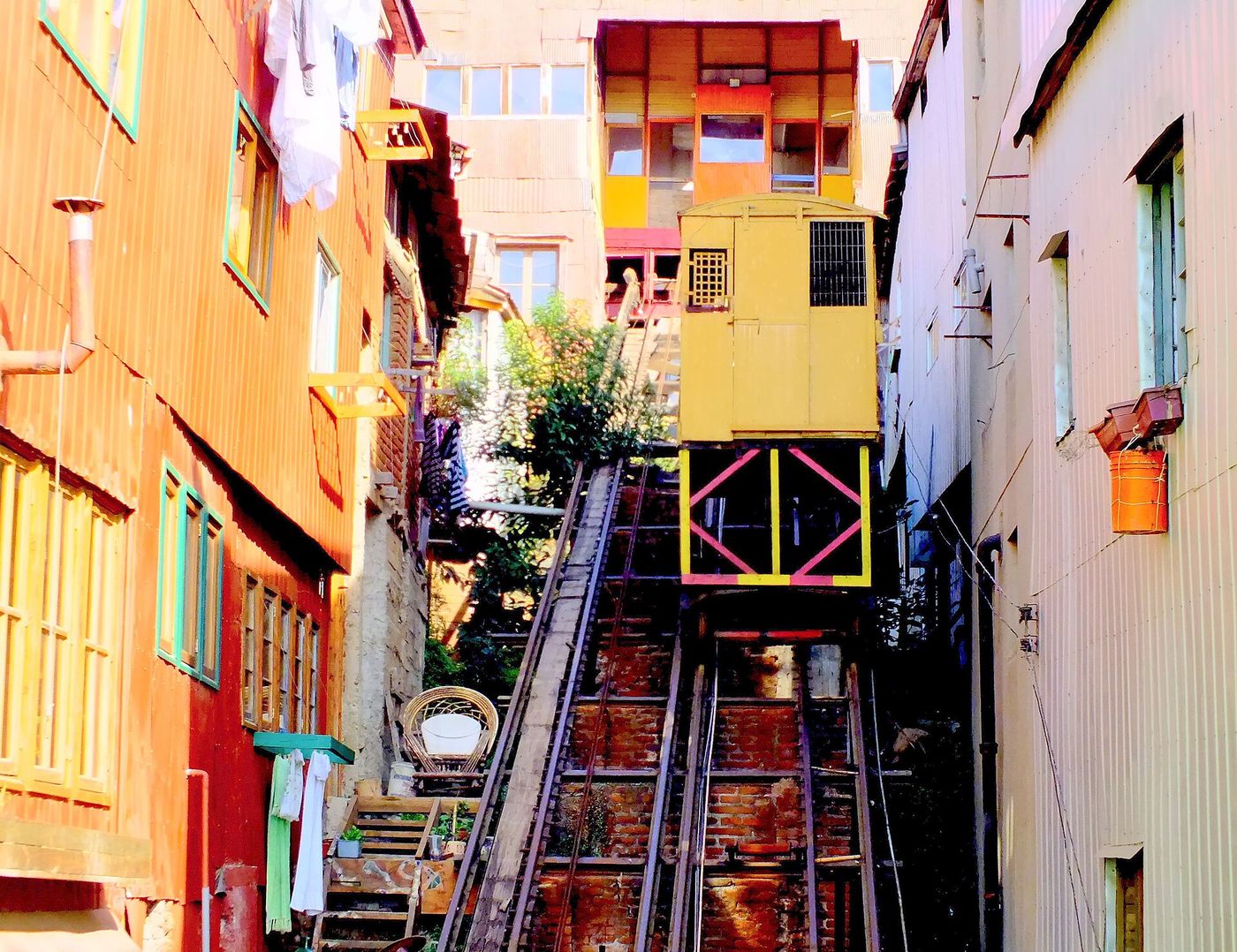
| Valparaíso | 1.5 to 2 hours by bus | Hills, street art, funiculars, cooler air |
| Viña del Mar | 1.5 to 2 hours by bus | Beaches, the song festival, promenades |
| Cajón del Maipo | 1 to 2 hours by road | Altitude, river, hiking, hot springs |
| Maipo Valley wineries | 40 to 90 minutes | Vines heavy before the March harvest |
| Farellones and the Andes | About 90 minutes | Hiking at 2,400 m, 10 degrees cooler |
Buses to Valparaíso leave Terminal Pajaritos and Alameda every 10 to 20 minutes and cost roughly CLP 4,900 to 6,180 one way. Go midweek if you can; a February Saturday on Ruta 68 is among the worst traffic of the Chilean year. The day trips guide covers each route in detail.
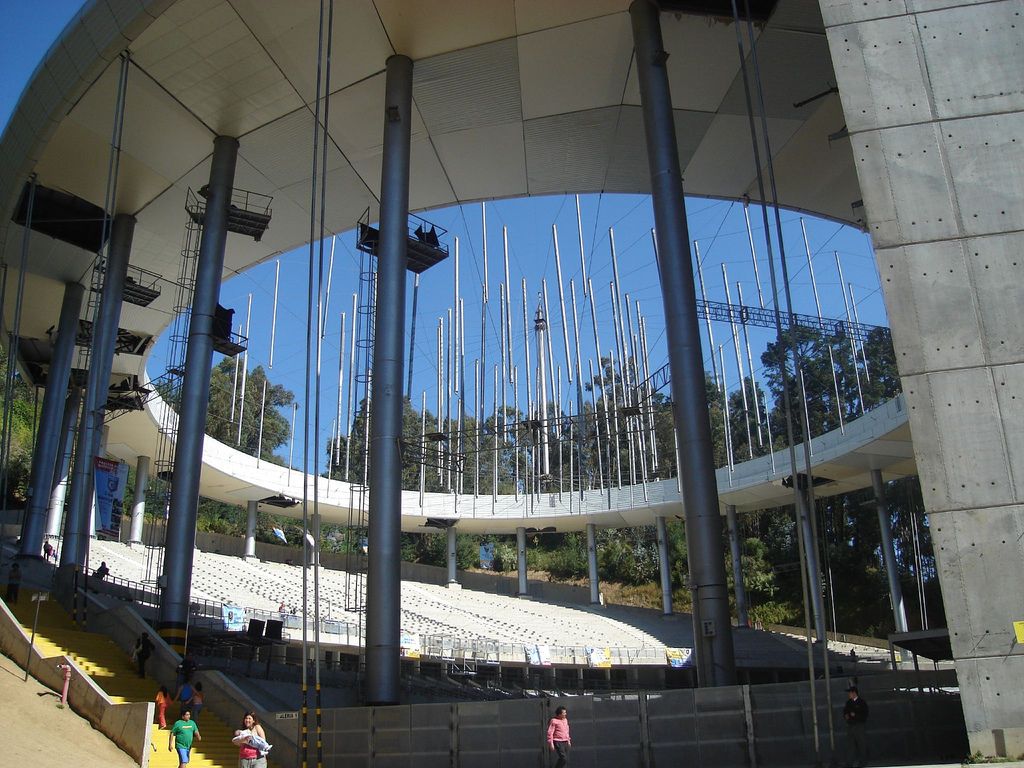
February events: the festival that empties the city further
The biggest event of the Chilean February is not in Santiago at all. The Festival Internacional de la Canción de Viña del Mar, held at the Quinta Vergara amphitheatre in Viña del Mar, runs for several nights in late February and dominates Chilean television and conversation while it is on. Dates and line-ups are announced closer to the event each year.
For a visitor in Santiago, that has two effects. Coastal accommodation becomes scarce and expensive during festival week, and the city itself gets even quieter as attention shifts west. If you want to attend, book the coast early; if you do not, the festival is a good week to have Santiago’s museums to yourself.
Beyond that, February is the thinnest month in Santiago’s own cultural calendar. Teatro a Mil finishes in late January, the theatre and concert seasons largely restart in March, and the city’s institutional programming resumes with the school year. What remains is outdoor: park concerts, film screenings and municipal events, which are announced locally rather than months ahead. The events and festivals guide covers the annual shape of it.
How to shape a February day
Exactly as you would in January, because the temperatures are the same. Three blocks: an outdoor morning, an indoor or aquatic afternoon, and a long outdoor evening.
- 07:30 to 11:00. Hills, markets, the centro on foot, the free walking tour that leaves Plaza de Armas at 10:00.
- 11:00 to 13:00. A shaded park or an early gallery.
- 13:00 to 15:30. Lunch, ideally the fixed-price menú del día, which is the best value meal in the country.
- 15:30 to 18:00. Museums, a pool or a siesta. Nothing in direct sun.
- 18:00 to 21:00. The teleférico, a park, a plaza, a long walk.
- 21:00 onward. Dinner on a terrace, which is when Santiago eats in summer anyway.
One February-specific adjustment: check that your lunch and dinner choices are open before you travel across town. That single habit removes most of the month’s frustration.
Is February a good time to visit Santiago?
Yes, with one large caveat. February gives you quiet museums, an easy city, reliable weather, clear Andes views and long evenings, at the cost of a food scene running at half capacity and afternoons too hot for sightseeing. If you are coming for culture, views and day trips, it works well. If you are coming to eat, come in March.
The balance in short:
| February is good for | February is bad for |
|---|---|
| Museums and galleries without crowds | Restaurant-led trips |
| Clear Andes views and photography | Midday walking |
| Coastal and mountain day trips | Anyone who dislikes 30°C heat |
| An easy, uncrowded Metro | A packed daytime itinerary |
| Long evenings outdoors | Cultural programming, which is thin |
There is also a timing trick within the month. The last week of February is the sweet spot: the heat has begun to ease toward March’s marginally lower averages, kitchens start reopening, the cultural season stirs, and the coast empties as families return for the school year. If your dates are flexible within February, take the end of it.
Should you visit Santiago in February or another summer month?
Statistically, February and January are twins. Practically, February is quieter and thinner, and March is the month that combines summer weather with a functioning city.
| Month | Average high | Rain | The trade-off |
|---|---|---|---|
| January | 30.2°C | ~0 mm | Teatro a Mil and a full events calendar, peak prices, many closures |
| February | 30.1°C | ~0.3 mm | The quietest city, the most closures, the thinnest calendar |
| March | 28.6°C | ~0.9 mm | Summer heat with everything open, harvest season, Lollapalooza |
If you can choose any of the three, choose March. It is slightly cooler, the restaurants are back, the wine valleys are picking, and the cultural season has restarted. If your dates are fixed to February, the compensation is real: you will have the Precolombino, the Museo de la Memoria and Cerro Santa Lucía in a way that no March visitor will.
For the January comparison in detail, see Santiago in January, which covers the festival month and its own closures, and for the full twelve-month view, our guide to choosing your dates weighs weather against prices, crowds and what is actually open.
A week in Santiago in February
Seven days is comfortable in February, and the emptiness is an advantage if you plan around it. This version assumes a Saturday arrival and builds in the coast, the mountains and the Monday closures.
- Saturday: arrive slowly. Walk Lastarria and Bellas Artes in the late afternoon, eat on a terrace. Nothing ambitious in 30C heat on day one.
- Sunday: centro and markets. The free walking tour from Plaza de Armas at 10:00, the Mercado Central at midday, an indoor afternoon, the teleferico at sunset.
- Monday: parks and neighborhoods. Museums, the zoo and the teleferico all close. Use the day for Barrio Italia, Parque Bicentenario and a long lunch, or move it to the coast.
- Tuesday: museums. The Precolombino in the morning, the Museo de la Memoria in the afternoon. Both are quiet in February in a way they never are in October.
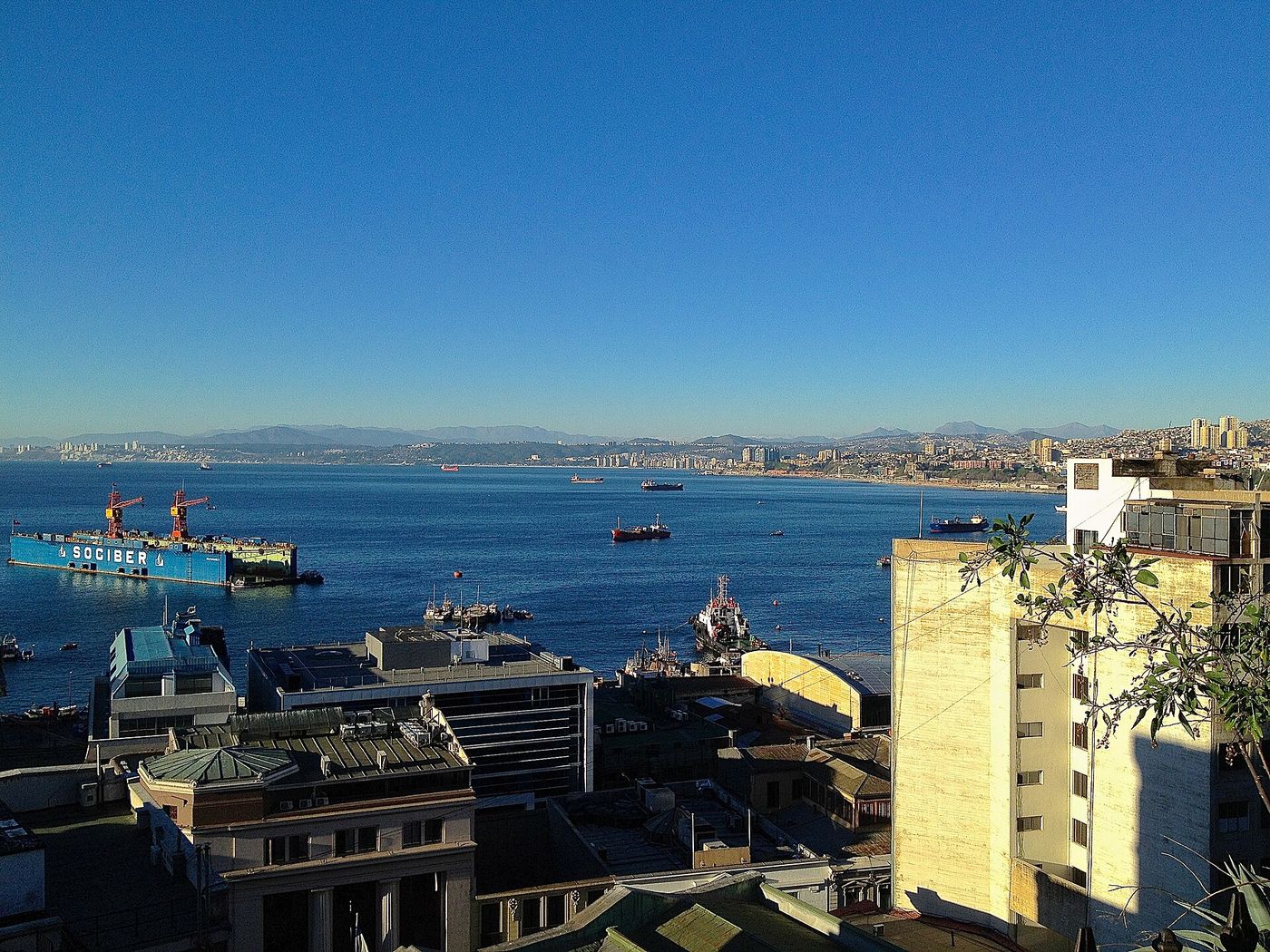
- Wednesday: the coast. Valparaiso midweek, when Ruta 68 is clear and the hills are not full of Santiago families. Take a jacket.
- Thursday: the Cajon del Maipo. An early start for altitude and river air, back before the worst of the afternoon.
- Friday: wine country or the city. The Maipo Valley vines are heavy before the March harvest, or spend the last day on whatever the first six days made you want more of.
The itineraries pillar has three and five-day versions, and the things to do round-up covers what to prioritize if this is a first visit.
Getting around in February
The Metro is the month’s best asset. It runs 06:00 to 23:00 Monday to Friday, from 06:30 on Saturday and 07:30 on Sunday and holidays, fares run CLP 735 to 895 depending on the hour, and since February 2026 it has accepted contactless bank cards directly. With offices half empty, even the 08:30 rush is mild.
Three February-specific patterns:
- Buses still need a bip! card. Contactless bank cards work on the Metro but not on RED buses, and the card costs CLP 1,550 with a CLP 1,000 minimum top-up.
- Walking distances that feel short in October are punishing at 15:00. Treat a 20-minute walk across the centro in February as 20 minutes in full sun with no shade.
- The coast roads are the worst traffic of the year at weekends. Ruta 68 toward Valparaiso jams badly on February Saturdays and around public holidays. Take a bus, and go midweek.
After the Metro closes at 23:00, which in a month of 22:00 dinners is a live problem, ride-hailing apps are the sensible answer. Budget roughly CLP 6,000 to 12,000 for a late crossing of the central comunas. Full detail on fares, cards and transfers is in getting around Santiago.
What February costs
The same as January for everything except accommodation, which eases slightly as the month goes on. Attraction prices, transport and restaurant prices do not vary seasonally in Santiago, so the month’s cost profile is driven almost entirely by beds and flights.
| Item | Price (checked September 2026) | USD approx. |
|---|---|---|
| Metro, off-peak | CLP 735-815 | 0.77-0.86 |
| Metro, peak | CLP 895 | 0.94 |
| bip! card for buses | CLP 1,550 | 1.63 |
| Teleférico return | From CLP 2,630 | 2.77 |
| Funicular return, weekday | CLP 2,250 | 2.37 |
| La Chascona | CLP 11,000 | 11.58 |
| Museo Precolombino, foreign visitor | CLP 12,000 | 12.63 |
| Museo de la Memoria | Free | – |
| Sky Costanera adult | CLP 25,000 | 26.32 |
| Bus to Valparaíso, one way | CLP 4,900-6,180 | 5.16-6.51 |
| Cousiño Macul winery tour | CLP 25,000 | 26.32 |
Converted at CLP 950 to USD 1. The honest verdict on Sky Costanera holds in February as in every month: it costs roughly ten teleférico tickets for a view from inside a glass box in a financial district, when the hill above the city gives you the Andes in the frame and moving air. The trip cost guide has the full budget picture.
Heat, sun and fire season
Three February risks, all of them shared with January. Heat, ultraviolet exposure and the central Chilean wildfire season, which runs roughly December to March and peaks in the driest weeks.
Heat. Mid-30s afternoons are normal. Treat 13:00 to 17:00 as indoor time, carry water, and do not attempt an unshaded hill at midday. Santiago’s dry air hides dehydration well.
Sun. SPF 50, a brimmed hat and sunglasses, and more of all three on any day trip that gains altitude. The ski-area roads climb above 2,400 m, where UV rises sharply.
Wildfires. Central Chile’s fire season runs through February, usually away from the city but occasionally close enough to fill the basin with smoke or close a foothill road. Check conditions before a Cajón del Maipo or coastal drive on a hot, windy day and follow local guidance.
Ordinary city safety is unchanged by the season. Keep bags zipped and in front of you in the centro, avoid holding a phone loose in a crowd, and use an app rather than flagging a taxi. The safety guide has the full picture, including the distraction scams that catch visitors in Plaza de Armas.
What to pack for February
Identical to January: light clothing, one warm evening layer, and serious sun protection. The evening layer is the item people leave behind and regret, because a 30.1°C afternoon becomes a 13.0°C night and terrace dinners run late.
- Breathable shirts, shorts or light trousers.
- One sweater or light jacket, carried every day.
- SPF 50, a hat with a brim, sunglasses.
- Walking shoes with grip for the hills, plus something for a nice dinner.
- Swimwear for hotel or park pools.
- A refillable bottle.
- A jacket for any coastal day trip, whatever Santiago’s forecast says.
The full seasonal list, including the dress codes that matter in the eastern neighborhoods, is in the packing guide.
February by traveller type
The month reads very differently depending on why you came, and the gap between the best and worst fit is wider in February than in any other month.
| Traveller | February verdict |
|---|---|
| First-time visitor | Good. The headline sights are all open and uncrowded |
| Couples | Good, with caveats. Book restaurants that are confirmed open |
| Families | Good with a pool, hard without one |
| Solo travellers | Good. Hostels run on international visitors, not locals |
| Food-led trips | The worst month of the year. Come in March |
| Museum and culture trips | The best month for access, the thinnest for new programming |
| Hikers and outdoors | Excellent in the mountains, unpleasant in the city at midday |
| Photographers | Clear Andes, empty streets, brutal midday light |
| Budget travellers | High-season beds, low-season everything else |
The travel styles guide goes further on each of those, including what changes about the city for solo travellers, couples and business visitors regardless of season.
Five February mistakes worth avoiding
- Trusting online opening hours. In February, listings are the least reliable they are all year. Owners close for three weeks and update nothing. Confirm on the day.
- Planning a restaurant-led trip. If eating your way through Barrio Italia and Nunoa is the point of your visit, February is the wrong month and March is the right one.
- Climbing a hill at 14:00. Cerro Santa Lucia and Cerro San Cristobal are steep, stony and unshaded. Both are excellent at 08:00 and miserable in the afternoon.
- Driving to the coast on a Saturday. February weekends put half of Santiago on Ruta 68. A bus costs a few thousand pesos and avoids the queue.
- Packing for heat only. A 30.1C afternoon becomes a 13.0C night, and Valparaiso can be ten degrees cooler than the city at the same hour. One layer, carried daily.
Using an empty city: what February makes possible
An emptied capital is a strange gift, and a few things are only comfortable in the weeks when Santiago belongs to whoever stayed behind. This is the argument for February that no weather table makes.
Museums at your own pace. The Precolombino’s galleries in February hold a handful of people. The same rooms in October carry school groups. If you care about looking at objects rather than queuing past them, this is the month.
Photography without crowds. Plaza de Armas, the Mercado Central’s ironwork, the Cementerio General’s avenues and the stairs of Cerro Santa Lucia all photograph better empty, and February is the only month that reliably delivers that. Shoot early: the light is hard by 11:00 and the haze builds through the afternoon.
A Metro that works. Line 1 between 08:00 and 09:00 in February is a different transport system from Line 1 in May. If you have any reason to cross the city at rush hour, this is when it is painless.
Tables at the places that stay open. The restaurants that keep working through the holidays are the ones with staff and reservations systems, which means the high-end tables that book out weeks ahead in spring are often available on a few days’ notice.
Space in the mountains. The Cajon del Maipo fills at weekends but empties midweek, and February Wednesdays on the upper trails are quiet in a way that the same trails in November are not.
The trade is always the same one: you get the city’s infrastructure without its street life. Whether that is a good deal depends entirely on which of the two you came for.
Accessibility and comfort in February heat
Heat changes the accessibility calculation in Santiago, and not only for visitors with mobility needs. Distances that are easy in October become hard in February, shade is scarce, and the places with reliable air conditioning are a smaller list than you would expect in a capital this size.
What helps:
- The Metro. Stations on the newer lines have lifts, and the system is the most comfortable way to cross the city in the afternoon. The centro’s flat grid means short surface walks between stations and sights.
- The funicular and teleferico rather than the climb. The funicular runs Tuesday to Sunday 10:00 to 18:45, Monday from 13:00, with a weekday return at CLP 2,250. The teleferico runs Tuesday to Sunday 10:00 to 19:45 from CLP 2,630 return. Both are closed Monday, and the funicular also closes on the first Monday of the month.
- Underground and air-conditioned spaces. The Centro Cultural La Moneda’s galleries are below ground, the big museums are cooled, and shopping centers work as a heat refuge even if you buy nothing.
- Scheduling. Early mornings and evenings are the accessible hours in this month for almost everybody, and 13:00 to 17:00 is the block to spend indoors regardless of fitness.
What does not help: Cerro Santa Lucia, which is stone stairs throughout and closes entirely when it rains, and the long unshaded stretches around Plaza de la Ciudadania and the larger parks. The accessible Santiago guide covers step-free routes, lift-equipped stations and the venues that publish accessibility information.
One more February-specific note: pharmacies are everywhere and stock rehydration salts, sunscreen and everything else you are likely to need. Nothing on this list needs to be carried from home.
Frequently asked questions
Is Santiago empty in February?
Largely, yes. February is the deepest part of the Chilean summer holiday, and residents leave for the coast and the south. Residential neighborhoods go quiet, traffic thins, museums are uncrowded and many small restaurants close for two to four weeks, mostly in the first half of the month.
Is February hotter than January in Santiago?
No, marginally cooler by day. The normals give February a mean maximum of 30.1°C against January’s 30.2°C, and a slightly warmer mean minimum of 13.0°C. The difference is not noticeable. What changes between the months is the number of open kitchens, not the temperature.
What closes in Santiago in February?
Mostly small, owner-run businesses: neighborhood restaurants, cafés, bakeries and independent galleries, typically for two to four weeks. Museums keep their normal Tuesday to Sunday hours and close on Monday as they do all year. Transport, markets, malls and the major attractions run as usual.
Is the Viña del Mar festival worth travelling for?
Only if you want the spectacle. The Festival Internacional de la Canción runs several nights in late February at the Quinta Vergara in Viña del Mar and dominates Chilean television. Coastal accommodation gets scarce and expensive that week, which is worth knowing even if you skip it.
Do shops and supermarkets close in February in Santiago?
No. Supermarkets, pharmacies and shopping centers run normal hours through the summer, and so do the markets. The closures are concentrated in small, owner-run restaurants, cafes and independent shops, which shut for two to four weeks at their owners’ discretion.
Is late February better than early February?
Usually, yes. The last week sees kitchens reopening, families returning before the March school year, the coast emptying and the heat beginning to ease toward March’s averages. Early February is quieter and more shuttered, which suits some trips and frustrates others.
Can you swim in Santiago in February?
In pools, yes. The Parque Metropolitano pools run a summer season into March, and hotel pools are the most useful amenity of the month. The ocean at Valparaíso and Viña del Mar is cold year-round because of the Humboldt Current, so coastal trips are better for the air temperature than the water.
Should I visit Santiago in February or March?
March, if you have the choice. It holds most of February’s warmth at 28.6°C, brings the restaurants back, starts the wine harvest and restarts the cultural calendar. February’s advantage is quiet: empty museums, an easy Metro and a city that belongs briefly to whoever stayed.
If February’s closures are the problem, March is the answer: the same summer warmth at 28.6C, the kitchens reopened, the cultural season restarted and harvest underway in the valleys around the city. Our guide to Santiago Chile in March covers the vendimia, the Lollapalooza weekend and why locals rate it among the two best months of the year.
Sources
- Dirección Meteorológica de Chile: climate normals, Santiago Pudahuel 330021
- Dirección Meteorológica de Chile: climate normals, Quinta Normal 330020
- Parque Metropolitano de Santiago
- Teleférico Santiago: hours and fares
- Funicular Santiago
- Fundación Neruda: La Chascona
- Museo Chileno de Arte Precolombino
- Museo de la Memoria y los Derechos Humanos
- Metro de Santiago: fares and hours
- Santiago Turismo: markets and visitor information
- Government of Canada travel advice: Chile
- Visit Santiago: official visitor site
Image credits
| Photo | Credit |
|---|---|
| Parque Forestal (top of page) | Alvaro Vidal, CC BY-SA 3.0, via Wikimedia Commons |
| Plaza Nunoa | Rodrigo Fernández, CC BY-SA 4.0, via Wikimedia Commons |
| Piscina Antilen | Falk2, CC BY-SA 4.0, via Wikimedia Commons |
| An ascensor in Valparaiso | Yanquele Arévalo, CC BY-SA 3.0, via Wikimedia Commons |
| Quinta Vergara, Vina del Mar | Eduardo Cortes from Valparaiso, Chile, CC BY 2.0, via Wikimedia Commons |
| Valparaiso bay | Ashoka Jegroo, CC BY-SA 3.0, via Wikimedia Commons |