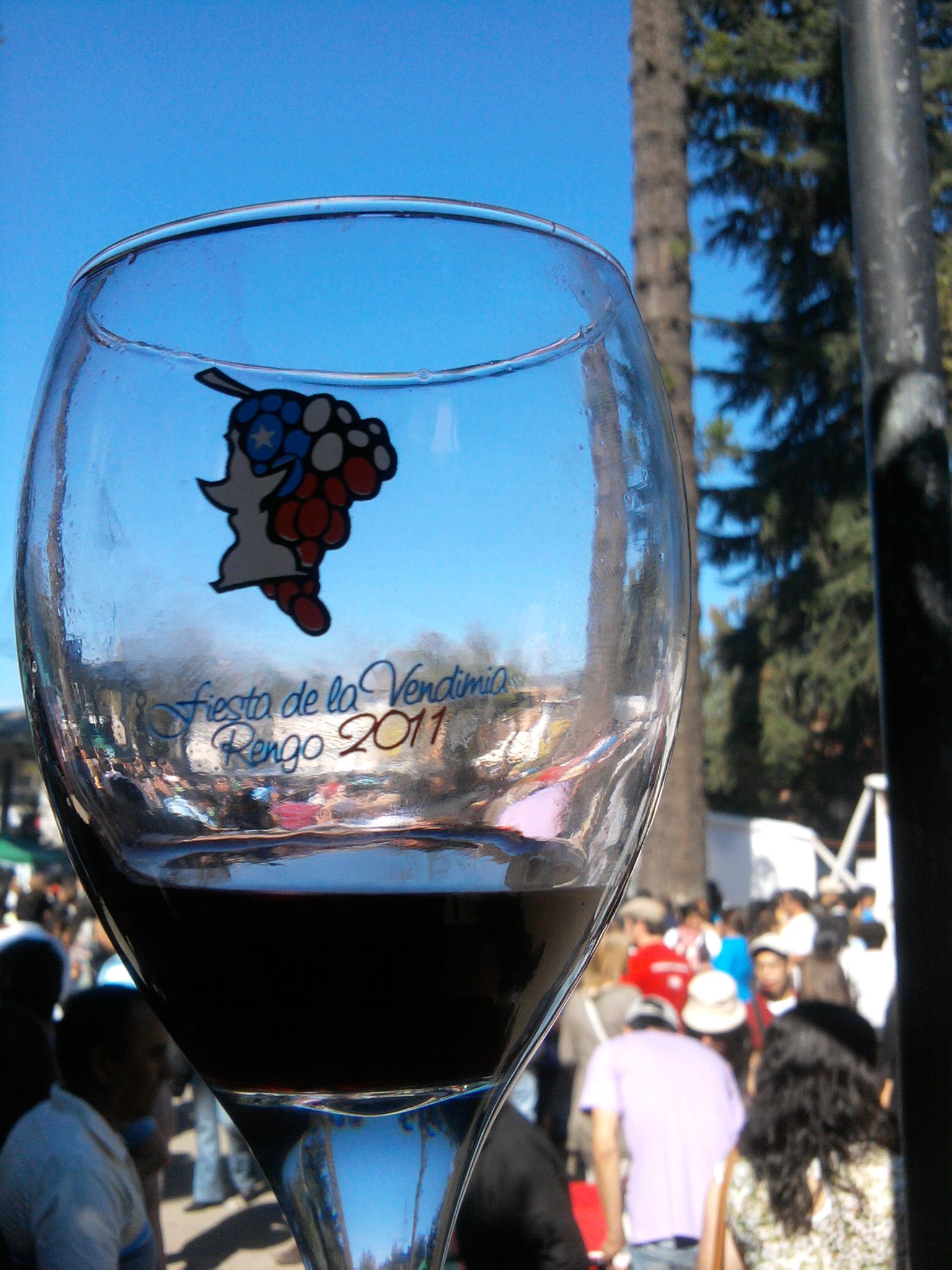
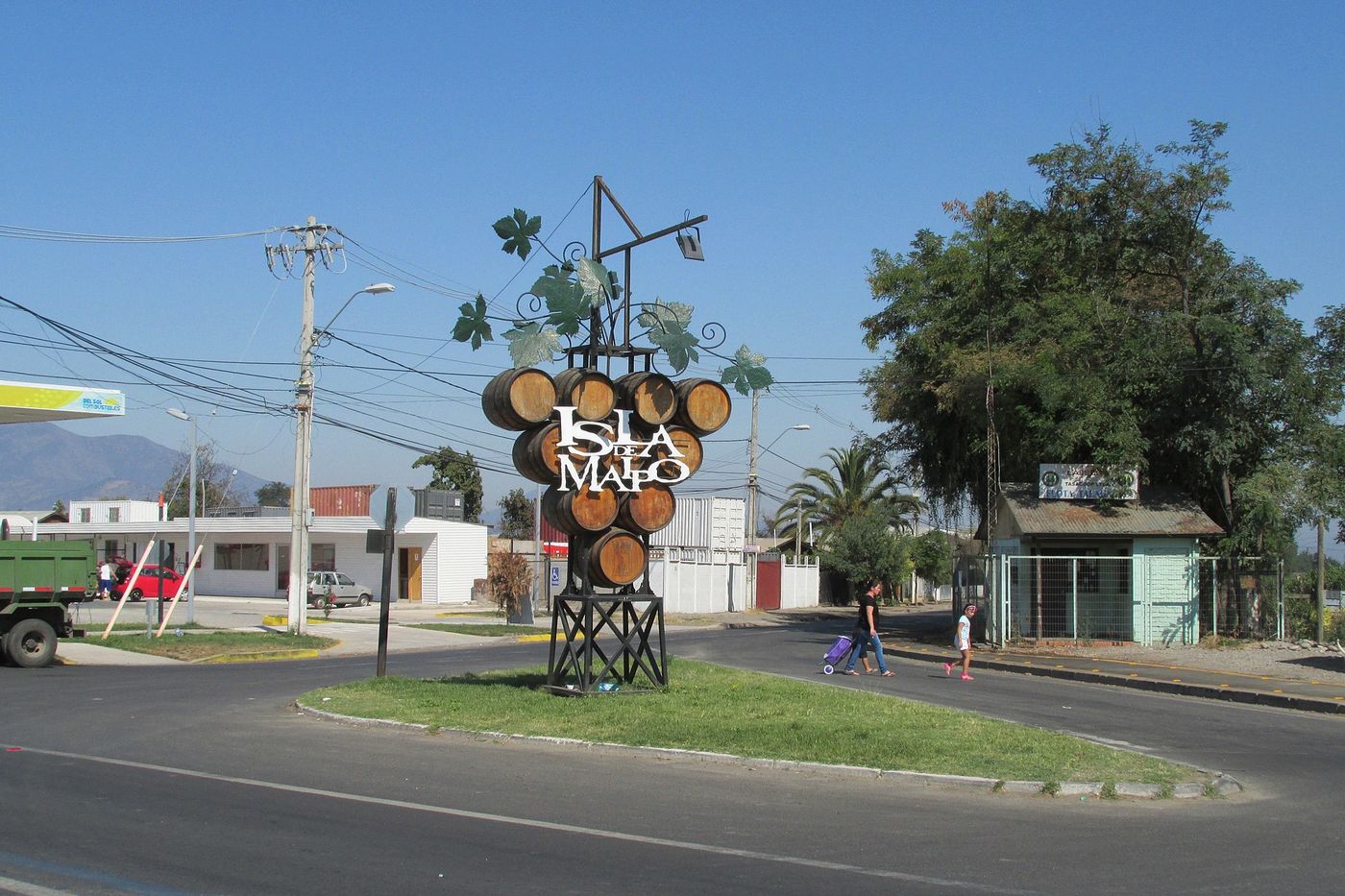
The Maipo Valley wine harvest festivals are small-town street parties rather than ticketed wine events, and the biggest is at Isla de Maipo, about an hour southwest of Santiago. The 2026 edition ran on 28 and 29 March with more than a dozen wineries and close to a hundred stallholders taking over the town centre, and entry was free.
Two more communes in the valley run their own vendimias, at Buin and Pirque, and the season as a whole stretches from late March into April. This guide covers what each one is, what actually happens there, how to get to them without a car, and the honest question of whether a festival beats a straightforward winery tour. For the wider Chilean calendar, see the events and festivals guide.
The Maipo vendimias at a glance
| Festival | Commune | When it runs | Entry | Best for |
|---|---|---|---|---|
| Fiesta de la Vendimia de Isla de Maipo | Isla de Maipo | Late March; 28-29 March in 2026 | Free entry, tastings sold separately | The biggest and most visitor-ready |
| Fiesta de la Vendimia de Buin | Buin | Late March in past editions | Not published | A bigger town, easier transport |
| Fiesta de la Vendimia de Pirque | Pirque | Late April in past editions | Not published | The closest valley town to Santiago |
| Estate harvest tours | Across Maipo | Throughout March and April | CLP 25,000-40,000 | Wine rather than fiesta |
One important caveat before you plan anything. These are municipal events whose dates are confirmed a few weeks out, not a year ahead, and they move between late March and late April depending on the commune and the harvest. The 2026 Isla de Maipo dates are confirmed by the municipality; the Buin and Pirque patterns below come from a Chilean government agency’s listing for an earlier year and should be treated as the shape of the season rather than as this year’s calendar (checked September 2026).
Why Maipo matters: Chile’s Cabernet heartland
The Maipo Valley is the oldest and most established of Chile’s wine regions, and it starts at Santiago’s southern edge. That proximity is the practical reason these festivals exist an hour from a capital city, and it is also why the valley’s wine is worth taking seriously rather than treating as a day-trip novelty.
The valley divides roughly into three sectors, and the difference shows in the glass:
- Alto Maipo, the upper section closest to the Andes around Puente Alto, Pirque and Penalolen, sits highest and coolest. It produces Chile’s most celebrated Cabernet Sauvignon, and the estates here are the ones whose names travel internationally.
- Central Maipo, around Buin and Isla de Maipo on the valley floor, is warmer and flatter, with a longer history of everyday wine and a growing number of serious producers. This is where the festivals are.
- Coastal or Lower Maipo, further west toward Talagante and Melipilla, feels the Pacific influence and works with a broader range of varieties.
For a visitor, the useful implication is that a single day in the valley can cover a mountain-influenced estate and a valley-floor town festival without much driving. Pirque and Puente Alto sit at one end of Metro Line 4’s reach; Buin and Isla de Maipo are 20 to 30 minutes beyond that by road.
Harvest itself runs on altitude and variety. Whites and early reds come in first, from February; Cabernet, the valley’s signature, is usually among the last, into April. That is why the festivals fall where they do, at the tail of the work rather than the middle of it.
What is a Chilean vendimia festival?
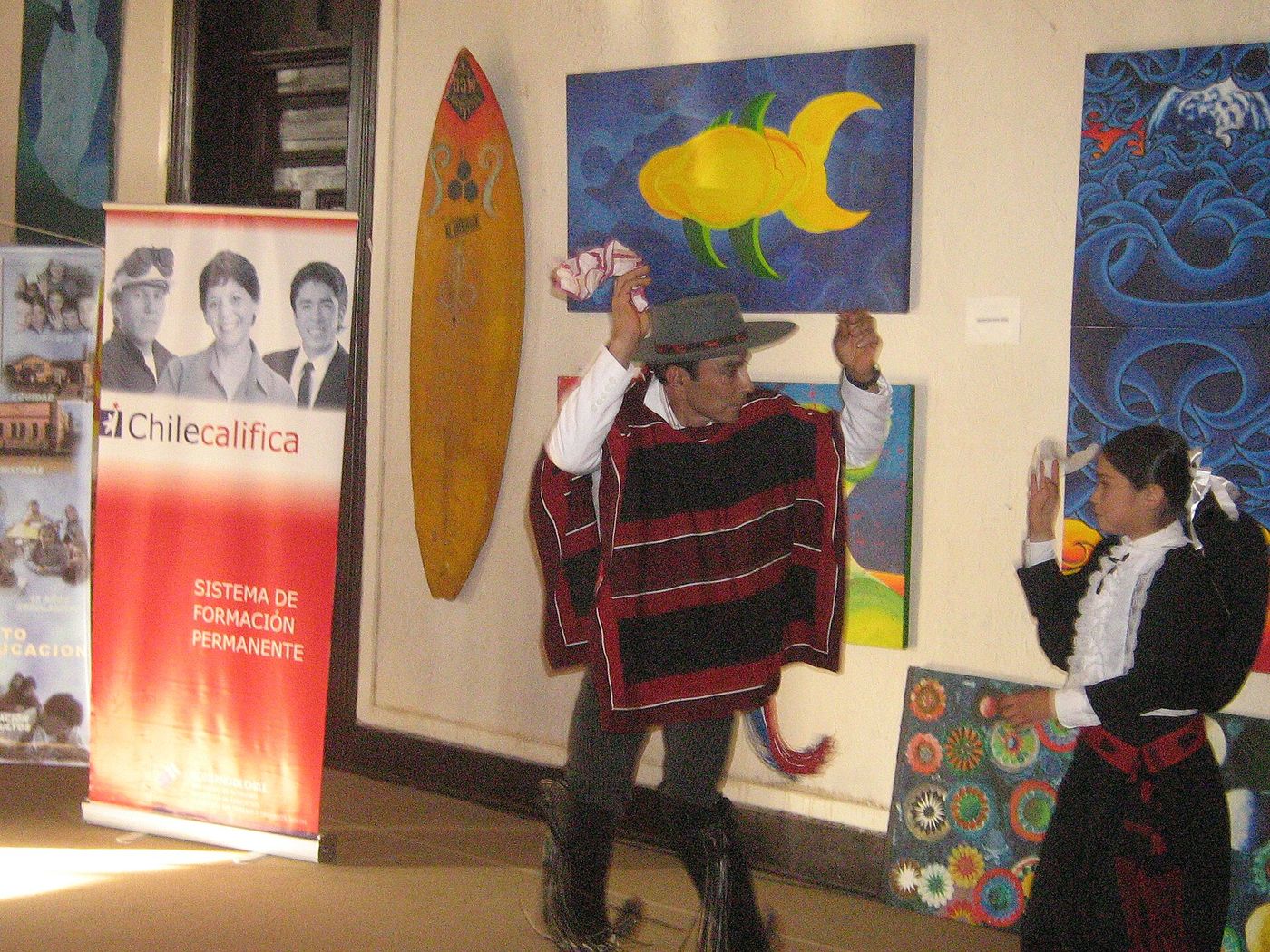
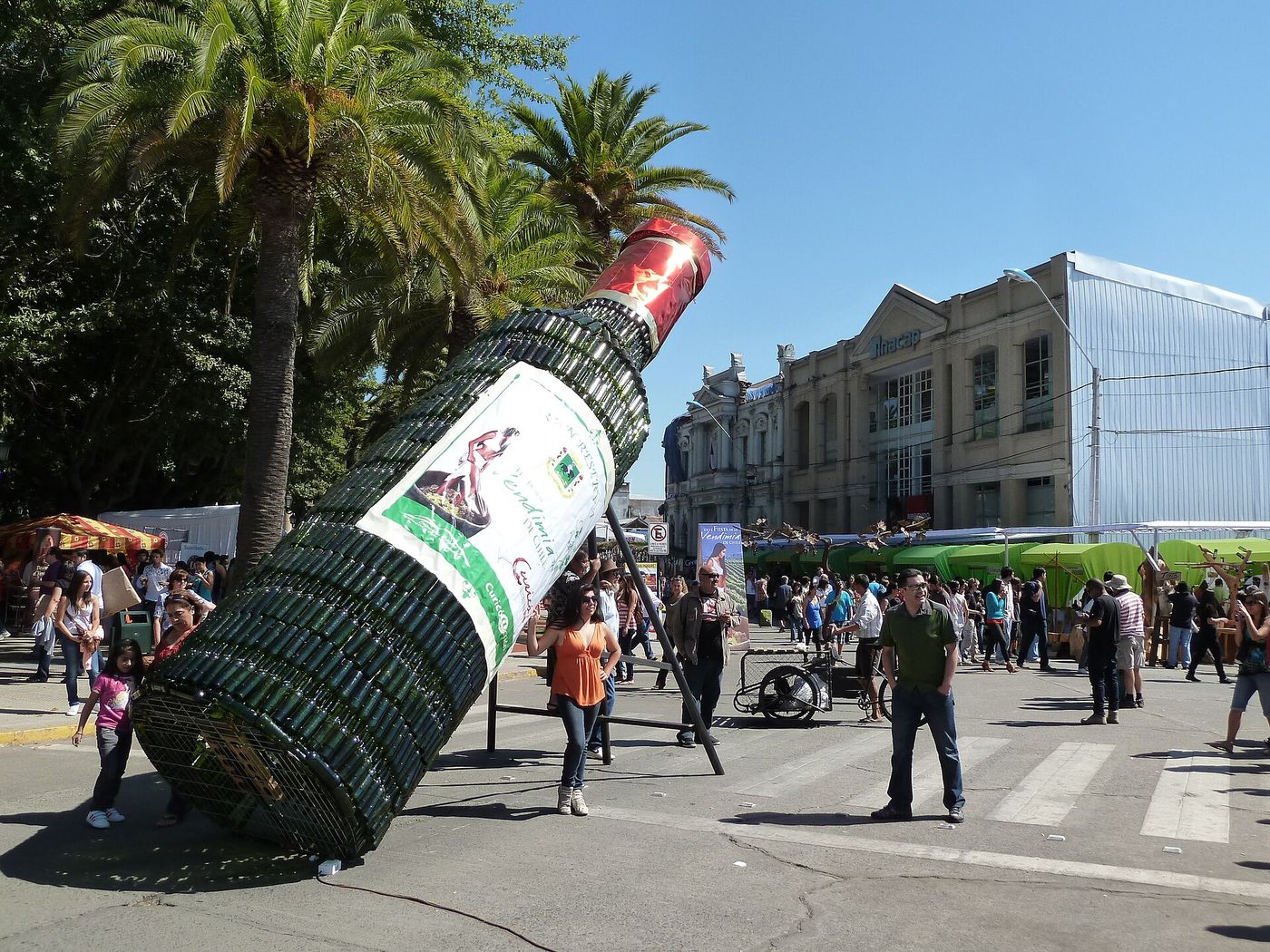
A harvest festival in the Maipo Valley is a free town-centre fiesta with wine at the middle of it. Expect stalls from local wineries selling tastings and bottles, a hundred or so artisan and food producers, grape-stomping competitions, folk music, cueca dancing and Chilean country cooking, all spread across a plaza and the streets around it.
The format has been consistent for decades. A government agency’s description of the Metropolitan Region vendimias lists tastings, grape stompers, criollo games, Chilean-style masses, cueca, traditional food, crafts, folk groups and wine sold at cellar prices. That is still an accurate summary of what you will find.
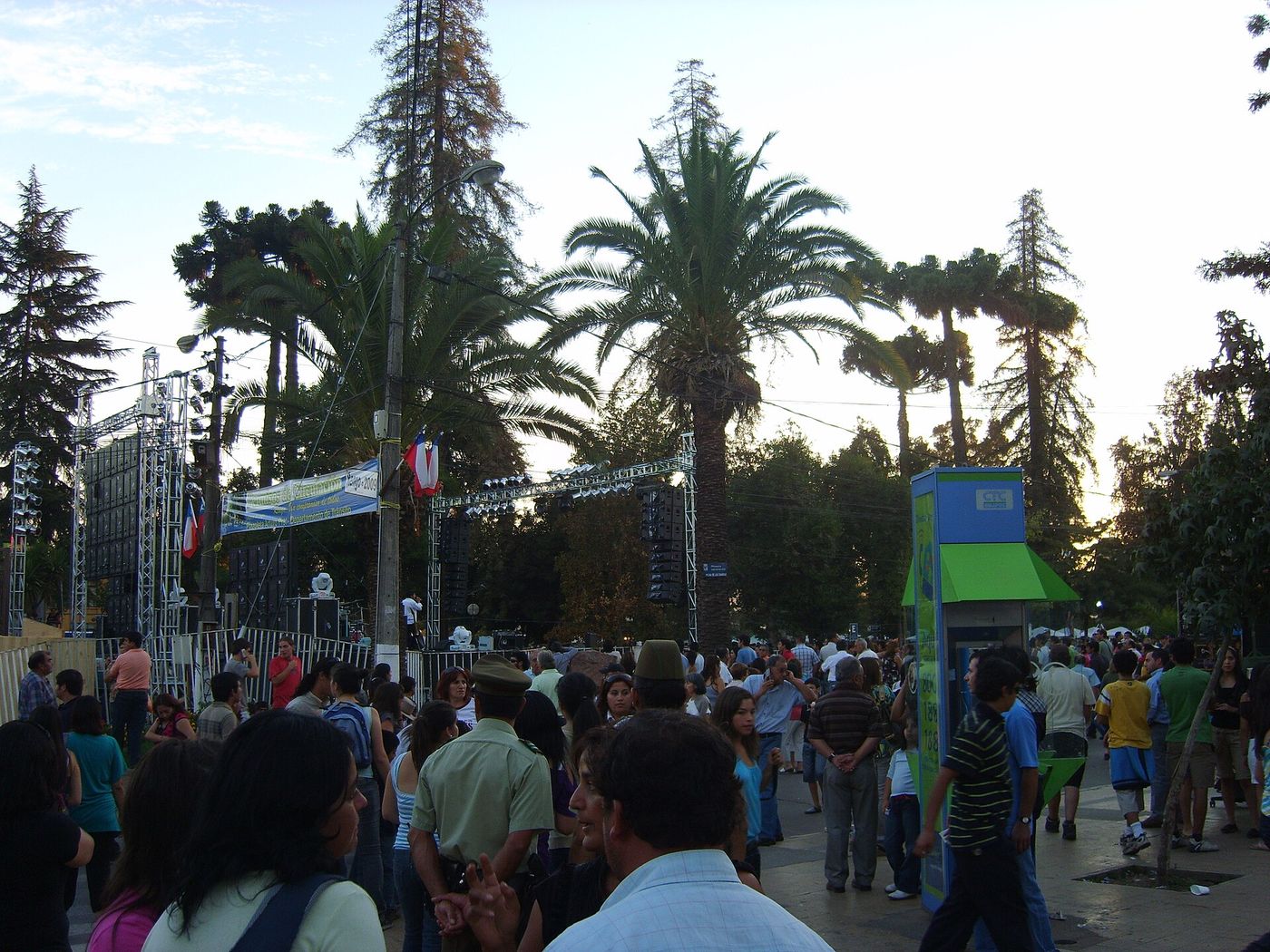
What it is not: a curated wine event. There are no masterclasses running all day, no international critics, and very little English. Tastings are sold by the glass or by a token system at each winery’s stall, the food is empanadas and roast meat rather than a tasting menu, and the entertainment is a stage with Chilean bands playing to families sitting on the grass. That is the appeal, if it is your kind of thing.
The wine itself is genuinely good, because Maipo is Chile’s most established valley for Cabernet Sauvignon and the wineries pouring at these festivals are the ones with vineyards a few kilometres away. Bottles sell at cellar prices, which is usually well below Santiago retail.
Fiesta de la Vendimia de Isla de Maipo
This is the one to aim for. Isla de Maipo’s municipality calls it the most important tourism event in the commune, and the 2026 edition ran on 28 and 29 March across the town’s historic centre, with the Plaza Central stage as its focus.
What the municipality confirmed for 2026:
- More than a dozen wineries from the commune, the wider Maipo Valley and abroad.
- Close to a hundred exhibitors, including artisans, small producers and local businesses.
- Grape-stomping competitions and a full live music programme on the Plaza Central stage.
Press coverage of the same edition adds detail the municipal page does not publish: free entry, an eighteenth edition, the festival laid out along Avenida Santelices and the Plaza Central, tasting sales from 12:00 to 20:00 on the Saturday and 12:00 to 19:00 on the Sunday, and an official opening at 10:30 on Saturday at the Santuario Parroquial Nuestra Señora de la Merced. Treat those as likely rather than certain, since they come from news reports rather than the organisers.
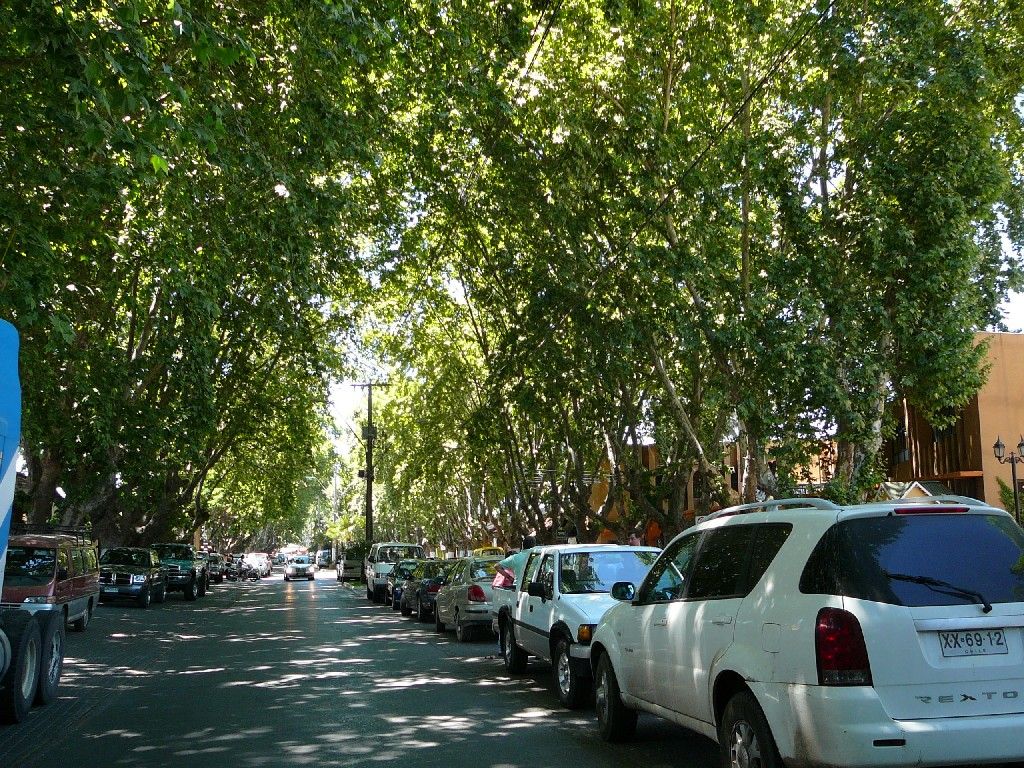
Isla de Maipo sits about 45 km southwest of Santiago, in the flat lower part of the valley where several well-known estates have their vineyards. The town is small enough that the festival effectively becomes the town for a weekend, which is the point.
Buin and Pirque: the other two
Two more Metropolitan Region communes run their own vendimias, and both are worth knowing about, particularly if the Isla de Maipo dates do not fit your trip.
Buin held its festival in a park on calle O’Higgins in past editions, running from 11:00 until midnight on the main days and until 21:00 on the Sunday. Buin is a larger town on the main route south, which makes it the easiest of the three to reach, and it sits close to the Santa Rita estate at Alto Jahuel.
Pirque has used the Palacio Majadas de Pirque as its venue, and its festival has fallen later in the season, into late April. Pirque is the closest wine village to Santiago and the easiest half-day trip in the valley, reachable on Metro Line 4 to Plaza de Puente Alto plus a short local bus or colectivo. It is also home to Concha y Toro, the valley’s most visited winery.
Neither commune publishes dates far ahead, and both have changed venues and formats between editions. Check the municipal social media accounts or ask at a Santiago tourist information point in the weeks before you travel. The pattern to expect: Buin and Isla de Maipo in late March, Pirque into April.
How to get to the Maipo vendimias from Santiago
None of the three is on the Metro, but all three are within an hour or so of the city by road, and Pirque is the only one with a genuinely simple public transport route.
| Destination | Distance from Santiago | Public transport | Practical note |
|---|---|---|---|
| Pirque | About 30 km southeast | Metro Line 4 to Plaza de Puente Alto, then local bus or colectivo, roughly 10 minutes | The easiest independent trip |
| Buin | About 35 km south | Regional buses from the south of the city; Metrotren to Buin station | The best rail option |
| Isla de Maipo | About 45 km southwest | Regional buses via Talagante; no direct Metro | The hardest without a car |
Three things worth planning for. Festival weekends put far more traffic than usual on the roads south, and the return trip on a Sunday evening is the slowest part of the day. Public transport to Isla de Maipo involves at least one change and thins out in the evening, so check the last departure before you settle in. And the whole point of a vendimia is drinking wine, which makes driving yourself the worst option available.
Chile enforces strict drink-driving limits, well below those in the United States or the United Kingdom, and the penalties are serious. If you want to visit a festival and drink at it, use public transport, an organised tour or a driver. The getting around guide covers the Metro, buses and taxis in the city, and the day trips guide covers getting out of it.
What a festival day actually looks like
Arrive late morning, eat early, taste through the afternoon, and leave before the music finishes. That is the pattern that works, and the reason is transport rather than stamina.
A realistic shape for a day at Isla de Maipo or Buin:
- 10:00 to 11:00, leave Santiago. Allow more time than the map suggests; festival traffic builds from mid-morning.
- Late morning, walk the stalls. The artisan and producer stands are at their most pleasant before the crowds arrive, and the wineries are still setting up.
- 12:00 onward, tastings open. At Isla de Maipo in 2026 tasting sales ran from 12:00, which is when the day properly starts.
- Early afternoon, eat. Chilean festival food is empanadas, roast meat, pastel de choclo and whatever the local producers have brought. Eat before you drink much.
- Mid-afternoon, the competitions. Grape stomping is the set piece, and it is as silly and as popular as it sounds.
- Late afternoon, the music. Folk groups, cueca and Chilean bands on the main stage.
- Early evening, leave. Tasting sales at Isla de Maipo closed at 20:00 on the Saturday and 19:00 on the Sunday in 2026. Heading back before the last band means a much easier journey.
Bring cash. Many small producers and some winery stalls do not take cards, and mobile coverage at a crowded outdoor event is unreliable enough that card terminals fail anyway.
Combining a festival with an estate visit
The best version of a vendimia day pairs one estate tour with one town festival, and the geography cooperates if you pick the right pair.
| Festival | Estate to pair it with | Why it works |
|---|---|---|
| Isla de Maipo | Undurraga, at Talagante | Both sit in the lower valley, 15 minutes apart |
| Buin | Santa Rita, at Alto Jahuel | The estate is effectively in Buin’s backyard |
| Pirque | Concha y Toro, in Pirque | Same village, the easiest public transport of the three |
A working structure for the day:
- Book the estate tour for the morning, ideally 10:00 or 11:00. Harvest-season tours are busier and fill earlier than the same visit in June.
- Eat at the estate or in the town after the tour, before the festival crowds peak.
- Spend the afternoon at the festival, when tastings are open and the music starts.
- Leave in the early evening, before the last acts and the traffic.
One honest caveat about harvest-season tours: the wineries are working. Tours can be shortened, rerouted around machinery or moved outside while a cellar receives fruit. That is precisely what makes March and April interesting, but it is not the month for a leisurely, uninterrupted cellar walk.
Prices at the estates nearest the city run CLP 25,000 to 40,000 per person for a tour with tasting (checked September 2026), which is the single largest cost in a day that otherwise runs on free entry and bus fares. The wine tours guide covers each estate, its languages and its transport in detail.
What harvest actually changes about the wine
Visiting during the vendimia changes what is in the glass as well as what is happening around it, and it is worth knowing what you are tasting.
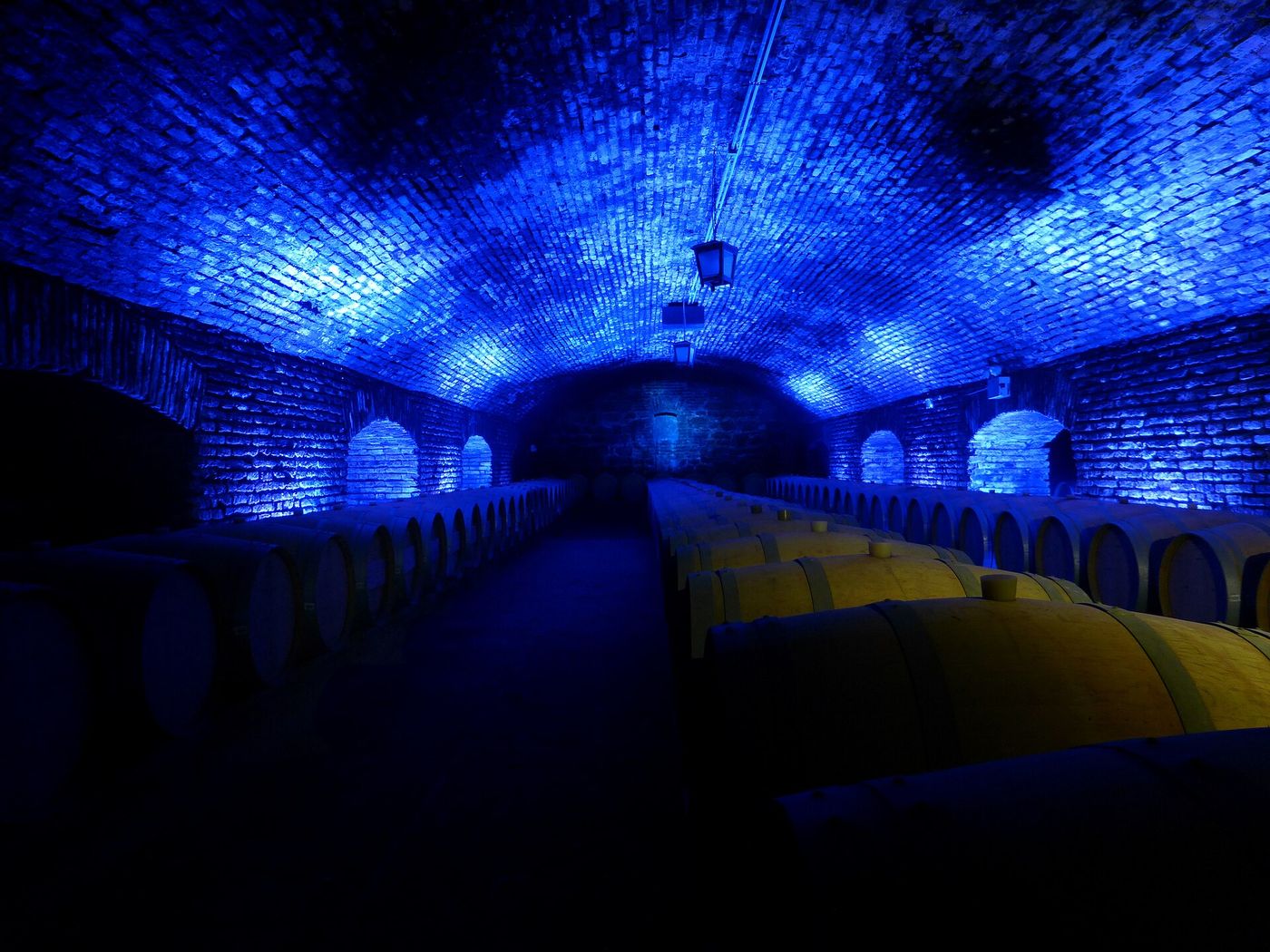
Tank and barrel samples. Some estates pour unfinished wine during harvest, straight from tank or barrel. It is cloudy, sharp and nothing like the bottled version, and it is the most interesting thing you will taste all day if the winery offers it.
Young wine at the festivals. The stalls at a town vendimia sell finished wine, generally recent vintages at cellar prices. This is not the place to look for aged Cabernet; it is the place to buy three bottles of something good for less than one would cost in a Santiago restaurant.
Pipeno and country wine. Chile’s rustic, lightly fermented country wine turns up at harvest festivals and fondas in jugs and litre bottles. It is cheap, low in alcohol by Chilean standards and drunk by the tumbler. Try it once; it explains a lot about Chilean drinking culture.
Fresh grape juice and mosto. Non-drinkers and children are catered for at these events, usually with fresh juice from the same fruit.
Buying to take home. Bottles at cellar prices are one of the few genuinely good-value souvenirs in Chile, but check your airline’s baggage allowance and your home country’s duty-free limit before buying a case. Wine is heavy, and Chilean estates will pack bottles for checked luggage.
One thing to skip: the branded glass. Most festivals sell a commemorative tasting glass that you carry all day. It is a nice object and a nuisance to transport, and the wine tastes the same from a plastic cup.
Festival or winery tour: which is actually better?
For most international visitors, a winery tour. The festivals are excellent value and genuinely local, but they are built for Chilean families rather than for wine tourists, and almost everything happens in Spanish. A tour at an estate gives you the vineyard, the cellar, a guided tasting and, in harvest season, fruit actually arriving.
The honest comparison:
| Vendimia festival | Estate tour | |
|---|---|---|
| Cost | Free entry; tastings a few thousand pesos | CLP 25,000-40,000 per person |
| Language | Spanish, almost entirely | English available at the major estates |
| What you see | A town party with wine stalls | Vineyards, cellars, production |
| Wine range | Many wineries, small pours | One producer, in depth |
| Atmosphere | Families, folk music, crowds | Structured and calm |
| Best for | A cultural experience | Understanding Chilean wine |
The estates closest to Santiago run tours through harvest: Cousiño Macul in Peñalolén at CLP 25,000 for the traditional tour and CLP 40,000 for the premium, Santa Rita in Buin at CLP 31,000 for the Clásico, and Undurraga in Talagante at CLP 29,500 for the Sibaris with English departures at 10:00 and 15:00 (checked September 2026). Concha y Toro at Pirque is the most visited and the easiest to reach, though its tour price was not published at the time of writing.
The best answer, if your dates allow, is both: an estate tour on a weekday and a festival at the weekend. They are different experiences that happen to involve the same grapes. The wine tours guide covers the estates, the valleys and how to choose between them.
Beyond Maipo: the bigger harvest festivals
If a vendimia is the reason for your trip rather than a bonus, the larger festivals are further out. Chile’s official tourism body features three valleys rather than Maipo.
- Colchagua, centred on Santa Cruz, holds its harvest festival every March with tastings from more than 20 wineries, music, food and crafts, and a wine route linking 13 historic estates. It is the country’s best-known vendimia and a long day trip or an overnight from Santiago.
- Casablanca, between Santiago and Valparaíso, runs harvest events within the February to May window, with grape stomping, local cuisine and more than 20 wineries. Easy to combine with a coastal day.
- Curicó, in the Maule region, also runs every March, with tastings, parade floats and the crowning of a harvest queen, connecting 15 wineries across several towns.
The trade-off is straightforward: Maipo is close and small, Colchagua is far and grand. If you have one free day, Maipo wins on logistics. If you have two and care about wine, Colchagua is the better festival. Both sit inside a Chilean calendar that runs Teatro a Mil in January and Fiestas Patrias in September, mapped out in the Santiago events and festivals calendar.
Staying overnight in the valley
Most visitors do this as a day trip from Santiago, which is the sensible default. The valley towns are small, accommodation is limited, and the city is an hour away with far more choice. There are two reasons to stay out anyway.
The first is drinking. A festival is a long day of wine, and a room in the commune removes the transport problem entirely. The second is the following morning: valley mornings in autumn are beautiful, and an early start at an estate before the crowds is a different experience from arriving at 11:00 with everyone else.
What is available: a handful of small hotels and guesthouses in and around the valley towns, plus rural lodges attached to or near some estates. Options are thin and fill quickly for festival weekends, so book well in advance or stay in Santiago.
If you stay in the city instead, base yourself somewhere with easy access to Line 4 or the southern bus terminals if the valley is a priority. The where to stay guide compares the city’s neighborhoods, and the trip cost guide covers what a day out of the city adds to a budget.
When is the Maipo harvest, and when should you go?
The Chilean vendimia season runs from February to May, and the Maipo Valley picks through March and into April. The festivals cluster at the end of that window, when the work is mostly done and the communes can spare the attention.
| Month | What is happening in the valley |
|---|---|
| February | Early varieties come in; estates get busy |
| March | The main harvest, and the Isla de Maipo and Buin festivals |
| April | Late picking, Pirque’s festival, autumn colour in the vines |
| May | Cellar work; the season’s celebrations are over |
March is also the best month to be in Santiago generally, with average highs of 28.6°C and effectively no rain, the city back at work after the summer holidays and the cultural season restarted. Santiago in March covers the month in full, and Santiago weather by month has the climate data if you are weighing April instead.
One practical warning about April: the weather turns. April averages 25.7°C by day but drops to 9.5°C at night, and the first rain of the season usually arrives in late April or May. An outdoor festival in Pirque in late April is a different proposition from one at Isla de Maipo in late March.
If your dates miss the festivals
The vendimia weekends are two days each, scattered across a five-week window, and plenty of trips will not line up with any of them. Very little is lost.
What to do instead:
- Take an estate tour in harvest season. March and April deliver the working-winery experience with none of the crowd, and the tours run all week.
- Go in any other month. A tour at Cousino Macul, Santa Rita, Undurraga or Concha y Toro is worthwhile year-round, and off-season visits are quieter, cheaper to book and more relaxed.
- Visit Pirque as a half day. Metro Line 4 to Plaza de Puente Alto plus a short local hop puts you in wine country in about an hour from the centre, no tour required.
- Look at Casablanca on a coastal day. The valley sits between Santiago and Valparaiso, which makes it an easy add-on to a coast trip.
- Go to Colchagua properly. An overnight in Santa Cruz is the best wine trip within reach of Santiago, festival or not.
The broader point: the festivals are a good cultural day out rather than the only way to see Chilean wine country. If your trip is about wine, the estates matter more than the street parties. If it is about Chile, the street parties are the more interesting half. The day trips guide covers both directions out of the city.
Money, safety and practical rules
Nothing about a vendimia is risky, but a few practical rules make the day easier.
- Bring cash. Small producers and some winery stalls do not take cards, and outdoor card terminals fail when the network is congested. ATMs in small communes run out of cash on festival weekends.
- Do not drive after tasting. Chile’s drink-driving limits are strict, enforcement is routine and penalties are severe. This is the single most important rule of the day.
- Plan the return trip before you start. Public transport from Isla de Maipo and Buin thins in the evening, and rideshare coverage outside Santiago is patchy.
- Watch valuables in the crowd. Ordinary event precautions apply: bag zipped and in front of you, phone pocketed. The safety guide covers the wider picture.
- Sun and heat. Late March afternoons in the valley run close to Santiago’s 28.6C average, with less shade than the city. Hat, sunscreen and water.
- Pace the tastings. Pours are small but they add up across a dozen stalls, and Chilean festival food is heavy, late and worth waiting for.
Emergency numbers across Chile: police 133, medical 131, fire 132.
What to bring and what to expect
A vendimia is an outdoor event in a small town at the end of a Chilean summer. Plan for sun, dust, crowds and a long day on your feet.
- Cash in pesos. The single most important item. Small producers often do not take cards.
- Sun protection. SPF 50, a hat and sunglasses. Shade at these events is whatever the plaza’s trees provide.
- A layer for the evening. March nights drop to around 11°C, and April’s to 9.5°C.
- Comfortable shoes. You will stand and walk for hours on paving and grass.
- Water, alongside the wine.
- A plan for getting home before you start drinking.
What to expect socially: a family event rather than a drinking event. Chilean festivals of this kind involve grandparents, children and dogs, and the tone is closer to a county fair than to a wine fair. That makes them pleasant and slightly slow, and it means the crowd thins earlier than you might think.
Accessibility varies by venue and is not published in advance. Plaza-based events on flat ground, as at Isla de Maipo, are broadly navigable, but temporary surfaces, crowds and portable toilets are the usual limitations. The accessible Santiago guide covers the city’s general picture, though it cannot speak for a temporary event in another commune.
What the valley looks like the rest of the year
The festivals occupy four or six days out of twelve months, and the Maipo Valley is open for the other 360. Knowing what changes across the year makes it easier to plan a visit that is not built around a specific weekend.
| Season | In the vineyards | What a visit is like |
|---|---|---|
| Spring, September to November | Budburst and flowering, green rows | Comfortable weather, quiet estates, good light |
| Summer, December to February | Ripening; heat and irrigation | Hot, dusty, and the estates are focused on the coming harvest |
| Autumn, March to May | Harvest, then leaves turning gold | The busiest and most interesting months, festivals included |
| Winter, June to August | Pruning, dormant vines | Cold, quiet, cheapest, and the cellars are at their calmest |
Two seasons stand out for different reasons. Autumn is the obvious one: fruit, fermentation, festivals and the vines turning colour through April and May. Less obvious is spring, when the valley is green, the Andes still carry snow, the weather is mild and you will share a tour with four people rather than forty.
Winter visits are underrated and genuinely cold. Vineyards are bare, tasting rooms are warm, and the price of everything drops. If wine rather than atmosphere is the point, a July tour with an unhurried guide beats a March tour interrupted by a delivery of grapes.
What does not change is the transport problem: Pirque is easy, Buin is manageable, Isla de Maipo needs planning, and drinking rules out driving yourself in every season. For the full picture of the estates, their tours and how to reach each, see the wine tours guide, and for other directions out of the city, the day trips guide.
Frequently asked questions
When is the Fiesta de la Vendimia in Isla de Maipo?
Late March, with the 2026 edition confirmed by the municipality for 28 and 29 March. Dates are announced a few weeks ahead rather than a year in advance, so check the commune’s own channels before booking anything around it (checked September 2026).
Is the Maipo Valley harvest festival free?
Entry to Isla de Maipo’s festival has been free, with tastings and bottles sold separately at each winery’s stall. Buin and Pirque do not publish their pricing in advance. Assume free or low-cost entry and budget for tastings, food and bottles at cellar prices.
How do I get to the Maipo vendimias without a car?
Pirque is easiest: Metro Line 4 to Plaza de Puente Alto, then a local bus or colectivo. Buin has a Metrotren station and regional buses. Isla de Maipo is the hardest, needing a regional bus via Talagante. Given the wine, public transport or an organised tour beats driving in every case.
Are the festivals worth it if I do not speak Spanish?
Partly. The stalls, the wine and the grape stomping need no language, and pointing works fine for tastings. The music, the announcements and most conversation will pass you by. If you want the wine explained, book an estate tour with an English-language departure instead.
Do the Maipo festivals sell food as well as wine?
Yes, extensively. Expect empanadas, roast meat, pastel de choclo, cheeses and whatever local producers have brought, alongside a hundred or so artisan stalls. Eat before you taste much; Chilean festival portions are generous and the wine stalls open around midday.
Are children welcome at a vendimia?
Very much so. These are family events rather than drinking events, with games, music and fresh grape juice alongside the wine. The practical limits are heat, crowds and long days on foot rather than anything about the atmosphere.
Which is better, Maipo or Colchagua?
Maipo for convenience, Colchagua for scale. The Maipo festivals are an hour from Santiago and feel like a town party. Colchagua’s festival at Santa Cruz is Chile’s best-known vendimia, draws more than 20 wineries and justifies an overnight stay, but it is a long way south.
Can I visit a winery on the same day as a festival?
Yes, and it makes a good day if you plan it properly. Book a morning tour at an estate near the festival commune, eat at the festival in the afternoon, and get back to Santiago before the evening traffic. Santa Rita is near Buin; Concha y Toro is in Pirque.
What else happens in the Maipo Valley in harvest season?
Estate tours run throughout, often with harvest-specific additions such as tank tastings. Some wineries host their own vendimia events for visitors, separate from the municipal festivals. Prices and dates vary by estate, so check each one directly rather than assuming a valley-wide programme.
The festivals are only one part of a season that starts weeks earlier on the coast. Casablanca’s whites are often picked from late February, before the first Maipo vendimia, and Colchagua’s carménère is still coming in after the last one, into May. Our guide to the wine harvest season near Santiago maps the whole sequence valley by valley, including the vendimias held inside the city itself and what a harvest-season tour costs.
Sources
- Municipalidad de Isla de Maipo: Fiesta de la Vendimia 2026
- INDAP: harvest festivals in the Metropolitan Region
- Chile Travel: Fiesta de la Vendimia Isla de Maipo
- Chile Travel: Chilean harvest festivals
- Viña Cousiño Macul
- Viña Santa Rita
- Viña Undurraga
- Viña Concha y Toro
- Metro de Santiago: fares and hours
- Dirección Meteorológica de Chile: climate normals, Santiago Pudahuel
- Santiago Turismo: municipal visitor information
- Visit Santiago: official visitor site
Image credits
| Photo | Credit |
|---|---|
| A Chilean vendimia (top of page) | Aeveraal, CC BY-SA 3.0, via Wikimedia Commons |
| Isla de Maipo | Marco Antonio Correa Flores, CC BY-SA 4.0, via Wikimedia Commons |
| Dancing the cueca | Diego Grez, CC BY-SA 3.0, via Wikimedia Commons |
| A Chilean vendimia crowd | Aeveraal, CC BY-SA 3.0, via Wikimedia Commons |
| A street in Isla de Maipo | Patricio Cornejo Riv…, CC BY-SA 3.0, via Wikimedia Commons |
| Street scene at a vendimia | LuxoDresden, CC BY-SA 3.0, via Wikimedia Commons |
| Concha y Toro, Pirque | Banfield, CC BY-SA 2.5 ar, via Wikimedia Commons |