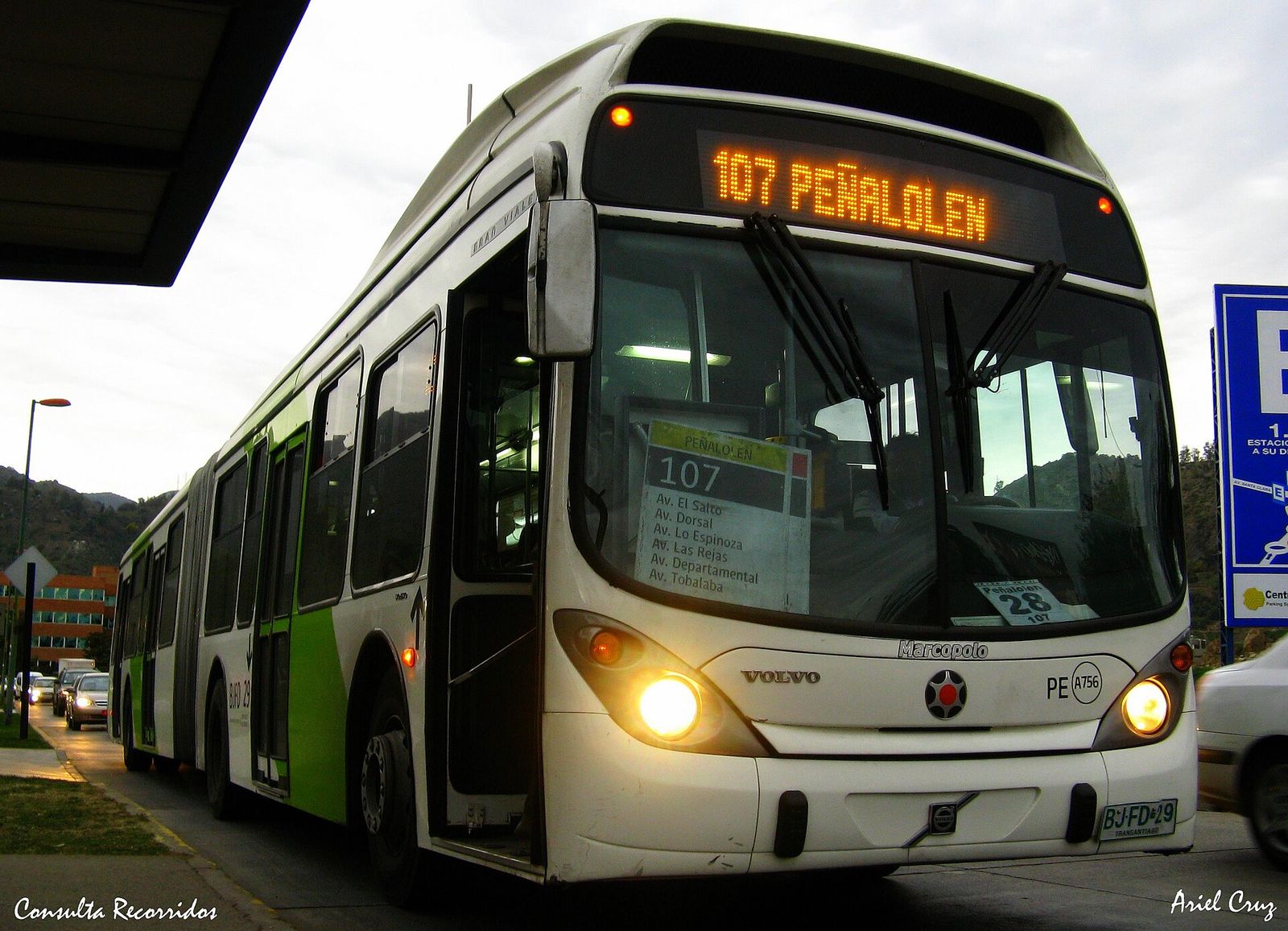
Accessible travel Santiago Chile is a story of two cities. The transport system has improved substantially — Metro Lines 3 and 6 are step-free throughout and the bus fleet is now overwhelmingly low-floor with ramps — while the pavements, the historic centre and several of the headline attractions have not changed much at all. The practical consequence is that getting across Santiago is easier than getting along one block of Lastarria, and planning around that inversion is what makes a trip here work.
This guide is written from published operator information and visitor-level observation rather than a formal access audit. Where something is not verifiable, we say so and tell you who to ask.
What you need to know first
| Element | Reality | Confidence |
|---|---|---|
| Metro Lines 3 and 6 | Step-free throughout, lifts at all stations, platform screen doors | High |
| Metro Lines 1, 2, 4, 5 | Variable; many stations have lifts, availability depends on maintenance | Medium — check the station |
| RED buses | Low-floor with manual ramps and wheelchair spaces across most of the fleet | High |
| Pavements, historic centre | Uneven, high kerbs, inconsistent drop-downs, frequent roadworks | High |
| Lastarria, Barrio Italia, París-Londres | Cobbled; hard going for wheels of any kind | High |
| Newer museums | Step-free, lifts, accessible toilets | High |
| Older museums and historic houses | Partially adapted; ask about specific floors | Medium |
| Public toilets | Scarce, often charged; malls and museums are the reliable option | High |
| Taxi apps | Widely available and cheap; accessible vehicles are not standard | High |
The single most useful planning habit here: check the individual Metro station rather than the line. Lift coverage is uneven on the older lines and an out-of-service lift at a deep interchange is a genuine problem rather than an inconvenience.
Which Metro lines are step-free?
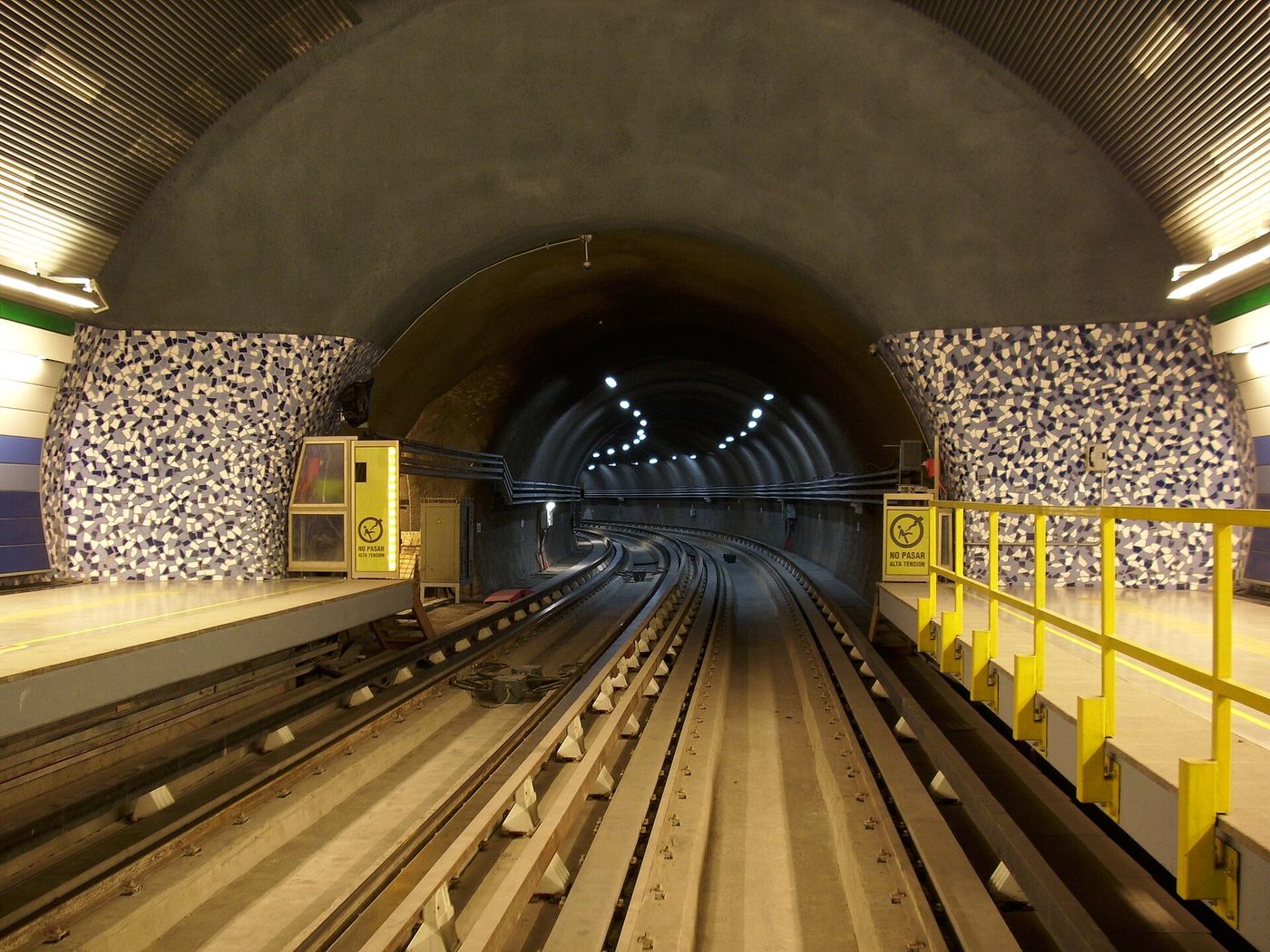
Lines 3 and 6, throughout. Both were built to modern accessibility standards with lifts at every station, platform screen doors and clear signage, and they are the reliable backbone of an accessible trip. The older lines — 1, 2, 4, 4A and 5 — are variable: many stations have lifts, but coverage is incomplete and availability depends on maintenance.
Two more things about the Metro:
Wheelchair spaces are in the first and last carriages, which matters at busy stations where boarding position is decided before the train arrives. Position yourself at the ends of the platform.
Interchanges are the hard part. Baquedano, Los Héroes and the other big interchange stations involve long passages, multiple levels and considerable distance between platforms. Allow substantially more time than the map suggests, and where a route offers a choice, prefer a longer journey with fewer interchanges over a shorter one with more.
Fares and hours are the same for everyone: CLP 735–895 depending on the time of day, with contactless Visa and Mastercard accepted at the Metro gates since February 2026. The system runs 06:00–23:00 Monday to Friday, from 06:30 on Saturdays and from 07:30 on Sundays and holidays. Our getting around Santiago guide covers the network in full.
Avoid peak hours if you can. Santiago’s Metro at 08:00 and 18:30 is genuinely crowded, and the crush makes wheelchair boarding, guide-dog handling and any kind of assisted travel much harder. Off-peak is also cheaper.
What about buses and taxis?
RED buses are the better-than-expected part of the system. The operator’s published figure is that 87.3% of the fleet has features supporting passengers with reduced mobility — dedicated wheelchair spaces, a mechanical locking system and seat belt, stop-request buttons at accessible height, and manual ramps. That figure comes from RED’s own accessibility page, which we were unable to reach directly on 18 September 2026, so treat it as the operator’s claim rather than an independent measurement.
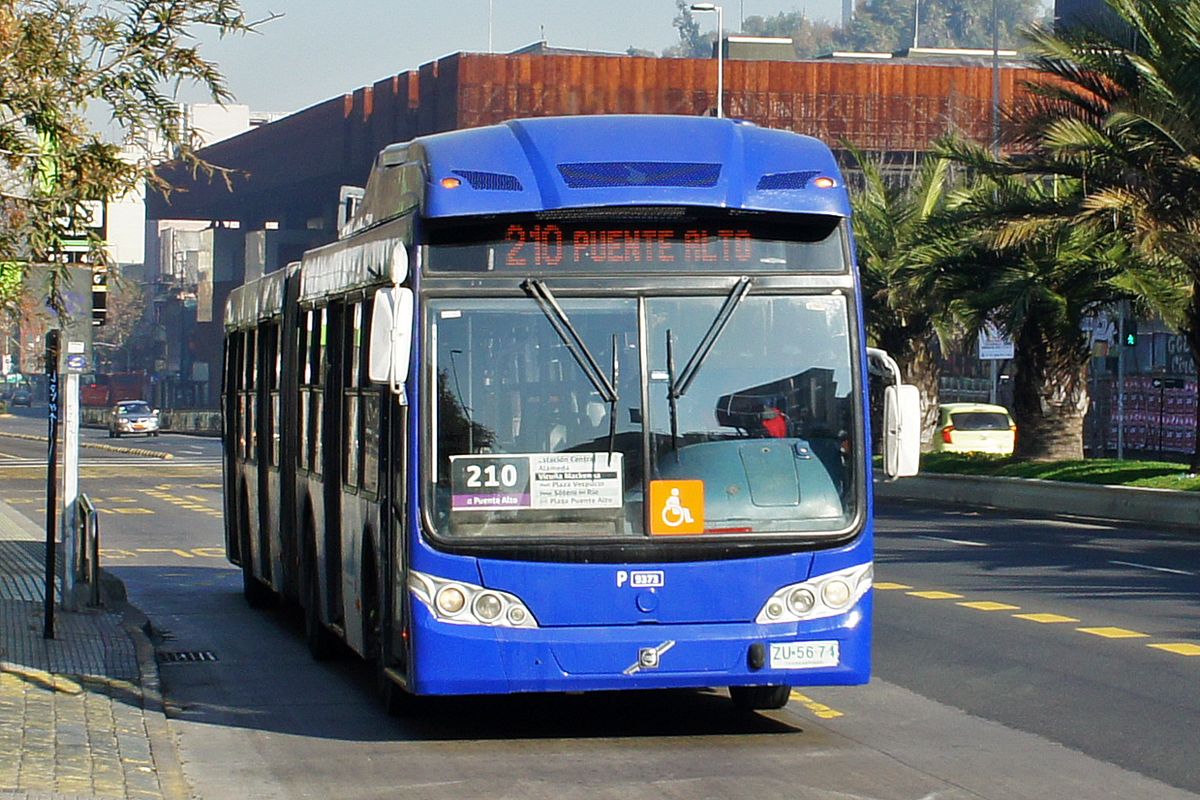
The practical catch with buses: the ramps are manual, which means they depend on the driver deploying them, and the space is single-occupancy. On a busy route at a busy hour this is workable but not quick.
Buses need a bip! card. Contactless bank cards work on the Metro but not on the buses, so buy a bip! (CLP 1,550) at a Metro station on your first day. One fare covers a trunk bus, a feeder bus and the Metro within a two-hour window, which makes mixed journeys good value.
Taxi apps are inexpensive and widely used, and they are the most flexible option for anyone whose mobility makes the Metro difficult. The significant limitation is that wheelchair-accessible vehicles are not a standard category in Santiago the way they are in some European and North American cities. If you use a non-folding chair, arrange accessible transport in advance through a specialist operator rather than assuming an app will provide it.
Airport transfers deserve advance arrangement for the same reason. Our Santiago airport guide covers the transfer options, and a private transfer booked ahead with your requirements stated is the low-stress version.
The pavements: the real constraint
This is the part that catches visitors out, and it is worth being blunt about.
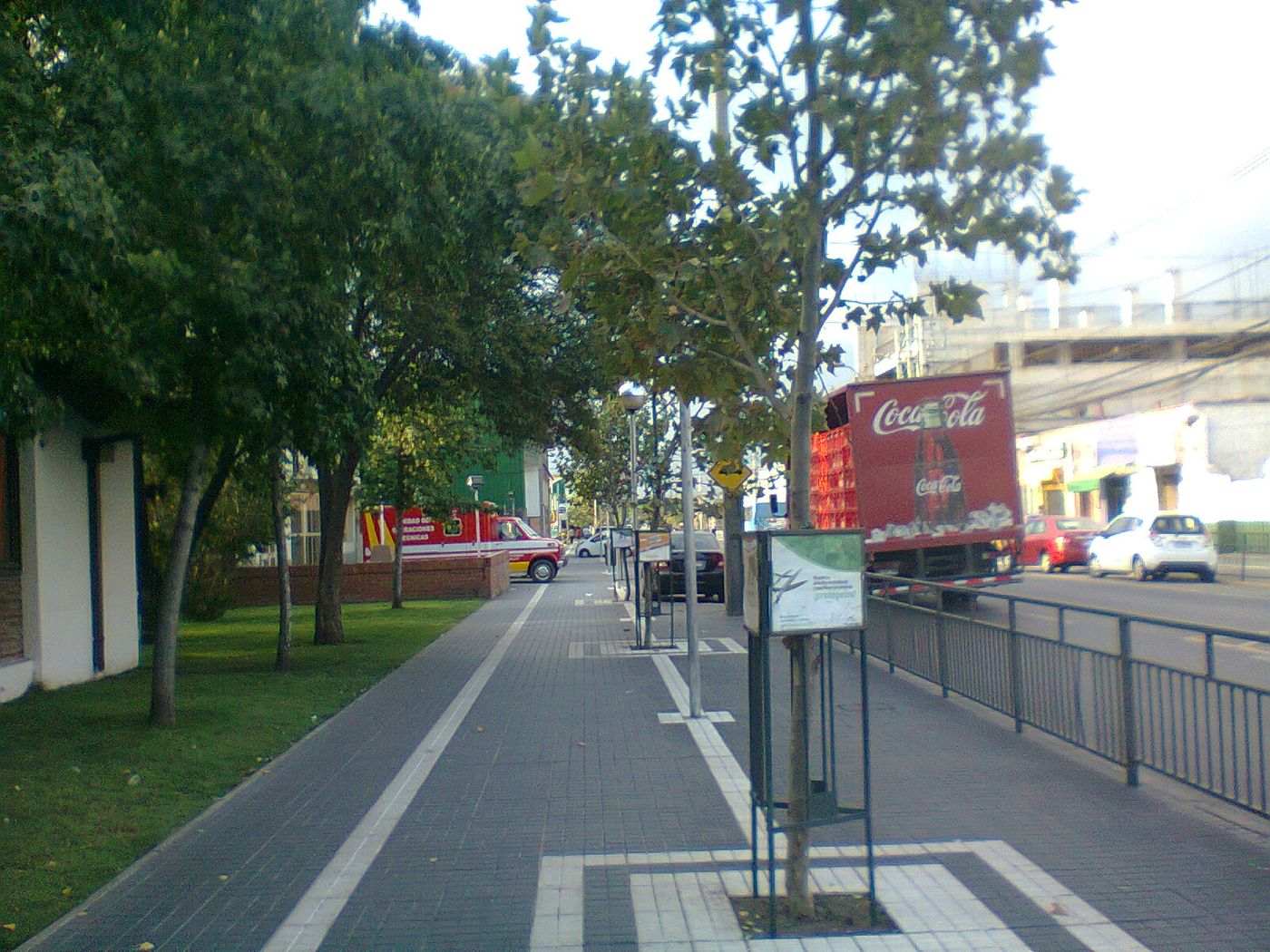
The historic centre. Pavements are uneven, kerbs are high, dropped kerbs exist but are inconsistent — you can find a good one on one corner and none on the next — and roadworks are frequent and poorly signed for detours. The pedestrian streets (Paseo Ahumada, Paseo Huérfanos) are flat and wide, which helps, but they are also crowded and full of street trading.
Lastarria, Barrio Italia, París-Londres and Barrio Concha y Toro are all cobbled. They are lovely and they are hard work on wheels of any kind, including a stroller. Budget for going slowly or going around.
Cerro Santa Lucía is a hill of staircases and terraces. There is no step-free route to the top.
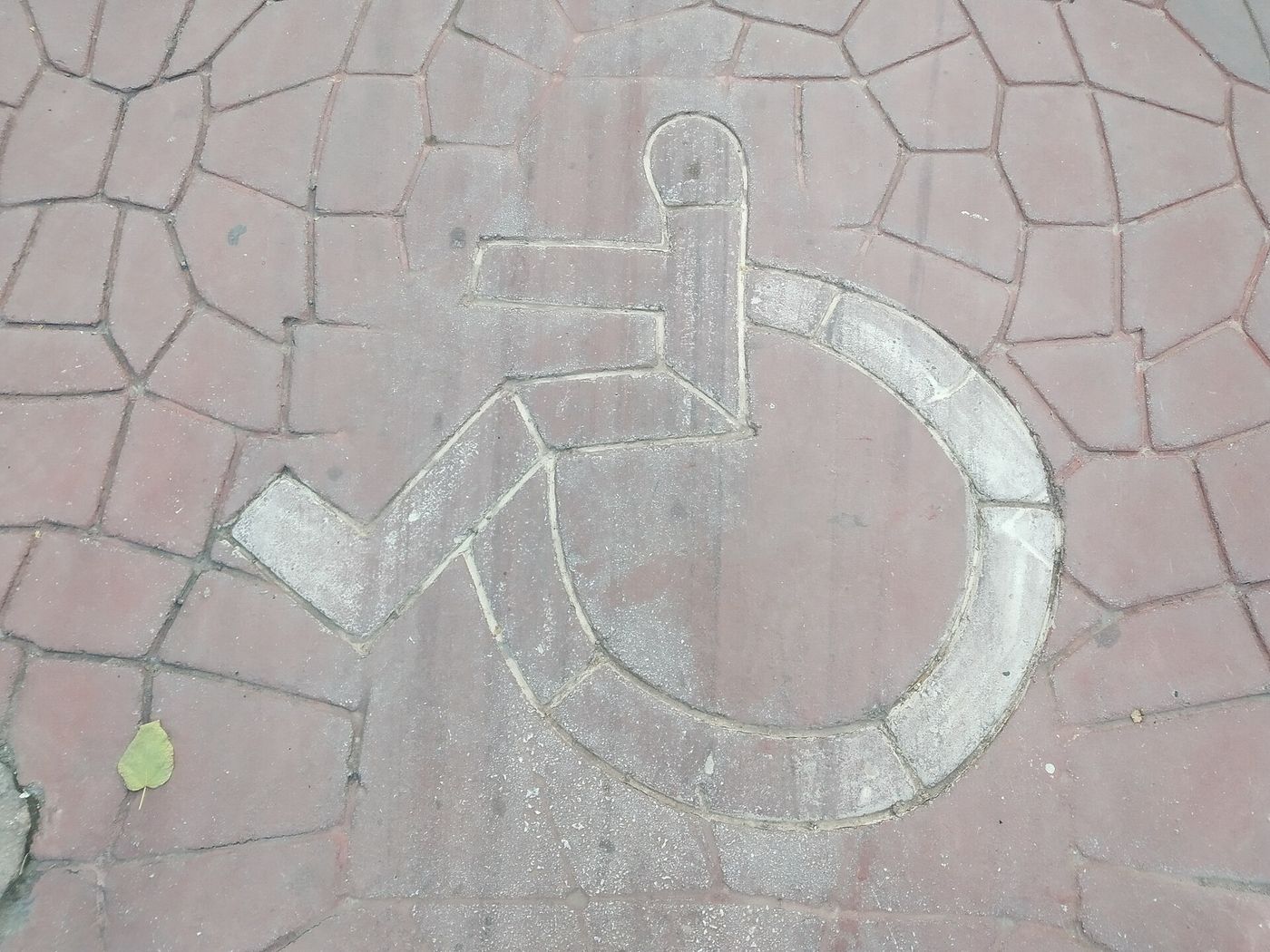
Providencia, Las Condes and Vitacura are much better: wider pavements, more consistent kerb cuts, newer construction, and more space. If mobility is a primary concern, this is where to base yourself — our neighborhoods guide covers the trade-offs, which mostly come down to accepting a longer journey to the historic sights in exchange for an easier daily life.
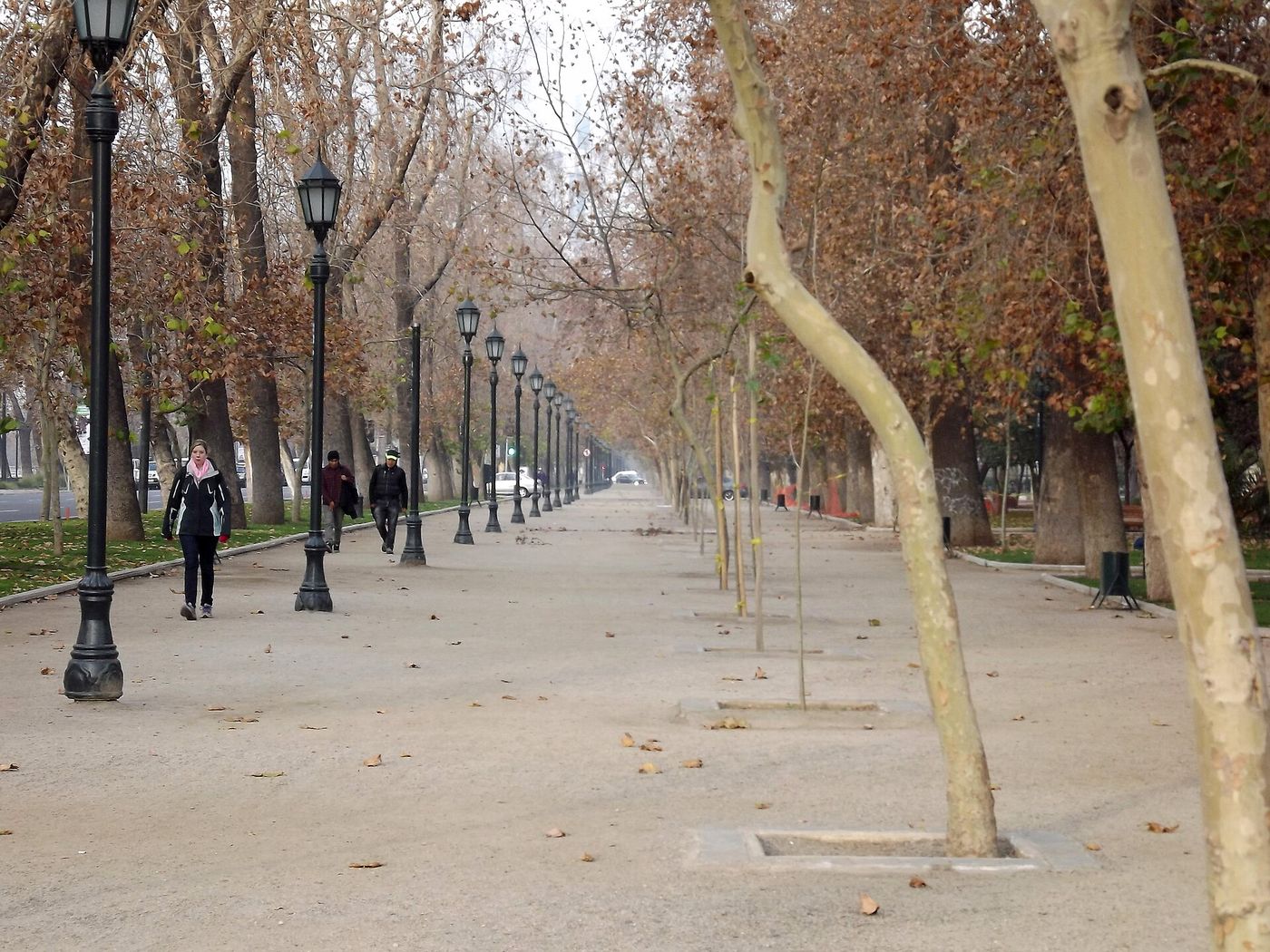
The parks are the good news. Parque Bicentenario in Vitacura has flat paved paths the whole way through, which makes it the single most accessible outdoor space in the city. Parque Araucano, Parque Forestal and Quinta Normal are all largely flat, with surfaces ranging from good to acceptable.
Attraction by attraction
Access notes below are based on published information and visitor-level observation. Call ahead for anything that matters to your trip — Chilean institutions are generally helpful on the phone or by email, and a specific question gets a much better answer than a general one.
| Attraction | Step-free? | Notes |
|---|---|---|
| Museo de la Memoria | Yes | Purpose-built, lifts, accessible toilets. The most accessible major museum in the city |
| Centro Cultural La Moneda | Yes | Underground, lift access, modern facilities |
| GAM | Yes | Rebuilt as a modern public building; plazas open daily 09:00–21:00 |
| Museo Nacional de Bellas Artes | Partly | Lift inside; the grand entrance is up steps — ask about the alternative entrance |
| MAC Parque Forestal | Partly | Same building, separate entrance |
| Museo Precolombino | Partly | Converted colonial building, adapted but tighter circulation |
| Museo Nacional de Historia Natural | Partly | Ground floor accessible; upper floors harder, and the second floor was closed in Sept 2026 |
| La Chascona | No | Built in stepped sections up a hillside; not adaptable |
| Cerro Santa Lucía | No | Staircases throughout |
| Cerro San Cristóbal | Partly | Funicular and teleférico exist; confirm chair access with the operator |
| Parque Bicentenario | Yes | Flat paved paths, the best outdoor option |
| Sky Costanera | Yes | Modern building, lifts throughout |
| Mercado Central / La Vega | Partly | Flat but very crowded, with uneven floors and narrow aisles |
| Pueblito Los Dominicos | Partly | Largely flat, some uneven surfaces between workshops |
On Cerro San Cristóbal specifically. The funicular and the teleférico both carry passengers up the hill, which removes the climb, but neither is a modern accessible installation and boarding arrangements vary. The Pío Nono teleférico line opened in February 2026 and is the newest infrastructure on the hill. Contact Parquemet or the teleférico operator before planning a day around it rather than turning up and hoping.
Free admission at the Museo de la Memoria, Bellas Artes, MAC and the Natural History museum means there is no financial penalty for turning up, discovering a problem and leaving. That is a small mercy worth knowing about. Our museums and culture guide has the hours and the full picture.
Toilets, rest points and the things nobody maps
The unglamorous logistics that determine whether a day works.
Accessible toilets are reliable in three kinds of place: shopping malls, larger museums, and modern cultural buildings. Costanera Center, Parque Arauco and Alto Las Condes all have them on multiple floors. The Museo de la Memoria, Centro Cultural La Moneda and GAM all have them. Beyond that, provision thins quickly.
Public toilets in parks and plazas exist but are inconsistent, often charged a few hundred pesos, and not dependably accessible. Do not build a day around finding one.
The practical method. Before you set out, identify two reliable facilities on your route and treat everything else as a bonus. Carry change. In a café or restaurant, buying a coffee buys you access, and nobody will object.
Places to sit. Benches are common in the parks and along Parque Forestal, scarce in the historic centre, and absent from the pedestrian shopping streets. If you need to rest at intervals, the parks and the museums are where a day should be routed.
Shade and heat. Between December and February the city regularly passes 30 °C with intense high-altitude sun and very little shade on the pedestrian streets. This is an access issue in its own right for anyone who overheats, uses medication affected by heat, or cannot move quickly between shaded points. Plan outdoor stretches before 11:00 and after 17:00 in summer.
Winter and air quality. From roughly April to August the basin traps pollution and the city issues alert, pre-emergency and emergency episodes restricting outdoor activity. If you have a respiratory condition, check the daily readings and keep indoor alternatives ready. Rain also closes Cerro Santa Lucía outright and makes cobbles and worn paving slippery.
Getting there and getting out
Arrivals. Santiago’s international airport is modern and has lift access, accessible toilets and assistance services. Airline-provided assistance must be requested when booking, and the usual advice applies: request it at booking, reconfirm 48 hours before, and arrive earlier than you would otherwise.
Wheelchairs on flights. Chilean carriers and international airlines flying here follow standard practice for carrying mobility equipment in the hold. Label everything, photograph your chair before check-in, and carry any removable parts into the cabin. Damage in transit is the most common problem for wheelchair users on any long-haul route, and having the pre-flight photographs is what makes a claim work.
Getting into the city is the first real decision. Ordinary airport transfer minibuses are not accessible; a private transfer booked ahead with your requirements stated is the reliable option. Our Santiago airport guide covers the choices and what each costs.
Domestic onward travel. If Santiago is a stop rather than the destination, be aware that accessibility drops sharply outside the capital. Long-distance buses vary enormously by operator and few are properly accessible. Domestic flights are the more reliable option for reaching Patagonia, the Atacama or the Lake District.
Altitude, if you are going to the mountains. The ski areas and Cajón del Maipo sit between 2,400 m and above 3,000 m, reached in about ninety minutes from a city at 570 m. That is a fast gain, and it matters for anyone with a cardiac or respiratory condition. Talk to a doctor before planning a mountain day, and note that the ski road’s police checkpoint can require chains or four-wheel drive in snow.
What should you ask before you book?
Generic accessibility statements are close to useless. Specific questions get specific answers, and Chilean venues respond better to them.
For accommodation:
- Is there a step or a ramp at the street entrance, and how many centimetres?
- Is there a lift, and what are its internal dimensions?
- What is the doorway width of the accessible room and its bathroom?
- Is the shower a roll-in, a step-over tray, or a bath?
- Are there grab rails, and where?
- Can you send a photograph of the bathroom?
That last question is the most useful one in the list. A photograph settles in ten seconds what an email exchange will not settle in a week.
For attractions:
- Is there a lift to every floor of the exhibition, or only some?
- Is the main entrance step-free, or is there an alternative entrance?
- Is there an accessible toilet on site?
- Is a companion admitted free?
- Can wheelchairs be borrowed on site?
For tours and day trips:
- Is the vehicle accessible, or is transfer required?
- How many steps into the vehicle?
- How much walking is involved at each stop, and on what surface?
- Are there accessible toilets along the route?
Language. Email in Spanish gets a faster and fuller answer than email in English at most Chilean institutions. A translated message is worth the two minutes.
Where should you stay?
Providencia is the strongest recommendation for most travellers with access needs. It has the best combination of wide pavements, consistent kerb cuts, Line 1 running through it, supermarkets and pharmacies at street level, and a large stock of newer apartment-style accommodation with lifts.
Las Condes and Vitacura are better still on surfaces and space, at the cost of a longer journey to the historic sights and, in Vitacura’s case, no Metro at all.
Lastarria and Bellas Artes are the most central and the least forgiving underfoot. Beautiful, cobbled, and full of old buildings with steps at the door.
Santiago Centro has the cheapest rooms, the flattest pedestrian streets and the worst pavements elsewhere, plus a district that empties after office hours. It works for some travellers and not for others.
What to look for, regardless of barrio: a lift, a step-free or ramped entrance, a room on a floor the lift actually reaches, and a bathroom you have seen a photograph of. Our where to stay guide covers the neighbourhoods in general terms.
Chains versus independents. International chain hotels in El Golf and Las Condes are the most likely to have genuinely adapted rooms and staff used to the questions. Smaller independents are often willing and sometimes better, but the rooms were rarely designed with access in mind.
Equipment, hire and repairs
Wheelchair and mobility equipment hire exists in Santiago through medical supply companies — ortopedias — rather than through tourism operators. Arrange it before you arrive rather than on the ground, because these businesses are not set up for walk-in tourist rental and stock is not guaranteed.
Repairs. The same ortopedias and some bicycle workshops can handle basic wheelchair repairs. Bring your own spare parts for anything proprietary; Chilean stock of specific components is limited.
Mobility scooters are much less common in Chile than in North America or northern Europe, and hire is correspondingly harder to find. If you rely on one, plan on bringing it.
Medical supplies and pharmacies. This is a genuine strength. Chilean pharmacies are everywhere, well stocked, cheap and staffed by pharmacists who give real advice. Most common medications are available, often without the prescription requirements you might expect, and at a fraction of North American prices. Bring a copy of your prescription and the generic names of anything you take.
Medical care is good. Private clinics in Providencia, Las Condes and Vitacura are used to foreign patients and to insurance. Emergency numbers: 131 for an ambulance, 133 for police, 132 for fire.
Oxygen and equipment requiring power. Chile uses 220V at 50Hz with European-style round two-pin plugs (type C and L). Check your equipment’s voltage tolerance and bring the right adapter.
Sensory and non-mobility access
Accessibility is not only about wheels, and Santiago’s provision here is more uneven.
Visual impairment. Tactile paving exists in the Metro and at major intersections but is inconsistent across the city. Audio announcements run on the Metro. Museum audio guides are common — the Precolombino, La Chascona and the Museo de la Memoria all have them — though they are designed as interpretation rather than as access tools. Guide dogs are legally permitted in public spaces and on public transport in Chile; carrying documentation is nonetheless worth doing, as awareness among individual staff varies.
Hearing impairment. Chilean Sign Language (Lengua de Señas Chilena) is distinct from ASL and BSL. Interpretation at cultural venues is occasional rather than routine. Induction loops are rare. Written communication works well: Chileans are generally patient and phone-based translation is commonplace.
Neurodivergent and sensory-sensitive travellers. Santiago is a loud city, and the Metro at peak, the markets and the pedestrian streets in the centre are all intense environments. The quiet alternatives are genuinely good: Parque Bicentenario, the Jardín Japonés on Cerro San Cristóbal (Tue–Sun 09:00–18:00, free), the Cementerio General, the quieter galleries at Bellas Artes on a weekday morning, and the Museo de la Memoria, which is emotionally heavy but physically calm. Quiet hours and sensory-friendly sessions are not yet a widespread practice at Chilean attractions.
Dietary and medical needs. Chilean restaurant staff are generally accommodating but awareness of allergens is less systematic than in the EU or North America. Carry a written card in Spanish stating what you cannot eat. Our food guide covers the cuisine, which is meat-heavy and not naturally friendly to several common restrictions.
Building an accessible day
The thing that makes a Santiago day work is choosing a single area and staying in it, rather than crossing the city twice.
An easy day in the west. Metro Line 5 to Quinta Normal. Museo de la Memoria — step-free, free, lifts — then the park itself, which is flat, then back. One interchange at most, everything within a few hundred metres.
An easy day in the east. Taxi to Parque Bicentenario, which has the best surfaces in the city, then lunch on Nueva Costanera or at the park cafés, then Parque Araucano or the mall if you need facilities. No Metro involved, because Vitacura has none.
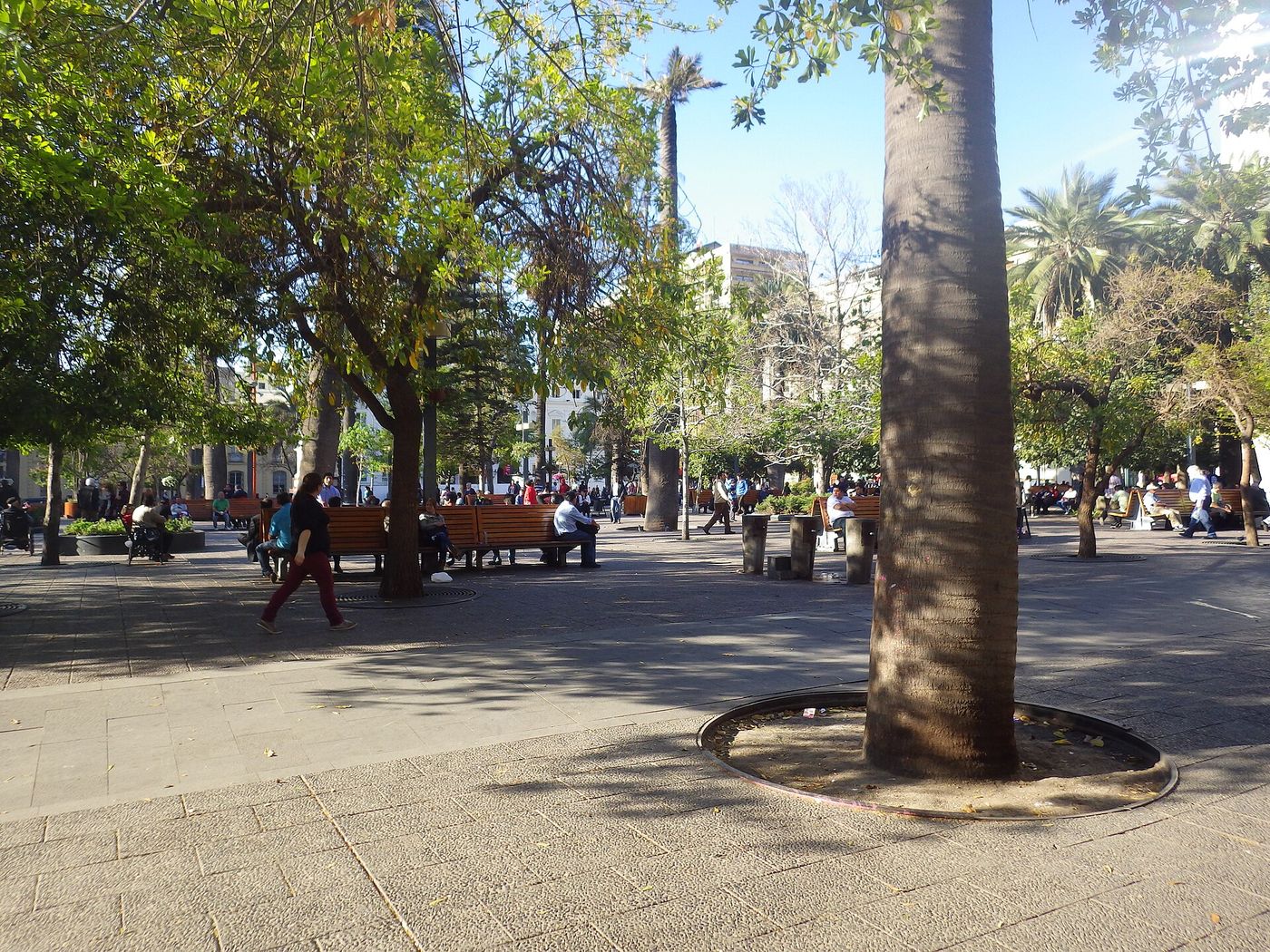
A central day, with caveats. Metro to La Moneda, Centro Cultural La Moneda underneath the plaza (step-free, lifts, several free galleries), then along to the Plaza de Armas on the pedestrian streets, which are flat. Avoid the side streets, avoid Lastarria, and know where the accessible toilets are — CCLM and the larger museums.
A view without a climb. Sky Costanera is a modern building with lifts throughout and, at CLP 25,000 for an adult, expensive but reliable. The alternative — the funicular or teleférico up Cerro San Cristóbal — is cheaper and more interesting, but needs a phone call first.
A day out of the city. The Maipo Valley wineries are the most realistic option, because several have level grounds and purpose-built visitor centres, but access varies enormously between estates and must be confirmed individually. The Cajón del Maipo is largely not accessible beyond the roadside viewpoints. Our day trips guide and wine tours guide cover both.
Build in slack. A lift out of service, a blocked pavement or a roadwork detour can cost half an hour. Two fixed commitments a day is a realistic maximum, which is also true for families — our Santiago with kids guide reaches the same conclusion from a different direction.
What tends to go wrong, and the backup plan
Five recurring problems, with what to do about each.
A Metro lift is out of service. Most likely on Lines 1 and 2. The backup is a taxi app to the next usable station, or a bus if the route works. Keep enough credit and enough patience for both.
A roadwork detour has no accessible route. Common in the centre. The backup is to go around a whole block rather than trying to cross the works, which costs time but not much of it.
A venue’s accessible entrance is locked. Frequent at older buildings where the side entrance is unstaffed. Phone from outside rather than waiting; someone will come.
A toilet you were counting on is out of order or charged. Map the reliable ones in advance — malls, museums, the larger cafés — and do not rely on public facilities in parks or plazas.
The weather changes the plan. Cerro Santa Lucía closes entirely in rain, the teleférico stops in high wind, and summer heat above 30 °C makes long outdoor stretches genuinely risky. Keep an indoor alternative in reserve for every outdoor day, and remember that between April and August the city issues air-quality alerts that matter if you have a respiratory condition.
The general principle. Santiago rewards a plan with slack in it far more than a tight itinerary. The city’s infrastructure is improving quickly but unevenly, and the gap between the published position and the position on the pavement is where trips go wrong.
Travelling with a companion or a carer
Several practical points that come up repeatedly.
Companion tickets. Free or reduced admission for a companion is common at Chilean cultural institutions but is not universal and is not always advertised in English. Ask directly at the ticket desk rather than assuming; the answer is usually yes at the larger museums, and moot at the four that are free anyway.
Hotel rooms. Twin rooms and connecting rooms are widely available in the chain hotels in Providencia and Las Condes, and less so in boutique properties in Lastarria and Bellas Artes. If you need a carer in an adjacent room, book early and confirm in writing.
Personal assistance services. Chile does not have a well-developed market in short-term personal care for visitors. If you need paid assistance during your stay, arrange it through a specialist travel operator before you arrive rather than expecting to find it locally.
Travelling alone. Santiago is manageable solo with a disability, with two caveats: the pavement problem means you should route conservatively and allow slack, and the language barrier is more significant here than in some Latin American capitals because English is less widely spoken. A translation app and a few written cards in Spanish cover most situations.
Insurance. Make sure your policy covers your equipment, its repair or replacement, and medical repatriation. Chilean private healthcare is good and expensive; public emergency care will treat you but the follow-up will not be what you are used to.
How does Santiago compare?
Useful context, because “accessible” is always relative.
Better than most of its neighbours. Santiago’s newer Metro lines and its renewed bus fleet put it ahead of Lima, Bogotá and most of the region. The investment is visible and recent, and it is continuing.
Behind the wealthier world cities. Compared with London, Tokyo, Berlin or Toronto, the gap is in the older infrastructure and the street environment rather than in the new-build. The Metro’s newest lines are as good as anywhere; the pavement outside the station is not.
Unusually polarised. The distance between the best and the worst is wider here than in most cities. Parque Bicentenario and the Museo de la Memoria are genuinely exemplary. Cerro Santa Lucía and La Chascona are entirely inaccessible and always will be. A trip works when it leans on the first category and plans around the second.
Improving quickly. Chilean accessibility legislation and the agency that oversees it, SENADIS, have driven real change over the last decade, and Line 6 and the bus renewal are the visible results. Anything you read about Santiago’s accessibility that is more than about three years old is likely to be too pessimistic on transport and roughly right on pavements.
The honest summary. If your mobility needs are moderate — you walk slowly, you use a stick, you need to sit often, you can manage a few steps — Santiago is a comfortable city with excellent, cheap public transport and lots of places to rest. If you use a non-folding wheelchair, it is a city that requires real planning, a preference for the eastern comunas, and a willingness to use taxis as infrastructure rather than as a treat.
What is genuinely good here?
It is worth ending on the positive, because accessibility guides tend to read as lists of obstacles.
The newer Metro lines are excellent — as good as anything in Europe, with lifts everywhere, platform screen doors and clear signage.
The bus fleet has been largely renewed with low floors and ramps, which is more than many wealthier cities can say.
Costs are low. Transport is under a dollar a journey, four of the best museums are free, and taxis are cheap enough to use as an access tool rather than a luxury. Our travel cost guide sets out the numbers.
People help. This matters more than it sounds. Chileans are, in general, quick to offer assistance and unembarrassed about it — on the Metro, at a kerb, in a shop. It is not a substitute for infrastructure, but it makes a difference on a difficult day.
The parks are flat, free and everywhere. Parque Bicentenario in particular is a genuinely excellent accessible space by any international standard.
Pharmacies and medical care are strong, which removes a category of worry that looms large on trips to some destinations.
A four-day accessible itinerary
Built on the eastern comunas, the two modern Metro lines and the free museums, with slack in every day.
Day one: settle in, stay local. Arrive, get a bip! card at a Metro station, and spend the afternoon in Providencia or Las Condes at street level — supermarket, pharmacy, a café, a short walk on decent pavements. Do not attempt the historic centre jet-lagged. Dinner near the hotel; Chileans eat from 21:00, so an early table is easy to get.
Day two: the west, and the best museum in the city. Metro Line 5 to Quinta Normal. The Museo de la Memoria is free, purpose-built, step-free and lifted, and it is the museum most worth the time. Allow two to three hours and a break afterwards in the park, which is flat. Taxi back rather than doing the return Metro journey tired.
Day three: the civic centre, carefully. Metro to La Moneda. Centro Cultural La Moneda is underneath the plaza with lift access, modern toilets and several free galleries — the easiest indoor cultural morning in the centre. Afterwards, the pedestrian streets to the Plaza de Armas are flat and wide, though crowded. Stop there; do not push on into Lastarria’s cobbles on the same day.
Day four: the east, and a view. Taxi to Parque Bicentenario in Vitacura, which has the best surfaces in the city, flat paths the whole way and a lagoon with flamingos. Lunch nearby. In the afternoon, either Parque Araucano and the mall next to it for guaranteed facilities, or Sky Costanera at Metro Tobalaba for a lifted, step-free view over the city at CLP 25,000.
If you have a fifth day, the Maipo Valley wineries are the most realistic trip out of the city, with several estates offering level grounds and purpose-built visitor centres — but confirm access with the specific estate, because it varies enormously. Our itineraries guide has the general trip shapes.
What this itinerary deliberately leaves out: Cerro Santa Lucía, La Chascona, Lastarria, Barrio Italia, Franklin and the Cajón del Maipo. Not because they are worthless, but because each involves surfaces or stairs that will consume a disproportionate share of a day. If one of them matters to you specifically, build the whole day around it rather than slotting it in.
Frequently asked questions
Is Santiago wheelchair accessible?
Partly, and improving. Metro Lines 3 and 6 are step-free throughout and most of the bus fleet is low-floor with ramps, so crossing the city is manageable. The problems are at street level: uneven pavements, inconsistent dropped kerbs, cobbled historic barrios and several major attractions with no step-free route.
Which Santiago Metro lines have lifts?
Lines 3 and 6 have lifts at every station and were built to modern accessibility standards. The older lines — 1, 2, 4, 4A and 5 — have partial coverage that varies by station and depends on maintenance. Check the specific stations on your route rather than assuming the line is accessible.
Are Santiago buses accessible?
Mostly. RED’s own published figure is that 87.3% of the fleet has features for passengers with reduced mobility, including wheelchair spaces, mechanical locks and seat belts, accessible stop buttons and manual ramps. The ramps are deployed by the driver, and the wheelchair space is single-occupancy.
Can you get a wheelchair-accessible taxi in Santiago?
Not reliably through the standard apps, which do not offer accessible vehicles as a category. Arrange accessible transport in advance through a specialist operator, particularly for airport transfers. Ordinary taxi apps are cheap and plentiful if you can transfer into a standard car.
Which Santiago attractions are step-free?
The Museo de la Memoria, Centro Cultural La Moneda, GAM, Sky Costanera and Parque Bicentenario are all genuinely accessible. Bellas Artes and the Precolombino are partially adapted. La Chascona and Cerro Santa Lucía are not accessible and cannot easily be made so.
Are guide dogs allowed in Chile?
Yes. Guide dogs are permitted in public spaces and on public transport under Chilean law. Awareness among individual staff varies, so carrying documentation and, ideally, a short written explanation in Spanish will smooth occasional misunderstandings at restaurant and museum doors.
Where should you stay in Santiago with mobility needs?
Providencia, for the combination of wide pavements, consistent kerb cuts, Metro Line 1, street-level shops and newer buildings with lifts. Las Condes is better still on surfaces but further from the sights, and Vitacura has no Metro. Lastarria is central and cobbled, which is the worst combination for wheels.
Is Santiago’s public transport free for disabled passengers?
Chile operates fare concessions through its national systems, but these are aimed at residents rather than visitors, and eligibility is tied to Chilean documentation. Foreign visitors should budget for standard fares of CLP 735–895 per Metro journey and buy a bip! card for the buses.
Sources
- RED Movilidad — accessibility
- Metro de Santiago
- Metro de Santiago — fares and hours
- Santiago Turismo — public transport
- Parquemet — Parque Metropolitano de Santiago
- Teleférico Santiago
- Museo de la Memoria y los Derechos Humanos
- Centro Cultural La Moneda
- Museo Nacional de Bellas Artes
- Centro Gabriela Mistral (GAM)
- SENADIS — Servicio Nacional de la Discapacidad
- Chile Travel — official tourism board
- Visit Santiago — official city tourism
Image credits
| Photo | Credit |
|---|---|
| RED bus, Santiago (top of page) | Arielcronics2, CC BY 3.0, via Wikimedia Commons |
| Santiago Metro station | Jorge Barrios, CC BY-SA 3.0, via Wikimedia Commons |
| Street and sidewalk, Santiago | Danny.bastian, CC BY-SA 3.0, via Wikimedia Commons |
| Accessibility marking | Satirdan kahraman, CC0, via Wikimedia Commons |
| Parque Forestal | Mapochito, CC BY-SA 3.0, via Wikimedia Commons |
| Plaza de Armas | usachino, CC BY-SA 3.0, via Wikimedia Commons |
| Articulated RED bus | Mariordo (Mario Roberto Durán Ortiz), CC BY-SA 3.0, via Wikimedia Commons |