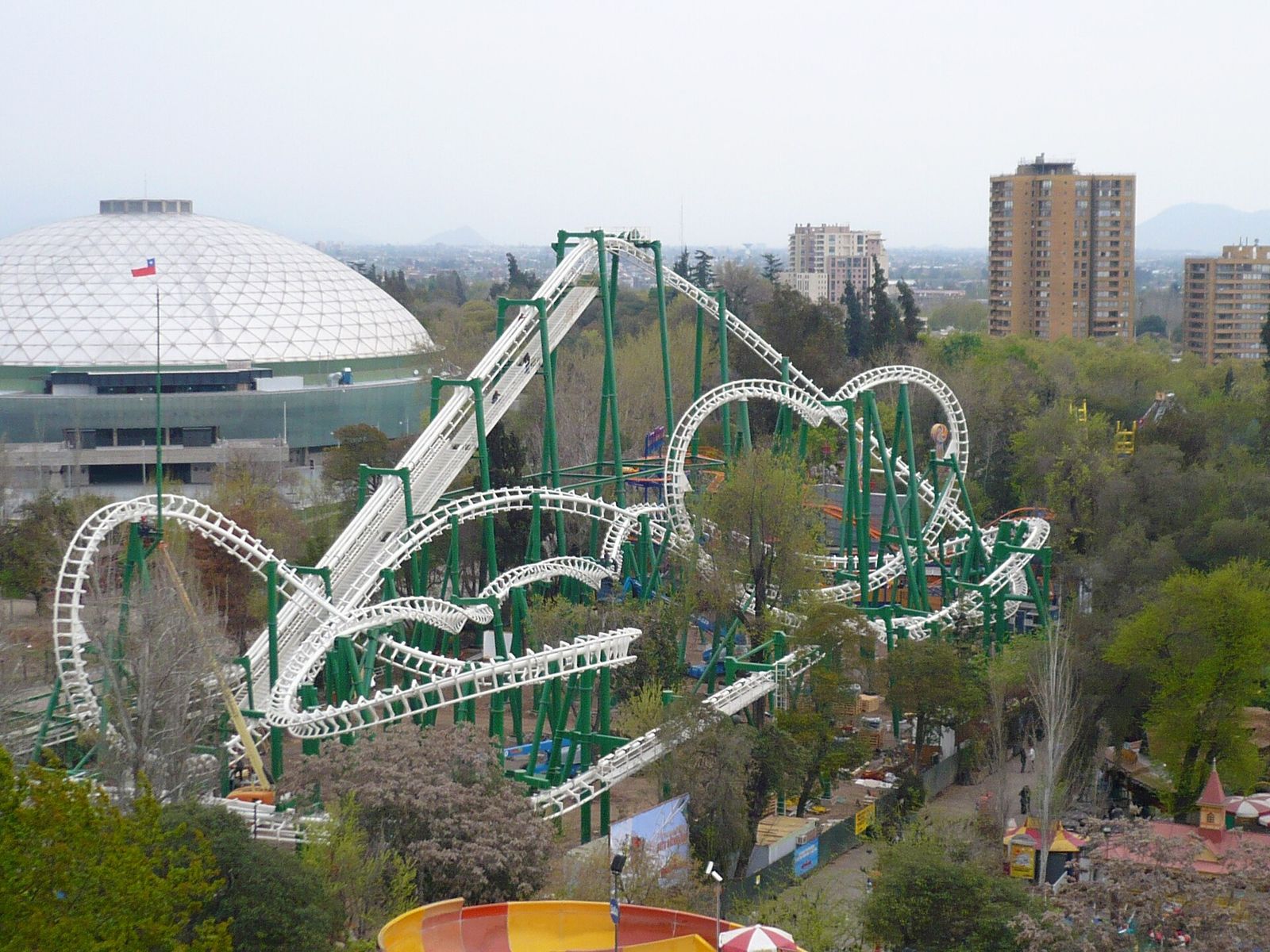
Chilean summer runs December to February, and the Santiago summer events calendar is front-loaded into January and back-loaded into March. January belongs to Teatro a Mil, the free street theatre festival that the culture ministry says around 80% of its audience attends without a ticket. March brings Lollapalooza to Parque O’Higgins and the harvest festivals to the wine valleys. February, in between, is the quietest month of the Chilean year.
That shape matters because the gap is real. If your dates fall in the first half of February, the city’s own calendar is thin and the action has moved to the coast. This page covers what happens in each summer month, what it costs, what closes, and how to find out what is on once you are there. For the full twelve-month picture, see the events and festivals guide.
The summer calendar at a glance
| When | What | Where | Cost |
|---|---|---|---|
| Late December | Christmas closures, New Year’s Eve | Citywide; the coast for fireworks | Free to watch |
| January | Festival Internacional Teatro a Mil | GAM and venues across the comunas | Around 80% of the audience attends free |
| January to February | Parque Metropolitano pool season | Cerro San Cristóbal | Paid, season dates vary |
| Late February | Viña del Mar song festival | Quinta Vergara, on the coast | Ticketed, outside Santiago |
| March | Lollapalooza Chile | Parque O’Higgins | Three-day passes, CLP 168,000 and up |
| Late March into April | Vendimia harvest festivals | Isla de Maipo, Buin, Pirque | Free entry; tastings sold separately |
| All summer | Free municipal and park programming | Plazas and parks across the city | Free |
Two structural facts about this calendar. Chilean events announce late, usually weeks rather than months ahead, with Lollapalooza the exception because its dates are published a year in advance. And the biggest single draw of the Chilean summer, the Viña del Mar song festival, is not in Santiago at all.
When is summer in Santiago?
December to February by the calendar, and effectively December to March by the weather. December averages 27.6°C by day, January 30.2°C, February 30.1°C and March 28.6°C, with almost no rain across the four months. The school year ends in December and restarts in early March, which is what actually drives the city’s rhythm.
That gives the season three distinct phases. December is summer with the city still working. January and February are the holiday months, when residents leave for the coast and a share of small businesses close. March is the return: warm weather, a fully functioning city, and the year’s densest run of events.
| Month | Average high | What the city is doing |
|---|---|---|
| December | 27.6°C | Working, then winding down for Christmas |
| January | 30.2°C | Emptying out; Teatro a Mil in full swing |
| February | 30.1°C | At its quietest; attention on the coast |
| March | 28.6°C | Back at work, with the biggest events of the season |
The practical consequence for events: outdoor programming is scheduled for the evening throughout, because nothing works outdoors between roughly 13:00 and 17:00. Santiago weather by month has the underlying figures.
December: Christmas, New Year and the last working weeks
December is the most normal of the summer months and the easiest to plan. The city is at work until the third week, restaurants are open, the cultural season is winding down rather than shut, and the evenings are the longest of the year with sunset near 21:00.
What to expect:
- Christmas. The 24th winds down through the afternoon and the 25th closes almost everything, including most museums, shops and restaurants. Chilean Christmas is a late-night family dinner on the 24th rather than a daytime event on the 25th.
- New Year’s Eve. Santiago marks it, but the country’s attention is on Valparaíso, whose bay fireworks are the national event. Coastal accommodation sells out months ahead. In the city, expect crowded restaurants, private parties and a 1 January that closes as completely as Christmas Day.
- Summer programming begins. The Parque Metropolitano pools open for their season, outdoor cinema and plaza events start appearing, and the terrace culture that defines a Santiago summer gets going.
- Prices climb. Accommodation moves into high season from mid-December.
The honest planning note: 25 December and 1 January are the two days of the Chilean summer when a badly planned itinerary collapses completely. Treat both as park, walk and long-lunch days, assuming you can find a kitchen that is open.
January: Teatro a Mil takes the city
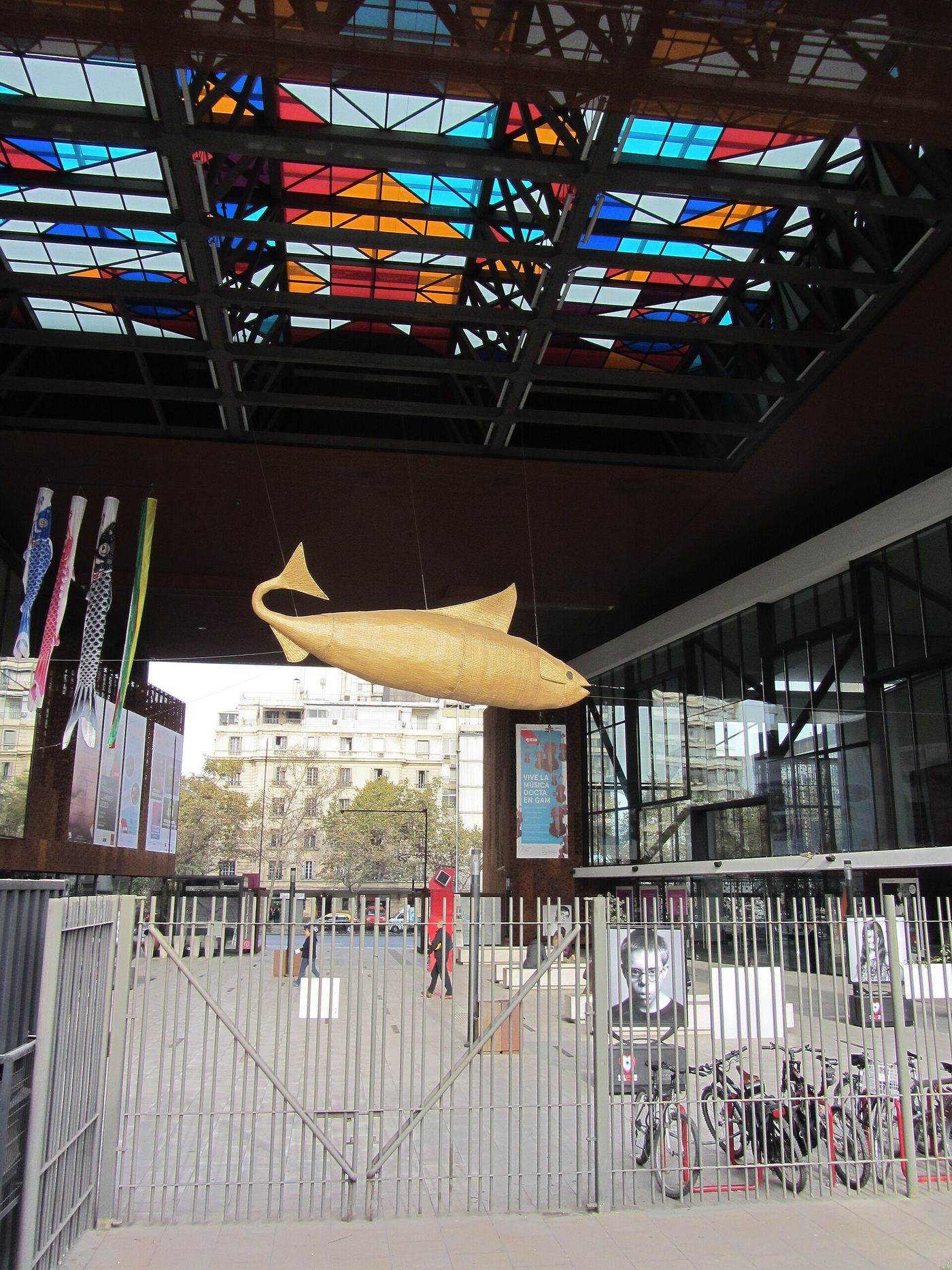
January’s calendar is dominated by one thing. The Festival Internacional Teatro a Mil runs across the month, with the 2026 edition staging 89 productions from 16 countries between 3 and 25 January. Its headquarters is GAM on the Alameda, and the culture ministry reports that around 80% of the audience attends free, through pasacalles and large outdoor productions in plazas across the comunas.
Why it works for visitors: the free half of the programme is physical theatre, circus, dance and processional work, none of which requires Spanish. The ticketed indoor half is mostly Spanish-language, often without surtitles, and the deepest discounts are sold in October before the programme exists. The Santiago a Mil festival guide covers the ticket ladder, the venues and how to find the day’s free shows.
Around the festival, January offers:
- The Parque Metropolitano pools, in their summer season on the slopes of Cerro San Cristóbal.
- Extended museum hours at La Chascona, open to 19:00 through January and February at CLP 11,000 (about USD 11.60, checked September 2026).
- Long evenings, with the terraces of Lastarria, Bellavista and Barrio Italia carrying the night.
- An emptying city, with the accompanying restaurant closures.
Santiago in January covers the month in detail, including what closes and how to shape a day around 30°C heat.
February: the quiet month, and the festival on the coast
February is the thinnest month in Santiago’s own calendar. Teatro a Mil has finished, the theatre and concert seasons do not restart until March, and the Chilean holiday is at its deepest, which means the largest number of closed kitchens and the emptiest streets of the year.
The month’s big event happens 120 km west. The Festival Internacional de la Canción de Viña del Mar, held at the Quinta Vergara amphitheatre in Viña del Mar, runs several nights in late February and dominates Chilean television while it is on. For a Santiago visitor that means two things: coastal accommodation becomes scarce and expensive that week, and the capital gets even quieter as attention moves to the coast.
What Santiago itself offers in February:
- Free municipal and park programming, announced locally rather than months ahead.
- The pool season, still running on Cerro San Cristóbal.
- Empty museums, which is the month’s real luxury. The Precolombino, the Museo de la Memoria and Bellas Artes are as uncrowded as they get.
- Terrace evenings, in the districts that stay open.
If your summer dates are flexible, February is the month to skip for events and the month to choose for quiet. Santiago in February sets out that trade-off in full.
March: the busiest month of the season
March is where the Chilean summer calendar reloads. The city comes back to work in the first week, the cultural season restarts, and two major events land within a fortnight of each other.
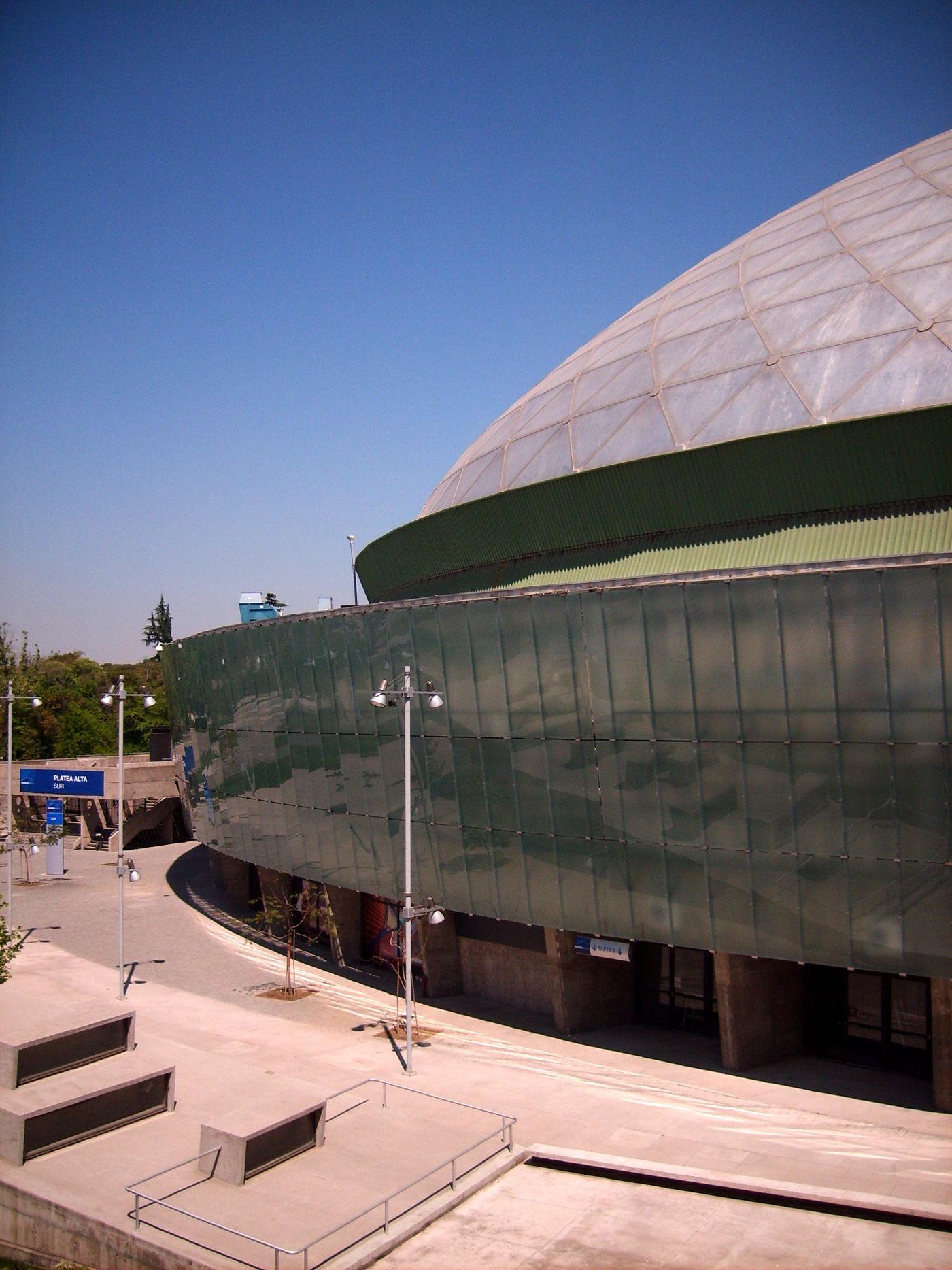
Lollapalooza Chile takes over Parque O’Higgins in mid-March, with the 2027 edition on 12, 13 and 14 March. Three-day general passes ranged from CLP 168,000 at the Early Bird stage to CLP 294,600 at Preventa 2, including service charges, and children under 10 enter free with a ticketed adult (checked September 2026). It is the one Chilean event whose dates are published a year ahead, which makes it the only summer event you can plan a flight around. The Lollapalooza visitor guide covers passes, transport and the late-night Metro problem.
The vendimia festivals arrive at the end of the month. Isla de Maipo’s harvest festival ran 28 and 29 March in 2026 with more than a dozen wineries and close to a hundred stallholders taking over the town centre, free to enter, and Buin and Pirque run their own editions between late March and late April. The Maipo Valley harvest festivals guide covers all three, including how to reach them without a car.
Alongside those, March restarts the theatre, concert and gallery seasons, the football calendar and the university year. Santiago in March covers the month, which locals rate as one of the two best of the year.
A summer week built around events
Seven days in a Chilean summer is enough for one major event, two day trips and a proper look at the city, provided the middle of each afternoon is written off. This version assumes January, the busiest month for free programming.
- Day one: arrive and walk. Lastarria and Bellas Artes late in the afternoon, dinner on a terrace at 21:00. Nothing strenuous in 30C heat on arrival day.
- Day two: centro in the morning, festival at night. The free walking tour from Plaza de Armas at 10:00, an indoor afternoon, then whichever free street production is running closest to you.
- Day three: hill and water. Cerro San Cristobal early or by teleferico, the Parque Metropolitano pools in the afternoon, an evening in Bellavista.
- Day four: the coast. Valparaiso is 1.5 to 2 hours by bus and reliably cooler. Go midweek; summer weekends put half of Santiago on the same road.
- Day five: museums. They are quiet in summer and closed on Monday, so schedule accordingly. The Precolombino and the Museo de la Memoria are the two to prioritise.
- Day six: the Cajon del Maipo or a winery. Altitude and river air, or a Maipo estate 45 to 90 minutes out.
- Day seven: whatever the week made you want more of, plus the event you did not get to.
The only fixed rules are the Monday closures and the afternoon heat. Everything else in a Santiago summer is flexible, because the weather is not going to interrupt it. The itineraries pillar has three and five-day versions, and the things to do round-up covers the sights themselves.
The free summer programme
Most of what happens in a Santiago summer costs nothing, and very little of it is advertised to visitors. Municipal and park programming runs through the season in plazas and parks across the comunas: outdoor cinema, concerts, dance, markets and children’s activities, usually in the evening once the heat drops.
The reliable free options, with or without a programme:
- Teatro a Mil’s street productions in January, the largest free cultural programme of the Chilean year.
- Parque Metropolitano, open daily 06:00 to 19:00, free to enter on foot, with the Jardín Japonés and viewpoints along the way.
- The Museo de la Memoria and the Museo Nacional de Bellas Artes, both free, Tuesday to Sunday.
- Cerro Santa Lucía, free, 07:00 to 20:30 Tuesday to Sunday in summer, opening at 12:00 on Monday.
- Plaza and park events, announced through municipal channels a week or two ahead.
- The free walking tour from the Cathedral on Plaza de Armas at 10:00 and 15:00 daily, which runs on tips.
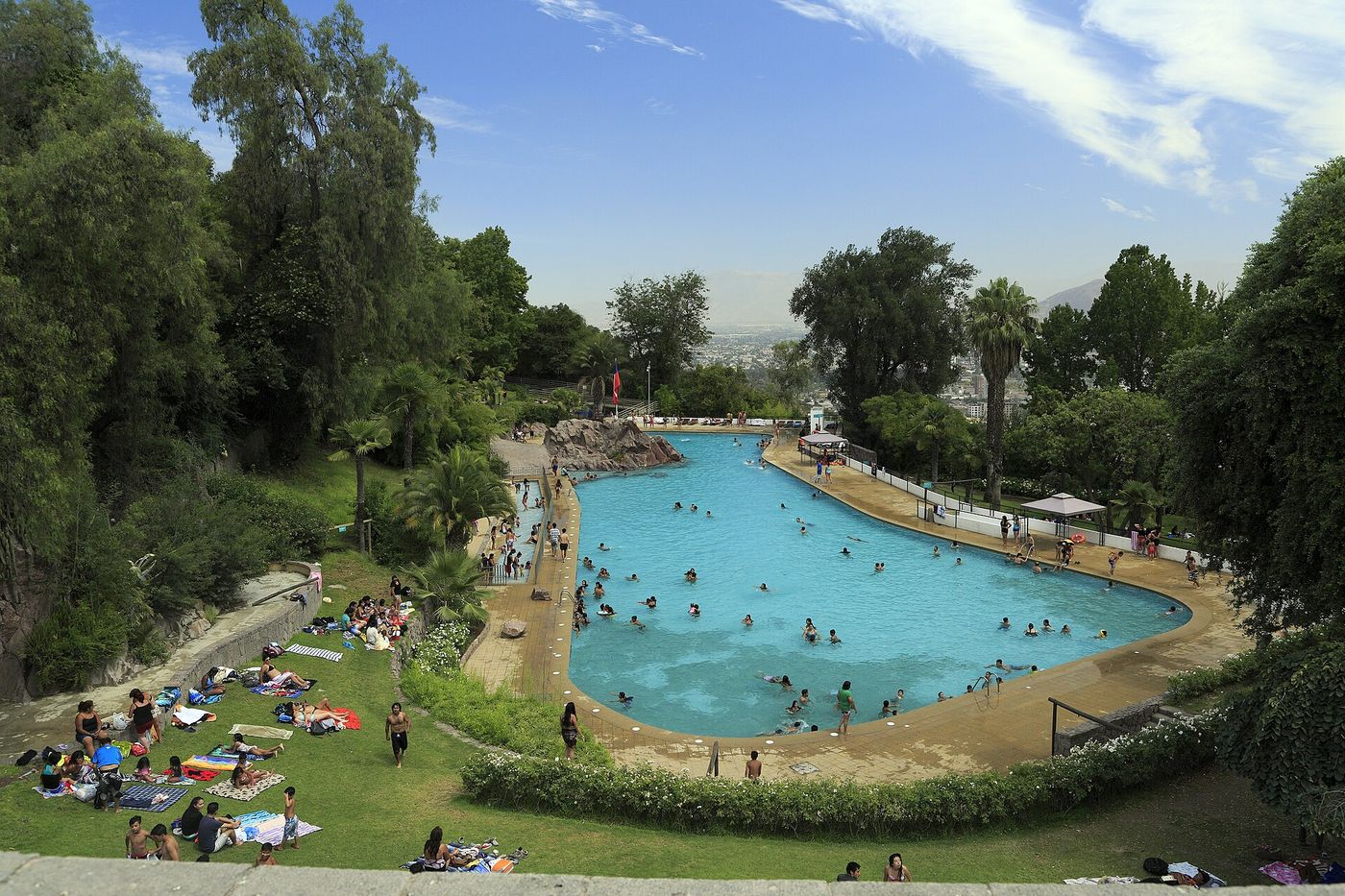
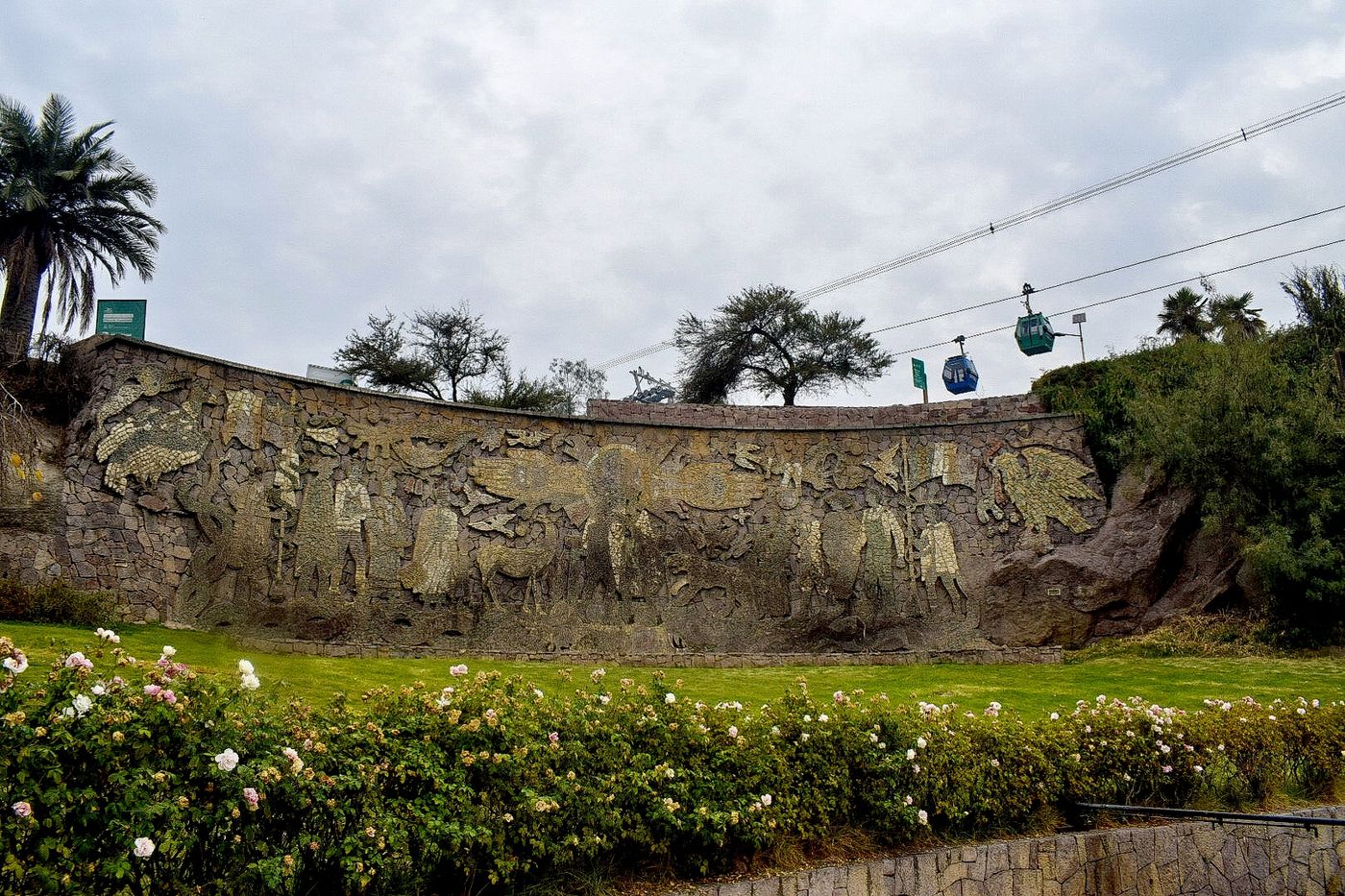
The one paid thing worth the money in high summer is a pool. The Parque Metropolitano’s Piscina Tupahue and Piscina Antilén run a summer season on the slopes of Cerro San Cristóbal; the 2025-26 season closed on 15 March 2026, with adult entry at CLP 7,000 in that season. Season dates and prices are published each summer, so check before making the trip.
What closes in Santiago over the summer?
This is the part most event guides leave out, and it shapes a summer trip more than any festival does. Between late December and the end of February, a large share of small, owner-run businesses close for two to four weeks.
| What | Summer status |
|---|---|
| Neighborhood restaurants and cafés | Many closed for 2-4 weeks, mostly in February |
| Theatre and concert seasons | Largely paused until March |
| Independent galleries | Reduced hours or closed |
| Major museums | Open Tuesday to Sunday, closed Monday, as always |
| Metro and transport | Normal service throughout |
| Markets and supermarkets | Normal |
| 25 December and 1 January | Almost everything closed |
| 18-19 September | Not a summer date, but the year’s other full shutdown |
The practical rule: build your days around institutions that publish hours, and check any specific restaurant on the day. Chilean owners close for three weeks without updating a listing anywhere.
How do you find out what is actually on?
Check official and municipal channels in the week before you travel, because Chilean events are announced weeks rather than months ahead. The festival’s own site, the commune’s social media and the ticketing platforms carry the real schedule; international listings sites lag behind and often miss free programming entirely.
Where to look, in order of usefulness:
- The festival’s own website, for anything with a name. Teatro a Mil, Lollapalooza and the municipal vendimias all publish their own schedules.
- Municipal channels for the commune you are in or visiting, which is where free plaza and park programming is announced.
- GAM, Matucana 100 and the Teatro Municipal for the cultural season, which restarts in March.
- The main Chilean ticketing platforms, which change by event: Lollapalooza sells through Ticketmaster Chile, while Teatro a Mil has used different partners between editions. Always buy through the link on the event’s own site.
- The tourist information points in the centro, which carry printed programmes for municipal events.
What not to rely on: international aggregator sites, which cover ticketed concerts reasonably and free Chilean programming barely at all. For the fixed dates that anchor the rest of the year, from Fiestas Patrias in September to the winter season, the full Santiago events calendar is the place to start.
Buying tickets as a foreign visitor
Chilean ticketing runs through a handful of platforms, and which one you need depends entirely on the event rather than on the venue. Lollapalooza sells through Ticketmaster Chile. Teatro a Mil has used different partners between editions. Municipal festivals sell nothing at all, because entry is free and tastings are bought on the spot.
Practical advice:
- Always start at the event’s own website and follow its link to the seller. Chilean events publish their authorised platforms each year, and searching for tickets directly turns up resellers first.
- Expect a separate service charge. Chilean ticketing quotes a base price and adds a fee that can run 12% or more. A CLP 263,000 Lollapalooza pass becomes CLP 294,600 once the fee is added.
- Bank and retail promotions are real money. Chilean events routinely discount 20% to 50% for particular cards or retail partners, with capped stock at each tier. If you hold no Chilean card, you pay the general price.
- Foreign cards sometimes fail on Chilean payment platforms. Try a second card or a different browser before assuming the ticket is gone.
- Avoid resale. With stock capped by tier, resale markups on popular Chilean events are steep, and counterfeit tickets circulate around the big ones.
For free events, none of this applies. The street half of Teatro a Mil, the municipal plaza programming and the vendimia festivals all work on turning up, which is the main reason they suit visitors whose dates were fixed before the programme existed.
Where to stay for summer events
Central. Almost every summer event either happens in the centre or finishes after the Metro stops, and both problems are solved by geography rather than planning.
| Area | Good for | Trade-off |
|---|---|---|
| Lastarria and Bellas Artes | Teatro a Mil at GAM, walkable evenings | The priciest central beds |
| Barrio Brasil and Yungay | Parque O’Higgins events, cheaper beds | Patchier at night |
| Bellavista | Late nights, terraces, hill access | Loud until 03:00 at weekends |
| Providencia | Comfort, restaurants that stay open in February | Further from the free street programme |
| Santa Isabel and Matta Sur | The closest residential streets to Parque O’Higgins | Few tourist services |
Book earlier than you would for the shoulder months. December to February is high season despite the city emptying of locals, and Lollapalooza weekend in March tightens the centre further. The where to stay guide compares the neighborhoods properly, and the trip cost guide covers what a summer week costs.
Practicalities: heat, tickets and getting home
Three things determine whether a summer event is enjoyable or exhausting, and none of them is the programme.
Heat. Outdoor events are scheduled for late afternoon and evening because the middle of the day is unusable. January and February average just over 30°C, and the sun at 33° south with dry air is strong until late afternoon. Hats, water and shade are planning items rather than afterthoughts.
The evening drop. A 30°C afternoon becomes a 12°C night. Every outdoor evening event needs a layer you have carried all day, which is the single most common thing visitors forget. The packing guide covers the rest.
Transport. The Metro runs 06:00 to 23:00 Monday to Friday, from 06:30 on Saturday and 07:30 on Sunday and holidays, at CLP 735 to 895 per ride, and takes contactless bank cards. RED buses still need a bip! card at CLP 1,550. The problem is that concerts and festival headliners finish at or after 23:00, so plan the journey home before you go out. Ride-hailing apps work and surge; walking distance is the real solution. The getting around guide has the detail.
Crowd safety at free events is the ordinary Santiago picture concentrated: keep bags zipped and in front of you, avoid holding a phone loose in a dense crowd, and agree a meeting point. The safety guide covers the scams and the neighborhoods.
Summer events with children
Chilean summer events are family events by default. Free street theatre, plaza concerts and harvest festivals all run with children present, late into the evening, and nobody expects them to be quiet.
What works:
- Teatro a Mil’s street programme, particularly the circus and puppetry, which needs no language at all.
- Lollapalooza, where under-10s enter free with a ticketed adult and the Kidzapalooza area runs its own programme with sign language interpretation.
- The Parque Metropolitano pools and the zoo, which reopened in 2026 with free entry, advance booking through the park’s reservation site, and Tuesday to Sunday opening 10:00 to 17:00 with a daily cap.
- The vendimia festivals, where fresh grape juice, games and music run alongside the wine.
What to plan around: heat, crowd density at the big free events, and late finishing times. Arrive early, leave before the headline act, and treat the middle of the afternoon as pool or indoor time. The Santiago with kids guide covers the rest of the city’s family logistics.
Summer events beyond Santiago
Chilean summer is a national season, and some of its biggest events are a bus ride away. If your dates fall in the quiet weeks, this is where the country’s attention actually is.
- Vina del Mar song festival, late February at the Quinta Vergara, 1.5 to 2 hours west. The largest televised event of the Chilean year, with coastal accommodation booked out well ahead.
- New Year’s Eve in Valparaiso, whose bay fireworks draw crowds from across the country and fill rooms months in advance.
- The vendimia festivals, from late March into April across the Maipo Valley and, on a larger scale, at Santa Cruz in Colchagua.
- Coastal summer programming along the central coast, where the population of the beach towns multiplies from late December.
- Classical music in the south, where Chile’s long-running summer festival at Frutillar runs across January and February, though that is a flight rather than a day trip.
The practical lesson of the Chilean summer is that the capital empties toward the coast, and so do the events. If you are here in February and the city’s own calendar looks thin, that is because it is; the answer is a bus rather than a better listings site. The day trips guide covers the routes west and south.
Five summer event mistakes
- Booking February for the culture. The seasons have paused, Teatro a Mil has finished and the country is at the coast. Come in January or March if events are the point.
- Planning around dates that are not published. Chilean events announce weeks ahead, not months. Only Lollapalooza gives you a year’s notice.
- Forgetting the evening layer. A 30C afternoon becomes a 12C night, and outdoor events start after the heat drops.
- Missing the last Metro. Normal service ends at 23:00, which is when a lot of summer programming finishes. Walkable accommodation is worth more than a better seat.
- Assuming 25 December and 1 January work like normal days. They do not. Almost everything closes, and that includes the restaurants you were counting on.
Accessibility at summer events
Provision varies enormously between the organised festivals and the improvised ones, and almost none of it is published far ahead.
At the top end, Lollapalooza runs the most developed programme of any Chilean event of its size: accessible viewing platforms at the stages, a signed preferential access lane, accessible routes across the site, sensory pause zones staffed by specialists, sign language interpretation at the main stages and at Kidzapalooza, and trained volunteers on site. It publishes an accessibility contact address for questions ahead of the event.
Teatro a Mil’s indoor venues vary widely. GAM is modern and step-free; the independent spaces the festival also uses are converted buildings with stairs and no lifts. Street productions have no seating at all, which means standing for an hour or more on pavement in summer heat, so arriving early enough to claim a wall or a step matters.
The municipal vendimia festivals and plaza events are the least predictable. Flat plaza sites are broadly navigable, but temporary surfaces, dense crowds and portable facilities are the usual limits, and no commune publishes accessibility detail in advance.
The practical approach is the same in every case: contact the venue or the organiser directly rather than relying on a listing, and give yourself more time than the schedule suggests. The accessible Santiago guide covers the city’s permanent infrastructure, including which Metro stations have lifts and which cultural venues publish access information.
Frequently asked questions
What is the biggest summer event in Santiago?
Teatro a Mil in January, by audience. The 2026 edition ran 89 productions from 16 countries between 3 and 25 January, and the culture ministry says around 80% of its audience attends free street performances. Lollapalooza in March is bigger commercially but smaller in reach.
Are Santiago’s summer events free?
Many are. Teatro a Mil’s street programme, municipal plaza events, the parks and several major museums cost nothing. Lollapalooza is firmly ticketed, the vendimia festivals are free to enter with tastings sold separately, and the Parque Metropolitano pools charge a seasonal entry.
Do I need to speak Spanish to enjoy Santiago’s summer events?
Not for most of them. Street theatre, circus, dance, music and the harvest festivals work without a word of Spanish. Indoor theatre is the exception, since it is largely performed in Spanish without surtitles, so check the language on each production before booking.
Is Santiago worth visiting in summer at all?
Yes, with a plan. The weather is dependable, the evenings are long, the mountains are visible, the museums are quiet and January’s free festival programme is genuinely world-class. The costs are heat between 13:00 and 17:00, closed neighborhood restaurants and peak accommodation prices.
When are summer event dates announced?
Late, with one exception. Lollapalooza publishes its dates roughly a year ahead. Teatro a Mil opens presales in October and publishes the full programme in December. Municipal festivals and free programming are confirmed weeks in advance, so check in the fortnight before you travel.
Is February a bad month for events in Santiago?
For events, yes. Teatro a Mil has finished, the cultural seasons have not restarted, and the country’s attention is on the Viña del Mar song festival on the coast. February compensates with empty museums, an easy Metro and the quietest city of the year.
Where is the New Year’s Eve fireworks display?
The national event is in Valparaíso, whose bay fireworks draw crowds from across Chile and fill coastal accommodation months ahead. Santiago marks the night with restaurants, private parties and its own displays, and then closes almost completely on 1 January.
Can I combine Lollapalooza with the harvest festivals?
Yes, with a fortnight’s gap. Lollapalooza fell on 12 to 14 March for the 2027 edition, and Isla de Maipo’s vendimia ran on 28 and 29 March in 2026. A trip covering both would need about two weeks, which is a reasonable length for Santiago plus the valleys and the coast.
Sources
- Fundación Teatro a Mil: official festival site
- Ministerio de las Culturas: Teatro a Mil 2026 launch
- Lollapalooza Chile: official site
- Municipalidad de Isla de Maipo: Fiesta de la Vendimia
- Chile Travel: events calendar
- Parque Metropolitano de Santiago
- Teleférico Santiago
- Fundación Neruda: La Chascona
- Metro de Santiago: fares and hours
- Dirección Meteorológica de Chile: climate normals, Santiago Pudahuel
- Santiago Turismo: municipal visitor information
- Visit Santiago: official visitor site
Image credits
| Photo | Credit |
|---|---|
| Parque O’Higgins (top of page) | Fantacoaster, CC BY-SA 3.0, via Wikimedia Commons |
| GAM, Centro Cultural Gabriela Mistral | Rodrigo Fernández, CC BY-SA 4.0, via Wikimedia Commons |
| Mural at GAM | Rodrigo Fernández, CC BY-SA 4.0, via Wikimedia Commons |
| Movistar Arena | Jorge Barrios, CC BY-SA 2.0, via Wikimedia Commons |
| Piscina Antilen, Cerro San Cristobal | Falk2, CC BY-SA 4.0, via Wikimedia Commons |
| Mural at Piscina Tupahue | Francisco Lucero, CC BY-SA 4.0, via Wikimedia Commons |