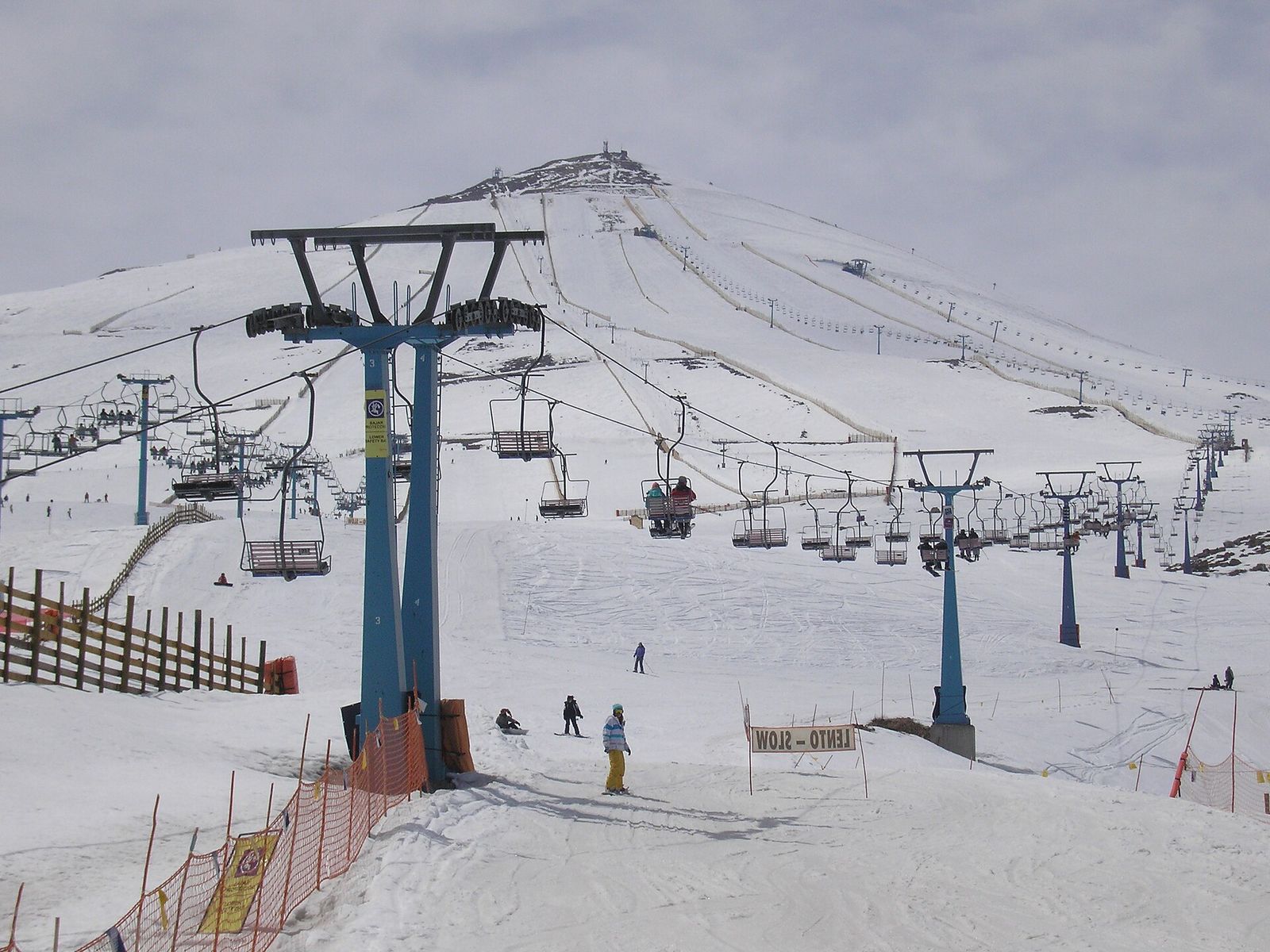
Skiing near Santiago Chile is the shortest hop from a capital city to a serious ski area anywhere in the world: 90 minutes from a Providencia hotel to a chairlift at 3,000 metres. Three linked resorts — El Colorado, La Parva and Valle Nevado — sit at the top of one switchback road, and Portillo is two hours north on the Argentine highway. The catch is the road itself, the cost of getting up it, and a season that swings hard from year to year.
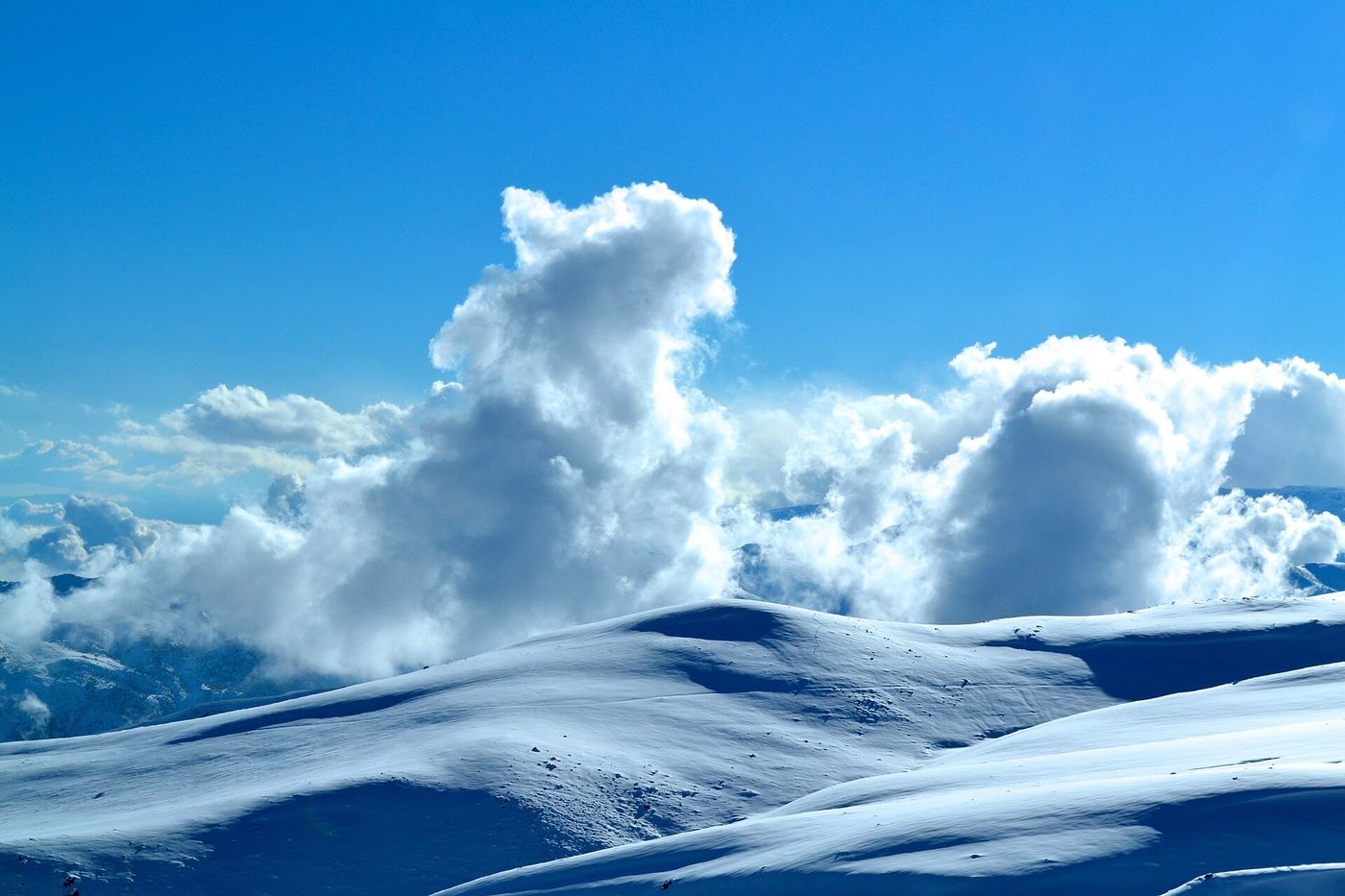
Which resort should you ski?
The honest short answer: El Colorado if you are learning or on a budget, Valle Nevado if you are a confident intermediate, La Parva if you want quiet, and Portillo if you want a proper ski holiday rather than a day out.
| Resort | Distance from Santiago | Drive | Best for | Day trip? |
|---|---|---|---|---|
| Farellones | ~35 km | 1.5 h | Beginners, snow play, non-skiers | Yes |
| El Colorado | ~36 km | 1.5 h | Beginners to intermediates, value | Yes |
| La Parva | ~38 km | 1.5 h | Quiet slopes, intermediates | Yes |
| Valle Nevado | ~46 km | 1.5–2 h | Intermediates and above, off-piste | Yes |
| Portillo | ~145 km | 2 h | A week-long stay, big terrain | Possible but not ideal |
| Lagunillas | ~65 km | 2 h | Cheap, small, local | Yes |
El Colorado, La Parva and Valle Nevado share a mountain and are linked on the Tres Valles combined pass, which is the reason most people end up at one of them. Farellones is the village below El Colorado rather than a resort proper, and it is where the tubing parks, sledging and beginner areas are — genuinely the right choice if half your group does not ski.
When is the ski season in Chile?
Roughly mid-June to late September or early October, with the most reliable snow from July to mid-September. It varies a lot year to year. In 2026 the season ran long: on 18 September, El Colorado’s own conditions board still showed 96 of 98 runs open with 10 of 17 lifts running.
That late-2026 snapshot is useful context but not a promise. Central Chile has had thin years and deep ones in the last decade, and the difference between them is the difference between skiing a full mountain in August and skiing three runs on machine-made snow. Before you book anything, check the resort’s own conditions page rather than a seasonal average.
| Period | Snow | Crowds | Prices | Verdict |
|---|---|---|---|---|
| Mid-June to early July | Building, patchy | Low | Lowest | Gamble, but cheap |
| Mid-July to early August | Usually the best | Highest — Chilean school holidays | Highest | Great snow, busy slopes |
| Mid-August to mid-September | Often excellent, sunnier | Moderate | Mid | The sweet spot |
| Late September onward | Softening, spring conditions | Low | Low | Fine for sun, poor for powder |
The single week to avoid if you dislike queues is the Chilean winter holiday, roughly the second half of July. Portillo prices it as high season explicitly — its 2026 rates treated 18 July to 2 August as peak alongside every weekend and public holiday.
What does skiing near Santiago cost?
More than you expect, and the lift ticket is only part of it. Here is what was verifiable in September 2026.
Portillo publishes clean day rates in US dollars:
| Portillo day ticket (2026) | High season | Low season |
|---|---|---|
| Adult 18–64 | USD 71 | USD 53 |
| Teen 12–17 | USD 51 | USD 40 |
| Child 5–11 | USD 49 | USD 37 |
| Senior 65+ | USD 28 | USD 24 |
High season means Saturdays, Sundays, public holidays and the 18 July–2 August block. Lifts run 09:00–17:00 and the ticket office closes at 16:00 (all checked September 2026).
Valle Nevado does not publish a single rack rate. It sells a fixed-date Ticket FIX priced dynamically by demand and date, plus a flexible Ticket FLEX, and everything loads onto a Valle Plus rechargeable card that costs CLP 6,000 (about USD 6) on top. Two things are worth knowing:
- A ten-ticket coupon book cost CLP 697,500 for ages 13–74 in the 2026 season, which works out near CLP 70,000 (about USD 73) a day. That is the most useful benchmark for what a day actually costs there.
- Children up to 12 ski free with a Power KIDS pass, and over-75s ski free with a Super Senior pass. Each carries a one-off CLP 15,000 issuance fee. If you are travelling with young children, that single policy can halve the cost of a family day.
El Colorado sells only through its online store and does not publish rates on its homepage, so treat any price you see quoted elsewhere as indicative. It generally undercuts Valle Nevado.
Then the rest of the day:
| Extra | Typical cost | Note |
|---|---|---|
| Round-trip shuttle from Santiago | Mid five figures CLP | Usually includes the road toll |
| Full ski or board rental | Mid five figures CLP | Cheaper in Santiago than on the mountain |
| Clothing rental (jacket, trousers) | Low five figures CLP | Worth it if you are here for one day |
| Road toll, Camino a Farellones | Low five figures CLP per car | Charged on the way up |
| Lunch on the mountain | 12,000–25,000 CLP | Captive pricing; take a sandwich |
| Snow chains hire | Low five figures CLP | Often bundled with rental cars |
Converted at roughly CLP 950 to USD 1 (checked September 2026). Budget realistically: a day at Valle Nevado with transfer, rental and lunch lands somewhere around USD 150–200 per person. This is not a cheap day out, and it is the main thing people get wrong when they plan it.
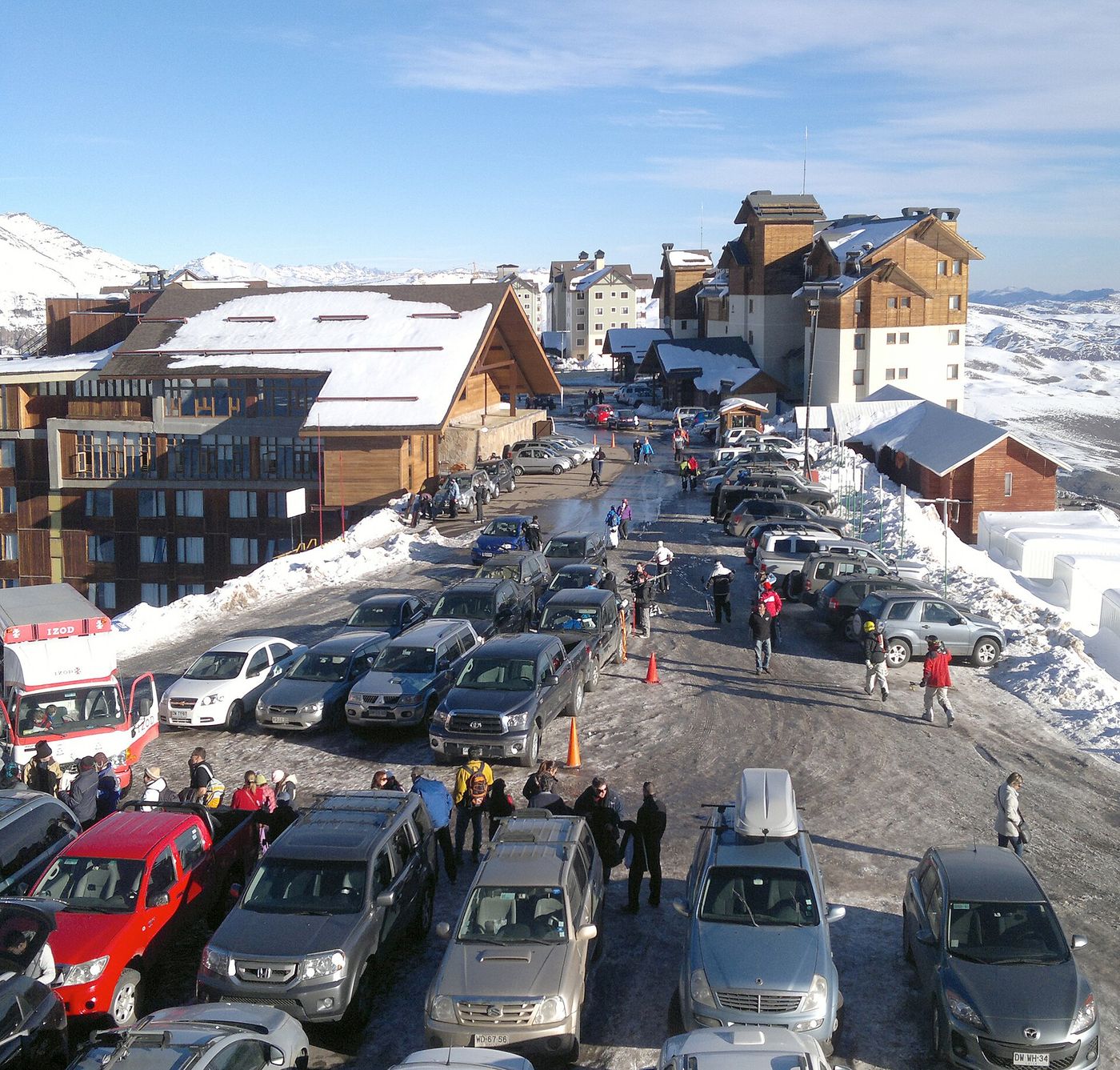
The road: what nobody tells you about Camino a Farellones
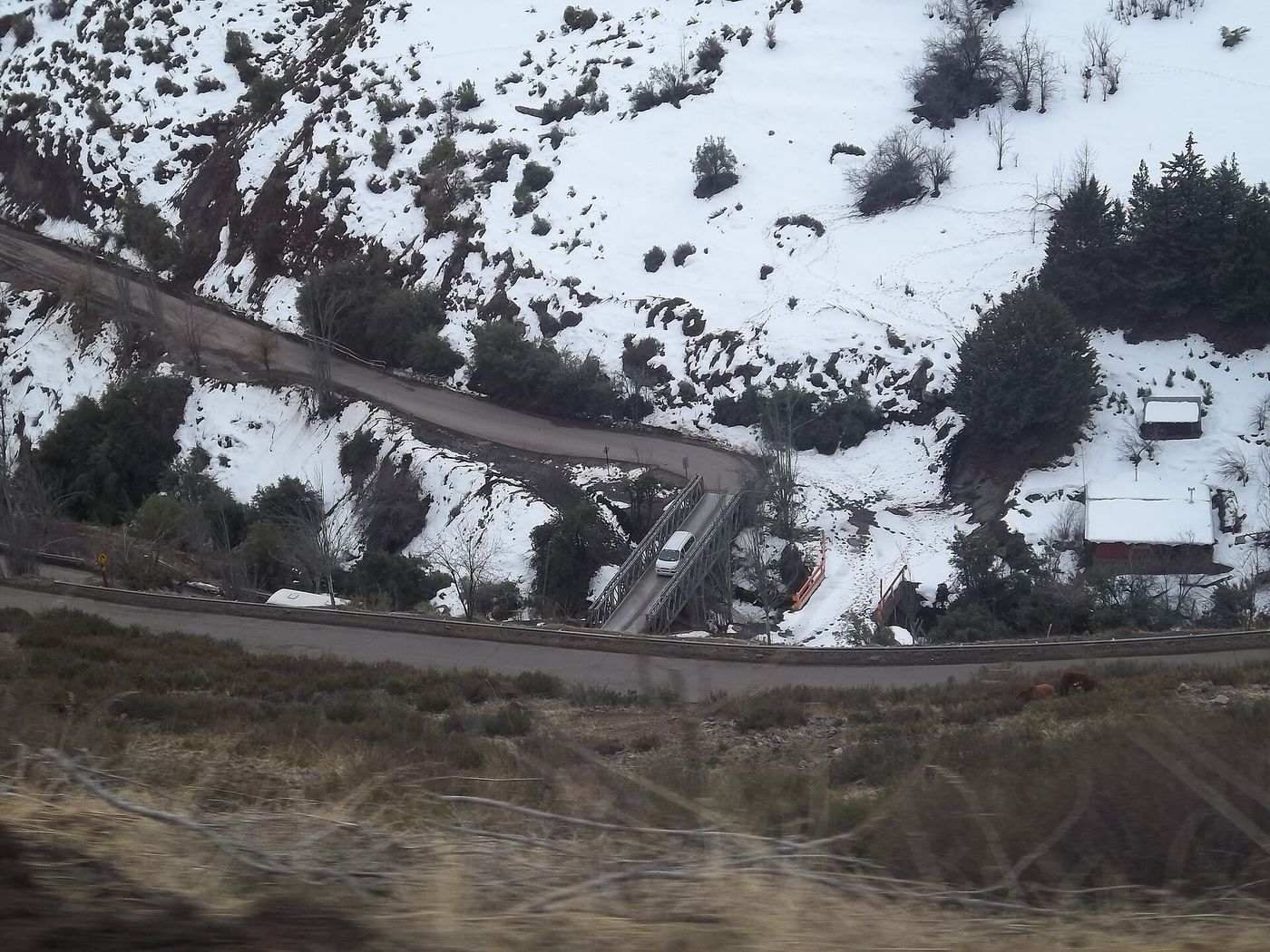
Everything at the top of this road depends on one thing — route G-21, a relentlessly switchbacked climb of roughly forty numbered hairpins from the eastern edge of Santiago up to Farellones. It is the reason the resorts are a day trip and it is also the reason a lot of days go wrong.
What you need to know:
- Carabineros run a control point part-way up. In snow conditions they can require snow chains or a four-wheel-drive vehicle, and they will turn you back without them. This is not negotiable and it is not a shakedown.
- The road can be one-way by time of day when traffic is heavy, typically uphill in the morning and downhill in the afternoon. Check before you set out on a busy weekend.
- It closes. Heavy snowfall shuts the road entirely, sometimes for a day. If you have one day in Santiago and it is the day of a storm, you will not be skiing.
- A toll is charged on the way up.
- It is not a road to learn mountain driving on. The hairpins are tight, the drops are real, there are no guardrails in places, and the traffic includes buses.
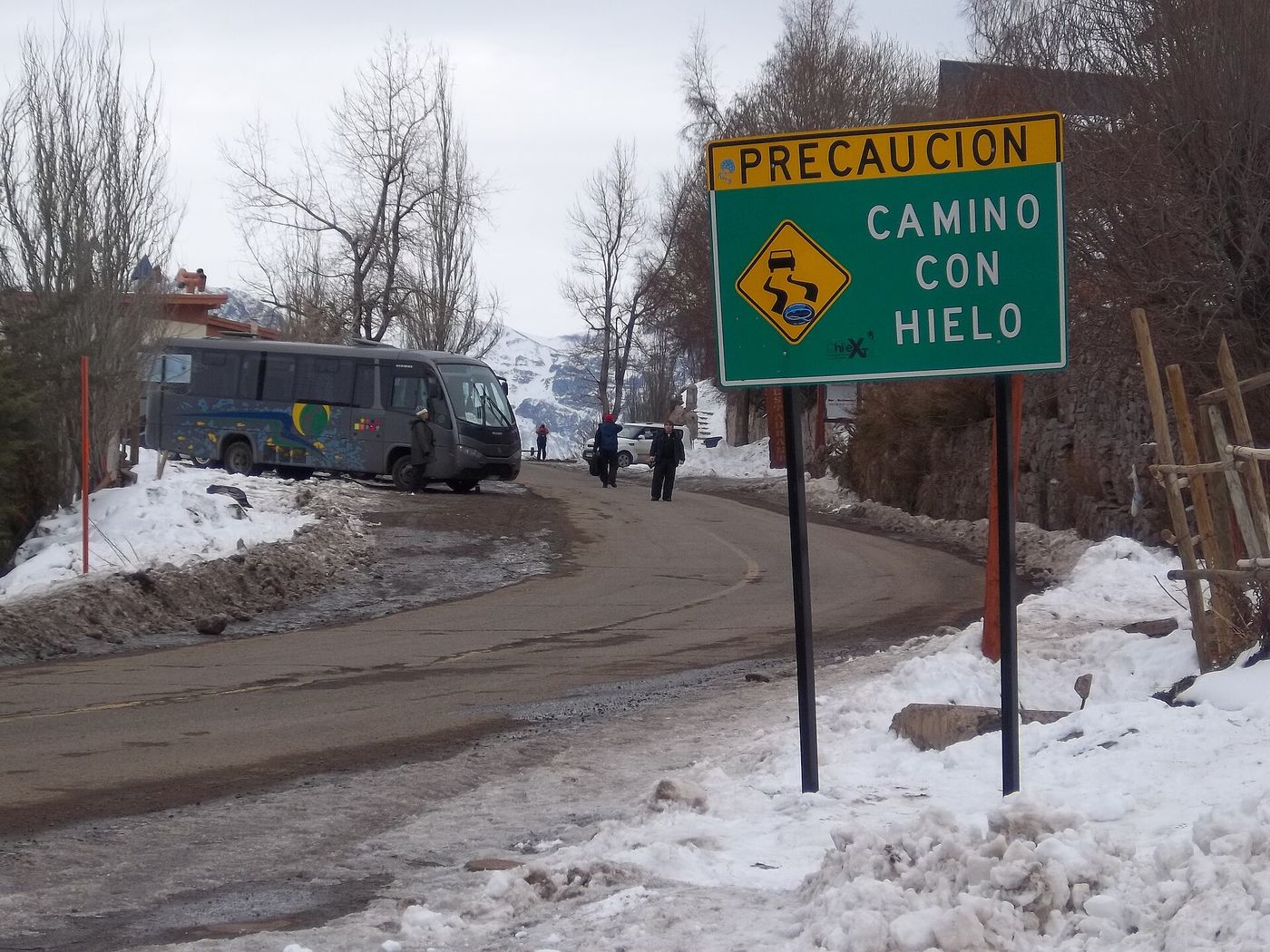
The practical conclusion for most visitors: take a shuttle, not a rental car. A shared transfer from Santiago costs less than a rental with chains once you are two people, the driver does the road every day, and the chains question stops being your problem. Hotels in Providencia and Las Condes can usually book one; so can the ski rental shops. Book the night before, not the morning of.
If you do drive, leave Santiago by 07:00 on a weekend. The queue at the control point on a sunny July Saturday can be an hour on its own, and the getting around Santiago guide covers the eastern exits out of the city.
El Colorado and Farellones: the beginner’s mountain
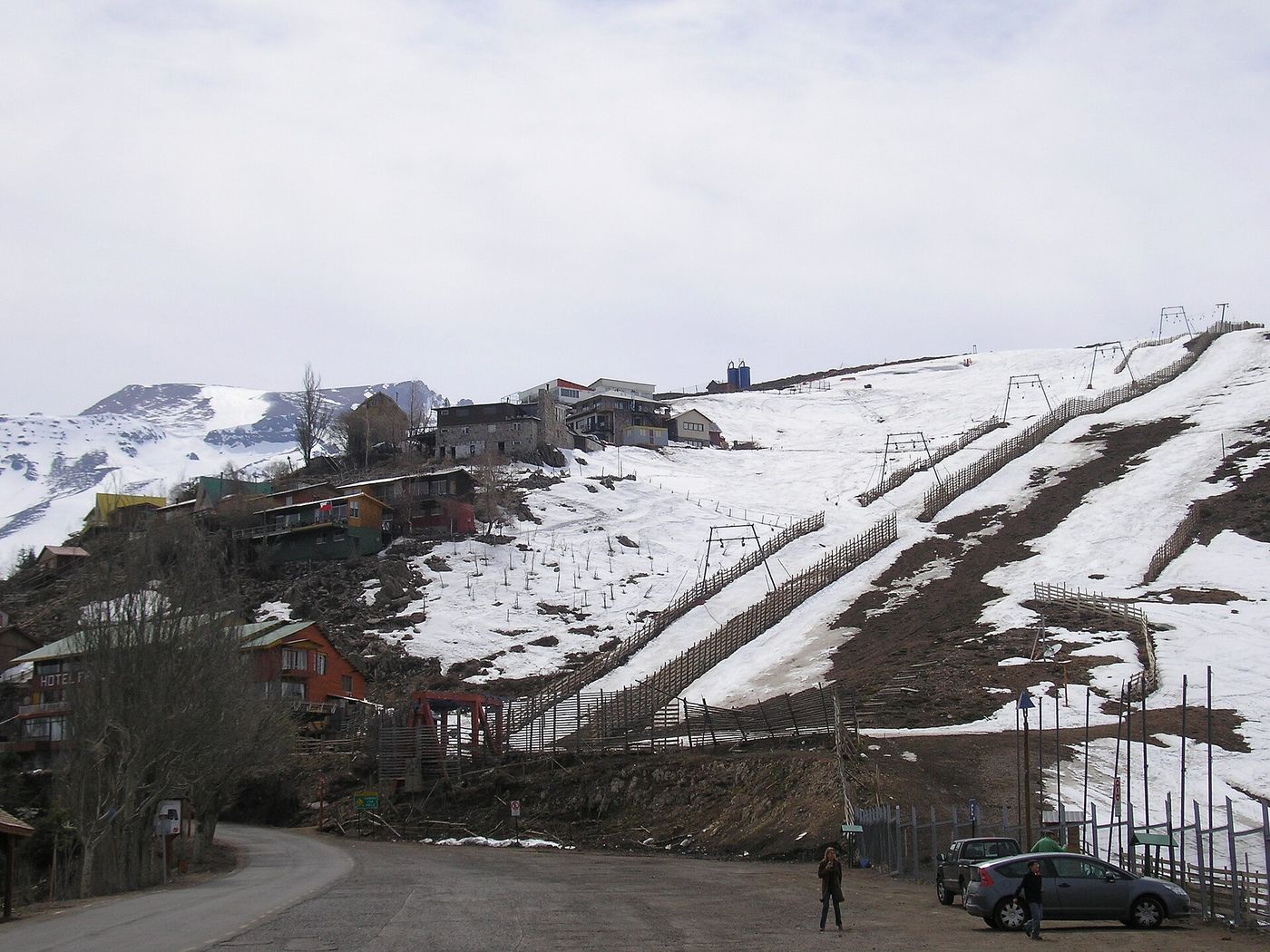
El Colorado is the closest real ski area to Santiago and the one with the most terrain for people who are still learning. It spreads across a broad, open mountain above the village of Farellones, with a large number of runs — around 112 by most counts — skewed towards green and blue. It is also the most Chilean of the three: more locals, more families, fewer international ski-week visitors.
Why it works for beginners. The learning areas are at the base rather than up a gondola, the pitch on the lower mountain is gentle, and the ski school runs in Spanish and English. Nothing about arriving here is intimidating.
Farellones village, just below, is where you go if you are not skiing at all. There are tubing runs, sledging areas, snow play zones for small children and restaurants with terraces facing the valley. A non-skiing partner or grandparent has a genuinely good day here, which is not true at Valle Nevado.
The honest verdict. If it is your first time on snow, or your first time in years, book El Colorado and do not agonise over it. The extra money for Valle Nevado buys terrain you will not ski.
Valle Nevado: the one you have heard of
Valle Nevado is the international face of Chilean skiing — purpose-built, high, treeless, and the one every ski magazine photographs. Roughly 100 km of piste and around 19 lifts by the resort’s own reckoning, spread across a wide bowl at high altitude, with the reputation for the best off-piste and heli-skiing access in the country.
Why people choose it. Altitude, which means more reliable snow than the lower slopes; wide open intermediate terrain; the linked Tres Valles skiing; and three hotels at the base if you want to stay on the mountain rather than commute.
Why you might not. It is the most expensive of the three. It is exposed — when the wind gets up, the upper lifts close and a high-altitude bowl with no trees is a bleak place. And it is the least interesting mountain for a genuine beginner, because the gentle terrain is limited and the atmosphere is built around people who already ski.
The Valle Plus card catches people out. You cannot just buy a ticket and go: everything loads onto a rechargeable card that costs CLP 6,000 extra. Buy it once and keep it.
Worth knowing about the kids policy. Under-12s ski free on a Power KIDS pass with a CLP 15,000 one-off fee, and that changes the maths for families substantially — a parent-and-two-children day at Valle Nevado can cost less than the same day at a resort charging full child rates.
La Parva: the quiet one
On a busy August Saturday, when El Colorado’s base is a car park and Valle Nevado’s lift queues are ten minutes deep, La Parva is where the people who know the mountain go. That is the whole pitch.
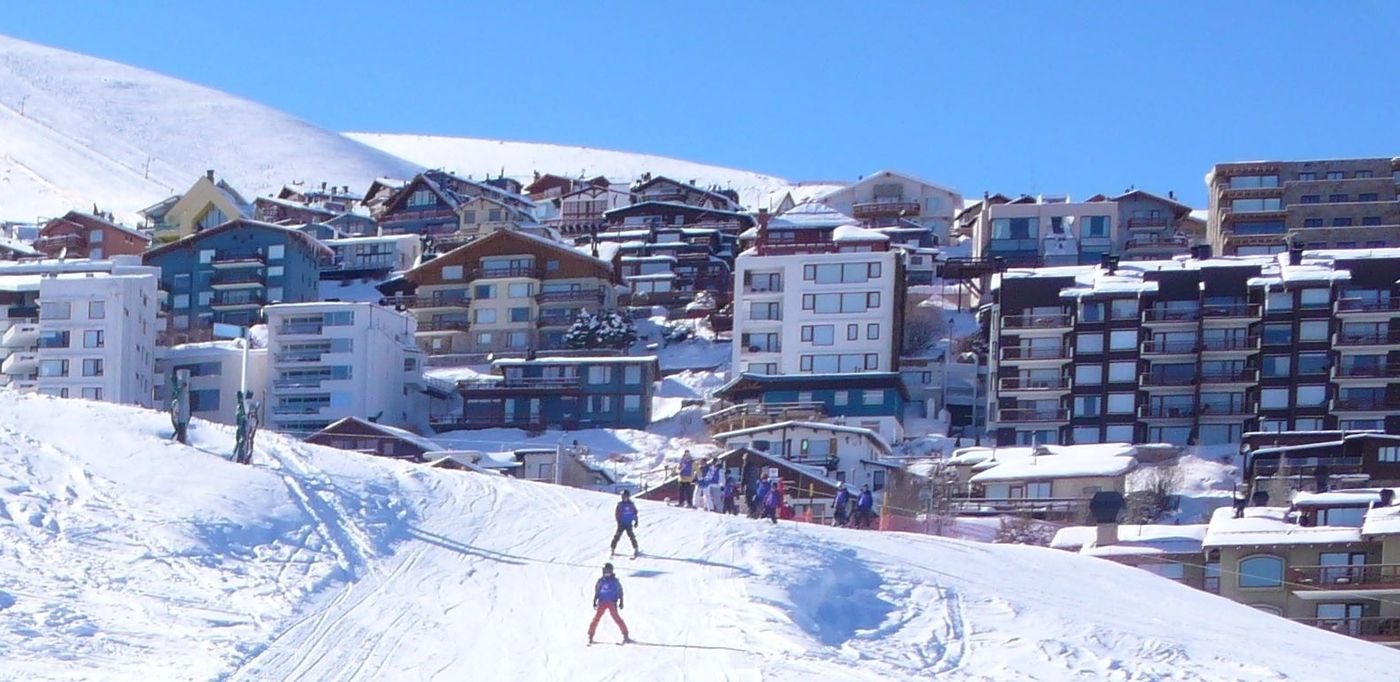
La Parva sits between the other two and is the least visited by international skiers, largely because it started as — and still partly is — a private club field with a village of chalets rather than hotels. The skiing is genuinely good, the pistes are quieter than either neighbour, and the connection to the Tres Valles network means you are never stuck on one mountain.
The terrain is more varied than its size suggests, with a good spread of intermediate runs and some genuinely steep lines off the top for people who can use them. Because it shares lifts and boundaries with El Colorado and Valle Nevado through the Tres Valles pass, a day here does not confine you — you can ski across, have lunch on another mountain, and ski back.
It suits confident intermediates who want to ski rather than queue, and people staying in a rented apartment for a week. It suits day-trippers and beginners much less well, because base facilities are thinner and the accommodation model assumes you are staying put.
Portillo: the proper ski holiday
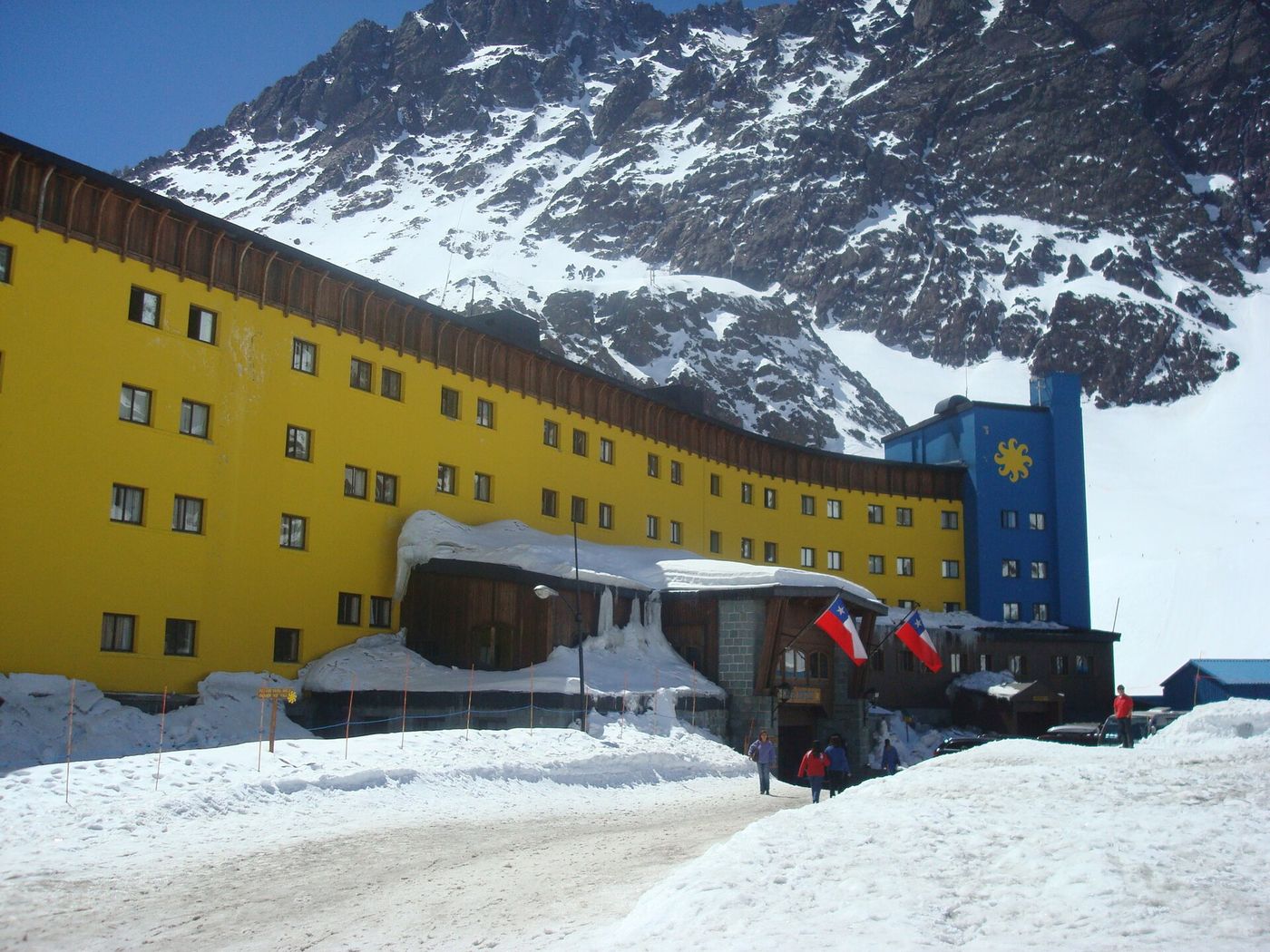
Portillo is something else entirely — not a day trip but a destination, 145 km north of Santiago on the highway to Argentina, sitting above the frozen Laguna del Inca beneath the Aconcagua massif. There is one hotel, the famous yellow one, and it runs on weekly packages from Saturday to Saturday with fixed dining times and a fixed community of guests.
The resort itself is 2 hours from the capital, lifts run 09:00–17:00, and day tickets in the 2026 season cost USD 71 for an adult in high season and USD 53 in low, with children 5–11 at USD 49 and USD 37 and over-65s at USD 28 and USD 24 (checked September 2026). Its high season covers weekends, holidays and 18 July to 2 August.
Can you day-trip it? Technically yes — two hours each way on a good road. In practice it is a long day for a mountain designed around staying, and the road over the Los Libertadores pass can close in a storm with traffic backed up for hours. If you want one day of skiing from Santiago, go up the Farellones road. If you want a week of skiing, Portillo is the better mountain and the better experience by a distance.
The terrain is serious: long steep faces, the famous va et vient slingshot lifts that fire you up avalanche-prone slopes with no towers, and off-piste that attracts national ski teams for southern-hemisphere training. It is not a beginner’s resort, though it does have learning terrain.
What does a ski day from Santiago actually look like?
Written out, because the timings are what make or break it.
| Time | What happens |
|---|---|
| 06:30 | Alarm. Eat something; the mountain restaurants are expensive and slow |
| 07:15 | Shuttle picks up in Providencia or Las Condes |
| 07:45 | Last pickups in Las Condes, then the city ends abruptly |
| 08:00 | The G-21 begins. Numbered hairpins start counting up |
| 08:30 | Carabineros control point. Chains checked if there is snow |
| 09:15 | Arrive Farellones or El Colorado; Valle Nevado 20–30 minutes further |
| 09:30 | Collect rental if you did not sort it in the city, buy the ticket |
| 10:00 | First lift, realistically |
| 13:00 | Lunch. Queues peak between 13:00 and 14:00 |
| 16:00 | Last runs; light goes flat early in June and July |
| 16:30 | Shuttle departs |
| 18:00 | Back in Santiago, assuming the descent is not queued |
The two soft spots are the control point and lunch. If you sort your rental in Santiago the night before you gain 45 minutes at the start of the day, and if you eat at 12:00 or 14:15 rather than 13:00 you gain another half hour. That is an hour and a quarter of skiing recovered from a day you have already paid for.
Lessons, snowboarding and doing this for the first time
All three Tres Valles resorts run ski schools, and all three teach in Spanish and English — but the English-speaking instructors are a smaller pool, so book ahead rather than turning up. Group lessons are the sensible starting point for adults; private lessons are worth the money for children, who make far faster progress one to one.
Snowboarding is well catered for. El Colorado and Valle Nevado both have terrain parks, and the wide, treeless, gently pitched lower mountain at El Colorado is close to ideal for learning to link turns without hitting anything. What Chile does not have much of is tree skiing: above about 2,000 metres these mountains are bare, so in flat light there is nothing to give you depth perception. On an overcast day that makes the slopes genuinely disorienting, and it is another reason beginners do better here in bright weather.
A realistic expectation for a first-timer with one day: a morning group lesson, lunch, and an afternoon of very slow green runs with a lot of falling over. That is a good day. Trying to compress learning to ski into a single day and also see the best of the mountain is how people end up cold, frustrated and injured.
Lagunillas: the cheap alternative
Lagunillas sits above San José de Maipo in the Cajón del Maipo, run by the Club Andino de Chile rather than a corporation. It is small — a handful of lifts and a short season — and it is the least glamorous skiing within reach of the city. It is also dramatically cheaper than anything on the Farellones road, close to the valley’s lodges, and quiet.
Go if the budget is the binding constraint, if you want to ski without the Tres Valles crowds, or if you are already staying in the Cajón del Maipo. Do not go if you want reliable snow — it is lower than the Farellones resorts and suffers for it in thin years — or if you need rental gear and lessons in English as a matter of course. Check it is open before committing the day; small club fields open late and close early.
Where should you stay for a ski trip?
For day trips, stay in the city and pick the eastern side of it. Las Condes and the upper end of Providencia put you on the right side for the shuttle pickups and for the rental shops, and they cut 20–30 minutes off the start of every ski day compared with the historic centre. Our where to stay in Santiago guide covers the neighbourhoods in detail.
For a dedicated ski week, the calculation changes:
- On the mountain. Valle Nevado has hotels at the base; La Parva rents apartments; El Colorado and Farellones have a mix. Staying up there means first lifts, no road, and no city at all — which is either the appeal or the problem, depending on you.
- Portillo. The hotel is the resort, sold as Saturday-to-Saturday packages with meals included. It is the most complete ski holiday in Chile and it is not flexible.
- Split the trip. Three nights in the city, four on the mountain, is the pattern that suits most people combining Santiago with skiing. You get the wine valleys and the museums and you get first lifts.
One thing to weigh: mountain accommodation in Chile is expensive relative to the city, and the food options are limited and captive. Commuting from Santiago costs you an hour each way but gives you a city’s worth of restaurants at the end of the day, at maybe half the room rate.
What goes wrong, and how to plan around it
Five failure modes account for most ruined ski days here, and four of them are avoidable.
The road closes. A storm shuts the G-21 and there is no alternative route. Nothing you can do except keep the day flexible and have a museum plan. If skiing is the whole reason for your trip, give yourself more than one possible day.
You get turned back at the control point. Almost always a rental car without chains. Take the shuttle.
You arrive at 11:00 instead of 09:30. Usually because the gear was rented on the mountain rather than in the city. Sort the rental the night before.
The wind shuts the upper lifts. Common at Valle Nevado, which is high and exposed. It does not close the resort, but it can reduce it to the lower half. Check the lift status page in the morning, not the snow depth.
Altitude flattens you. Sea level to 3,000 metres in a morning, then hard exercise. Drink water, skip the pisco sours the night before, and take the first hour slowly.
The one thing worth saying plainly: if you have a single free day in Santiago in July and the forecast is bad, do not spend it gambling on the mountain. The city’s museums, markets and wine valleys will still be there and open, and they do not depend on a road staying clear. Our guide to things to do in Santiago is the fallback plan.
Where do you rent skis?
In Santiago, the night before, and not on the mountain. Rental shops cluster along the eastern approach roads in Las Condes and around the top of Providencia, they are meaningfully cheaper than the resort counters, and renting in the city means you are on the slopes at 09:30 rather than queueing at 11:00.
What to rent and what to bring:
- Rent: skis or board, boots, poles, helmet. Renting a helmet is non-negotiable value.
- Rent if you are here for one or two days: jacket and salopettes. Most Santiago shops rent clothing, and it is not worth carrying ski kit across a continent for two days.
- Bring: gloves, goggles, thermal layers, high-factor sunscreen and lip balm. At 3,000 metres on a clear Chilean day the UV is brutal, and the shops on the mountain price these accordingly.
- Do not bring: a big suitcase of gear if you are skiing two days of a three-week trip. Rent it.
Ask the rental shop about transfers when you book. Many arrange a shuttle, and bundling the two is usually cheaper and always simpler.
How do you get there without a car?
Three ways, in order of how well they work.
Shared shuttle. Several operators run daily transfers up the G-21 in the season, leaving eastern Santiago around 07:00–08:00 and returning mid-afternoon. This is the default answer and the one to book.
Private transfer or tour. More expensive, more flexible, and worth it for a group of four or more or if you want to combine Farellones snow play with a half-day lesson.
Rental car with chains. Only if you are confident on mountain roads, have driven in snow, and accept that the control point may turn you back. Confirm the car comes with chains and that you know how to fit them before you leave the city.
There is no public bus and no Metro line up the mountain. Taxi apps will generally not take the G-21 in winter conditions. The nearest the Metro gets you is the eastern end of Line 1, which is where most shuttles pick up — handy if you are staying in Las Condes, less so if you are in the historic centre. Our neighborhoods guide covers which side of the city to base yourself on.
Is altitude a problem?
Sometimes. The base at Farellones sits around 2,400 m and the top lifts at Valle Nevado run well above 3,300 m, which is high enough to leave you breathless on the first morning and to give some people a headache. It is not dangerous at these altitudes for healthy adults, but it is noticeable.
The pattern that causes trouble is specific to Santiago: you sleep at 570 m in the city, drive to 3,000 m in ninety minutes, and immediately start exercising hard in thin, dry, cold air. That is a much sharper gain than most ski trips involve.
What helps: drink far more water than feels necessary, go easy on alcohol the night before, take the first hour gently, and eat properly. If you get a bad headache that does not shift, descend — going down 600 metres to Farellones usually fixes it. Anyone with heart or lung conditions should talk to a doctor before booking a high-altitude ski day, and that applies more here than at a European resort of the same nominal difficulty.
The other high-altitude hazard is sun. Snow, altitude and the southern-hemisphere ozone situation combine into UV levels that burn people badly and fast, including under the chin and inside the nostrils. Sunscreen every two hours, and wear the goggles.
What if you do not ski?
Farellones is the answer, and it is a good one. The village has tubing parks, sledging hills, snow play areas for small children and restaurants with terraces looking down the valley. A day there costs a fraction of a lift pass and works for people who have never seen snow before — which, for a lot of visitors arriving from the northern-hemisphere summer, is the actual appeal.
Other options in the season:
- A snow day tour that includes transport, entry to a snow park and lunch, without any skiing.
- Snowshoeing in Yerba Loca or the lower Cajón del Maipo, run by guiding companies rather than resorts.
- The view. Even the drive up the G-21 to Farellones for lunch and back is a genuinely good half day, provided the road is open.
- Hot springs, which are a summer proposition in the Cajón del Maipo but pair nicely with a winter city trip if you pick an operating one.
If your trip is in winter but the mountains do not appeal, the rest of the season’s options are in our guide to hiking and outdoor activities near Santiago and the best time to visit Santiago.
Skiing Chile versus skiing Europe or North America
Worth setting expectations, because visitors arrive with the wrong mental model and are either delighted or disappointed for the wrong reasons.
What is better here. The scale of the terrain relative to the crowds. The altitude, which on a good year delivers dry snow at latitudes where you would not expect it. The light — Chilean winter days are often brilliantly clear, and skiing above a sea of cloud with the Andes stretching to the horizon is genuinely spectacular. And the proximity: nowhere in Europe puts a 3,000-metre resort ninety minutes from a capital city’s international airport.
What is worse. No trees, which means no shelter, no depth perception in flat light and nowhere to ski when the weather closes in. Fewer mountain restaurants and less variety in them. Lift infrastructure that is older than the equivalent in the Alps at several of the resorts. Village life that barely exists outside Portillo and Farellones — these are ski areas rather than ski towns, and there is no equivalent of an après-ski street.
What is different rather than better or worse. The season, obviously, which is why northern-hemisphere ski teams train here. The pricing model, where lift tickets are sold dynamically and the printed rate is often meaningless. And the relationship with the city: most people skiing here are on a day trip from Santiago rather than a week in a resort, which makes weekends crowded and weekdays surprisingly quiet.
The practical takeaway: come in the week if you can, expect the mountain rather than the village to be the attraction, and pack sunglasses as seriously as you pack gloves.
Who should choose which resort?
| If you are… | Go to | Because |
|---|---|---|
| A complete beginner | El Colorado | Gentle base terrain, ski school, lower cost |
| Travelling with small children | Farellones or El Colorado | Snow play, short lift queues, easy escape |
| A confident intermediate on a day trip | Valle Nevado | Best intermediate terrain within 90 minutes |
| An advanced skier with one day | Valle Nevado | Off-piste access and the Tres Valles link |
| An advanced skier with a week | Portillo | Better mountain, better snow, full package |
| Looking for quiet slopes | La Parva | Least crowded of the three linked resorts |
| On a tight budget | Lagunillas | Small, cheap, no frills, near San José de Maipo |
| Not skiing at all | Farellones | Tubing, sledging, terraces, no lift pass |
Frequently asked questions
How far is skiing from Santiago?
El Colorado and Farellones are about 35 km from the eastern edge of the city, which takes around 90 minutes because of the switchbacks. Valle Nevado is roughly 46 km and a little longer. Portillo is 145 km north and about two hours on a main highway. All four are feasible day trips in good conditions.
Can you ski in Santiago for one day?
Yes, and it is one of the few capital cities where that is true. Leave at 07:00, ski from 09:30, and be back for dinner. Book a shuttle rather than driving, rent your gear in Santiago the night before, and have a backup plan for the day, because the road closes in heavy snow.
What months can you ski in Chile?
Mid-June to late September in a normal year, with July and August the most reliable. Seasons vary sharply: in 2026 El Colorado still had 96 of 98 runs open on 18 September. Check the resort’s own conditions page before booking, because seasonal averages tell you very little in central Chile.
Do you need snow chains to reach the ski resorts?
Often, yes. Carabineros operate a control point on route G-21 and can require chains or four-wheel drive in snow conditions, turning back vehicles without them. This is the single strongest argument for taking a shuttle instead of a rental car, since the operator handles it as a matter of routine.
Is Valle Nevado or El Colorado better?
El Colorado for beginners, families and value; Valle Nevado for intermediates and above, and for off-piste. Valle Nevado is higher and has more reliable snow but costs more, and its Valle Plus card adds CLP 6,000 before you buy a ticket. Both connect to the same Tres Valles terrain.
How much does a day of skiing near Santiago cost?
Budget USD 150–200 per person all in. A Valle Nevado day works out near CLP 70,000 for the lift ticket alone based on its 2026 ten-ticket book, plus shuttle, rental and lunch. Portillo’s 2026 adult day ticket was USD 71 in high season. Children under 12 ski free at Valle Nevado on a Power KIDS pass.
Can beginners ski near Santiago?
Yes. El Colorado’s base area is designed for it, with gentle terrain reachable without a gondola and ski schools running in Spanish and English. Farellones below it has snow play and tubing if a full lesson feels like too much. Valle Nevado is the weakest of the three for absolute beginners.
Is it worth going to Portillo from Santiago for the day?
Only if you have already skied the Farellones resorts or specifically want Portillo’s terrain. It is two hours each way, the pass road can close, and the resort is built around week-long stays. As a ski holiday in its own right it is the best skiing within reach of Santiago; as a day trip it is a long way to go.
Season dates above the city move with the snowpack rather than the calendar, so it helps to know what the weather does down in Santiago at the same time. Our guide to Santiago weather by month covers the winter rain pattern that puts snow on the mountains, the smog days that follow a still week, and how quickly the air clears once a front has passed.
Sources
- Ski Portillo — day skiing near Santiago
- Valle Nevado — lift and multiday tickets
- Valle Nevado — season passes
- El Colorado — conditions and tickets
- La Parva
- Ski Portillo — official site
- Visit Santiago — mountains and nature
- Chile Travel — official tourism board
- Dirección Meteorológica de Chile
- Metro de Santiago
- UK Foreign Office — Chile travel advice
- Government of Canada — Chile travel advice
Image credits
| Photo | Credit |
|---|---|
| El Colorado (top of page) | Juankbmw, CC BY-SA 4.0, via Wikimedia Commons |
| Slopes above La Parva | Nbendersky, CC BY-SA 4.0, via Wikimedia Commons |
| Valle Nevado | JetDriver, CC BY-SA 3.0, via Wikimedia Commons |
| Road from Farellones to El Colorado and La Parva | Dario Alpern, CC BY-SA 3.0, via Wikimedia Commons |
| Farellones | Juankbmw, CC BY-SA 3.0, via Wikimedia Commons |
| La Parva | Saint Ex, CC BY-SA 3.0, via Wikimedia Commons |
| Hotel Portillo | Carlos yo, CC BY-SA 3.0, via Wikimedia Commons |
| Camino a Farellones | Dario Alpern, CC BY-SA 3.0, via Wikimedia Commons |