A Viña del Mar day trip from Santiago takes about two hours each way by bus, with departures every 15 minutes or so from the Alameda terminals for about CLP 3,000 one way (checked 1 October 2026). Go in summer for the beaches, or any time for the gardens, palaces and Easter Island moai. If you only have one coastal day, choose Valparaíso instead.
Viña del Mar is Valparaíso’s neighbor and its opposite: a tidy, prosperous beach resort of apartment towers, gardens, palaces and long sandy beaches, where Chileans have spent their summers for more than a century. It is easy, pleasant and safe-feeling, and it has a handful of genuine sights, but it lacks the raw character that makes Valparaíso unforgettable. This guide covers the bus, a walking route, the beaches, what’s worth seeing, and when Viña earns a day of its own. For the full range of options, start with our comparison of day trips from Santiago.
Viña del Mar at a glance
| How | Time each way | Cost | Best for | Verdict |
|---|---|---|---|---|
| Bus, on your own | About 2 hours | About CLP 3,000 one way | Beach days, a relaxed visit | The easy, cheap way |
| Bus to Valparaíso, then the Merval train | About 2 hours, plus a short train ride | Bus plus a train fare | Seeing both cities | Workable, but rushes both |
| Rental car | About 1.5-2 hours | Car, fuel and tolls | Adding Concón, Reñaca or Casablanca | Only with extra stops |
| Group tour | Around 10 hours in total | Varies by operator | No logistics, both cities and a winery | Little time in either city |
Bus details from an aggregator check on 1 October 2026; tour durations from operator listings, October 2026. Dollar figures use about CLP 950 to the US dollar.
Who Viña suits: families, beach lovers in summer, anyone who has already seen Valparaíso, and travelers who want a gentle, easy day by the sea. Who should go elsewhere: first-time visitors with only one coastal day, who will get more from Valparaíso’s hills, and anyone hoping for a swim in warm water, which the Pacific here doesn’t provide.
How do you get from Santiago to Viña del Mar?
By bus from the Alameda terminals at Estación Central or Los Héroes: operators such as Condor and Pullman run every 15 minutes or so from about 06:00 to 22:30, take around two hours for the 138 km, and charge about CLP 3,000 one way.
The terminals. Viña buses leave from the same terminals as the Valparaíso buses: Terminal Alameda, Terminal Sur and San Borja at Estación Central, and Los Héroes further east along the Alameda, all named in the aggregator listing on 1 October 2026. Some operators also pick up at Terminal Pajaritos, on Metro Line 1, on their way out of the city; ask when you buy.
The operators and fares. Condor, Pullman, Pullman Costa Central, Bus Norte and several others run the route. On 1 October 2026 fares were CLP 3,000-3,100 one way in a semi-cama seat, and Condor alone was listing a departure every 15 minutes from 06:00 to 22:05. Prices rise at peak times, on summer weekends and around holidays.
The journey. Buses take Route 68 west through the Casablanca Valley, then run along the coast. Allow two hours, more on Friday evenings and Sunday afternoons, when much of Santiago heads to the coast and back.
From Valparaíso. If you’re combining the two cities, the Merval commuter train, run by EFE as its Limache-Puerto line, links them along the bay, with stations from Puerto and Bellavista in Valparaíso through Recreo and Miramar to Viña del Mar and beyond (EFE station list, checked October 2026). It’s the easiest way between the two, faster and calmer than the coast road.
Getting home. Buses return to Santiago into the evening. On normal weekdays you can buy the return when you’re ready; on summer weekends and Sunday evenings especially, buy it when you arrive. Our guide to getting around Santiago covers the Metro to the terminals, which takes contactless bank cards.
A day in Viña on foot
Viña’s main sights are spread along the coast and around the center, and most are within walking distance of each other. This route takes in the best of them with time for the beach.
1. Plaza Vergara (morning). Start at the main square, Plaza José Francisco Vergara, a short walk from the bus terminal, with its palms, fountain and the grand old hotels and buildings around it. This is the heart of the old resort town.
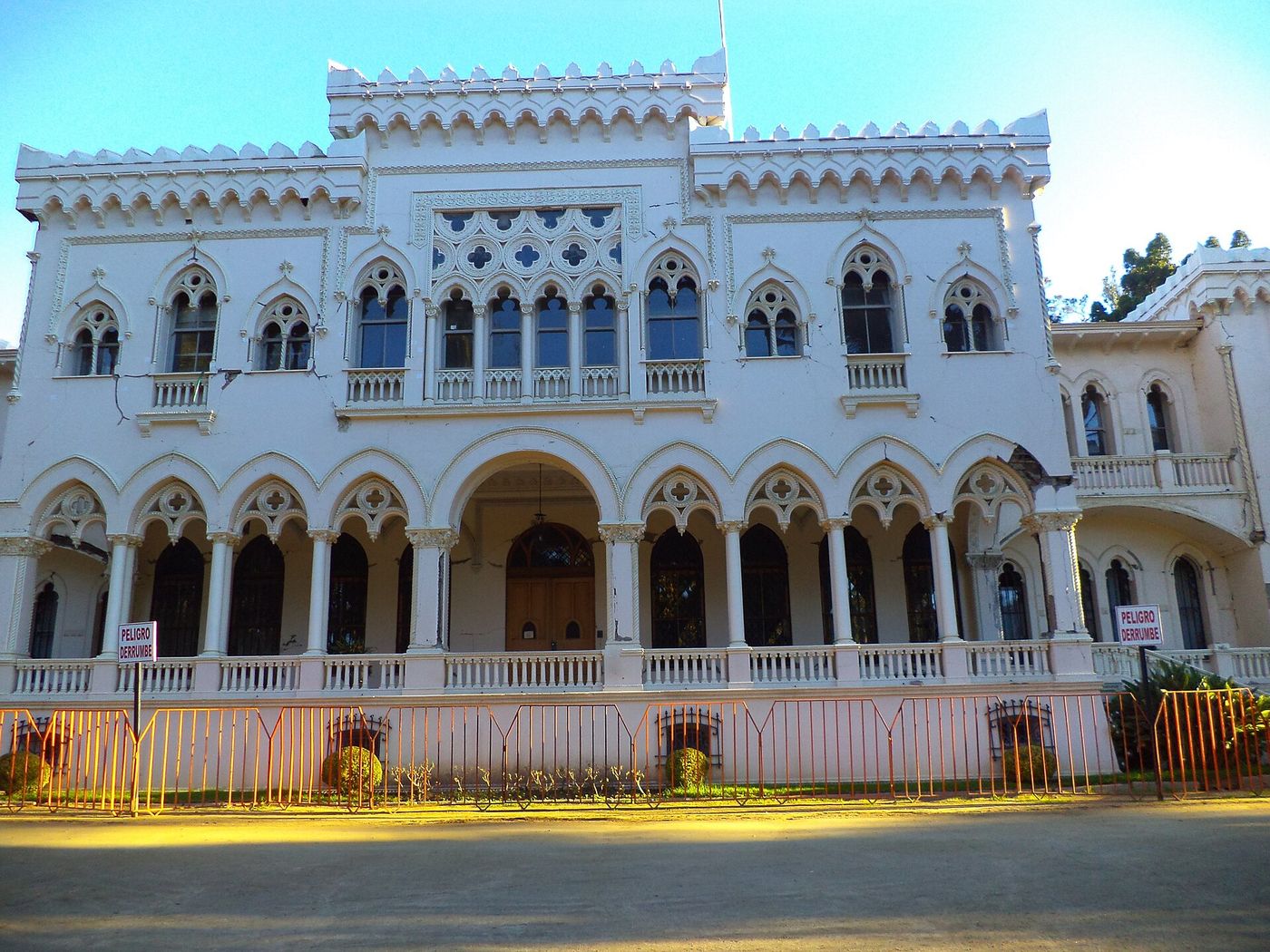
2. Quinta Vergara and the Palacio Vergara. A few blocks south, the Quinta Vergara is a large, shady park around the Palacio Vergara, a Venetian Gothic mansion that houses the city’s fine arts museum, which the municipality listed as hosting exhibitions in October 2026. The park also holds the open-air amphitheater where the Festival Internacional de la Canción de Viña del Mar, Latin America’s best-known song festival, takes place every February.
3. Palacio Rioja. Back through the center, the Palacio Rioja is a Belle Époque mansion with gardens, now the Museo Palacio Rioja, which the municipality lists among the city’s active cultural venues. Even if you don’t go in, the gardens and facade are worth the detour.
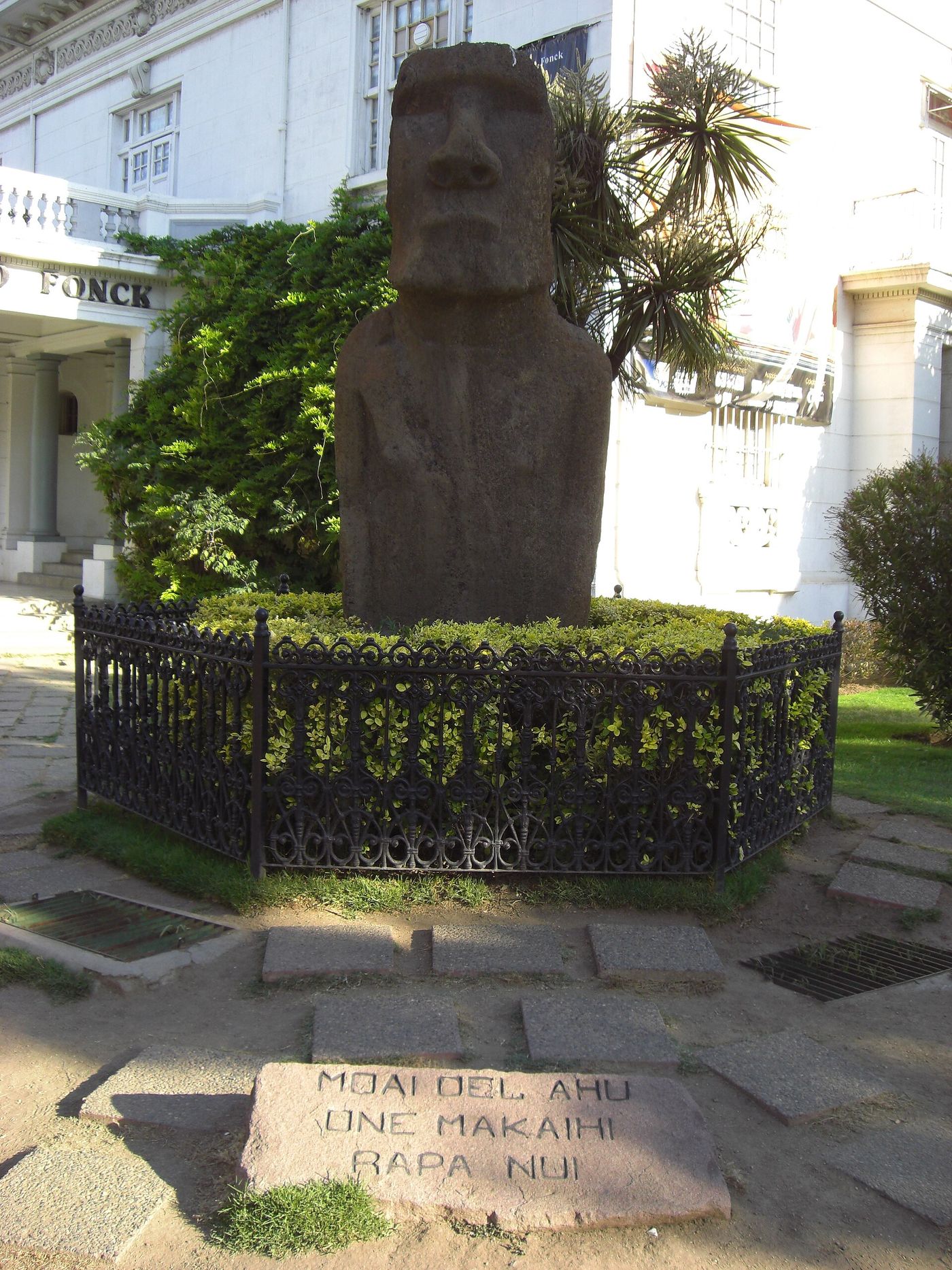
4. Museo Fonck and the moai. Head north across the Marga Marga estuary to the Museo Fonck, at 4 Norte 784, whose collection runs from Easter Island archaeology to natural history. Its emblem stands outside: a genuine Rapa Nui moai, one of the very few on mainland Chile, beside the museum’s entrance. It’s worth the walk just for that.
5. Lunch (midday). Viña’s restaurants are concentrated around the center and along the coastal avenues; see the eating section below.
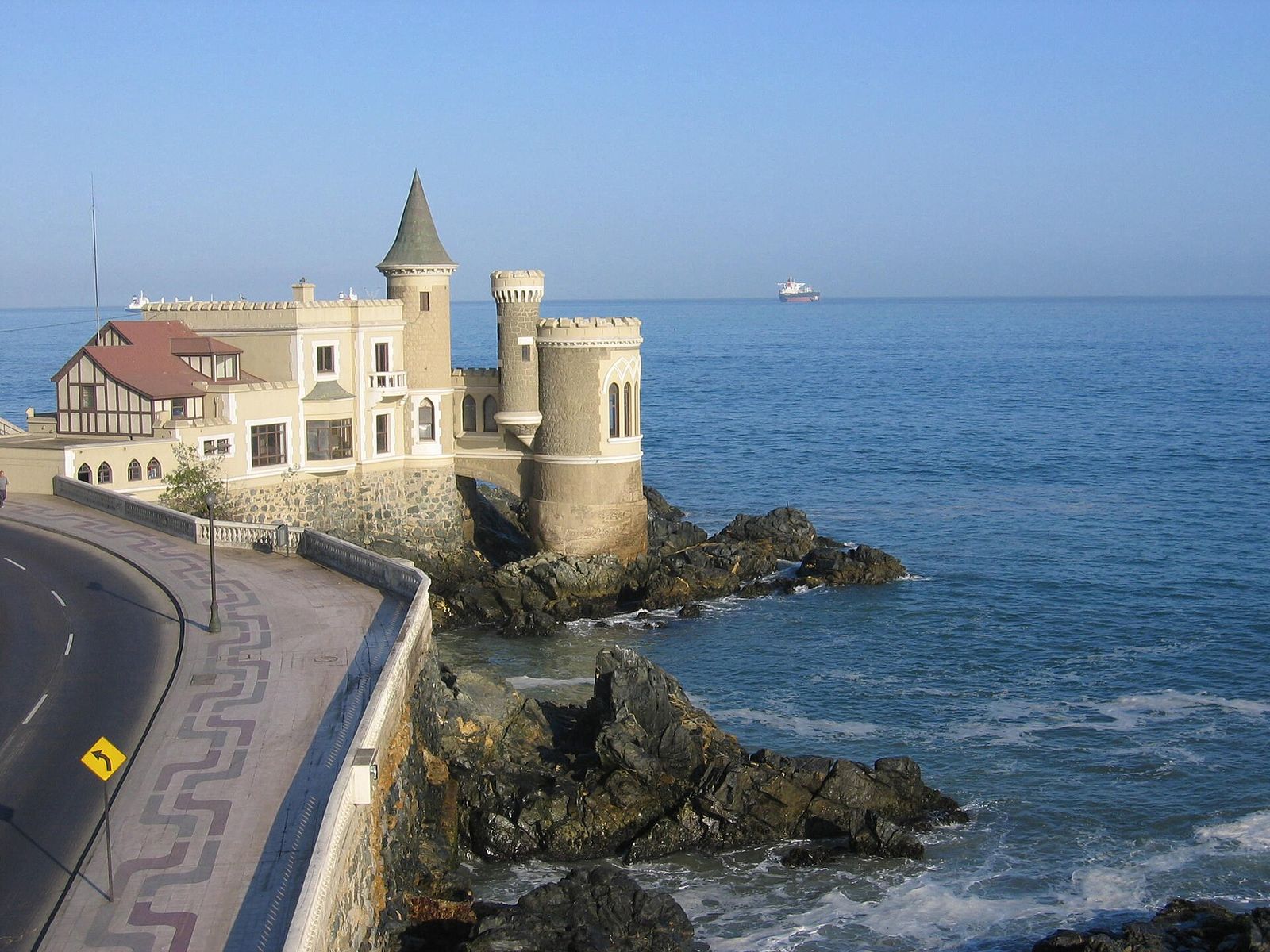
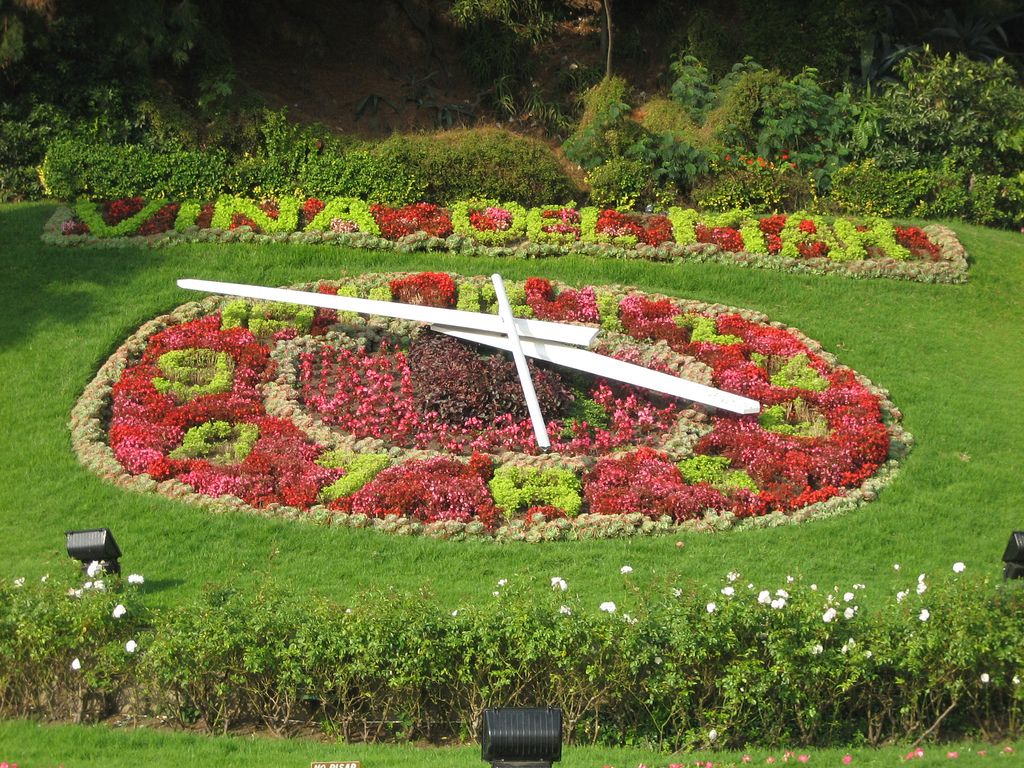
6. The coast: Castillo Wulff, Avenida Perú and the flower clock (afternoon). Walk to the waterfront, where the Castillo Wulff, an early-20th-century castle, sits on the rocks above the waves near the mouth of the estuary, with the Avenida Perú seafront promenade and the Casino close by. On the southern side of the center, the small cove beach of Caleta Abarca lies below the Reloj de Flores, the flower clock that is Viña’s best-known postcard, its face planted with flowers.
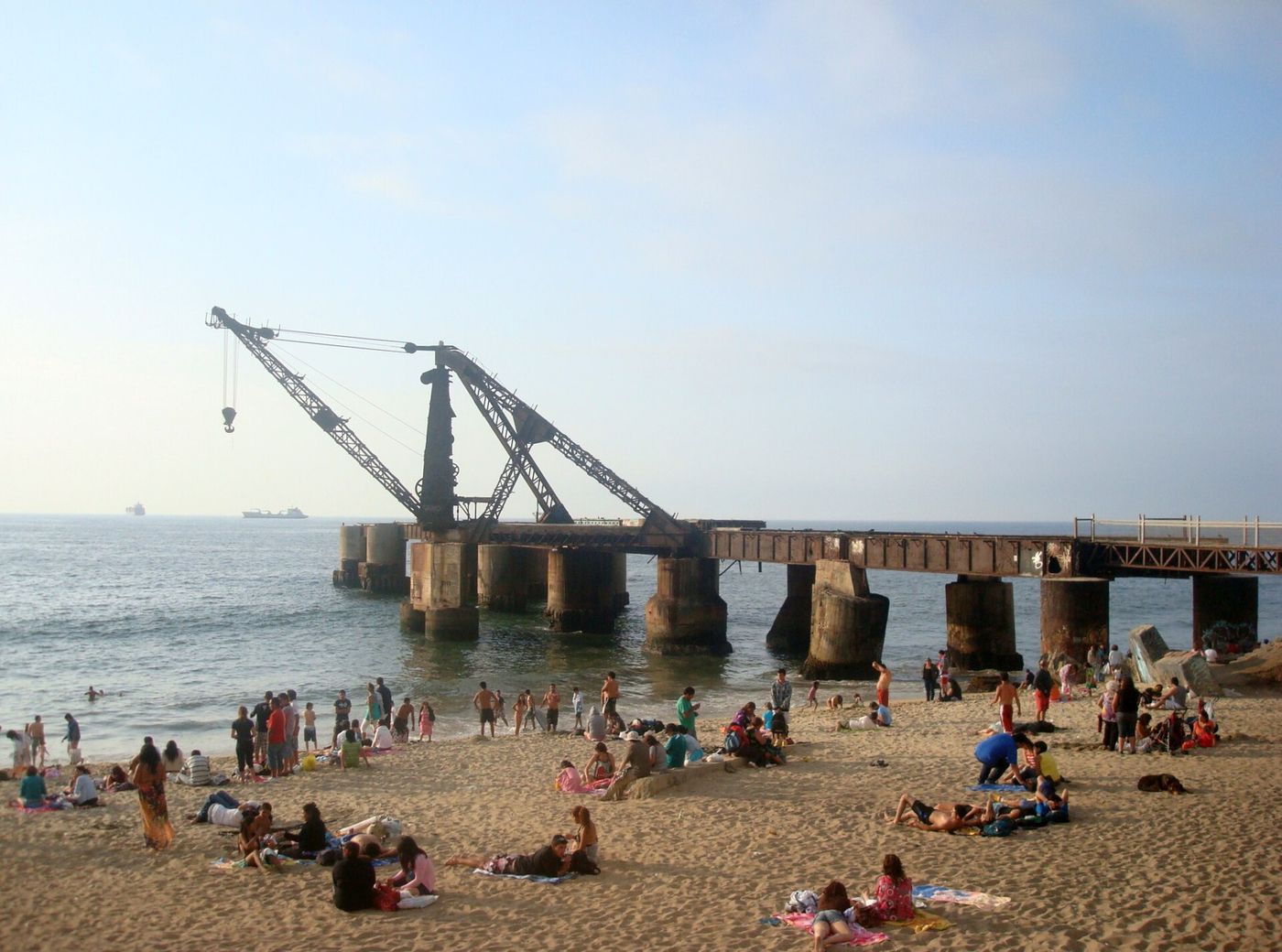
7. The beach (late afternoon). North of the estuary, Playa Acapulco and the other central beaches stretch along the bay, with the old Muelle Vergara pier jutting into the sea. Find a spot, watch the surf, and head back to the bus terminal by early evening.
Getting around Viña
Viña is a compact, mostly flat city along its central stretch, and you can see the main sights on foot. Beyond walking, four options cover everything else:
- The Merval train. EFE’s Limache-Puerto line runs through Viña, with stations including Miramar, Viña del Mar, Hospital, Chorrillos and El Salto, and continues along the bay to Valparaíso. It’s the easiest way to Valparaíso and useful for the inland districts.
- Local buses. Frequent buses run along the coast to Reñaca and Concón and through the city. Ask your hotel or the tourist office which number you need, and carry small cash.
- Taxis and colectivos. Taxis are plentiful in the center; colectivos, shared taxis on fixed routes, are cheaper and run to the hills and nearby towns.
- Ride-hailing. The major apps work in Viña, and they’re the simplest option for the botanical garden or a late return to the bus terminal.
The one thing Viña doesn’t need is a car. Parking near the beaches is difficult in summer, and the center is easier on foot.
The beaches: which one, and when
Viña’s beaches are the reason most Chileans come, and they’re at their best from December to March. A few things to know before you pack a swimsuit:
| Beach | Where | What it’s like |
|---|---|---|
| Caleta Abarca | South of the center, below the flower clock | A small, sheltered cove beach close to the sights |
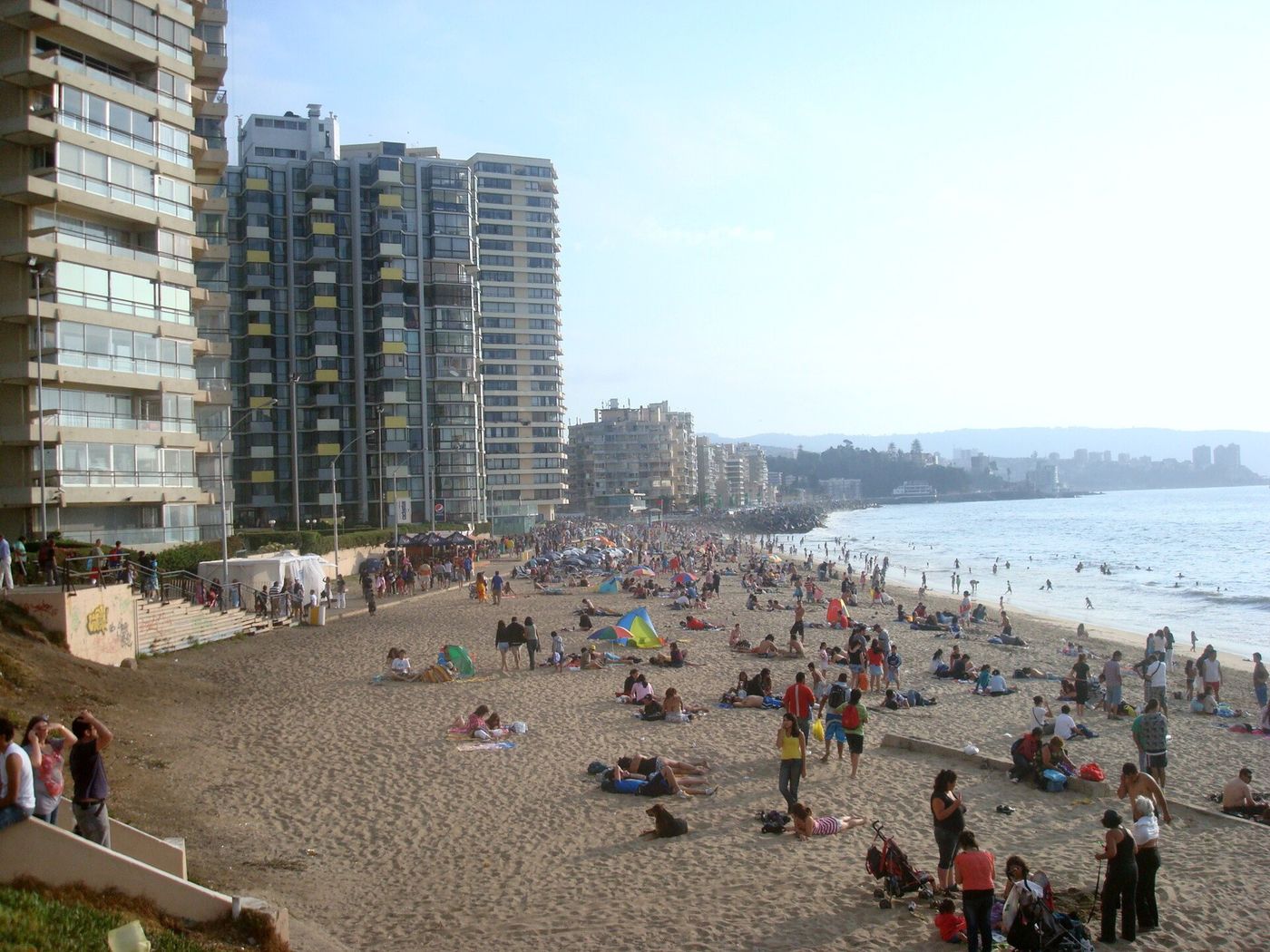
| Playa Acapulco and the central beaches | North of the Marga Marga estuary | Long, sandy and lined with apartment towers; busy in summer |
| Around the Muelle Vergara | By the old pier | The pier makes it the most photogenic stretch |
| Reñaca | North of Viña, by local bus or taxi | The famous summer beach, with terraced apartments on the hill behind; packed in January and February |
The water is cold. The Humboldt Current keeps the Pacific along central Chile chilly even in midsummer. Many people paddle and sunbathe rather than swim, and the surf can be strong. Swim only where others are swimming, follow any flags and lifeguard instructions, and never swim alone.
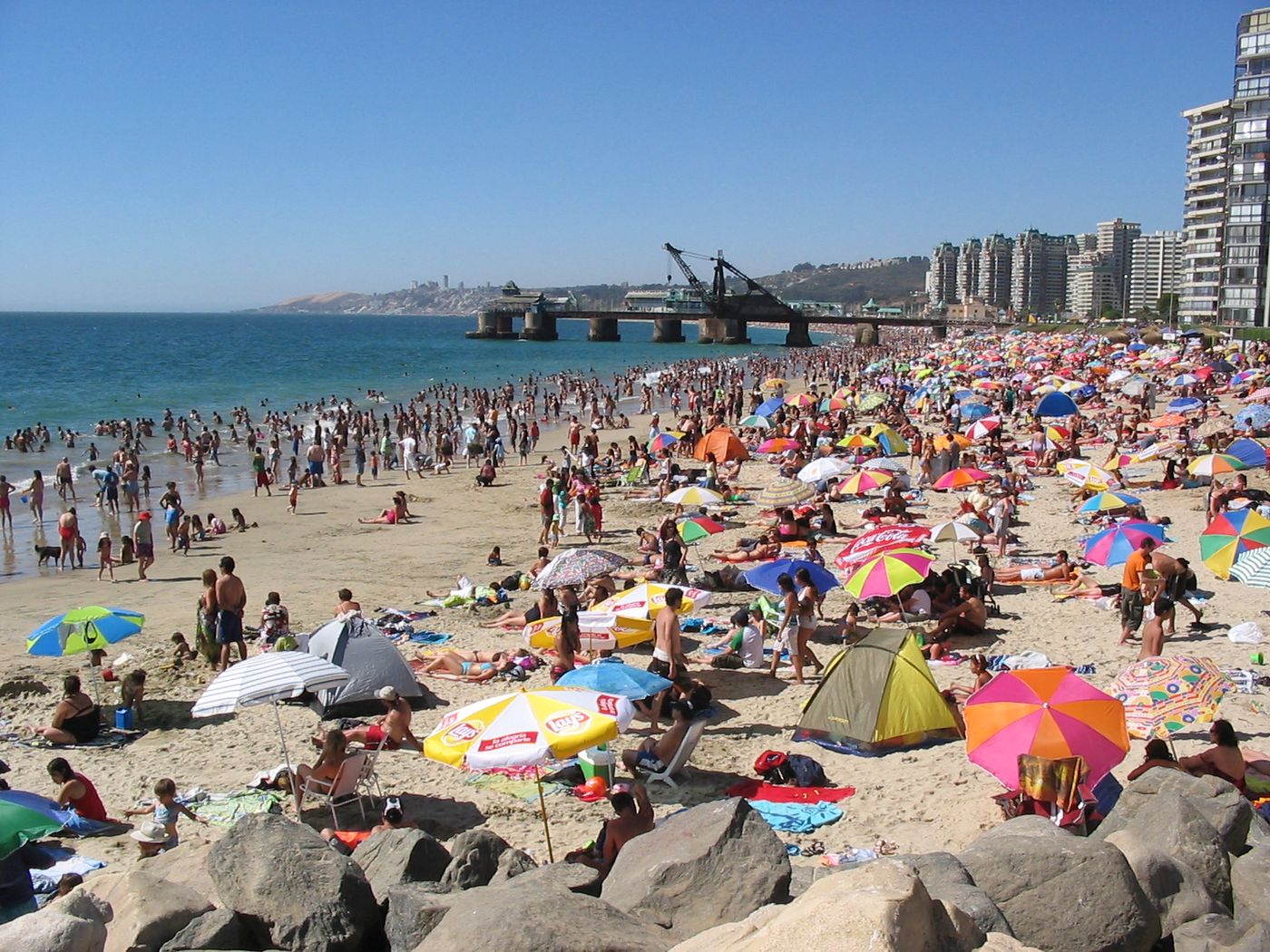
Summer crowds. In January and February, the central beaches fill with families, umbrellas and vendors, especially at weekends. Weekdays and the hours before noon are calmer.
Out of season. From April to November the beaches are empty and often gray, pleasant for a walk but not a beach day. Choose the gardens and museums instead.
Watch your things on the sand. Unattended bags are the easiest target on any busy beach; bring only what you need and keep your phone with you.
Central Viña or Reñaca: choosing a beach
Reñaca, just north of Viña along the coast road, is the beach many Chileans have in mind when they talk about summer on the coast: a long stretch of sand below apartment buildings stepped up the hillside, with restaurants and bars along the road behind. In January and February it’s livelier, younger and more crowded than Viña’s central beaches; out of season it’s quiet.
The choice comes down to what else you want from the day. Viña’s central beaches are a walk from the bus terminal and from the sights, which makes them better for families and for anyone who wants the moai, the flower clock and the palaces as well as the sand. Reñaca needs a local bus or a taxi along the coast, and it’s the better choice when the beach is the whole point of the trip. Either way, the water is the same cold Pacific, and the same advice applies: swim where others are swimming and keep an eye on the surf.
Gardens, palaces and the moai
If the beach isn’t the point, or the weather isn’t on your side, Viña still has plenty for a day:
The Jardín Botánico Nacional. Chile’s national botanical garden lies inland in the El Salto sector, at Camino El Olivar 305, and it was badly hit by the wildfires that swept the area in February 2024. Its own site now says it’s open every day of the year, including holidays: entry from 09:00 to 17:30 on weekdays (closing at 18:00) and 09:00 to 18:00 at weekends and on holidays (closing at 18:30). Adults pay CLP 3,000, over-60s and children aged 5 to 12 CLP 1,500, children under 5 enter free, and cars pay CLP 3,000 extra; no booking is needed and you can pay by card or in cash (checked 1 October 2026). It has picnic areas, bike rental, a canopy line and mini golf, and pets are allowed. The Merval’s El Salto station serves the same district; a taxi from the center is simpler.

The Quinta Vergara and Palacio Vergara. The city’s great park and its fine arts museum, in a Venetian Gothic palace. Check the museum’s hours with the municipal tourist office before going.
The Palacio Rioja. A Belle Époque mansion and museum with formal gardens in the center.
The Museo Fonck. Easter Island archaeology, Chilean natural history and the moai at the door, at 4 Norte 784. The museum’s homepage didn’t list hours or prices when we checked, so call ahead (+56 32 268 6753).
The Castillo Wulff and the Reloj de Flores. Two free icons on the waterfront, both best seen in the morning light.

The tourist office. The municipality’s tourist information office is at Calle Arlegui 715, open Monday to Friday 09:00-14:00 and 15:00-17:30 (checked 1 October 2026), with a free phone line on 800 47 0022. It’s the place to check museum hours and any events on the day.
A short history of the garden city
Viña del Mar is young by Chilean standards. It was founded in 1878 on the lands of an old hacienda, and it grew up as the seaside retreat of the wealthy families of Valparaíso and Santiago, who built the palaces, gardens and grand houses that still define its center. Its nickname, the Ciudad Jardín or garden city, comes from that era of parks, avenues and private gardens.
The palaces tell the story. The Palacio Vergara belonged to the family that owned the land on which the city was founded, and the Palacio Rioja was built for a wealthy family in the early 20th century, when Viña was becoming the place where Chile’s elite spent their summers. As Valparaíso’s port declined in the 20th century, Viña kept growing, adding apartment towers along the beaches, a casino and, from 1960, the song festival that has made the Quinta Vergara famous across Latin America.
That history explains the contrast with Valparaíso, a few kilometers away. Valparaíso was built by trade and shaped by the hills; Viña was planned for leisure and laid out on the flat. One is a port that became a city, the other a resort that became one.
Viña on a rainy day or in winter
From April to November, and on gray summer days, the beaches lose their appeal, but Viña still works for a day out:
- Museums. The Museo Fonck for Easter Island and natural history, the Palacio Vergara for fine art, and the Palacio Rioja for the Belle Époque interiors. Check hours at the tourist office first.
- The Jardín Botánico Nacional. Open every day of the year; in light rain the garden is quiet and green, though paths can be muddy.
- Shows and films. The municipality lists the Teatro Municipal, the Cine Arte de Viña del Mar and other venues among its active cultural spaces, with an events calendar on its tourism site.
- Cafés and long lunches. Viña’s center is full of cafés, and a slow seafood lunch is a good way to sit out a storm.
In winter, the sea can be spectacular from the rocks around the Castillo Wulff when a big swell comes in, but stay well back from the edge; waves on this coast can surge far higher than they look from a distance.
Is a Viña del Mar day trip worth it?
In summer, if you want a beach day, yes: it’s two hours from Santiago, cheap by bus and easy to navigate. Out of season, or on your only coastal day, it’s less compelling than Valparaíso, whose hills, funiculars and street art have no equivalent in Viña. Go for the beach, the gardens and the moai.
The honest comparison:
| Viña del Mar | Valparaíso | |
|---|---|---|
| Character | Tidy beach resort, gardens, palaces | Gritty port city, hills, funiculars, street art |
| Best for | Beaches, families, a relaxed day | Atmosphere, photography, history |
| Safety feel | Calmer and more polished | More street crime; needs more care |
| Walking | Mostly flat along the coast | Steep hills and stairs |
| Out of season | Quiet and a little empty | Just as interesting year-round |
| UNESCO listing | No | Yes, the historic quarter |
If you have one coastal day, go to Valparaíso; our Valparaíso day trip guide has the route. If you have two, give each a day. If you’re visiting with children in summer, or you want to swim and sunbathe, Viña is the better choice.
Combining them. You can see both in one day using the Merval train between them, and most organized tours do exactly that. The cost is time: you’ll get a few hours in each, not enough for Valparaíso’s hills or Viña’s beaches. If you combine, spend the morning in Valparaíso, when the light on the hills is best, and the late afternoon on Viña’s seafront.
Half a day in Viña, if you’re combining it with Valparaíso
If you’ve decided to see both cities in one day, give Valparaíso the morning and Viña the late afternoon, when the beach light is at its best and you’re closer to the bus home. From Valparaíso, take the Merval from Puerto or Bellavista station to Viña del Mar station, then:
- Walk to the Castillo Wulff and the seafront for the classic view back along the bay toward Valparaíso.
- See the Reloj de Flores and, if you have time, the moai outside the Museo Fonck, which closes earlier than the beach does.
- Finish on the beach north of the estuary, by the old Muelle Vergara pier, as the sun drops.
- Head to the bus terminal by early evening, buying your ticket to Santiago before you go for dinner.
That’s about three hours in Viña, which is enough for its highlights if you skip the museums. It isn’t enough for the botanical garden, which needs its own half day.
Should you take a tour?
Only if you want both cities and a Casablanca winery without organizing anything. Tours typically run about 10 hours and divide the day among the three, so you get a quick look at Viña’s clock, castle and beach. On your own by bus, Viña is so easy to navigate that a tour adds little.
When a tour does make sense:
- You want a winery stop on the way. Casablanca’s vineyards are on the road but not reachable by bus. Our comparison of the best wine tours from Santiago covers the options, including a Valparaíso and Casablanca tour or transfer from USD 135 per person.
- You have very little time and want the highlights of both cities. A tour is the most efficient, if shallow, way to do it.
- You’d rather not use public transport. A private driver is the most comfortable option, at a price.
When to go
Summer (December to March). The beach season and Viña at its liveliest. January and February are the busiest months, with crowded beaches, packed buses at weekends and higher prices. Weekdays are calmer.
The Viña del Mar Festival (February). The Festival Internacional de la Canción fills the city and the Quinta Vergara’s amphitheater every February. It’s a huge event in Chile, broadcast across Latin America, and it makes the city busy and expensive for its week. Great if you have tickets; worth avoiding if you don’t. Our guide to Santiago in February covers the month.
New Year’s Eve. The fireworks along the bay between Valparaíso and Viña draw enormous crowds, and both cities fill to capacity. Not a day-trip night.
Fire season. The Government of Canada warns of wildfire risk from December to March from the Valparaíso region south to Araucanía (checked September 2026). The February 2024 fires around Viña del Mar were among the deadliest in Chile’s history, and they reached the botanical garden. A fire near the coast can close roads or fill the air with smoke, so check the news before you travel in summer.
Autumn, winter and spring (April to November). Quiet, cooler and often gray, with winter rain. The beaches are for walking rather than sunbathing, but the gardens, palaces and museums are pleasant and uncrowded.
Weather. The coast is usually cooler and windier than Santiago, and summer mornings can start with fog that burns off by midday. Bring a layer even in January.
An evening in Viña
If you’re staying the night, or taking a late bus back, Viña has the most varied evening on the central coast. The municipality’s tourism site lists the Casino Enjoy Viña del Mar, the Teatro Municipal, the Sporting de Viña del Mar music venue, the Cine Arte and a comedy club among the city’s venues, alongside the summer concerts at the Quinta Vergara.
For a day trip, the simplest plan is an early dinner and a bus back to Santiago. Buses leave Santiago for Viña until about 22:30, and services back run into the evening; check the last departure on the day and buy your ticket before dinner, especially at weekends. Take a taxi to the terminal rather than walking with bags late at night.
Eating in Viña
Viña has a wide choice of restaurants, from seafood places along the coast to cafés and set-lunch spots in the center. Seafood is the obvious choice by the sea: grilled fish, shellfish dishes and seafood empanadas. For a cheaper lunch, look for the menú del día, a fixed-price set lunch offered on weekdays, often on chalkboards outside.
Two practical notes: Chileans eat lunch late, from about 13:30 or 14:00, and a 10% tip is customary in sit-down restaurants, often suggested on the bill. Restaurants with a sea view charge for it. For a guide to Chilean food more broadly, see our guide to the best food in Santiago.
What to bring for a coast day
- A layer. Even in January, mornings on the coast can be gray and cool, and the wind picks up in the afternoon.
- Sun protection. When the fog lifts, the sun on the beach is strong; bring a hat, sunglasses and high-factor sunscreen.
- Swimsuit and towel, if you’re planning a beach day, and sandals for the sand.
- Small cash, for local buses, colectivos, beach vendors and snacks.
- Comfortable shoes for the walk between the center, the palaces and the seafront.
- A bag you can keep close, rather than one you leave on the sand while you swim.
Our list of what to pack for Santiago covers the rest of a trip to Chile.
Safety, the beaches and accessibility
Petty crime. Viña feels calmer and more polished than Valparaíso, but the Government of Canada lists Valparaíso and Viña del Mar among the Chilean cities with petty crime, including at tourist areas, lookouts and transit stations (checked September 2026). Watch your bag at the bus terminal, on the busy beaches and on crowded summer promenades, and keep your phone out of sight.
The sea. The Pacific here is cold and can be rough. Swim only at beaches where others are swimming, follow the flags and lifeguards, and keep children within arm’s reach in the surf.
At night. The center and the coastal avenues are busy on summer evenings. Take taxis late at night and keep to well-lit streets.
Accessibility. Viña is one of the easier coastal destinations for travelers with limited mobility. The center and the seafront promenades are mostly flat, with wide sidewalks along the main avenues. The beaches are sand, and access to the water varies. Some sights, including the area around the flower clock and the Castillo Wulff, involve slopes or steps, and the Jardín Botánico is a large garden with paths of varying surfaces. Ask museums about step-free access before visiting. Our guide to accessible Santiago covers transport in the capital, and the Santiago safety guide covers the common scams.

What the day costs
| Item | Cost (CLP) | About (USD) | Notes |
|---|---|---|---|
| Metro to the terminal, each way | 735-895 | Under 1 | By time of day; checked September 2026 |
| Bus Santiago-Viña, one way | About 3,000-3,100 | About 3.20 | Semi-cama, 1 October 2026; more at peak times |
| Jardín Botánico Nacional, adult | 3,000 | 3.20 | Over-60s and children 5-12: 1,500 |
| Museums | Check on the day | – | Ask at the tourist office, Calle Arlegui 715 |
| Lunch | Varies | – | A set lunch is the best value |
| Merval train, if combining with Valparaíso | Check on the day | – | Fares not checked for this guide |
A day by bus, with the botanical garden, a museum and lunch, comes in at a fraction of an organized tour. For the rest of a trip’s budget, see what a trip to Santiago costs.
Viña with children
Viña is the easiest coastal day out from Santiago with children. The beaches are the obvious draw in summer, the moai at the Museo Fonck is a guaranteed hit, and the flower clock and the castle on the rocks are worth a photo. The Jardín Botánico Nacional adds space to run, picnic areas, bike rental, a canopy line and mini golf, with free entry for children under 5 and CLP 1,500 for children aged 5 to 12 (checked 1 October 2026).
The flat center and seafront promenades work well with strollers, unlike Valparaíso’s hills. Bring sun protection and layers, because the coast can switch from bright sun to cool wind quickly, and keep a close eye on children in the water, which is cold and can have strong waves. Our guide to Santiago with kids covers more family ideas.
Staying the night, and other coastal options
Stay the night. Viña has plenty of hotels and apartments, and a night on the coast lets you combine it with Valparaíso properly: one city each day, without rushing either. In summer, book well ahead, especially for weekends, the festival week and New Year’s Eve.
Reñaca and Concón. North of Viña, Reñaca is the summer beach of choice for many Chileans, and Concón, further along the coast, is known for its seafood restaurants and coastal dunes. Both are reachable by local bus or taxi from Viña, and both are best in summer.
Valparaíso. The obvious alternative or complement, a short Merval ride away. Our Valparaíso guide has the bus, the route and the safety advice.
Casablanca’s wineries. On the road between Santiago and the coast, best visited on a tour or with a driver who isn’t tasting.
For how all of these compare with the rest of the trips out of the capital, the guide to day trips from Santiago is the place to plan.
Frequently asked questions
How long does it take to get from Santiago to Viña del Mar?
About two hours by bus for the 138 km, more on Friday evenings, Sunday afternoons and summer weekends. Add the Metro to the terminal in Santiago and the short walk from Viña’s bus terminal to the center, and allow two and a half hours door to door.
How much is the bus from Santiago to Viña del Mar?
About CLP 3,000-3,100 one way in a semi-cama seat on 1 October 2026, with prices higher at peak times and on summer weekends and holidays. Condor, Pullman and several other operators run the route, with departures about every 15 minutes through the day.
Is Viña del Mar worth visiting?
Yes, for a summer beach day, a family outing or a second coastal day after Valparaíso. It’s easy, pleasant and has genuine sights, including the flower clock, the Castillo Wulff, its palaces and an Easter Island moai. On your only coastal day, Valparaíso is the more memorable choice.
Which is better, Viña del Mar or Valparaíso?
Valparaíso for character, history, street art and views; Viña del Mar for beaches, gardens and a calmer, flatter day. If you have one day, choose Valparaíso. If you have two, do one each, or combine them with the Merval train and accept a few hours in each.
Can you swim at Viña del Mar’s beaches?
Yes, in summer, but the Pacific here is cold even in January because of the Humboldt Current, and the surf can be strong. Many visitors paddle and sunbathe rather than swim. Swim only where others are swimming, follow the flags and lifeguards, and never swim alone.
How do you get from Valparaíso to Viña del Mar?
By the Merval commuter train, EFE’s Limache-Puerto line, which runs along the bay from Puerto and Bellavista stations in Valparaíso to Viña del Mar station and beyond. Local buses and taxis also run along the coast road, but the train is the easiest option.
When is the best time to visit Viña del Mar?
December to March for the beaches, with weekdays far calmer than weekends. February brings the Viña del Mar song festival, which fills the city. From April to November the beaches are quiet and often gray, but the gardens, palaces and museums make a pleasant, uncrowded day.
Is the botanical garden in Viña del Mar open?
Yes. The Jardín Botánico Nacional, badly damaged by the February 2024 fires, says it’s open every day of the year. On 1 October 2026, entry ran 09:00-17:30 on weekdays and 09:00-18:00 at weekends, with adults paying CLP 3,000 and children aged 5 to 12 CLP 1,500.
Sources
- Jardín Botánico Nacional de Viña del Mar
- Museo Fonck
- Municipalidad de Viña del Mar: Visita Viña tourism site
- EFE: Limache-Puerto train (Merval), stations
- Recorrido.cl: buses from Santiago to Viña del Mar
- Pullman Bus
- Metro de Santiago: fares and hours
- Government of Canada: travel advice for Chile
- UK FCDO: Chile safety and security
- UNESCO World Heritage Centre: Historic Quarter of the Seaport City of Valparaíso
- Servicio de Impuestos Internos: dólar observado 2026
Image credits
| Photo | Credit |
|---|---|
| Castillo Wulff (top of page) | Mike Dougherty, U.S. Marine Corps, public domain, via Wikimedia Commons |
| Reloj de Flores | Patrick Furlong from Santiago, Chile, CC BY 2.0, via Wikimedia Commons |
| Palacio Vergara | CoteCifuentes, CC BY-SA 3.0, via Wikimedia Commons |
| Moai at the Museo Fonck | Diego Delso, CC BY-SA 3.0, via Wikimedia Commons |
| Muelle Vergara | Carlos yo, CC BY-SA 4.0, via Wikimedia Commons |
| Viña del Mar beach in summer | G. Küppers (JordiCubero), CC BY-SA 3.0, via Wikimedia Commons |
| Jardín Botánico Nacional | 3BRBS, CC BY-SA 3.0, via Wikimedia Commons |
| Palacio Rioja | Carlos yo, CC BY-SA 4.0, via Wikimedia Commons |
| Merval, Hospital station | Carlos Figueroa, CC BY-SA 4.0, via Wikimedia Commons |
| Playa Acapulco | Carlos yo, CC BY-SA 4.0, via Wikimedia Commons |