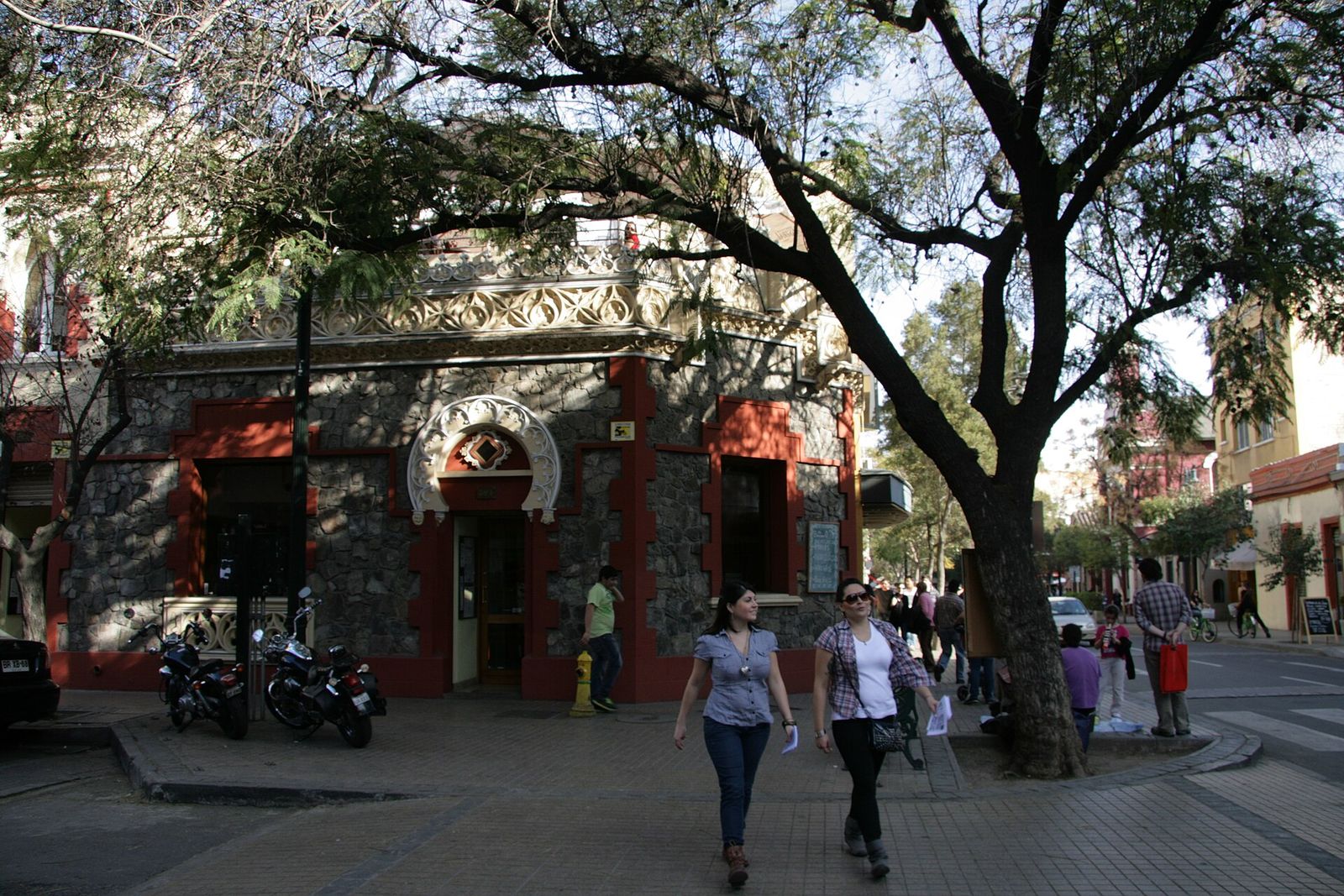
The best area to stay in Santiago for first time visitors is Lastarria and Bellas Artes, the small district between Cerro Santa Lucía and Parque Forestal. You can walk to the old center, the main museums and two of the city’s hills, and Metro Lines 1 and 5 are at the door. Providencia is the better choice for longer stays or tighter budgets.
That’s the short answer, and most first trips should take it. The longer answer depends on how many nights you have, what you want from the evenings and how you feel about paying more to walk less. This page sets the four realistic first-timer bases against each other on the things that matter on a first visit: how many sights you can walk to, how many need a Metro change, how noisy the nights are, what the advisories say about each area and what rooms cost. For every neighborhood in the city, including the ones first-timers can skip, see our full guide to where to stay in Santiago.
The first-timer shortlist at a glance
| Base | Best for | Sights within walking distance | Metro | Night noise | Typical double (Sept 2026) |
|---|---|---|---|---|---|
| Lastarria / Bellas Artes | Three to five nights, first visit | Most of them | Line 1 (Universidad Católica), Line 5 (Bellas Artes) | Medium | CLP 90,000-190,000 |
| Providencia | A week or more, better value | A few; most are one ride away | Line 1 (Manuel Montt, Pedro de Valdivia, Los Leones) | Low-medium | CLP 55,000-120,000 |
| Santiago Centro | The tightest budgets, daytime sightseeing | The historic core | Lines 1, 3 and 5 | Quiet, and empty after dark | CLP 40,000-90,000 |
| Las Condes / El Golf | Business trips, families, high-end hotels | Few sights; Sky Costanera | Line 1 (Tobalaba, El Golf), Line 4 (Tobalaba) | Low | CLP 130,000-350,000 |
Room rates are the typical double-room bands from our where-to-stay guide’s September 2026 check, in shoulder season; they move with the calendar. Dollar figures elsewhere on this page use about CLP 950 to the US dollar.
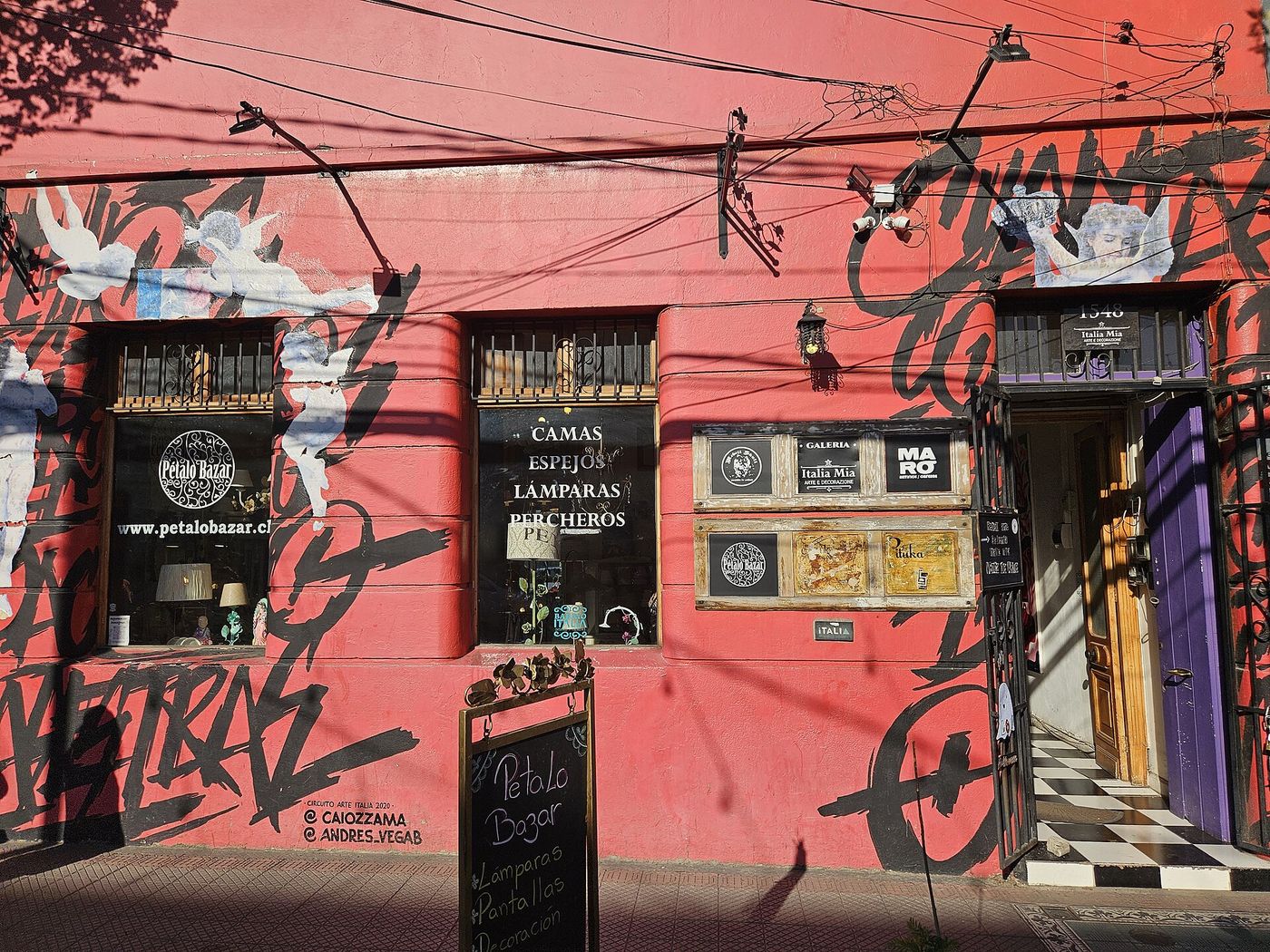
Two areas that blogs often recommend to first-timers are missing from that table on purpose. Barrio Italia is lovely, but it’s a place you visit for an afternoon of shops and cafés rather than a base for sightseeing, since it has no Metro station of its own and the old center is a ride away. Bellavista is where the bars are, and the bars are why you shouldn’t sleep there. Both are covered in the stay-or-visit section below.
Why Lastarria and Bellas Artes win a first visit
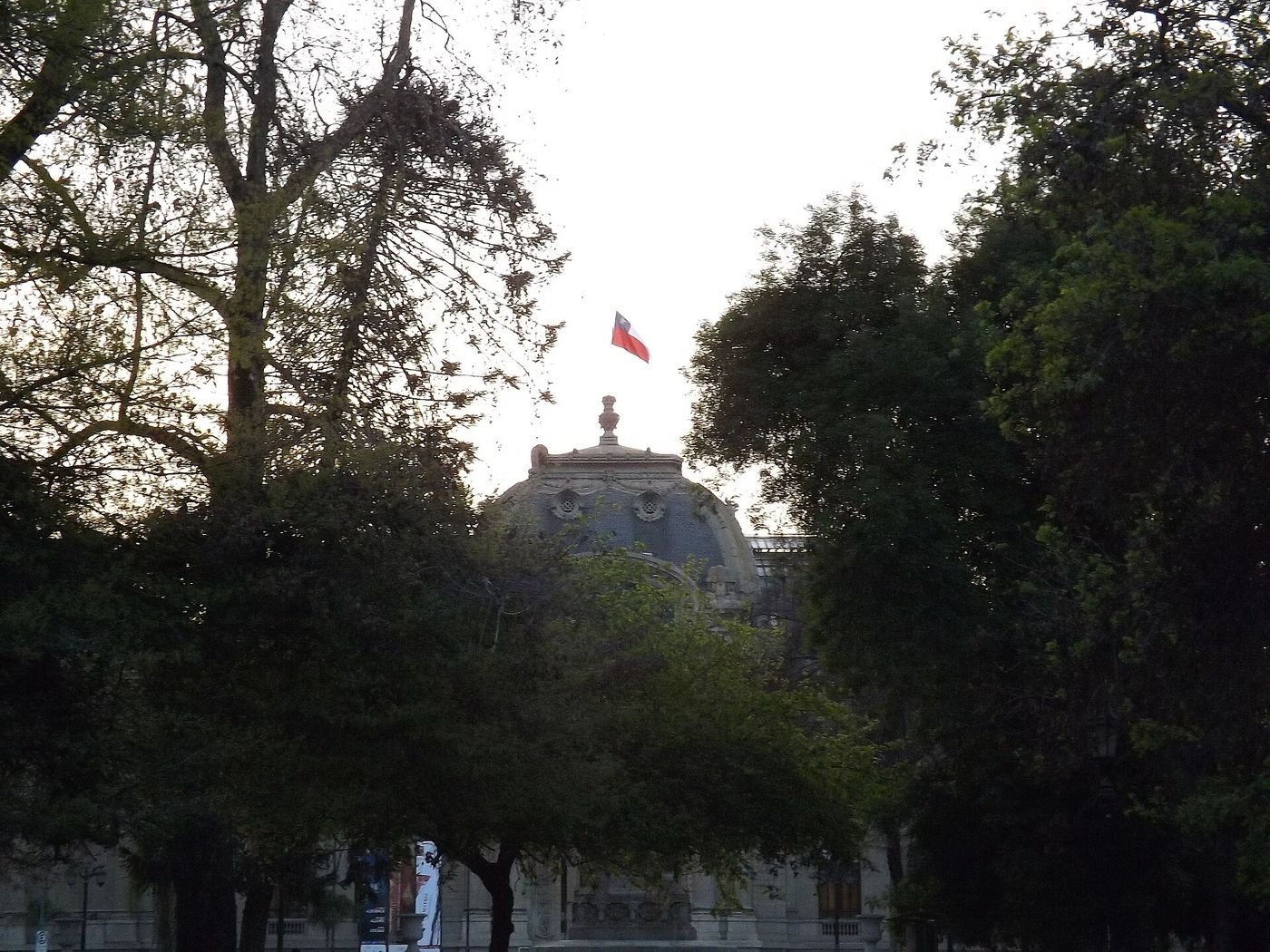
Lastarria is a handful of cobbled blocks between Cerro Santa Lucía and Parque Forestal, with Bellas Artes just across the park. For a first visit, its advantage is simple: more of what you came to see is on foot from your door than from any other base.
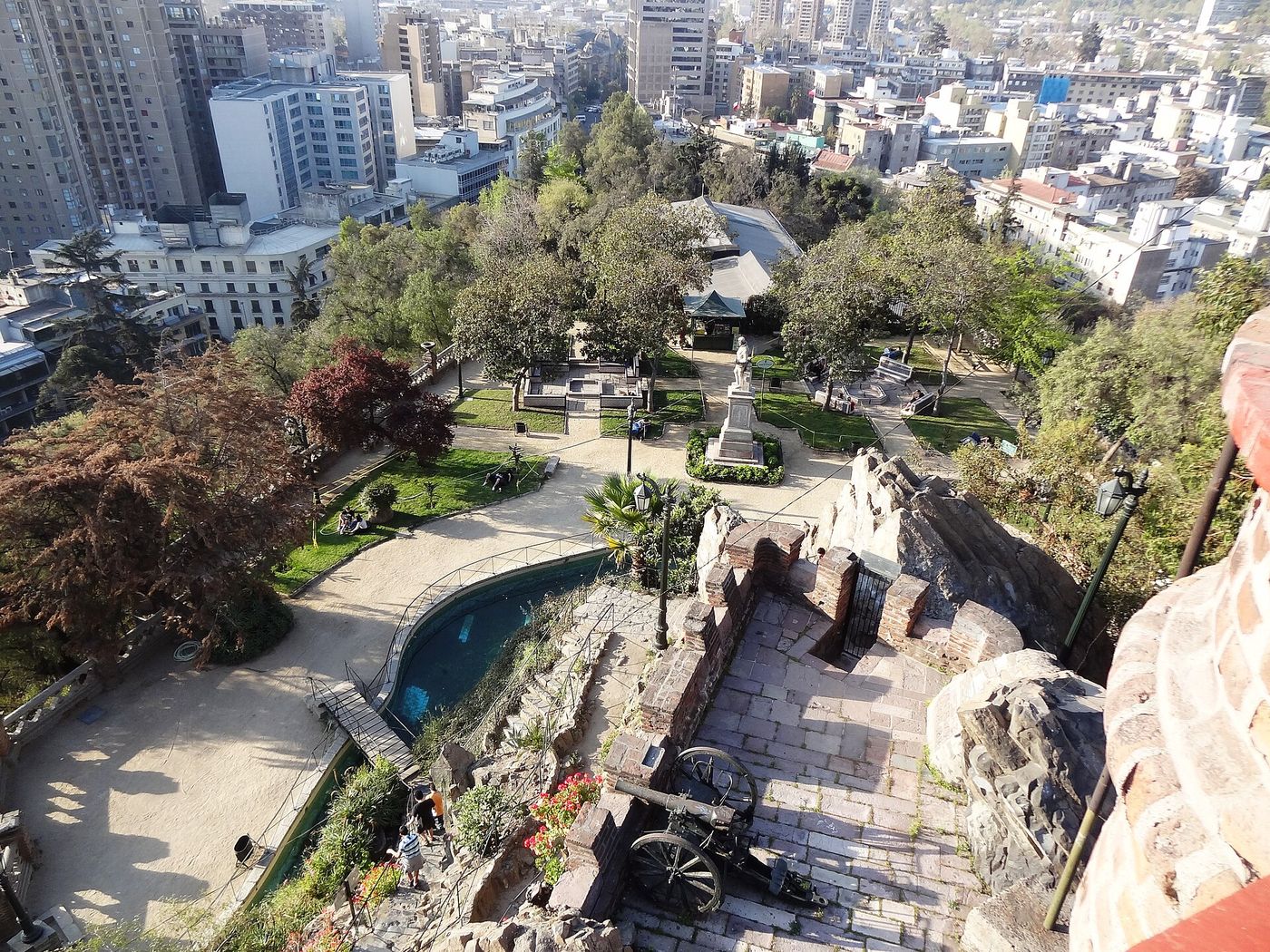
From a hotel in Lastarria, you can walk to Cerro Santa Lucía, which rises at the end of the street; across Parque Forestal to the Museo Nacional de Bellas Artes and the Museo de Arte Contemporáneo, both free and open Tuesday to Sunday (checked September 2026); to the GAM cultural center, whose plazas are open daily 09:00-21:00; across the river into Bellavista for the Cerro San Cristóbal funicular and Neruda’s house, La Chascona; and, in about 20 minutes, to the Plaza de Armas and the cathedral. Everything else is a short ride on Line 1 or Line 5, with no changes for most of it.
The neighborhood also does evenings well. Restaurant terraces fill until around midnight, the streets are lively without being a nightlife district, and you can walk back to your hotel rather than finding a car. On a three- or four-night trip, that walkability adds up to hours.
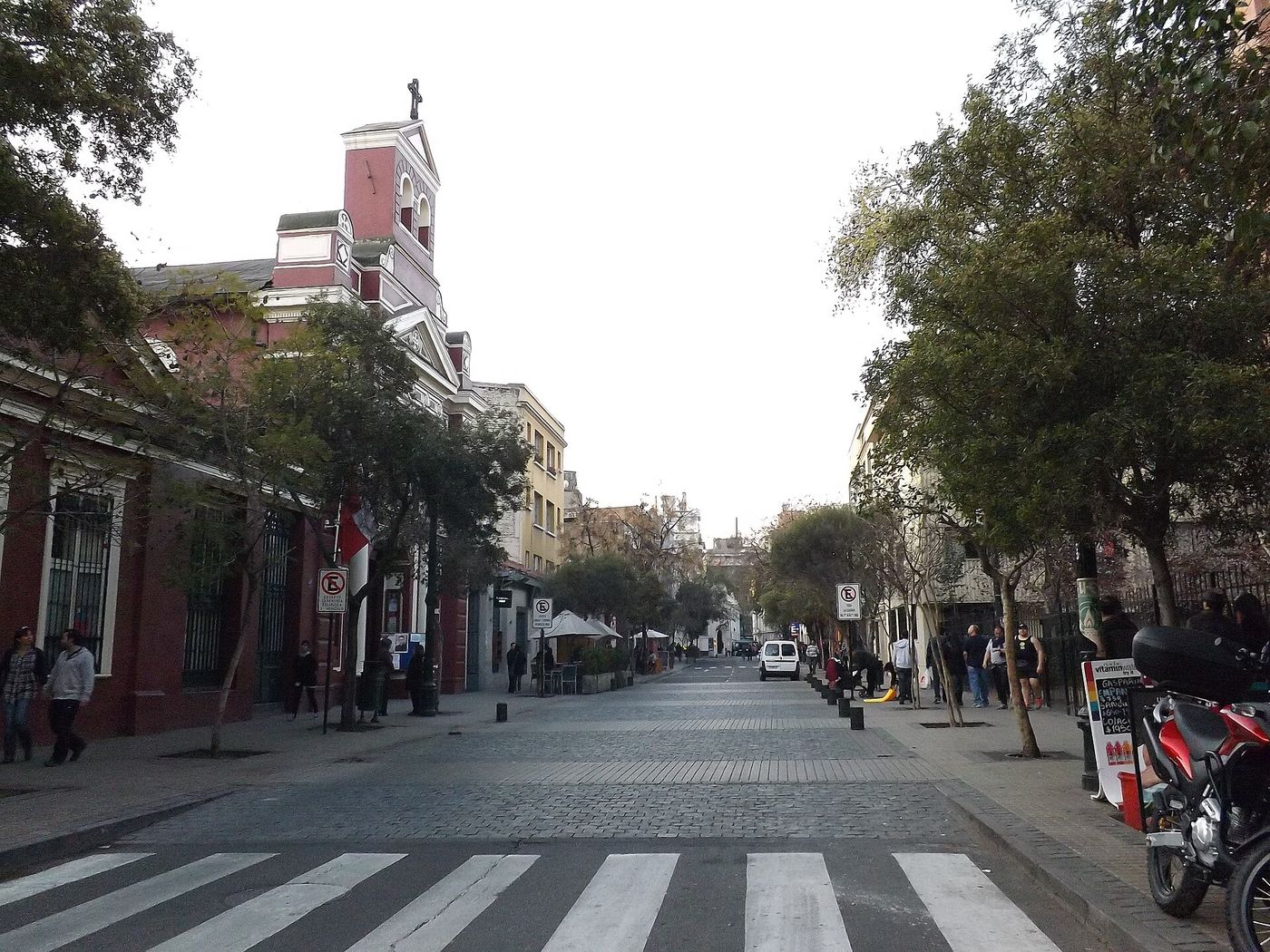
The catches. Lastarria is small, popular and priced accordingly: our where-to-stay guide puts a typical double at CLP 90,000-190,000 (about USD 95-200), roughly 40% more than a comparable room in Providencia. Rooms over the terraces can be loud until late, so ask for one facing the back or a quieter side street. And because it’s where visitors congregate, it appears on safety advisories: the Government of Canada names Lastarria, Bellavista and the area around Cerro Santa Lucía among the Santiago areas with higher risk of petty crime (checked September 2026). That’s a reason for the usual city precautions, not a reason to stay elsewhere, and our Santiago safety guide puts it in context.
Who should skip it: anyone staying a week or longer, for whom the premium stops making sense; light sleepers who can’t get a back room; travelers with a car, since parking is scarce; and business travelers whose meetings are in the east of the city.
Is Providencia better than Lastarria for a first trip?
For stays of a week or more, or a budget under about CLP 100,000 a night, yes. Providencia gives you a comparable room for roughly a third less, quieter nights and Line 1 at the door. You give up walking to the old center and most museums, which become a 10- to 25-minute Metro ride.
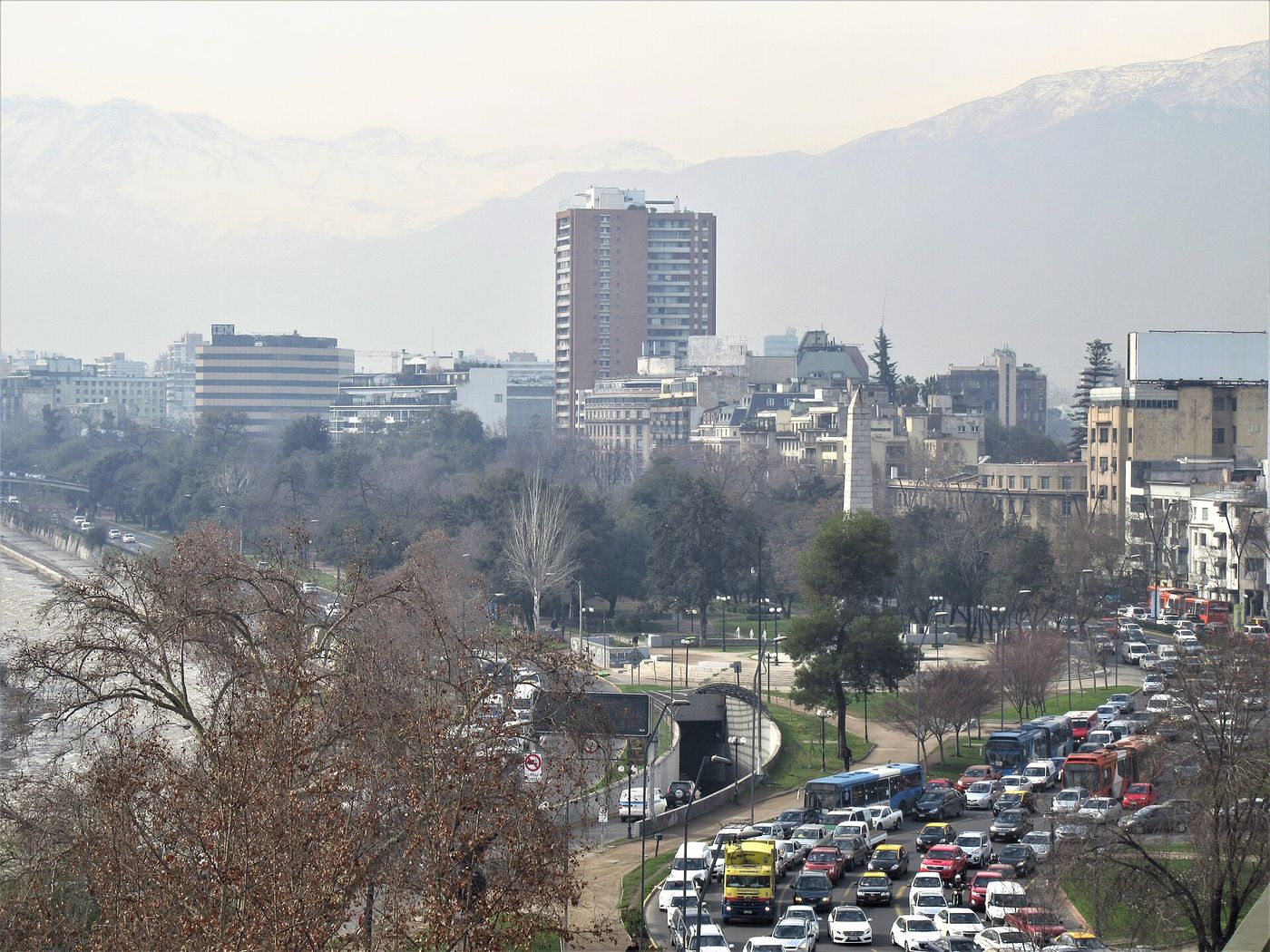
Providencia is the borough east of Plaza Baquedano, running along Avenida Providencia and Line 1 through Salvador, Manuel Montt, Pedro de Valdivia and Los Leones. It’s where many Santiaguinos live and work: leafy residential streets, apartment hotels, supermarkets, restaurants and cafés, with the busy commercial strip along the avenue itself. Our where-to-stay guide’s typical double here is CLP 55,000-120,000 (about USD 58-126).
What it does better than Lastarria:
- Price. The same standard of room for roughly a third less, which on a long stay pays for a day trip or two.
- Daily life. Supermarkets, pharmacies, laundries and ordinary restaurants on every block, which matters more the longer you stay.
- Quiet. Residential streets a block or two off the avenue are calm at night.
- Getting east. Sky Costanera, the business district and Los Dominicos are closer.
What it does worse:
- The old center is a ride away. Plaza de Armas, La Moneda and the Mercado Central all need the Metro, and the museums around Parque Forestal are a long walk or a change of line.
- Fewer evenings on foot. Providencia has good restaurants but less of the strolling-and-terraces atmosphere that makes Lastarria easy.
Our verdict: for three or four nights, pay for Lastarria; for a week, choose Providencia near Manuel Montt or Pedro de Valdivia and treat the old center as a day out.
Should first-timers stay in Santiago Centro?
Only on a tight budget, and only after choosing the block carefully. The historic center is the cheapest central base and close to the main sights by day, but it empties after offices close, and some streets feel deserted at night. Most first-timers are happier in Lastarria, a 20-minute walk away.
Centro is the old city around the Plaza de Armas, the cathedral, La Moneda and the Alameda. By day it’s busy, full of government buildings, offices, shops and street life, and our where-to-stay guide’s typical double is the cheapest of the four bases at CLP 40,000-90,000 (about USD 42-95). Metro coverage is excellent, with Lines 1, 3 and 5 all crossing it.
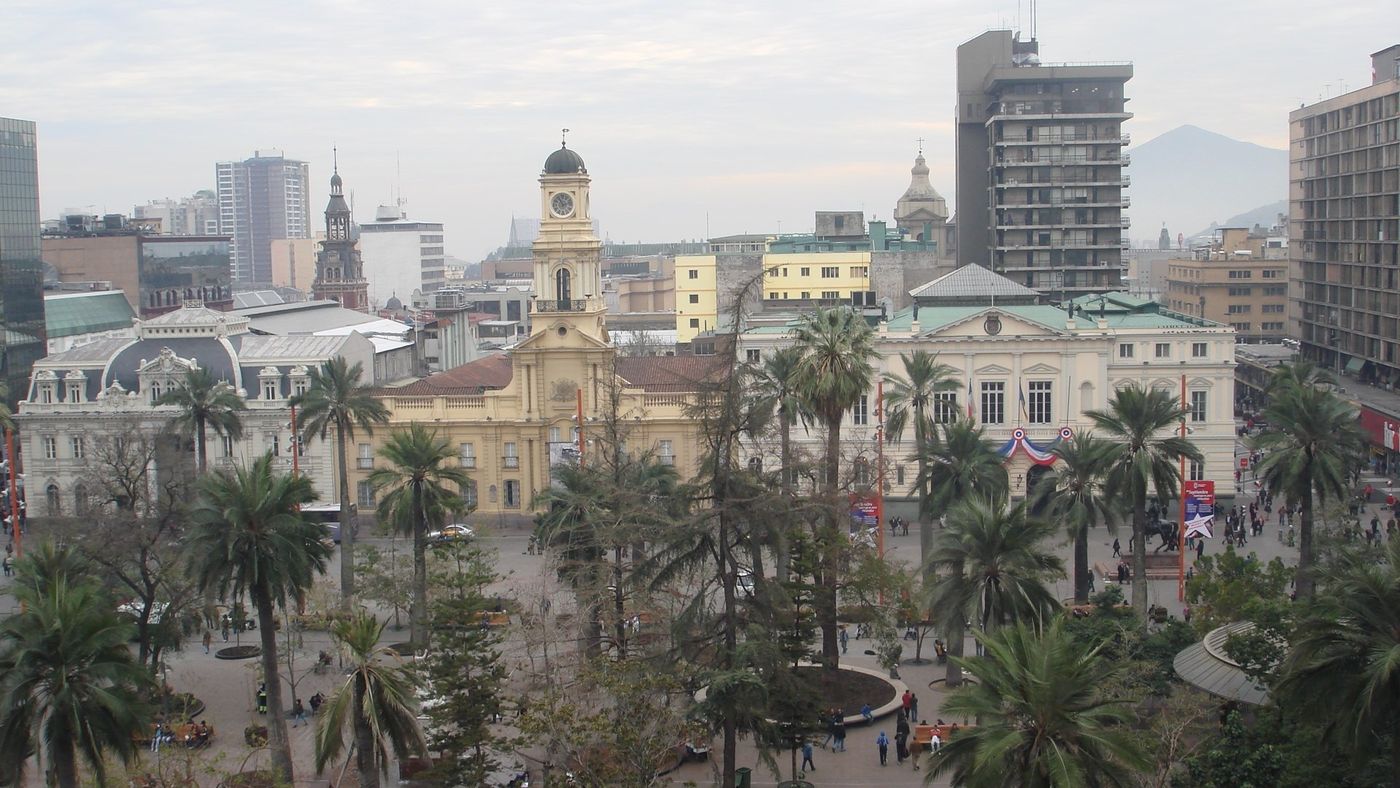
The problem is the evening. Once the offices close, much of the center goes quiet, restaurants are fewer, and walking back to a hotel through empty streets is less pleasant than it is in Lastarria or Providencia. The US Embassy lists the Plaza de Armas among the places where pickpocketing is common, and the UK government warns of distraction thefts across the city (checked September 2026). None of this makes Centro dangerous by day, but it does make it a weaker base for a first-timer who wants to wander after dinner.
If you do stay in Centro, choose a hotel close to a Metro station and to the Lastarria side, keep evenings to booked cars or short walks on busy streets, and avoid the streets immediately around the Plaza de Armas late at night. Our full where-to-stay guide covers the center’s blocks in more detail.
Las Condes and El Golf: the comfortable compromise
Further east along Line 1, the El Golf and Tobalaba area of Las Condes is Santiago’s modern business district, nicknamed Sanhattan for its towers. It’s polished, safe-feeling and full of international hotel brands, with the Costanera Center and its Sky Costanera observation deck at Tobalaba (adult CLP 25,000, daily 10:00-22:00; checked September 2026).
It suits business travelers, families who want space and familiar hotel standards, and anyone who values quiet over atmosphere. It suits most first-time sightseers less well: our where-to-stay guide puts the trip to the Plaza de Armas at 30-40 minutes door to door, and typical doubles at CLP 130,000-350,000 (about USD 137-368). Evenings are restaurant-and-hotel-bar rather than street life.
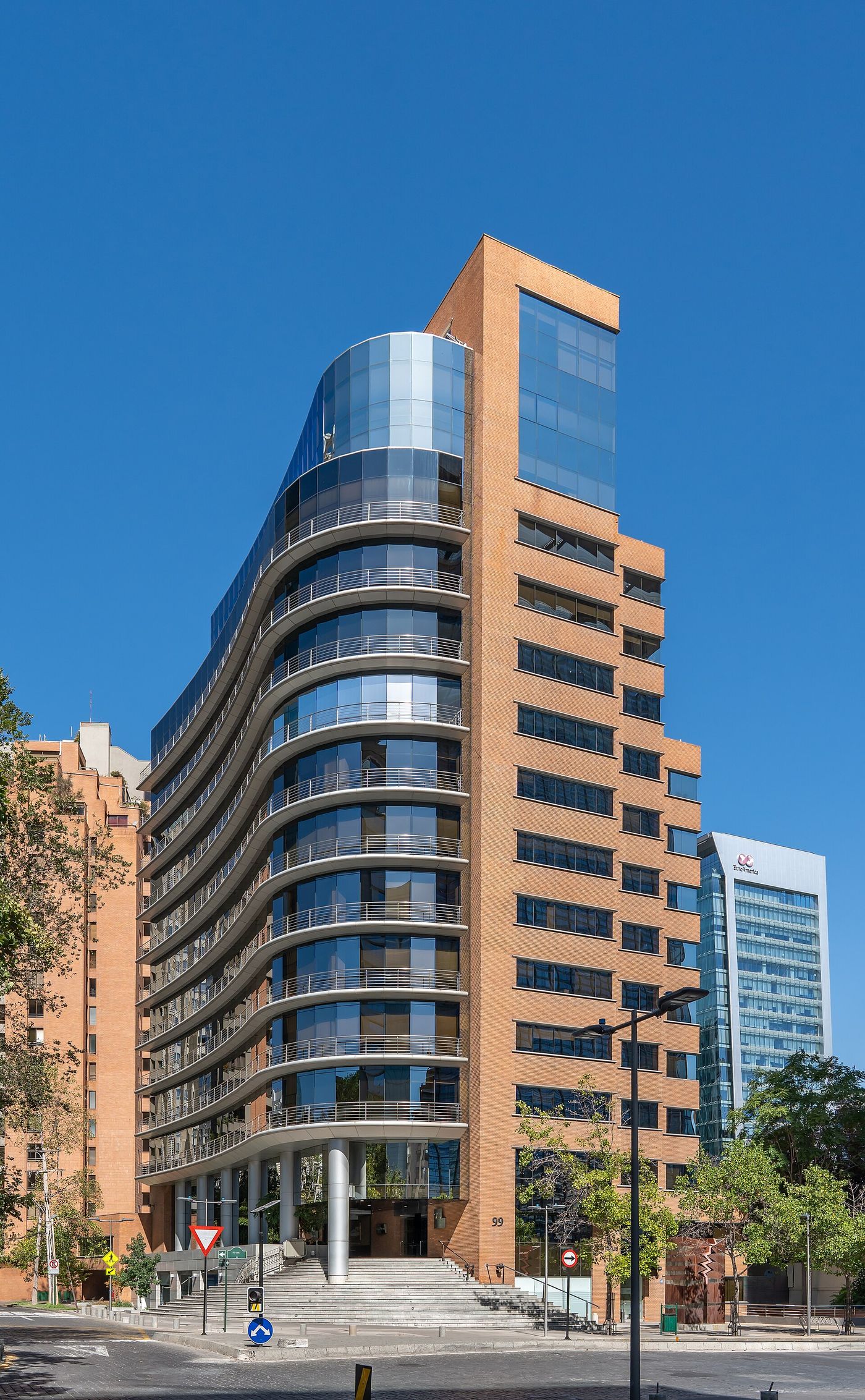
If you’re in Santiago on business with a day or two to sightsee, staying here and riding Line 1 into the center is perfectly workable. If the trip is all sightseeing, you’ll spend a lot of time underground.
Stay or just visit? Every central barrio, sorted
Santiago’s neighborhoods split neatly into places that work as a base and places that are better as an outing. For a first trip:
| Barrio | Stay? | Visit? | Why |
|---|---|---|---|
| Lastarria / Bellas Artes | Yes, the best first base | Yes | Walkable to most sights, good evenings |
| Providencia | Yes, for longer stays | For restaurants and errands | Value, quiet, Line 1 |
| Las Condes / El Golf | For business or families | For Sky Costanera | Comfort, distance from the old center |
| Santiago Centro | Only on a tight budget | Yes, by day | The historic core; empty at night |
| Bellavista | No | Yes, for evenings and the funicular | The nightlife is the reason to go and the reason not to sleep there |
| Barrio Italia | Better for a repeat visit | Yes, for an afternoon | Shops and cafés; no Metro station of its own |
| Barrio Brasil / Yungay | Only on a backpacker budget | Yes, by day | Handsome old streets, hostels, mixed at night |
| Ñuñoa | For a repeat visit | Yes, for a local evening | Residential, lively plazas, further out |
| Vitacura | Rarely | For galleries and shopping | Leafy and quiet, with no Metro |
Our guide to Santiago’s neighborhoods describes each one as a place to spend time rather than a place to sleep.
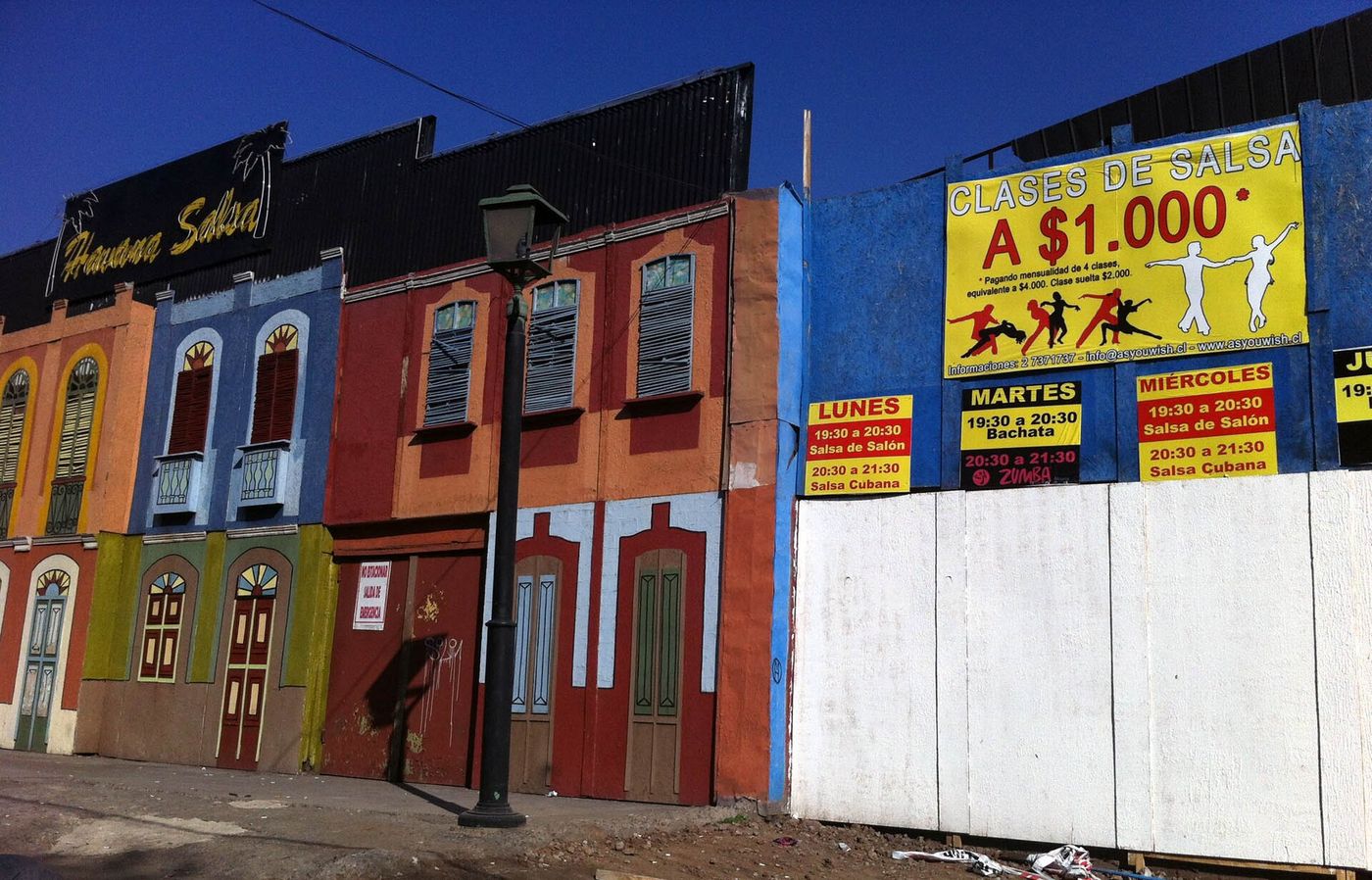
Bellavista deserves a word of its own. It’s the barrio first-timers most often book by mistake, attracted by the colorful houses, Neruda’s La Chascona and the Cerro San Cristóbal funicular. All three are worth the visit. But the streets around Pío Nono are Santiago’s busiest nightlife strip, loud at weekends into the small hours, and the UK government singles out Bellavista, with Suecia in Providencia, for drink spiking in bars (checked September 2026). Stay in Lastarria, a few minutes’ walk across the river, and visit Bellavista in the evening; our Santiago nightlife guide covers how to do that well.
How far is everything from each base?
From Lastarria you can walk to six of the ten sights below and reach the other four without changing trains. From Providencia or Las Condes, about half are a direct Line 1 ride and the rest need a change, and from Centro the old core is on foot but the east is a ride away.
The matrix below is the clearest way to see it. “Walk” means a reasonable walk for most adults; “direct” means one Metro line, no change; “change” means one change of line, or a short ride plus a walk.
| Sight (nearest station) | From Lastarria / Bellas Artes | From Providencia | From Centro | From Las Condes / El Golf |
|---|---|---|---|---|
| Plaza de Armas and cathedral (Plaza de Armas, L5) | Walk, or one stop on L5 | Change | Walk | Change |
| La Moneda and Centro Cultural La Moneda (La Moneda, L1) | Walk, or direct on L1 | Direct | Walk | Direct |
| Cerro Santa Lucía (Santa Lucía, L1) | Walk | Direct | Walk | Direct |
| Museo Nacional de Bellas Artes and MAC (Bellas Artes, L5) | Walk | Change | Walk | Change |
| Cerro San Cristóbal funicular and La Chascona (Baquedano, L1/L5, then walk) | Walk | Direct, then walk | Direct, then walk | Direct, then walk |
| Mercado Central (Plaza de Armas or Puente Cal y Canto) | Walk, or direct on L5 | Change | Walk | Change |
| Museo de la Memoria (Quinta Normal, L5) | Direct on L5 | Change | Change | Change |
| Sky Costanera (Tobalaba, L1/L4) | Direct on L1 | Direct | Direct | Walk |
| Barrio Italia (Santa Isabel, L5, then 10 minutes on foot) | Direct on L5 | Change | Change | Change |
| Pueblito Los Dominicos (Los Dominicos, L1) | Direct on L1 | Direct | Direct | Direct |
Walking judgments are ours; check the current network map on metro.cl before you travel.
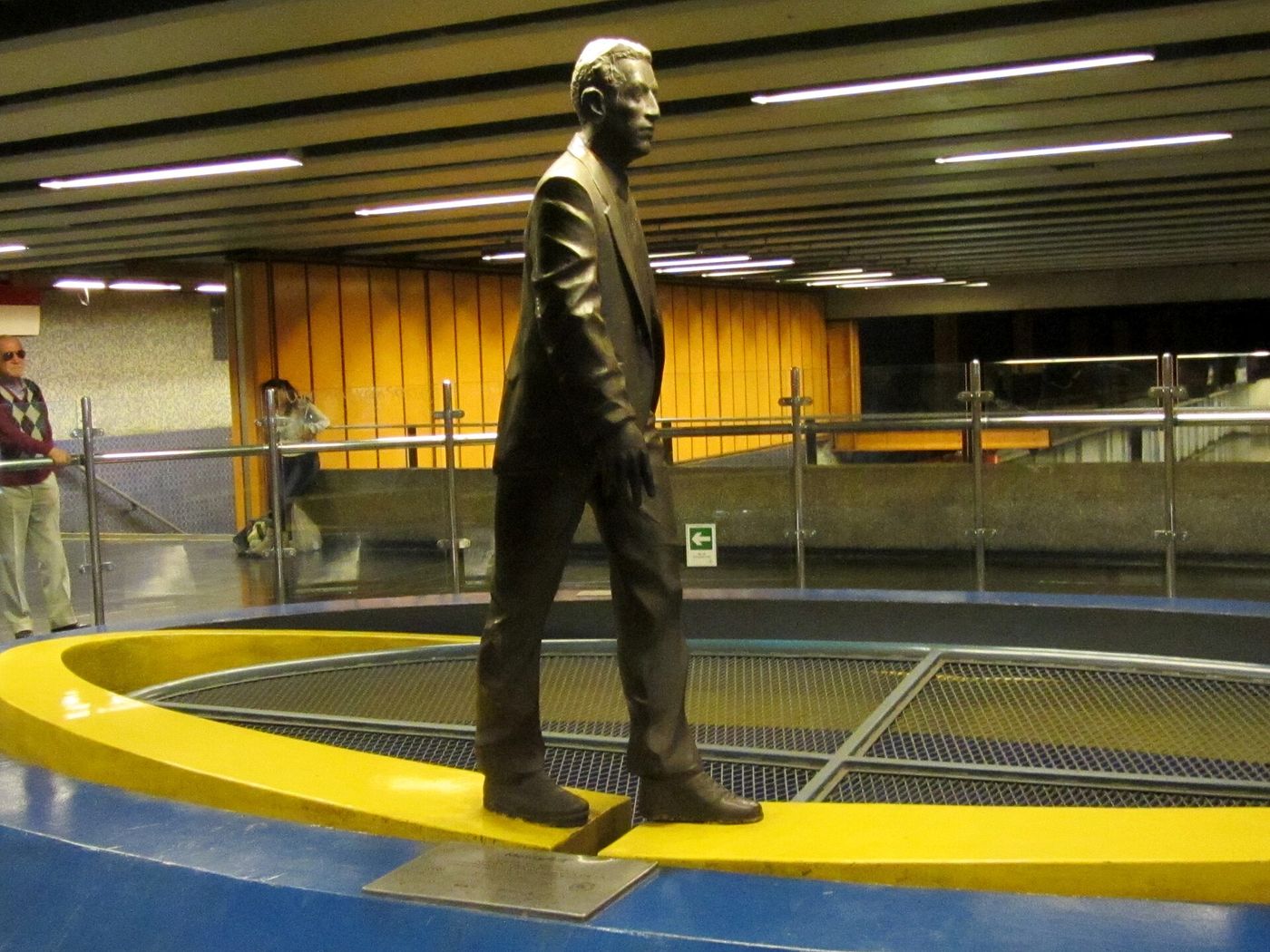
Three things to take from it. First, Line 1 makes every base workable, which is why the city’s hotels cluster along it. Second, Lastarria’s double access, Line 1 at Universidad Católica and Line 5 at Bellas Artes, is what turns most “changes” into direct rides. Third, the Metro runs Monday to Friday 06:00-23:00, Saturday 06:30-23:00 and Sundays and holidays 07:30-23:00, with fares of CLP 735-895 depending on the time of day (checked September 2026), so late evenings mean a short walk or a booked car home. Our guide to getting around Santiago covers paying by contactless card on the Metro and the bip! card the buses still need.
How to pick the hotel once you’ve picked the area
The area decides most of your trip; the hotel decides your sleep. For a first visit, these are the checks that matter:
- Within about eight minutes’ walk of a Metro station. In Lastarria that means Universidad Católica or Bellas Artes; in Providencia, Manuel Montt, Pedro de Valdivia or Los Leones. Check the walk on a map rather than trusting “near the Metro”.
- Which way the room faces. Ask for a room at the back or on a higher floor if the hotel fronts a terrace street, a main avenue or the Alameda.
- Heating and air conditioning. Santiago’s average January high is 30.2°C (86°F) and its average July low 3.5°C (38°F), measured at the city’s Pudahuel weather station (1991-2020 normals). A room without proper heating in July or cooling in January is a bad night either way. See Santiago weather by month for the full year.
- Early arrival. If your flight lands early in the morning, ask whether the hotel will store bags before check-in, and whether an early check-in can be guaranteed for a fee; it’s worth it after an overnight flight.
- The airport run. Arrange it before you land. Our Santiago airport guide covers official transfers, buses and how to avoid the taxi scams that the UK government warns about at the terminal.
- Paying in foreign currency. Foreign tourists can be exempt from Chile’s 19% VAT on hotel rooms when they pay in foreign currency or with a foreign card and show a passport and tourist card, at hotels registered for the scheme. Ask the hotel before you book whether it applies the exemption; our where-to-stay guide explains how it works.
- Recent reviews about noise and heating. Read the last six months of reviews, not the overall score; complaints about a new bar next door or a broken boiler are exactly what you need to know.
How many nights, and how to split them
The right base depends as much on the length of the trip as on the neighborhood itself. A simple rule of thumb for a first visit:
| Nights in Santiago | Where to stay | Why |
|---|---|---|
| 1-2 | Lastarria, or Centro near Universidad de Chile on a budget | Every minute counts, and walking saves the most of them |
| 3-4 | Lastarria / Bellas Artes | The classic first visit: walk to most sights, ride to the rest |
| 5-7 | Lastarria or Providencia | Either works; Providencia starts to pay off in price and quiet |
| 8+ | Providencia, or split the stay | Value, daily life and quieter nights matter more than a short walk |
Splitting a longer stay works well in Santiago, because the city’s character changes so much from west to east. Spend the first three nights in Lastarria, doing the old center and the museums on foot, then move east to Providencia for the rest of the trip, when you’re making day trips to the coast, the wine valleys or the mountains and want a quieter base closer to the eastern end of Line 1. The move is a short ride on Line 1 or a ride-hail with your bags.
If the trip includes Valparaíso or Viña del Mar, consider a night or two on the coast rather than two long day trips; our comparison of day trips from Santiago sets out which excursions are worth an overnight.
Arriving from the airport, base by base
How you get from the airport to your hotel depends a little on where you’re staying. Our airport guide’s September 2026 fare check puts the options at roughly CLP 2,200-2,800 for the airport bus plus a Metro fare, CLP 8,000-12,000 per person for a shared minibus, CLP 18,000-28,000 for a ride-hail and CLP 25,000-35,000 for an official taxi booked at the counter inside the terminal.
- Lastarria and Centro. The airport buses’ Los Héroes stop, on Lines 1 and 2, is the better connection for the historic center and Lastarria. With light luggage in daylight, bus plus Metro is fine; after an overnight flight with big cases, a booked car or an official taxi straight to the door is worth the extra.
- Providencia and Las Condes. The airport buses also stop at Terminal Pajaritos, directly on Line 1, the better connection for anywhere east of the center. Two travelers with luggage can take the bus to Pajaritos and a short ride-hail from there, which skips the airport pickup fee and the long Metro leg with bags.
- Any base, late at night. Book an official taxi or transfer inside the terminal and ignore anyone who approaches you in arrivals; the UK government gives an example of an airport taxi charging CLP 5,000,000 instead of CLP 50,000.
Our full Santiago airport guide covers the counters, the buses and the scams in detail.
Five booking mistakes first-timers make
1. Booking Bellavista for the photographs. The painted houses are lovely and the nightlife is the best in the city, which is precisely why the rooms are loud at weekends. Visit; don’t sleep there.
2. Trusting the word “Santiago” in a listing. Greater Santiago is enormous, and a property described as “in Santiago” can be in a residential commune a long way from the sights, with no Metro nearby. Check the map pin against the Metro network before you pay, and treat anything more than a 10-minute walk from a Line 1 or Line 5 station with suspicion.
3. Forgetting the seasons. A room without heating in July, when nights average 3.5°C, or without air conditioning in January, when days average 30.2°C, makes for miserable nights. Ask, and read recent reviews for complaints about either.
4. Arriving on a big weekend without a booking. Fiestas Patrias in mid-September and major events such as Lollapalooza in March fill the city’s hotels and change opening hours across town. Book well ahead, or plan around them.
5. Choosing Vitacura or the far east for a sightseeing trip. These are pleasant, upscale areas, but Vitacura has no Metro station, and the old center is a long ride away. For a first visit, the hours lost in traffic outweigh the leafy streets.
If you’re bringing a car
Most first-time visitors don’t need one in the city, and the Metro, ride-hailing and walking cover everything this page describes. If you do arrive with a rental car for trips into the mountains or the wine valleys, the calculation changes. Parking is scarce and expensive in Lastarria and Centro, while hotels in Providencia and Las Condes are more likely to have their own garages and easier access to the urban highways leading out of the city. Ask the hotel about parking before you book, and consider picking up the car only on the day you leave the city.
What a first-timer should expect to pay
Rates move with the calendar more than with the neighborhood. The bands in the table at the top of this page are typical shoulder-season doubles; in practice:
- June to August is low season and the cheapest time to book in the tourist areas.
- December to February brings international visitors and higher prices in Lastarria, even as business hotels in Las Condes discount.
- Fiestas Patrias, 18-19 September, is the year’s biggest domestic travel weekend, when much of the city closes and prices jump.
- Lollapalooza Chile, 12-14 March 2027, fills hotels across the city for its weekend; our Lollapalooza Chile guide has the details.
For how a room fits the rest of a trip’s budget, see what a trip to Santiago costs.
Safety by area, for a first visit
Santiago is a big city with a real petty-crime problem, and the advisories are worth reading before you choose a base. The essentials, as checked in September 2026:
| Source | What it says that matters for your choice of area |
|---|---|
| US Department of State | Chile at Level 2, Exercise Increased Caution |
| Government of Canada | “Exercise a high degree of caution” for Chile; names Bellavista, Lastarria and around Cerro Santa Lucía as higher-risk areas in Santiago; Plaza Italia / Plaza Baquedano as the protest focal point |
| UK FCDO | Pickpocketing and mugging very common; distraction thefts; drink spiking in Suecia and Bellavista bars; risk of protests in Santiago, particularly on Friday afternoons; book taxis |
| US Embassy | Pickpocketing at Santa Lucía, San Cristóbal, Plaza de Armas, Bellavista and Yungay |
Read that list carefully and it describes where visitors go rather than where visitors shouldn’t stay. Lastarria appears because it’s full of tourists, not because it’s unsafe to sleep there. What it does mean for first-timers:
- Keep your phone out of reach of passing hands. Distraction thefts and snatched phones on terraces and at viewpoints are the classic Santiago crime.
- Use booked cars late at night, especially between Bellavista and anywhere else.
- Avoid Plaza Baquedano on protest days. The Canadian government lists 29 March, 1 May, 11 September and 18 October as notable dates, and the UK warns about Friday afternoons. Lastarria and Providencia sit on either side of the plaza, so check the news and walk around it if necessary.
- Don’t flag taxis at the airport. Use the official transfer desks or a booked car.
Our Santiago safety guide covers scams, the advisories in full and what to do if something goes wrong.
Accessibility: hills, cobbles and elevators
For travelers with limited mobility, the choice of base matters more than usual. Lastarria’s streets are partly cobbled and its sidewalks narrow in places, and Cerro Santa Lucía, next door, is a hill of stairs and steep paths. Providencia and Las Condes are generally flatter, with wider sidewalks and more modern hotel buildings, which tend to have elevators and step-free entrances. Centro is flat, but crowded by day.
Check three things before booking: step-free access from the street to reception, an elevator to your floor, and step-free access at your nearest Metro station, which varies by station and entrance. Our guide to accessible Santiago covers transport and sights in detail.
Three days from a Lastarria base
Here is how a first visit flows from the recommended base, built around Santiago’s one big trap: most museums close on Mondays, and so do the teleférico and the zoo on Cerro San Cristóbal. Do this on Tuesday to Saturday if you can.
Day 1: the old city on foot. Start with Cerro Santa Lucía, which opens at 08:00 in winter and 07:00 in summer from Tuesday to Sunday (from noon on Mondays) and closes when it rains (checked September 2026). Walk down to the Plaza de Armas and the cathedral, then the Museo Chileno de Arte Precolombino (Tuesday to Sunday, 10:00-18:00). Lunch at the Mercado Central, skipping the touts in the central hall for the stalls around the edge. In the afternoon, La Moneda and the Centro Cultural La Moneda beneath the plaza in front of it. Dinner back in Lastarria.
Day 2: parks, art and the big hill. Morning across Parque Forestal at the Museo Nacional de Bellas Artes and the MAC, both free. Walk over the river into Bellavista and take the funicular or the teleférico up Cerro San Cristóbal for the view. Visit La Chascona, Neruda’s Santiago house (CLP 11,000, Tuesday to Sunday). Stay for dinner in Bellavista, and take a booked car back.
Day 3: memory and the modern city. Line 5 from Bellas Artes to Quinta Normal for the Museo de la Memoria y los Derechos Humanos (free, Tuesday to Sunday). Then Line 1 east: Sky Costanera at Tobalaba for the view, or Barrio Italia for an afternoon of shops and cafés, or the end of the line at Los Dominicos for the craft village.
Prices and hours checked September 2026. For longer plans, see our Santiago itineraries, and for the full list of sights, the guide to things to do in Santiago.
If your trip is longer than four or five nights, or your budget won’t stretch to Lastarria, the full guide to where to stay in Santiago covers every other neighborhood, hostel to five-star, with seasonal rates and how to read a Santiago hotel listing.
Frequently asked questions
What is the best area to stay in Santiago for a first visit?
Lastarria and Bellas Artes, between Cerro Santa Lucía and Parque Forestal. You can walk to the old center, the main museums and two hills, and Metro Lines 1 and 5 stop at the edge of the district. Providencia is the better value choice for a week or longer.
Is Lastarria safe to stay in?
Yes, with normal city precautions. Canada’s advisory names Lastarria among Santiago’s higher-risk areas for petty crime because it’s full of tourists, so watch your phone on terraces and take booked cars late at night. The streets are busy with restaurant traffic until around midnight.
Is Providencia or Lastarria better?
Lastarria for three or four nights of sightseeing; Providencia for a week or more, a smaller budget or quieter nights. A typical double runs CLP 90,000-190,000 in Lastarria against CLP 55,000-120,000 in Providencia (September 2026), and Providencia puts the old center a Metro ride away rather than a walk.
Should I stay in Santiago Centro?
Only on a tight budget. Centro is the cheapest central base and close to the main sights by day, but it empties after dark and the Plaza de Armas is a known pickpocketing spot. Lastarria, about 20 minutes’ walk away, is a much better base for evenings.
Is Bellavista a good place to stay?
Not for most first-timers. It’s Santiago’s busiest nightlife district, loud at weekends into the small hours, and the UK government warns of drink spiking in its bars. Stay in Lastarria, across the river, and visit Bellavista for La Chascona, the funicular and dinner.
Do I need to stay near a Metro station?
Yes. Santiago’s sights are spread out along Metro Lines 1 and 5, and a hotel within about eight minutes’ walk of a station saves hours over a trip. The Metro runs until 23:00 every day, so plan a booked car for later nights.
Where should families stay in Santiago?
Providencia or Las Condes, for quieter streets, parks, supermarkets and apartment hotels with more space. Lastarria works for families on a short trip, but rooms are smaller and evenings noisier. Our guide to Santiago with kids covers the sights that suit children.
When are Santiago hotels most expensive?
Around Fiestas Patrias on 18-19 September, in December to February in the tourist areas, and on big event weekends such as Lollapalooza Chile on 12-14 March 2027. June to August is the cheapest season in Lastarria and Providencia.
If your trip runs to a week or more and Providencia is the better fit, the choice of block matters as much as the choice of borough. A room a street or two off Avenida Providencia, between Manuel Montt and Pedro de Valdivia, is the sweet spot for most visitors. Our Providencia where-to-stay guide covers each station area, Barrio Suecia’s late nights and the protest days to watch near Plaza Baquedano.
Whichever base you choose, plan the first ride in advance. Alone with a carry-on in daylight, the Centropuerto bus to Metro República and a short Line 1 ride is the cheapest way in, at about CLP 3,200 including the Metro; with luggage, at rush hour or after dark, an official taxi bought at the counters behind the blue arrow after customs is the easier choice. Our guide to getting from Santiago airport to the city center has the details.
Sources
- Visit Santiago: official visitor site
- Metro de Santiago: fares and hours
- US Department of State: Chile travel advisory
- Government of Canada: travel advice for Chile
- UK FCDO: Chile safety and security
- Dirección Meteorológica de Chile: climate normals, Santiago Pudahuel
- Sky Costanera
- Museo Nacional de Bellas Artes
- Centro Gabriela Mistral (GAM)
- Parque Metropolitano de Santiago
- Lollapalooza Chile 2027
- Servicio de Impuestos Internos: dólar observado 2026
Image credits
| Photo | Credit |
|---|---|
| Barrio Lastarria (top of page) | SvetlanaLom, CC BY-SA 3.0, via Wikimedia Commons |
| Parque Forestal and Bellas Artes | Alvaro Vidal, CC BY-SA 3.0, via Wikimedia Commons |
| Lastarria street | Alvaro Vidal, CC BY-SA 3.0, via Wikimedia Commons |
| Avenida Providencia | Felipe Restrepo Acosta, CC BY-SA 4.0, via Wikimedia Commons |
| Plaza de Armas | Raul from Recife, Brasil, CC BY 2.0, via Wikimedia Commons |
| Las Condes | Rjcastillo, CC BY-SA 4.0, via Wikimedia Commons |
| Bellavista | order_242 from Chile, CC BY-SA 2.0, via Wikimedia Commons |
| Metro Universidad Católica | Rodrigo Fernández, CC BY-SA 4.0, via Wikimedia Commons |
| Cerro Santa Lucía | Rodolfo Ditzel Lacoa, CC BY-SA 3.0, via Wikimedia Commons |
| Barrio Italia | Tommy Boy, CC BY-SA 4.0, via Wikimedia Commons |