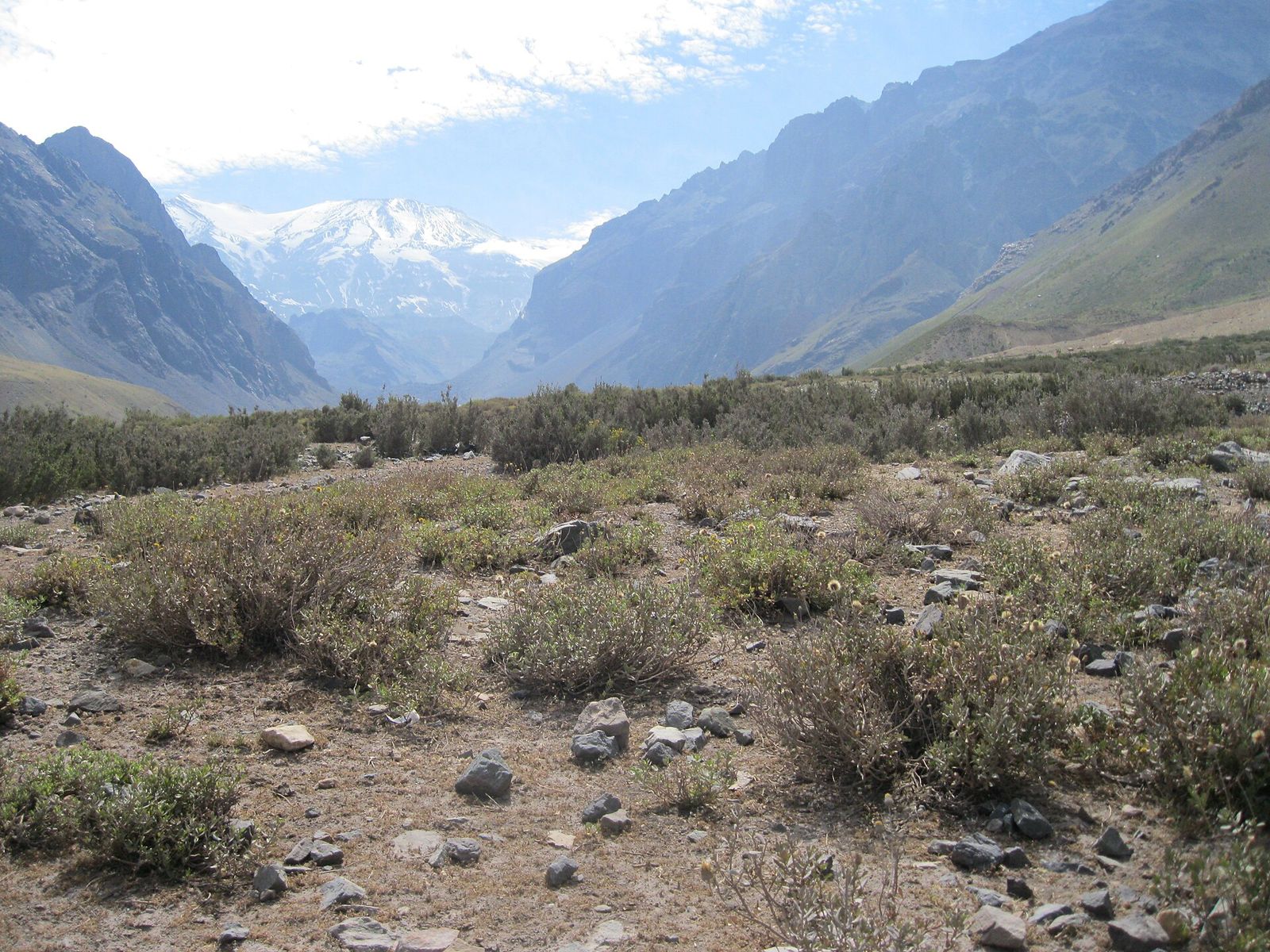
The Cajón del Maipo is the canyon of the Maipo River, beginning about an hour southeast of Santiago, and it’s the best day out into the mountains from the city: river towns, rafting, horseback riding, hot springs, a glacier-fed lagoon and the turquoise Embalse El Yeso. Plan a full day, and for anything above San Alfonso, a car, a tour or an early bus.
This Cajón del Maipo travel guide follows the valley road from the bottom to the top, with what each stop is worth, how to get there without a car, and the rules that changed in 2026: you can no longer hike to the El Morado glacier, El Yeso closes to private cars from April to August, and the hot springs at the top only take cash. For how the Cajón fits with the city’s foothill trails and the rest of the Andes around Santiago, see our guide to hiking and outdoor activities near Santiago.
The Cajón del Maipo at a glance
| If you want… | Go to | From Santiago | Without a car? | Cost (checked) |
|---|---|---|---|---|
| A relaxed half day in a mountain town | San José de Maipo | About 45 km, an hour | Yes, by bus | Lunch money |
| Rafting, riding or a short hike | San Alfonso and the Cascada de las Ánimas | About 60 km | By bus and a walk, or a tour | Rafting with picnic area CLP 35,000 |
| A glacier lagoon hike | Monumento Natural El Morado, Baños Morales | 93 km, about 2.5 hours | High-season bus or a tour | Entry via Pases Parques; last entry 12:30 |
| The turquoise reservoir | Embalse El Yeso | About 2.5 hours | Tour only in practice | CLP 3,450; no private cars April to August |
| Hot springs at the end of the road | Termas Valle de Colina | Km 89 of route G-25 | Car or tour | From CLP 10,000, cash only |
Prices and rules checked September 2026 (El Yeso) and October 2026 (everything else). Dollar figures elsewhere on this page use about CLP 950 to the US dollar.
Three things decide most Cajón trips. Distance: the good stuff is near the top, two and a half hours from the city. Day of the week: El Morado closes on Mondays and El Yeso keeps its own days. Season: from April to August the upper valley changes character, with El Yeso closed to private vehicles and winter conditions at El Morado.
How do you get to the Cajón del Maipo?
By car on route G-25, the Camino al Volcán, which climbs from Puente Alto through San José de Maipo to Baños Morales. Without a car, CONAF lists two buses: Metrobús 72 from Metro Bellavista de La Florida (Line 5), and Buses Turismo Montaña’s 08:30 high-season departure. For El Yeso, take a tour.
| Option | Where from | Good for | Notes |
|---|---|---|---|
| Car | Puente Alto, then route G-25 | Everything, on your own schedule | Paved to Baños Morales, per CONAF; El Yeso road unpaved and closed to cars April to August |
| Metrobús 72 | Metro Bellavista de La Florida, Line 5 | San José de Maipo and the lower and middle valley | Ask the driver how far each departure goes |
| Buses Turismo Montaña | Corner of Américo Vespucio and Vicuña Mackenna, 08:30 daily in high season | The day trip to Baños Morales and El Morado | Reservations +56 2 2850 0555 |
| Organized tour | Hotel pickup in Santiago | El Yeso, El Morado, the hot springs | The only practical way to El Yeso without a car |
Bus details from CONAF’s El Morado page, checked October 2026.
Driving. The Cajón has one main road in and one out. Route G-25 leaves the southeastern edge of the city at Puente Alto and follows the river up through San José de Maipo, El Melocotón and San Alfonso to Baños Morales, and CONAF describes it as paved all the way there (checked October 2026). The side road to Embalse El Yeso, route G-455, is unpaved, and private vehicles are banned on it from km 21.7 between April and August (checked September 2026). Fill up before you start climbing, carry cash and water, and don’t count on phone signal in the upper valley.
The real hazard isn’t the road but the traffic on it. On Sunday afternoons the whole of Santiago’s weekend crowd comes down the same two-lane road, and the queue back into Puente Alto can add hours. Leave the top of the valley by 16:00 on a Sunday, or stay until after dark, or go midweek.
By bus. Metrobús 72 leaves from Metro Bellavista de La Florida, the Line 5 station on Vicuña Mackenna, and runs up the valley. Buses Turismo Montaña’s 08:30 departure from the corner of Américo Vespucio and Vicuña Mackenna, close to the same Metro station, runs daily in the high season and is the one CONAF points to for El Morado; call ahead to reserve. Our guide to getting around Santiago covers Line 5 and the Metro’s contactless payment; carry cash for the buses in the valley.
By tour. For El Yeso there is no sensible alternative. Private cars are banned for five months of the year, the operator has required a certified guide or tour in its winter mode, and the last stretch of road is rough. Tours also solve the El Morado last-entry problem, since they leave early enough to beat the 12:30 cutoff.
The road up the valley, stop by stop
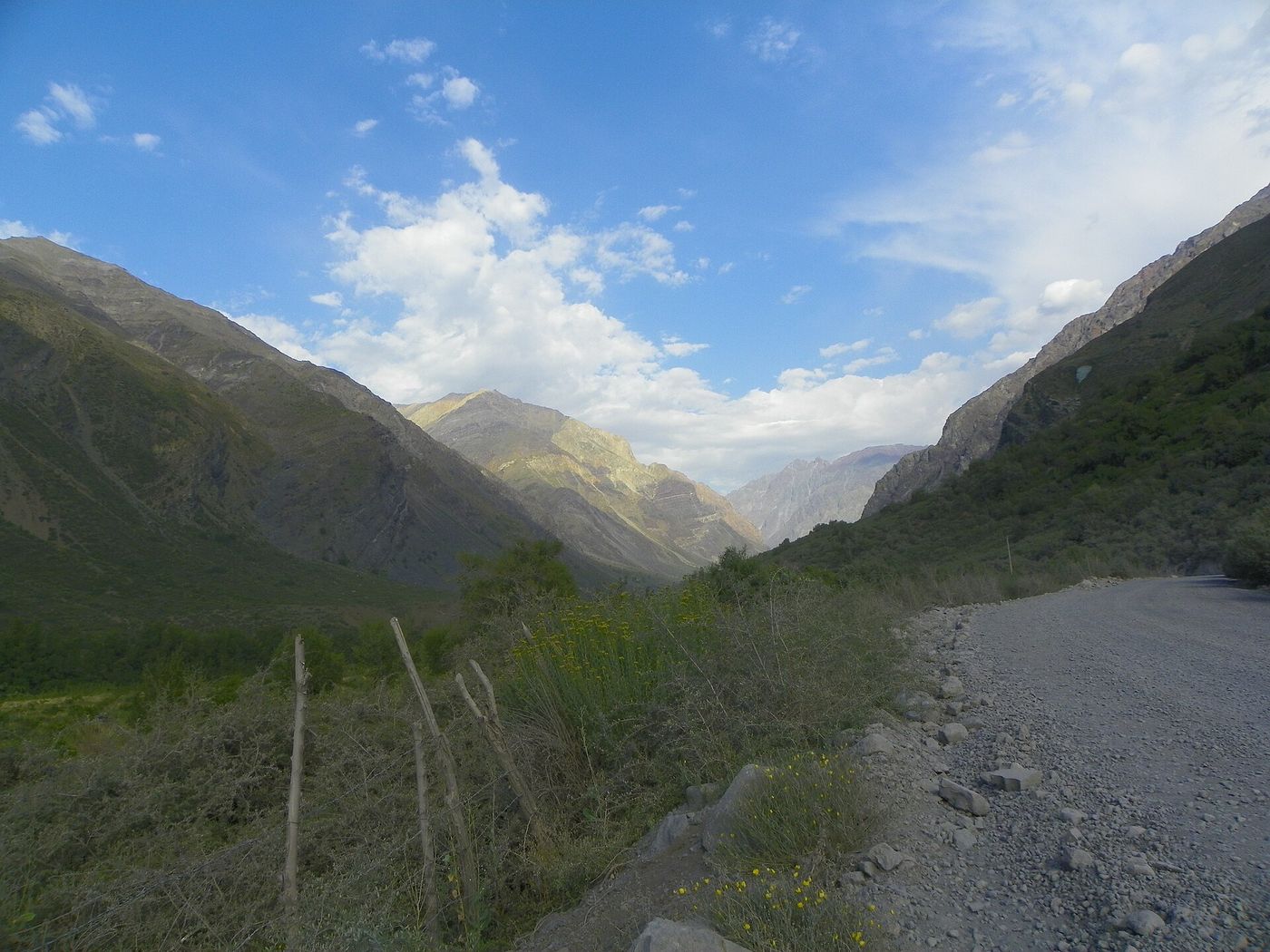
The Cajón reveals itself in stages. The lower valley is green, with orchards, poplars and weekend houses; above San Alfonso the mountains close in and the vegetation thins; past the El Yeso turnoff the valley becomes high, bare and spectacular. Here is what each stage is worth.
San José de Maipo: the valley town
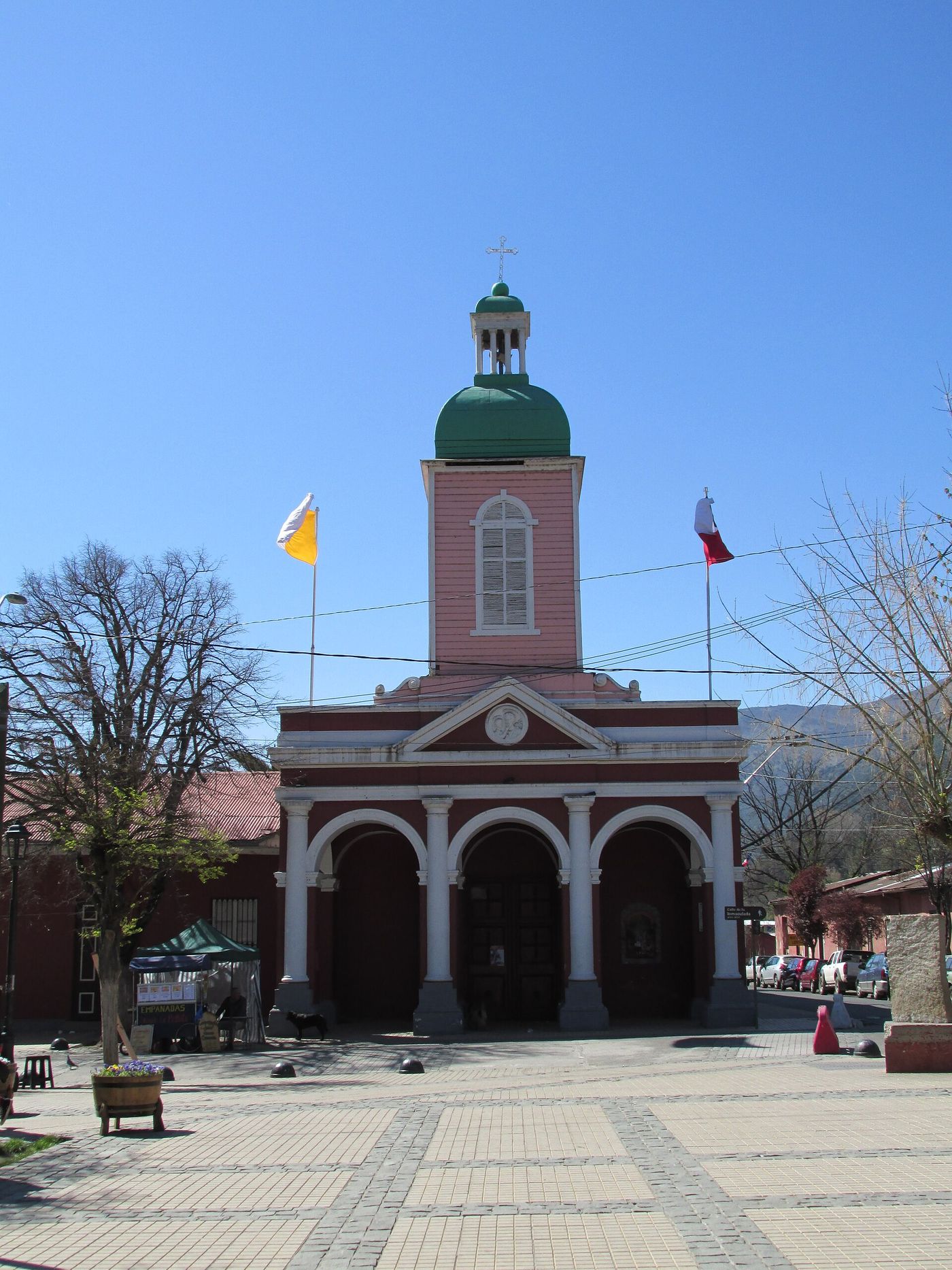
About 45 km and an hour from Santiago, San José de Maipo is the Cajón’s main town. Its plaza, with the pink-and-red church and a few cafés and places to eat around it, is the natural first stop for a coffee and a stretch.
It is pleasant rather than remarkable. As a destination in itself, it’s a half day at most, but it’s the gateway to everything above it and the place to buy anything you’ve forgotten. If you’re on a bus day, it’s also the most reliable point to reach without a car.
El Melocotón and San Alfonso: rafting and the sanctuary
A little higher, the valley narrows and the river picks up speed. This is where most of the Cajón’s adventure operators work, and where the Maipo’s white water is run in summer.
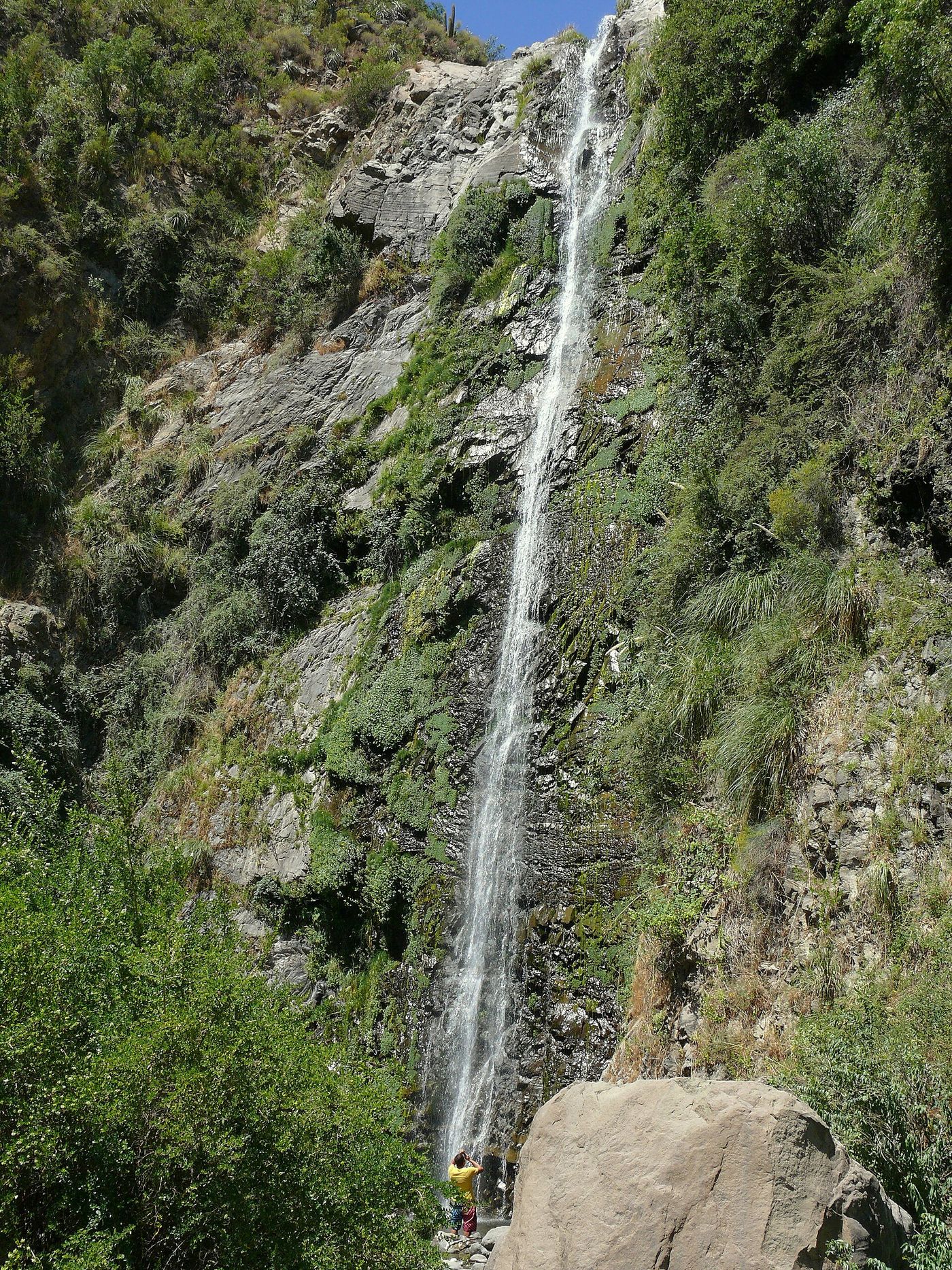
The best known is the Cascada de las Ánimas, a private nature sanctuary at San Alfonso, Camino al Volcán 31087, about 60 km from Santiago. It runs the widest menu of activities in the valley: rafting on the Maipo, horseback riding, hikes to its waterfall, a zipline, inflatable kayaks, a climbing wall, yoga and astronomy tours, plus a restaurant, a café, a pizzeria and brewery, a spa and a pool, and accommodation from suites to domes and cabins (checked October 2026). Its site lists rafting with use of a picnic area at CLP 35,000 (about USD 37) per person, and asks you to contact it for the rest.
Rafting on the Maipo is a summer activity, best roughly from December to March when snowmelt fills the river, and it is always done with an operator. The river is cold, fast and not a place for an inflatable from a supermarket. Horseback riding is the best way to get above the valley floor without hiking.
The middle valley and the El Yeso turnoff
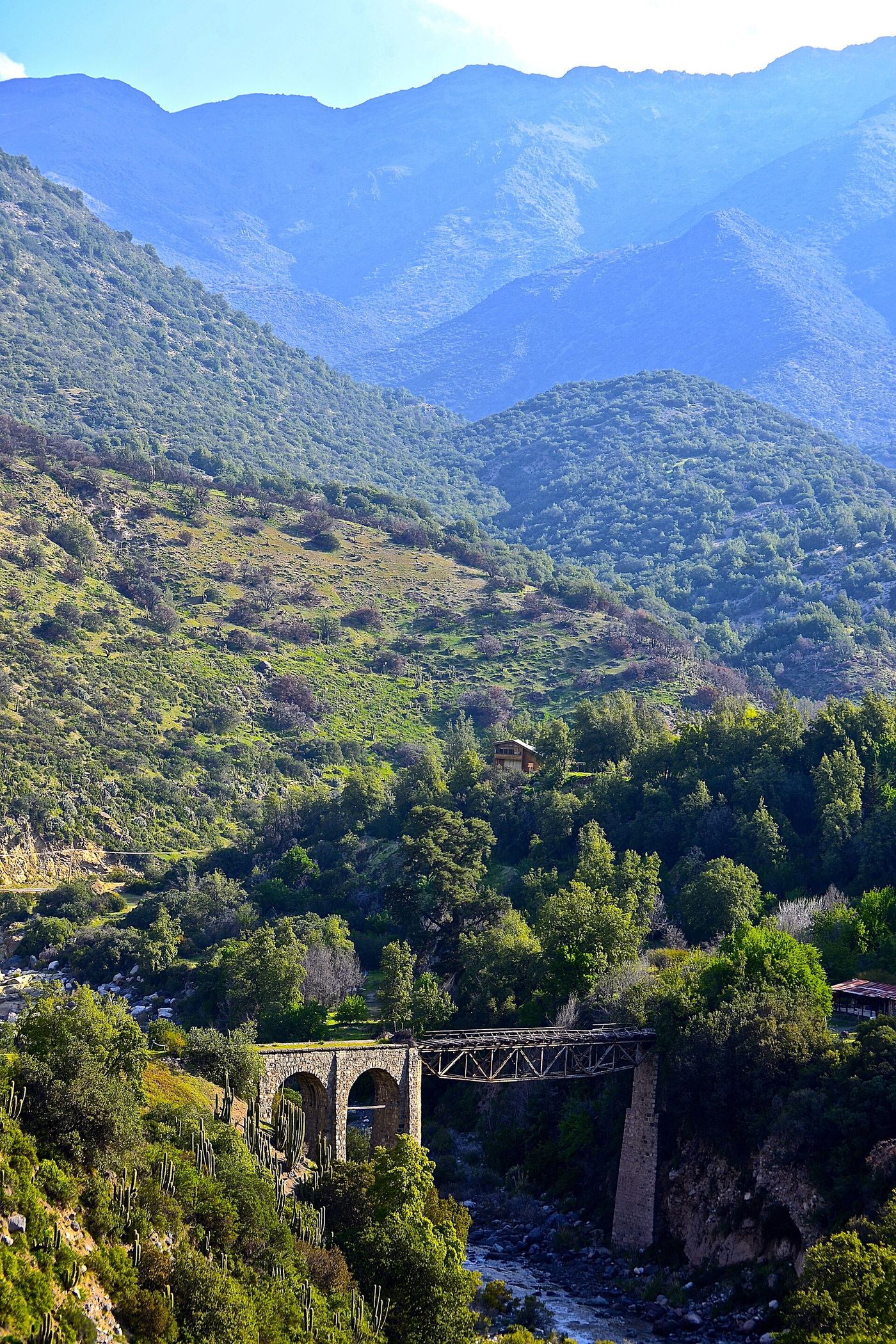
Above San Alfonso, the road passes small settlements and the old railway’s stone viaducts, relics of the line that once ran up the valley to El Volcán. Higher up, route G-455 branches off toward Embalse El Yeso, and the main road continues toward Baños Morales.
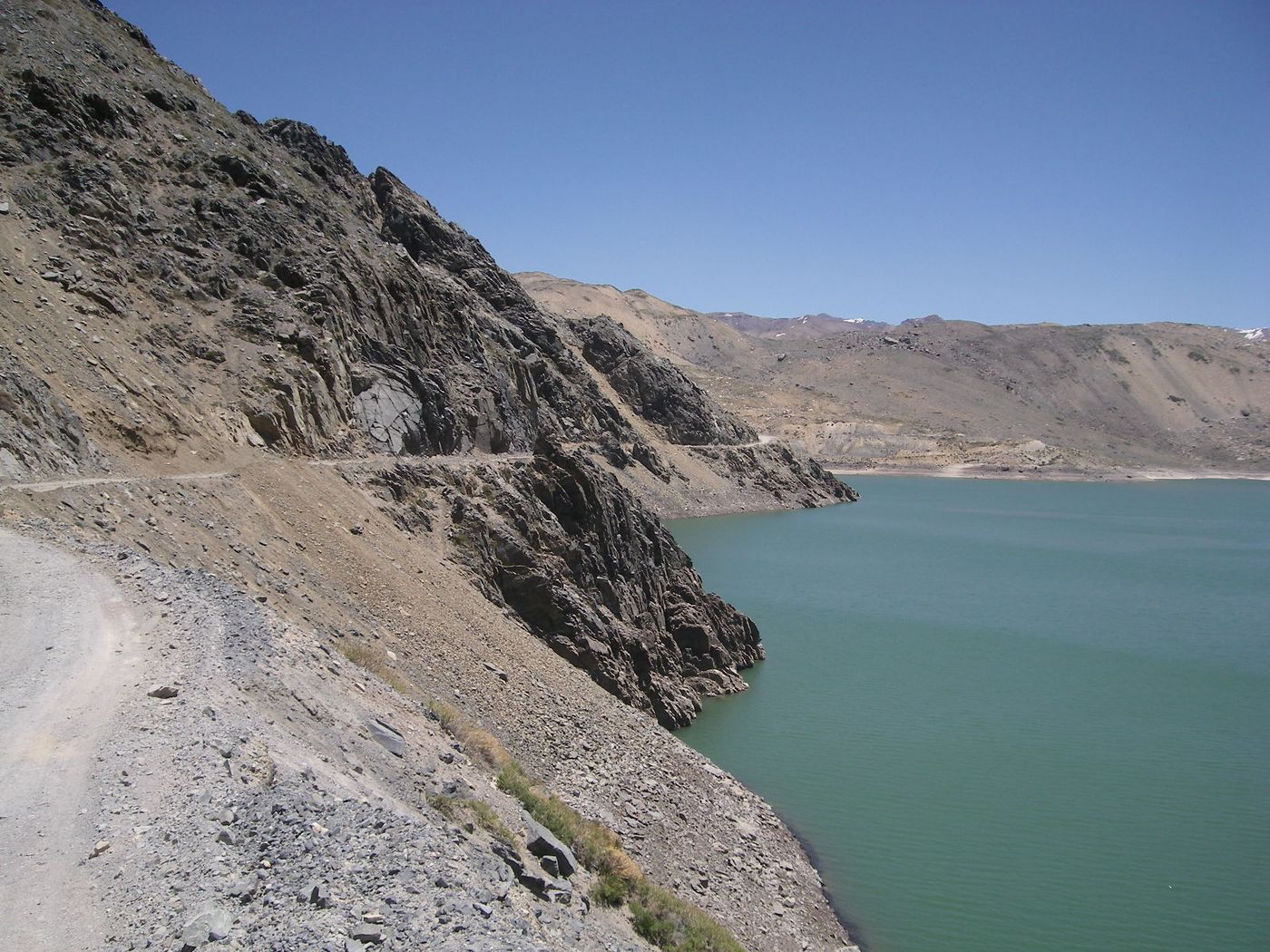
Embalse El Yeso is the reservoir every photograph of the Cajón seems to show: a turquoise lake at about 2,500 m, walled by bare mountains. It is also the stop with the most rules. When checked in September 2026, the park was open Thursday to Monday, 08:00-18:00, with last entry at 11:00 and adult entry at CLP 3,450 (about USD 3.60). Private vehicles are banned on G-455 from km 21.7 between April and August, and in mid-September the operator’s page still required a certified guide or a tour. An older chile.travel post from January 2026 described a different, weekend-only schedule with reservations, which tells you how often these rules move. Our outdoors guide has the full El Yeso access rules; check them again the week you go.
Is it worth it? On a clear summer day, yes, for the color and the scale. But it’s a long, dusty drive for a view, there are no facilities at the reservoir, and on a cloudy day the turquoise turns gray. If you only have one day for the Cajón, El Morado gives you more to do for the same distance.
Baños Morales and El Morado: the high valley
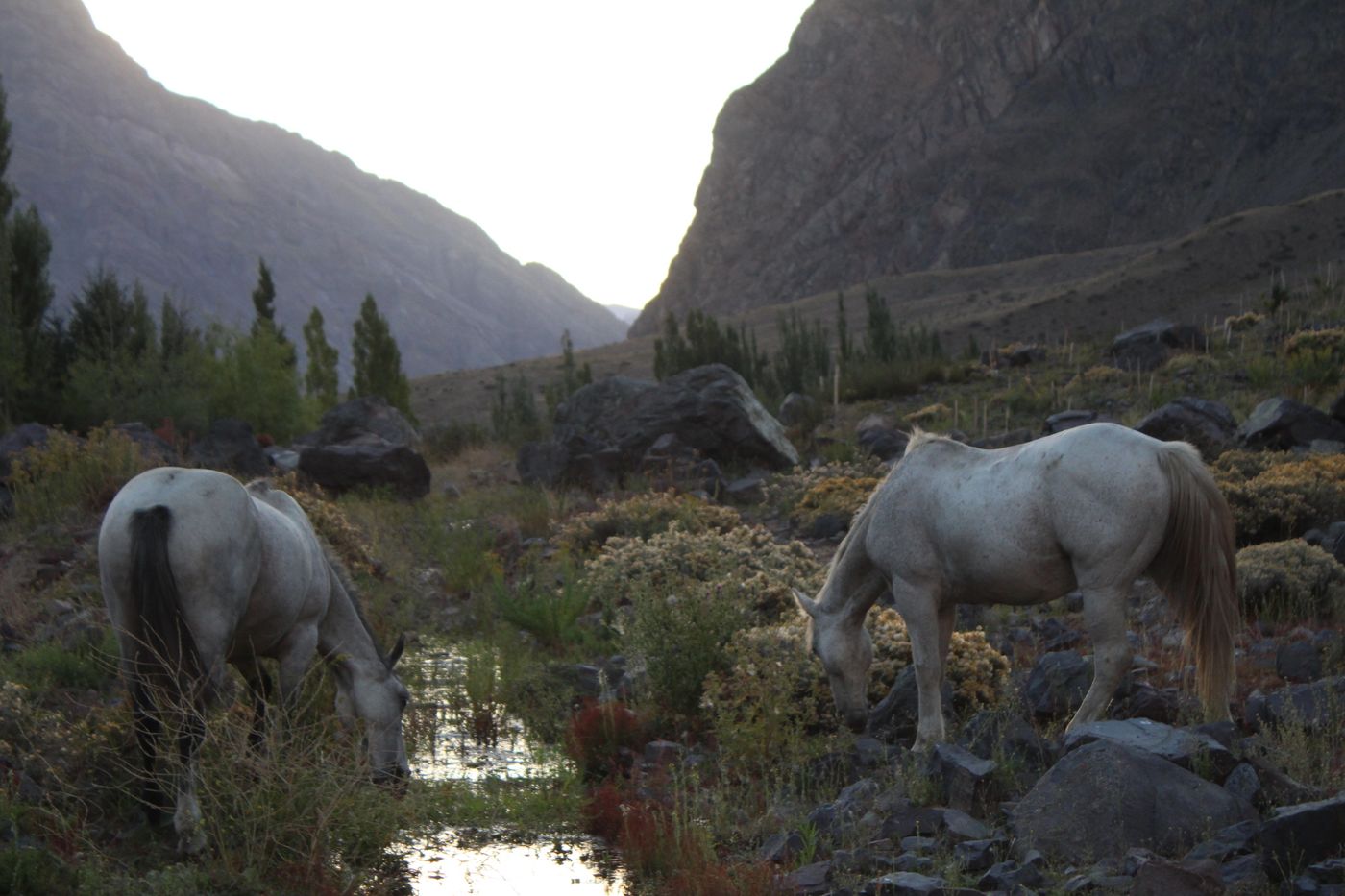
Baños Morales, 93 km and about two and a half hours from Santiago, is a small mountain village at the trailhead of Monumento Natural El Morado, the national park unit that protects the valley below Cerro El Morado and the San Francisco glacier. The scenery here is the Cajón at its most dramatic: bare red and gray peaks, snow above, and horses grazing the meadows by the stream.
The big change in 2026 is what you can do in the park. The trail to the San Francisco glacier is now limited: CONAF no longer allows visitors to reach the glacier or its base, and walks are permitted only as far as the lagoon (checked October 2026). The section below covers the details.
Valle de Colina: the end of the road
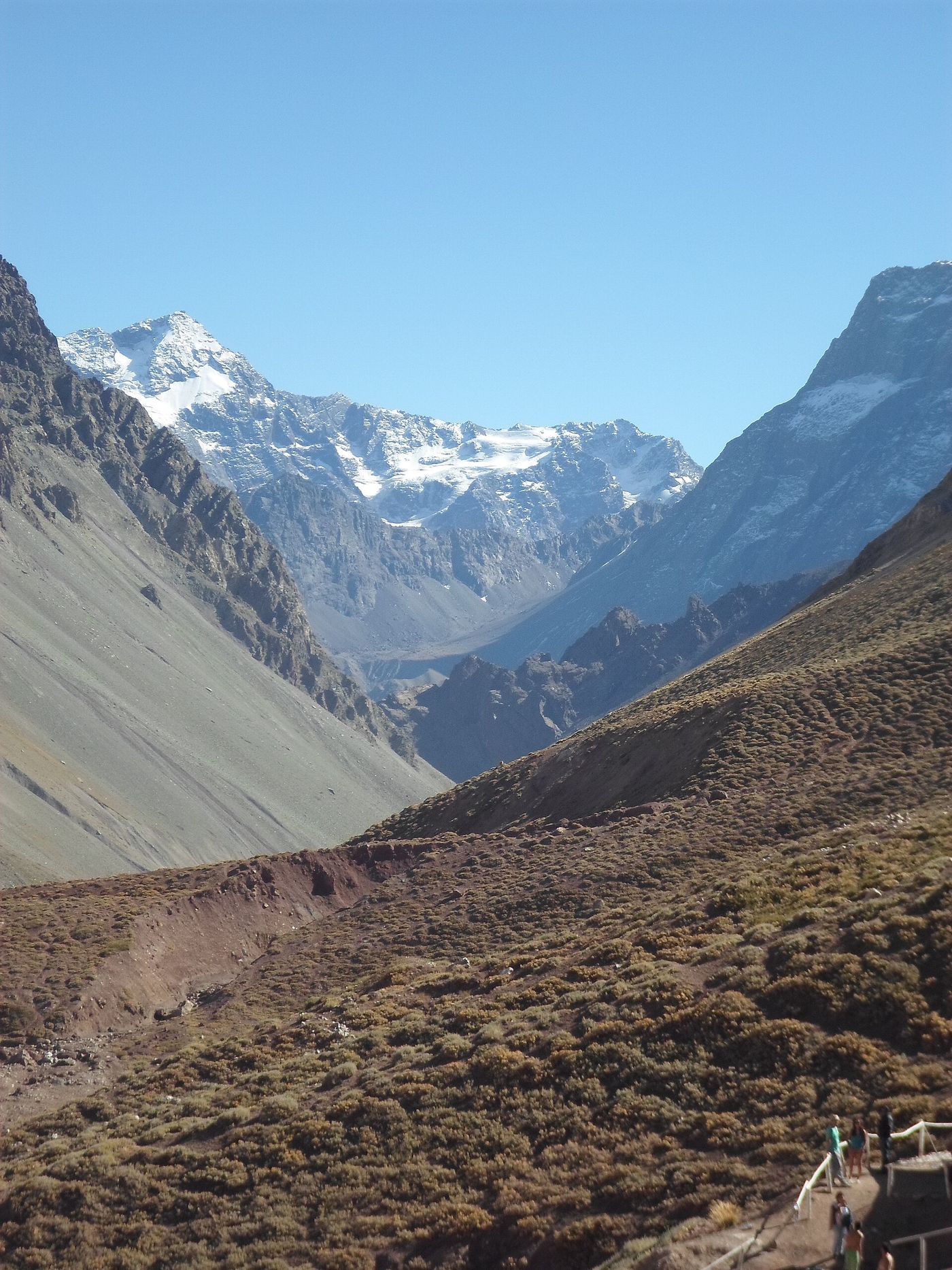
At km 89 of route G-25, past Baños Morales, the road ends at the Termas Valle de Colina, natural hot pools terraced into the mountainside. Chile’s tourism board lists entry from CLP 10,000 (about USD 11), payable only in cash, and recommends checking road conditions and hours on the operator’s site before going (post updated January 2026). It is the most remote stop in the valley and the one where a car with decent clearance, or a tour, matters most.
Is it worth it? If you like hot springs and can spare the whole day, it’s a memorable way to end a trip up the Cajón, soaking in warm water with the Andes all around. If you have to be back in Santiago by evening, the drive is too long for a soak.
Is the Cajón del Maipo worth a day trip?
Yes, if you want mountains rather than city sights: it’s one of Santiago’s most accessible slices of the Andes, with rafting, riding, hiking and hot springs. But the best of it is two and a half hours away, with rules, cutoffs and Sunday traffic. Start early, pick one stop, and go midweek if you can.
Who it suits:
- Hikers and photographers, for El Morado’s lagoon trail and the high valley around Baños Morales.
- Families and groups, for a day of rafting, riding and swimming at San Alfonso, with no long drive to the top.
- Travelers with only one day for nature, since few trips from Santiago put you this deep into the Andes this quickly.
Who might skip it:
- Visitors on a very short trip, who will get more from Cerro San Cristóbal or a foothill trail inside the city for a fraction of the time.
- Anyone set on El Yeso between April and August without booking a tour, since you simply can’t drive up.
- People who hate long drives, because the top of the valley is a five-hour round trip before you’ve walked a step.
For how the Cajón compares with the wine valleys, the coast and the ski resorts, see our comparison of day trips from Santiago.
El Morado in 2026: what the hike is now
Monumento Natural El Morado used to be sold as “the glacier hike near Santiago”. It isn’t any more, at least not to the glacier itself. Here is what CONAF and the park’s ticketing site said when we checked in October 2026:
| Detail | What applies |
|---|---|
| Trail | Sendero Glaciar San Francisco, 6 km, about 5 hours round trip, medium difficulty |
| How far you can go | To the lagoon only; the glacier and its base are closed to visitors because of unstable ground |
| Summer hours (October to March) | Tuesday to Sunday, 08:30-17:30 |
| Winter hours (April to September) | Tuesday to Sunday, 08:30-17:00 |
| Last entry | 12:30, all year |
| Closed | Mondays |
| Tickets | Sold through Pases Parques; nationals and foreigners buy in separate transactions |
| Winter gear | Proper snow-hiking boots and gaiters are mandatory, and visitors without them are refused entry |
| Altitude | Above 1,750 m |
| Hazards listed | Rockfall, avalanches, snowfall and flooding, May to September |
The ticketing site also notes that in some conditions the trail is open only as far as the Panimávida sector, so the lagoon itself isn’t guaranteed. Hours and days can change with the weather or safety decisions. Check Pases Parques the day before.
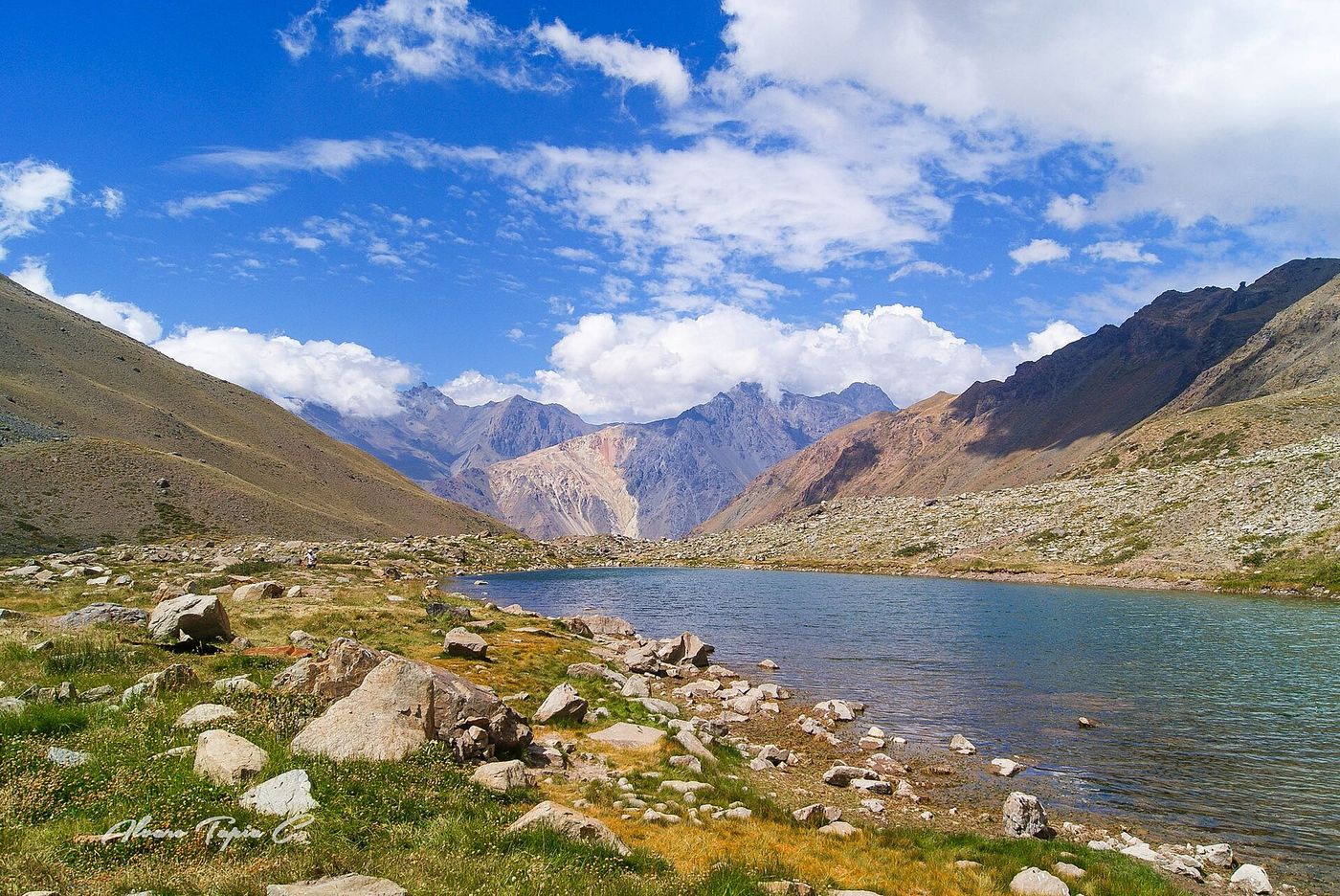
What the walk is like. The trail leaves Baños Morales and climbs steadily up the valley of the Morales stream, through scrub and open meadows, with the walls of the valley rising on both sides and Cerro El Morado ahead. The lagoon sits below the mountain, with the glacier hanging above it, and the view across the water is the reward. It is a long morning rather than a technical climb, but the altitude makes it feel harder than the numbers suggest, and the sun at this height is fierce.
The rules. CONAF prohibits fires of any kind, pets, camping (except for mountaineers on approved expeditions), drones without its authorization and leaving the marked trail, and it asks you to carry out all your rubbish. A notice about avian influenza asks visitors to take preventive care around wildlife. None of this is unusual, but rangers enforce it.
The 12:30 rule is the one that catches people. If you drive up from Santiago on a Saturday morning and hit traffic, you can arrive at 12:45 and be turned away after two and a half hours in the car. Leave Santiago by 08:00 at the latest, or take the 08:30 Turismo Montaña bus that CONAF lists for El Morado.
What does a day in the Cajón del Maipo cost?
A self-drive day costs fuel plus entry fees: CLP 3,450 for El Yeso, the El Morado ticket from Pases Parques, and from CLP 10,000 in cash for the Colina hot springs. Rafting with picnic area costs CLP 35,000 at the Cascada de las Ánimas. Tours cost more but solve transport, El Yeso access and cutoffs.
| Item | Price | About (USD) | Checked |
|---|---|---|---|
| Embalse El Yeso, adult entry | CLP 3,450 | 3.60 | September 2026 |
| Termas Valle de Colina, entry | From CLP 10,000, cash only | From 11 | January 2026 (chile.travel) |
| Cascada de las Ánimas, rafting with picnic area | CLP 35,000 | 37 | October 2026 |
| El Morado entry | Via Pases Parques; not displayed publicly | – | October 2026 |
| Metro to Bellavista de La Florida | CLP 735-895 | Under 1 | September 2026 |
The costs that surprise people are the ones you can’t pay by card. The hot springs take cash only, and you can’t count on cards on the valley buses or at the roadside stalls and small shops. Bring more cash than you think you need, in small notes. For a whole-trip budget, see what a trip to Santiago costs.
When is the best time to visit?
December to March is the best time: everything is open, the river is high enough for rafting and El Yeso can be reached by car. April and May are quieter and beautiful, with autumn color, but El Yeso closes to private cars. Winter needs a tour and snow gear.
| Season | What it’s like | What’s open | Verdict |
|---|---|---|---|
| December to March (summer) | Hot in the lower valley, perfect at altitude; river high with snowmelt | Everything, including rafting and El Yeso by car | The best season, and the busiest at weekends |
| April and May (autumn) | Poplars turning gold along the river; cool mornings | El Yeso closed to private cars from April; El Morado on winter hours | Beautiful, quiet, and the best time for photographs of the lower valley |
| June to August (winter) | Snow on the upper valley; short days | El Yeso tour only; El Morado with mandatory snow boots and gaiters | For hardy visitors, with a tour |
| September to November (spring) | Snowmelt, waterfalls in full flow, green lower valley | El Yeso’s car ban ends after August, though in 2026 the operator was still in winter mode in mid-September; summer hours at El Morado from October | Very good, especially in November |
In January and February, the summer holidays fill the valley at weekends, so a Tuesday or Wednesday is far quieter. Fiestas Patrias on 18-19 September sends half the city to the countryside, and the Cajón is one of the obvious escapes. For the city’s month-by-month weather, see Santiago weather by month.
Three ways to do the day
By car, the full valley. Leave Santiago by 07:30. Coffee on the plaza at San José de Maipo around 08:30, then straight up to Baños Morales to be at El Morado well before the 12:30 last entry. Walk to the lagoon and back, which takes most of the middle of the day. On the way down, stop at the Cascada de las Ánimas for a late lunch, or detour to El Yeso if it’s open to cars and you still have the energy. Be back below San José de Maipo before 16:00 on a weekend.
By bus, the lower valley. Take Metro Line 5 to Bellavista de La Florida and Metrobús 72 up the valley. Spend the morning in San José de Maipo, then continue to San Alfonso for an afternoon at the Cascada de las Ánimas, booked ahead for rafting or riding. Return by bus before dark. This is the cheapest good day in the Cajón and needs nothing more than a reservation and some cash.
Overnight, the best way. Stay a night at San Alfonso or in the upper valley and the traffic, the 12:30 cutoff and the long drive all stop mattering. You can be at El Morado for the opening and back down before the day-trippers arrive. For bases in the city itself, see our guide to where to stay in Santiago.
Where to eat and sleep in the valley
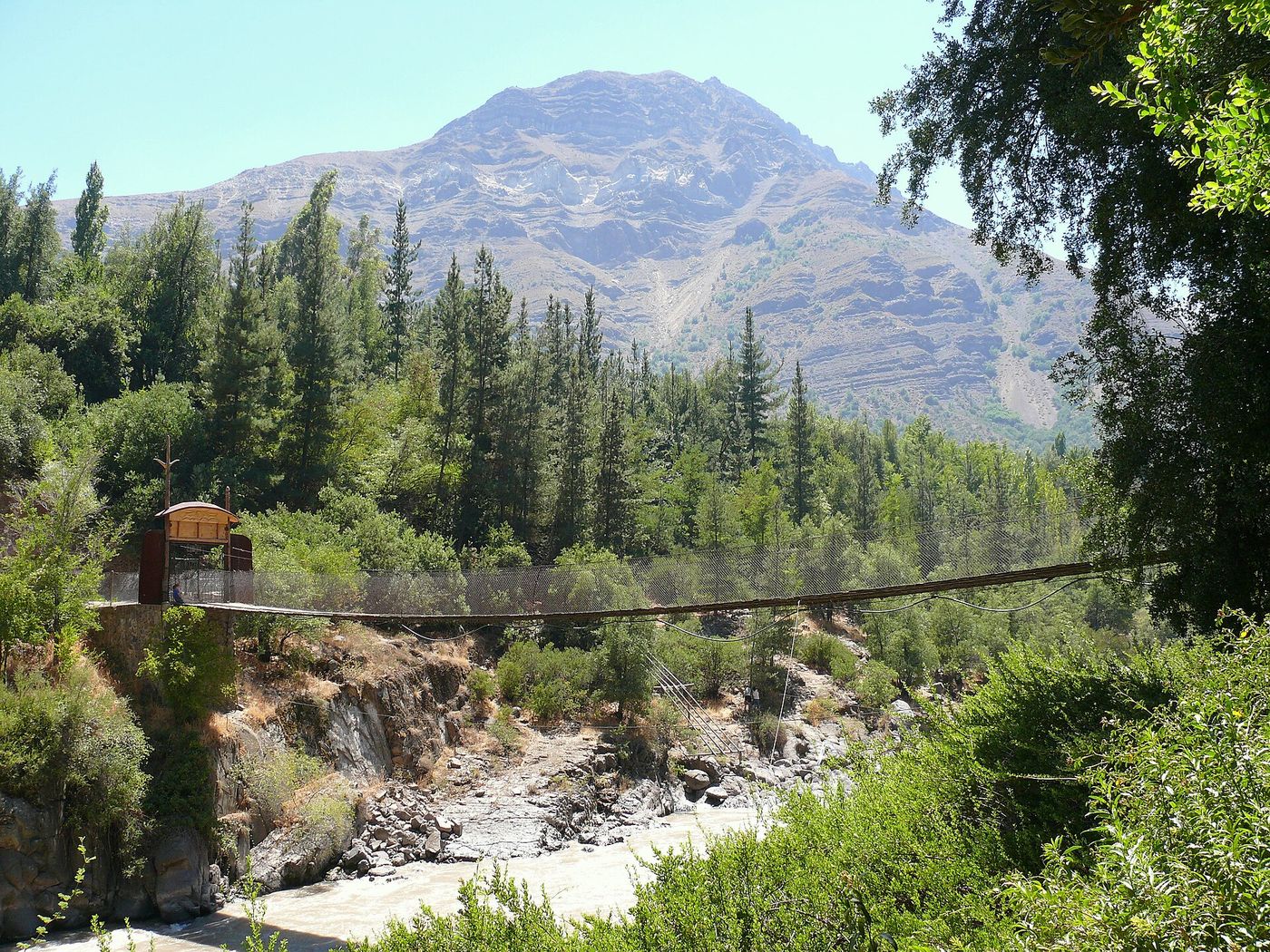
Eating. The lower valley is easy. San José de Maipo’s plaza has cafés and places for a long lunch, and the road on toward San Alfonso has small restaurants and stalls selling clay-oven empanadas and fresh bread, busiest at weekends. The Cascada de las Ánimas has its own restaurant, La Tribu, along with a café and a pizzeria and brewery called Jauría (checked October 2026). Above San Alfonso the options thin out quickly, and at El Yeso there is nothing at all. For any day that goes past the middle valley, pack a proper lunch and more water than you think you’ll drink.
Sleeping. One night in the valley changes the whole trip. You miss the Sunday traffic, you can be at the El Morado trailhead when it opens at 08:30 instead of racing the 12:30 cutoff, and you get the stars, which up here, away from the city’s glow, are the point of the astronomy tours the Cascada de las Ánimas runs. The Cascada itself offers lodge suites, riverside suites, domes, cabins and rooms (checked October 2026), and there are cabins and small guesthouses along the road through El Melocotón and San Alfonso. Book ahead for summer weekends and Fiestas Patrias.
Camping. CONAF doesn’t allow camping in El Morado except for mountaineers on approved climbs, and wild camping by the reservoir at El Yeso isn’t a good idea for the same reasons the area has rules at all. If you want to camp, use an established campground in the lower or middle valley and ask about fire rules on arrival; outside the parks, too, fire is the risk that matters most in a dry Andean summer.
What to bring for a day in the Cajón
The Cajón catches people out in small ways. This is the checklist that avoids most of them:
- Cash in small notes. The Valle de Colina hot springs take cash only, and you can’t count on cards on the buses or at the roadside stalls.
- A full tank. Fill up before you start climbing out of Puente Alto.
- Water and lunch for anything above San Alfonso.
- Layers. At 2,500 m the air is cool even on a summer afternoon, and the wind at El Yeso cuts through a T-shirt. A fleece and a windproof shell are enough in summer; in winter, proper cold-weather gear.
- Sun protection. Hat, sunglasses and high-factor sunscreen. The sun at altitude burns faster than it does in the city.
- The right shoes. Hiking shoes for the El Morado trail in summer. In winter, the park requires snow-hiking boots and gaiters and turns away visitors without them.
- Offline maps and a charged phone, since signal disappears in the upper valley.
- A swimsuit and towel if the hot springs are on the plan.
- A bag for your rubbish, because there are no bins where you’ll need one.
For the rest of a Santiago trip, our list of what to pack for Santiago covers the city and the seasons.
Pairing the Cajón with Pirque’s wineries
Pirque sits at the mouth of the Cajón, and on a map the two look like an obvious pair: mountains on the way up, wine on the way down. In practice, the combination only works if nobody in your car is driving after the tasting, and the mountain road plus the tasting makes for a very long day.
The version that works is a lower-valley morning with a late-afternoon tasting and someone else at the wheel: San José de Maipo and the river in the morning, then Pirque on the way back for one of Concha y Toro’s later experiences, such as the three-and-a-half-hour Diablo Wine Sunset at CLP 60,000 (about USD 63; checked October 2026), which the winery sells with an Uber transport option. The version that doesn’t work is El Morado or El Yeso followed by a tasting, which crams five hours of driving and a hike in front of the wine.
For the wineries themselves and how to reach them, see our Maipo Valley wine tour guide.
Safety, altitude and accessibility
Altitude and sun. El Morado’s trail starts above 1,750 m and El Yeso sits at about 2,500 m. Most visitors feel nothing worse than shortness of breath, but walk slowly, drink water, and wear a hat and high-factor sunscreen even on cool days.
Weather and terrain. CONAF lists rockfall, avalanches, snowfall and flooding between May and September as the hazards in El Morado, and the high valley can swing from sun to storm in an afternoon. Stay on marked trails, turn back if the weather turns, and check conditions before you set out.
The river. The Maipo is cold and fast, and rafting belongs with a licensed operator, with a helmet and life jacket. Don’t swim in the main river, however hot the day.
The road. Drive slowly on the curves, watch for cyclists and buses, and avoid driving down after dark in winter. In winter conditions, the upper road can need chains or close altogether; ask before you go.
Signal and cash. Phone coverage is patchy above San Alfonso and absent at El Yeso. Tell someone your plan, download offline maps, and carry cash.
Accessibility. The Cajón is mixed for visitors with limited mobility. San José de Maipo’s plaza and the restaurants at San Alfonso are reachable by car with little walking. El Morado’s trail is a long, uneven mountain path, and El Yeso has no facilities at the water’s edge. Organized tours are the most practical way to see the valley from a vehicle; ask about the terrain at each stop before booking. Our guide to accessible Santiago covers transport and the wider city, and the Santiago safety guide covers petty crime in the city before and after the trip.
Leave no trace in the Cajón
The valley takes heavy weekend traffic, and the scars show in litter at popular stops. The rules are simple: carry out everything you carry in, including fruit peel; no fires anywhere, which in El Morado is an offense punishable under Chilean law; dogs stay at home for El Morado; stay on the trail, especially on the scree slopes where shortcuts start erosion gullies; and don’t fly a drone in the park without CONAF’s authorization. At El Yeso, which has no bins, take your rubbish back to Santiago.
Once you’ve done the Cajón, the Andes outdoors guide is the place to pick the next trip, from the foothill trails inside the city to Yerba Loca and La Campana.
Frequently asked questions
How far is the Cajón del Maipo from Santiago?
San José de Maipo, the valley’s main town, is about 45 km and an hour from the city. The Cascada de las Ánimas at San Alfonso is about 60 km, Baños Morales and El Morado 93 km (about 2.5 hours), and the Valle de Colina hot springs sit at km 89 of route G-25, at the end of the road.
Can you get to the Cajón del Maipo by public transport?
Yes, partly. Metrobús 72 runs from Metro Bellavista de La Florida (Line 5) up the valley, and Buses Turismo Montaña runs an 08:30 high-season departure from Américo Vespucio and Vicuña Mackenna, reservations +56 2 2850 0555, which CONAF lists for El Morado. El Yeso effectively requires a tour.
Can you still hike to the El Morado glacier?
No. As of October 2026, CONAF only allows walks as far as the lagoon; the San Francisco glacier and its base are closed because of unstable ground. The trail is 6 km and about 5 hours round trip, last entry is 12:30, and the park closes on Mondays.
Is Embalse El Yeso open?
It depends on the season and changes often. In September 2026 it opened Thursday to Monday, 08:00-18:00, last entry 11:00, CLP 3,450. Private cars are banned on the access road from km 21.7 between April and August, and the operator was requiring a guide or tour. Check the week you travel.
What is there to do in the Cajón del Maipo?
Rafting on the Maipo in summer, horseback riding, hiking to the El Morado lagoon, visiting Embalse El Yeso, soaking in the Valle de Colina hot springs, and slower things: lunch in San José de Maipo, a zipline or a waterfall walk at the Cascada de las Ánimas, and stargazing tours.
How much does a Cajón del Maipo day trip cost?
Self-drive costs fuel plus entries: CLP 3,450 for El Yeso, the El Morado ticket via Pases Parques, and from CLP 10,000 in cash for the Colina hot springs. Rafting with a picnic area costs CLP 35,000 at the Cascada de las Ánimas. Bring cash, since many places don’t take cards.
When is the best time to visit the Cajón del Maipo?
December to March, when everything is open, rafting runs and El Yeso is reachable by car. April and May bring autumn color and quiet roads but close El Yeso to private vehicles. Avoid summer weekends if you can, and leave by 16:00 on Sundays to beat the traffic.
Do you need a tour for the Cajón del Maipo?
For El Yeso, in practice yes. For San José de Maipo and San Alfonso, no; buses and a booked activity are enough. For El Morado, either a car leaving Santiago by 08:00, the high-season 08:30 bus or a tour, because the last entry is 12:30.
El Yeso changes more than any other stop in the valley. On 1 October 2026 its operator still had the park in winter mode, with entry only through certified guides and tour operators, the reservoir sector closed and a guided route from the Puente Caya sector toward the natural lagoons of El Encañado and Laguna Negra instead. Our Embalse El Yeso travel guide explains both modes, how to check which one applies, and what to ask a tour before you book.
Sources
- CONAF: Monumento Natural El Morado
- Pases Parques: Monumento Natural El Morado
- Chile Travel: Cajón del Maipo destination page
- Chile Travel: Cajón del Maipo hot springs and landscapes
- Cascada de las Ánimas
- Visit Santiago: mountain and nature
- Ilustre Municipalidad de San José de Maipo
- Metro de Santiago: fares and hours
- Government of Canada: travel advice for Chile
- Servicio de Impuestos Internos: dólar observado 2026
Image credits
| Photo | Credit |
|---|---|
| Baños Morales (top of page) | Nd0806, CC BY-SA 3.0, via Wikimedia Commons |
| San José de Maipo church | Marco Antonio Correa Flores, CC BY-SA 3.0, via Wikimedia Commons |
| Upper Cajón del Maipo | Nelson Pérez, CC BY-SA 3.0, via Wikimedia Commons |
| Cascada de las Ánimas waterfall | Marcelo Ois Lagarde, CC BY-SA 3.0, via Wikimedia Commons |
| Old railway viaduct | Anna-Kim Pagé Cornforth, CC BY-SA 3.0, via Wikimedia Commons |
| Embalse El Yeso | R.A.T.P., CC BY-SA 3.0, via Wikimedia Commons |
| Horses at Baños Morales | Rpinto, CC BY-SA 3.0, via Wikimedia Commons |
| Laguna El Morado | Alvaro Tapia from Curicó, Chile, CC BY-SA 2.0, via Wikimedia Commons |
| Upper valley near Valle de Colina | Gallardoval, CC BY-SA 3.0, via Wikimedia Commons |
| Bridge at Cascada de las Ánimas | Marcelo Ois Lagarde, CC BY-SA 3.0, via Wikimedia Commons |