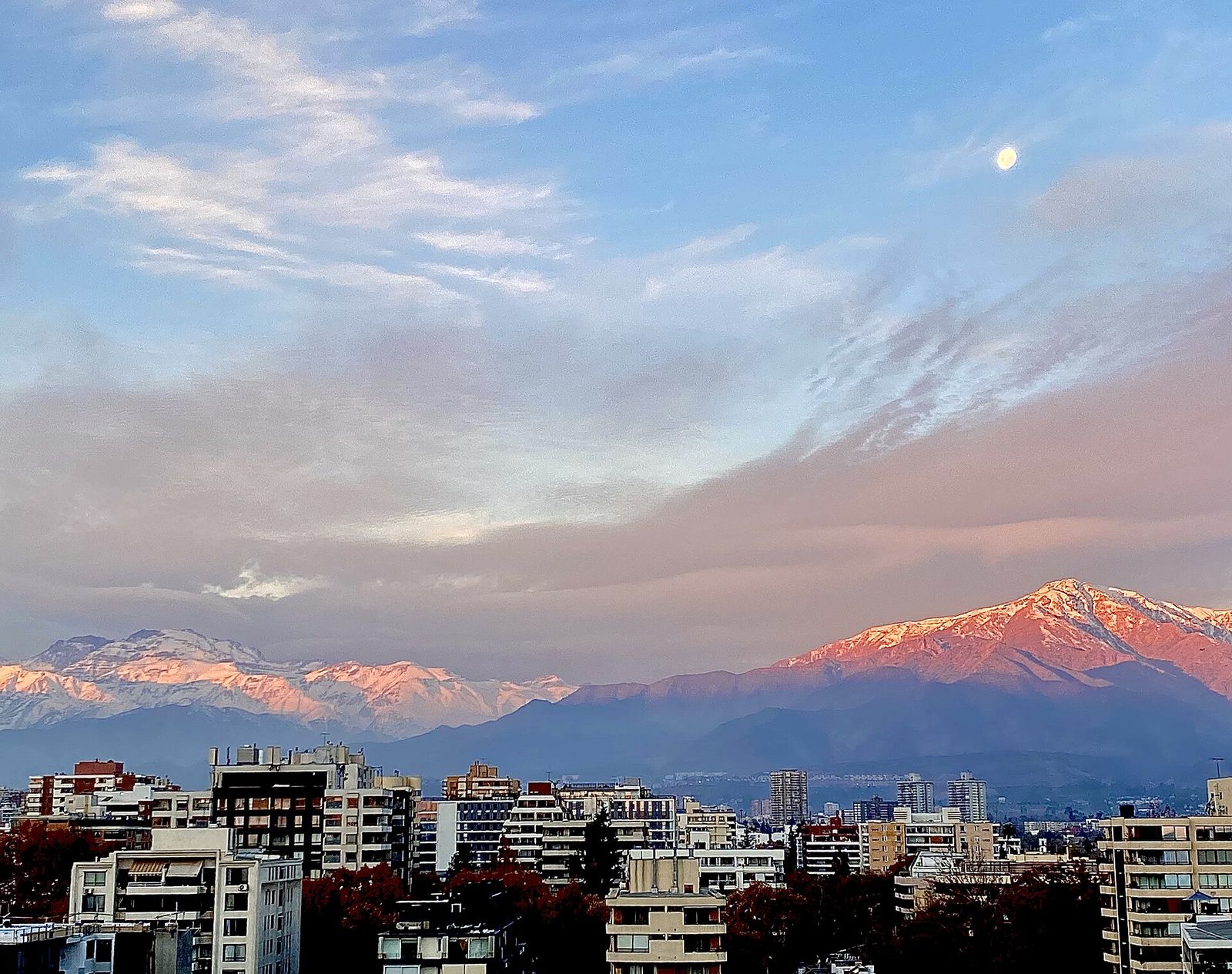
The best time to visit Santiago Chile is March to April or September to November: warm, dry days, clear air and no crowds. Summer is hot and empties out, winter is cold, wet and smoggy. Below, the official 1991-2020 climate normals, plus timing by what you actually want from the trip. Checked September 2026.
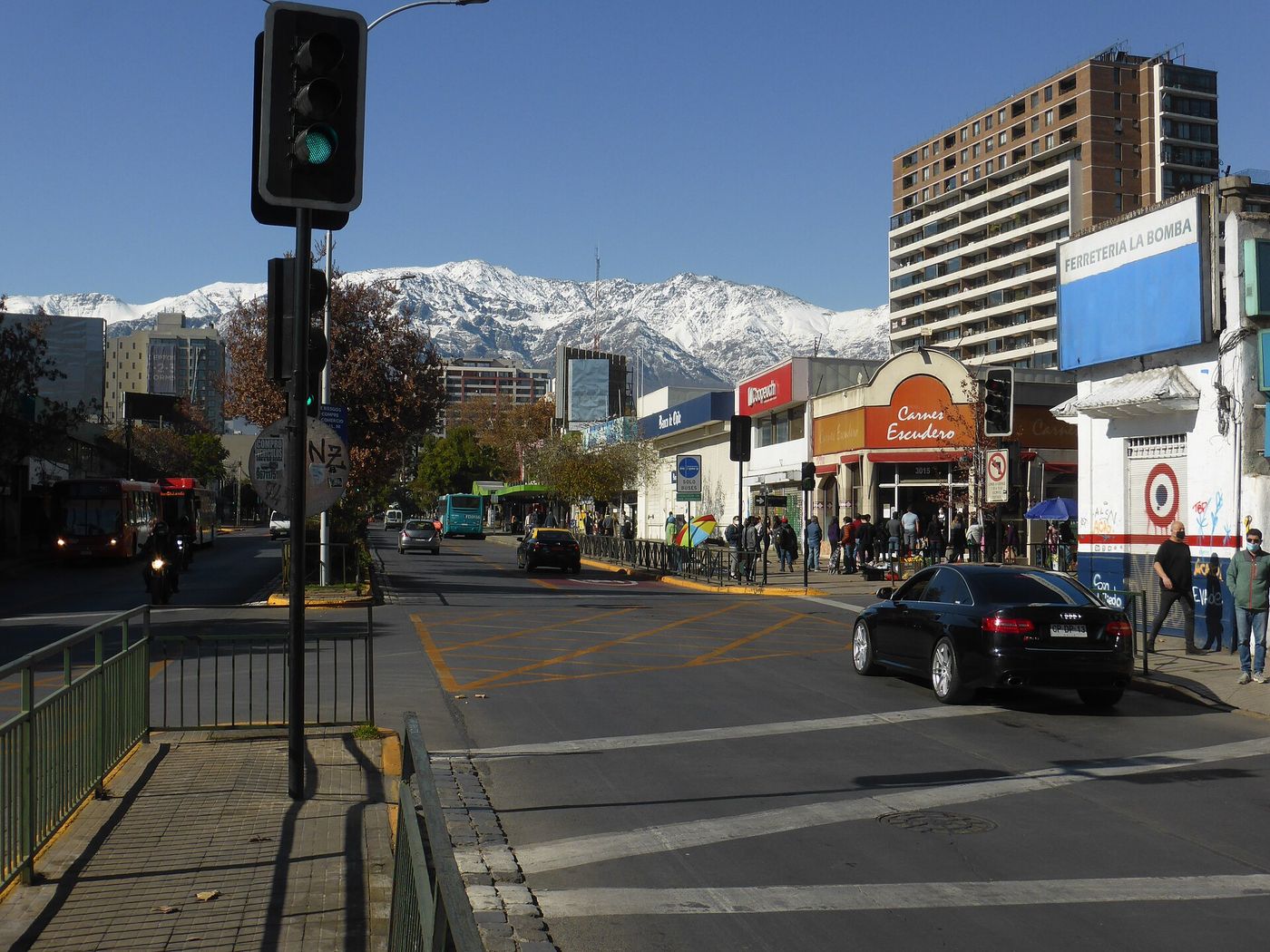
Santiago has a Mediterranean climate that is drier than most people expect: the official normals put annual rainfall at around 219 mm, which is less than Madrid, less than Los Angeles, and concentrated almost entirely into four winter months. The city’s weather is not the main timing question. Air quality and mountain visibility are.
The short answer, by what you want
| You want | Go in | Why |
|---|---|---|
| The best all-round trip | March-April, October-November | Warm, dry, clear, uncrowded |
| Clear Andes views | October-December, March-April | Winter haze gone, snow still on the peaks |
| Wine harvest | March-April | Vendimia season in the Maipo and Casablanca valleys |
| Skiing | July-August | Peak season at Valle Nevado, La Parva, El Colorado |
| Hiking the high Andes | December-March | El Yeso and El Morado accessible, roads open |
| The cheapest rooms | June-July | Low season, 30-40% below shoulder rates |
| A big national party | 18-19 September | Fiestas Patrias, with almost everything else closed |
| Beach day trips | January-February | The Pacific is cold year-round but tolerable then |
| To avoid crowds entirely | May, August | Quiet, cheap, and you take what the weather gives |
If you have no constraints at all, October is the single best month: 20°C days, clear air, snow on the peaks, wildflowers in the coastal range, and shoulder-season prices.
Santiago’s climate in numbers
These are the official normals published by Chile’s Dirección Meteorológica for the Pudahuel station, covering the 1991-2020 period, checked September 2026. Pudahuel is the airport station on the western edge of the city; the centro typically runs one to two degrees warmer.
| Month | Mean high (°C) | Mean low (°C) | Approx. rainfall (mm) | In practice |
|---|---|---|---|---|
| January | 30.2 | 12.4 | 0 | Hot, dry, empty city |
| February | 30.1 | 13.0 | 0.3 | The same, with more closures |
| March | 28.6 | 11.4 | 1 | Excellent: warm days, harvest |
| April | 25.7 | 9.5 | 4 | Excellent: cool mornings, clear |
| May | 21.7 | 5.2 | 13 | Cooling fast; first rain |
| June | 17.3 | 3.9 | 34 | Cold, grey, smog begins |
| July | 15.0 | 3.5 | 67 | Wettest month; worst air |
| August | 14.6 | 3.0 | 38 | Cold; ski season peak |
| September | 18.5 | 4.9 | 34 | Warming, variable, Fiestas Patrias |
| October | 20.3 | 6.5 | 17 | The best month |
| November | 23.7 | 8.3 | 8 | Warm, dry, long evenings |
| December | 27.6 | 11.1 | 4 | Hot, city starting to empty |
Two notes on that table. The rainfall figures are derived from the cumulative precipitation series on the same official page, so treat them as approximate monthly totals rather than published monthly normals. And the mean lows understate how cold a Santiago winter feels indoors, because Chilean buildings are notoriously under-heated and under-insulated; 3°C outside with no central heating is a different experience from 3°C in northern Europe.
When is the best time to visit Santiago?
March to April and September to November. Days sit between 18°C and 29°C, rainfall is minimal, the air is clear enough to see the Andes, and hotel rates sit below both the January peak and the Fiestas Patrias spike. October is the strongest single month; April is the strongest for wine.
The reasoning behind that, in order of weight:
- Air quality. Santiago sits in a basin ringed by mountains, and in winter a temperature inversion traps pollution against them. This is not a minor aesthetic issue: it removes the mountains from view and, during declared episodes, restricts outdoor activity.
- Mountain visibility. The Andes are the reason Santiago’s setting is remarkable. On a clear October morning the 5,000 m wall of the cordillera fills the end of every eastbound street. In July you often cannot see it at all.
- Temperature. January regularly passes 32°C with fierce high-altitude sun, which changes what you can do between 13:00 and 17:00.
- Who else is there. Santiaguinos leave the city in January and February for the coast and the south, which makes summer oddly quiet in the city and packed at the beaches.
Summer: December to February
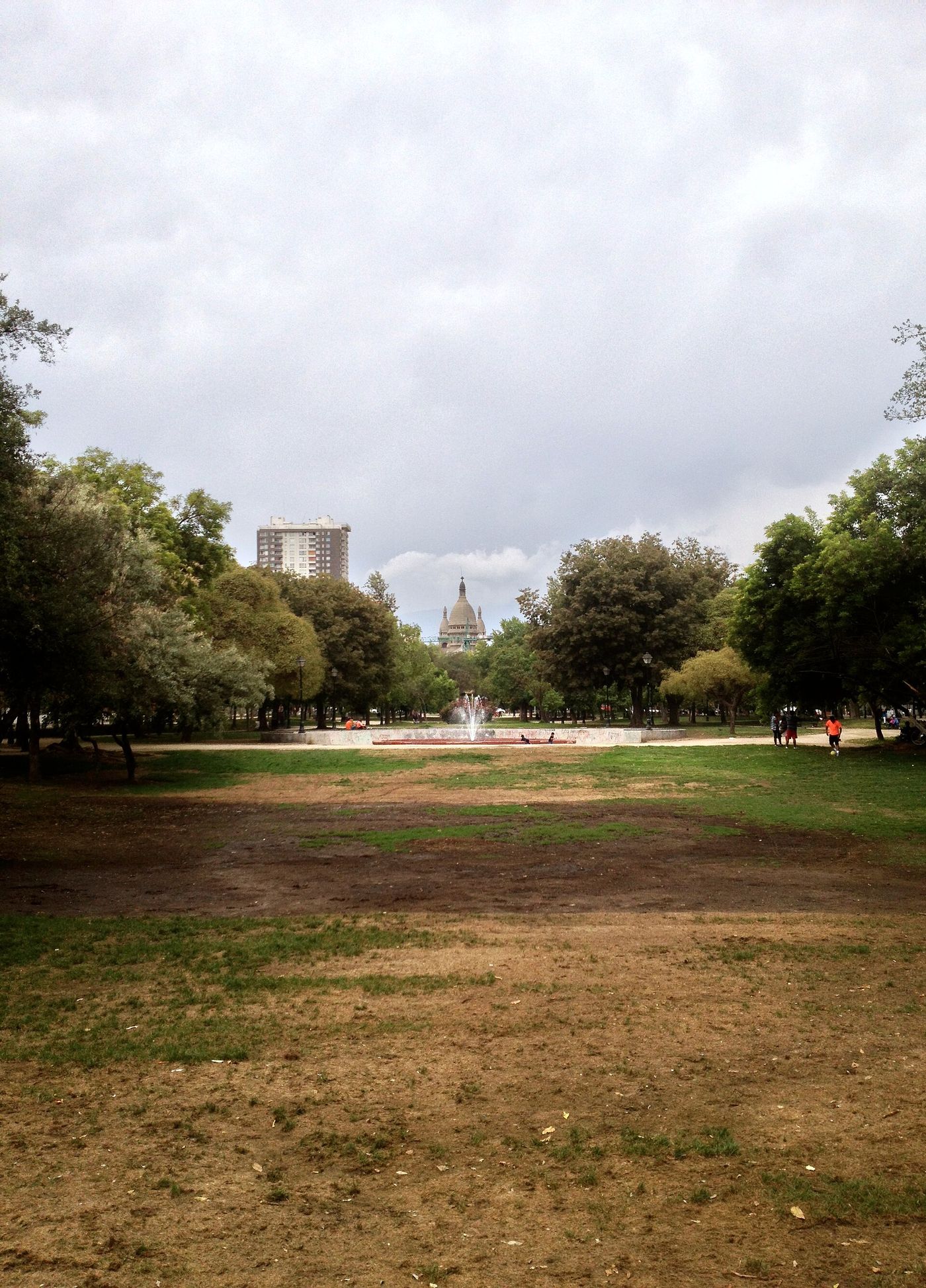
Hot, dry and bright, with mean highs above 30°C in January and February and essentially no rain. Evenings are long and warm, and the city stays outside until midnight.
What is good. Long daylight. The high Andes are at their most accessible, with Embalse El Yeso open to private vehicles and the El Morado trail at its best. The coast is at its warmest, which in Chile means the water is merely very cold rather than painfully so. Outdoor dining, rooftop bars and the Parque Metropolitano pools are all in season.
What is not. The heat is genuine and the sun at 570 m with low humidity burns quickly. Many restaurants, particularly good small ones in the centro, close for two or three weeks in February when their owners go on holiday. Hotel prices are at their annual peak in January. And the city itself is half-empty, which some visitors love and others find flat.
How to handle it. Adopt the local rhythm: out early, indoors or at a long lunch from 13:00 to 17:00, back out at 18:00. Cerro Santa Lucía at 19:30 in January is one of the best hours of the year; the same climb at 14:00 is punishing.
Autumn: March to May
The best season in the city, and the least visited by foreigners.
March is still warm, with highs near 29°C, but the edge is off and the city has refilled after the February exodus. It is also vendimia, the grape harvest, with festivals across the Maipo, Casablanca and Colchagua valleys through March and into April. If wine is any part of why you are coming, this is when to come.
April is arguably the single most pleasant month: 25°C days, cool mornings, plane trees turning in Parque Forestal, and almost no rain. Visibility is excellent.
May is the transition. Highs drop to 21°C, the first real rain arrives, and the mountains get their first snow, which makes for spectacular clear days between fronts. It is also cheap, because it falls between seasons for everyone.
Winter: June to August
Cold, damp and hazy in the city; excellent in the mountains an hour away.
Mean highs sit between 14.6°C and 17.3°C, with lows around 3°C, and July brings most of the year’s rain. It does not snow in the city in any normal year, though it snowed memorably in 2017 and the mountains behind the city are white from June.
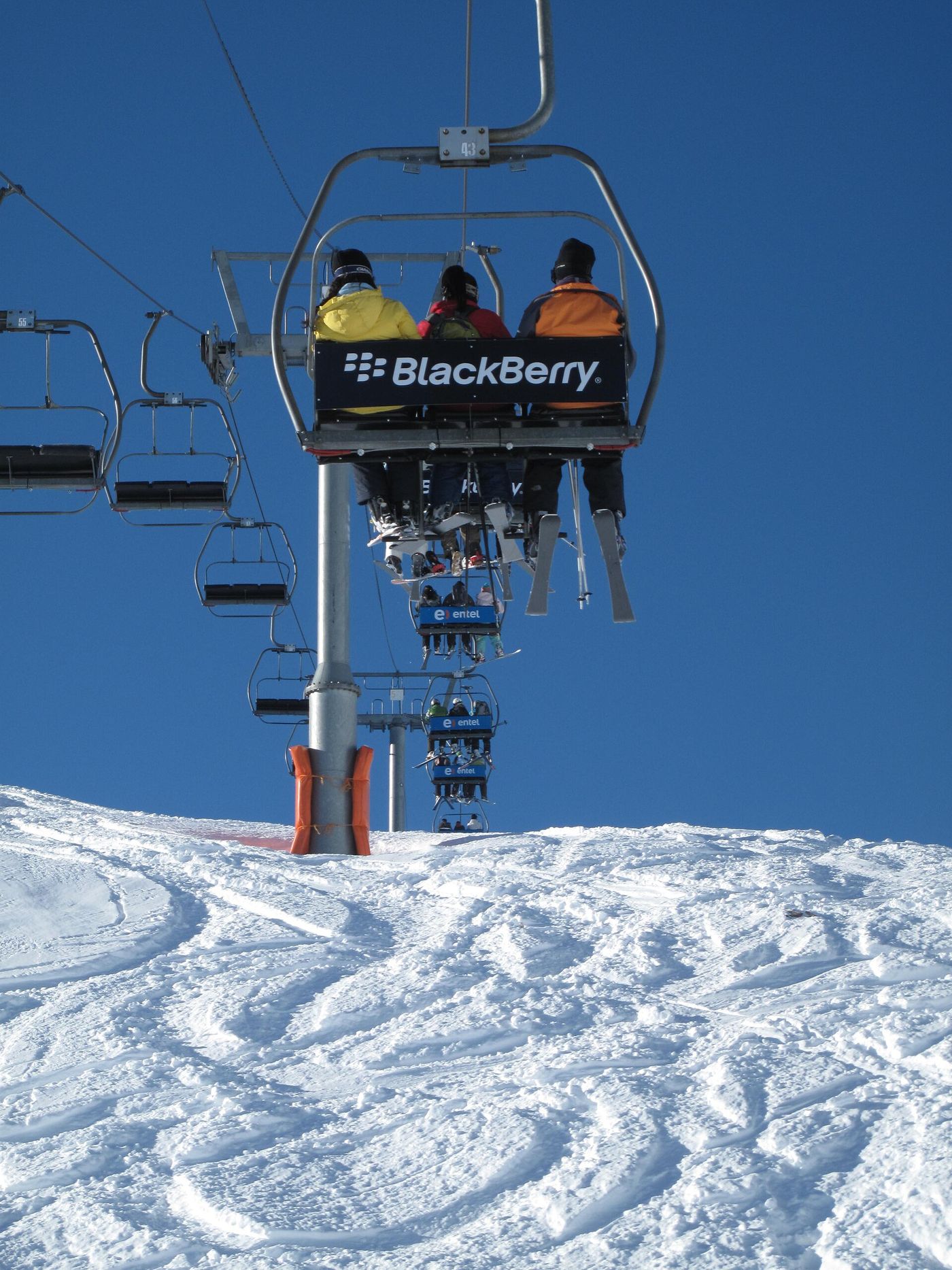
What is good. Ski season at Valle Nevado, La Parva and El Colorado, 90 minutes from Las Condes, with a season running roughly June to September. Hotel rates are at their annual low, 30-40% below shoulder season. Museums are empty. The wine valleys are quiet and the estates give you more attention.
What is not. The smog, which is dealt with in its own section below. Under-heated buildings. Short days, with dark by 18:00 in June. And a long list of seasonal closures: the Embalse El Yeso road is shut to private vehicles April through August, the La Campana summit trail closes June to August, and the road to Baños Morales is unreliable.
Who winter suits. Skiers, obviously. Also anyone whose Santiago is about museums, food, wine and long lunches rather than viewpoints, and anyone whose budget matters more than their photographs.
Spring: September to November
Spring arrives quickly. September is variable, with warm days interrupted by cold fronts and the last of the winter rain, but by the end of the month the air has cleared and the mountains are back.
October is the best month of the year in Santiago. Highs of 20°C, low rainfall, clean air, snow still deep on the peaks, and the coastal range covered in wildflowers if the winter was wet. Hotel prices are reasonable and the city is busy in a pleasant rather than crowded way.
November is warmer at 23.7°C, still dry, with long evenings and terrace season properly underway. It is the last comfortable month before the summer heat.
The one date to handle deliberately is 18-19 September, which is covered below.
What about the smog?
Santiago’s winter air pollution is real and it is the strongest argument against a June-to-August visit. A temperature inversion traps particulates in the basin, visibility drops to a few kilometers, and the city periodically declares environmental alerts that restrict industry and older vehicles. Rain clears it within hours; several still days rebuild it.
What this means in practice for a visitor:
- The mountains disappear. On a bad July day the Andes are simply not visible from the city, which removes most of the point of the viewpoints.
- Paid viewpoints become bad value. Sky Costanera at CLP 25,000 is questionable on a clear day; in a July inversion you are paying USD 26 to look into grey.
- Sensitive people notice it. Anyone with asthma or a respiratory condition should take it seriously and check the daily index, which the environment ministry publishes.
- It is worst in the mornings and in the days following a long dry, still spell. The first clear day after rain is spectacular.
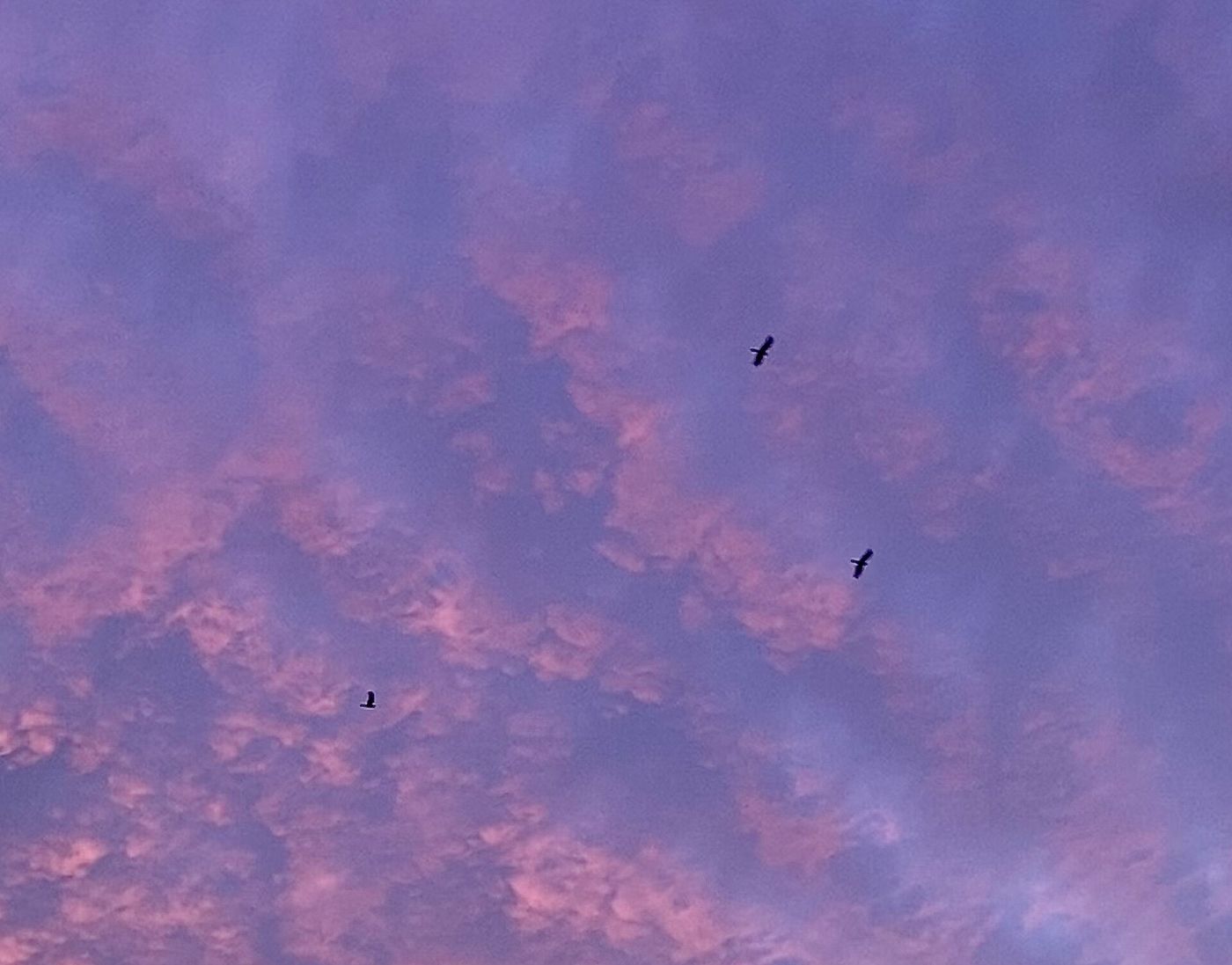
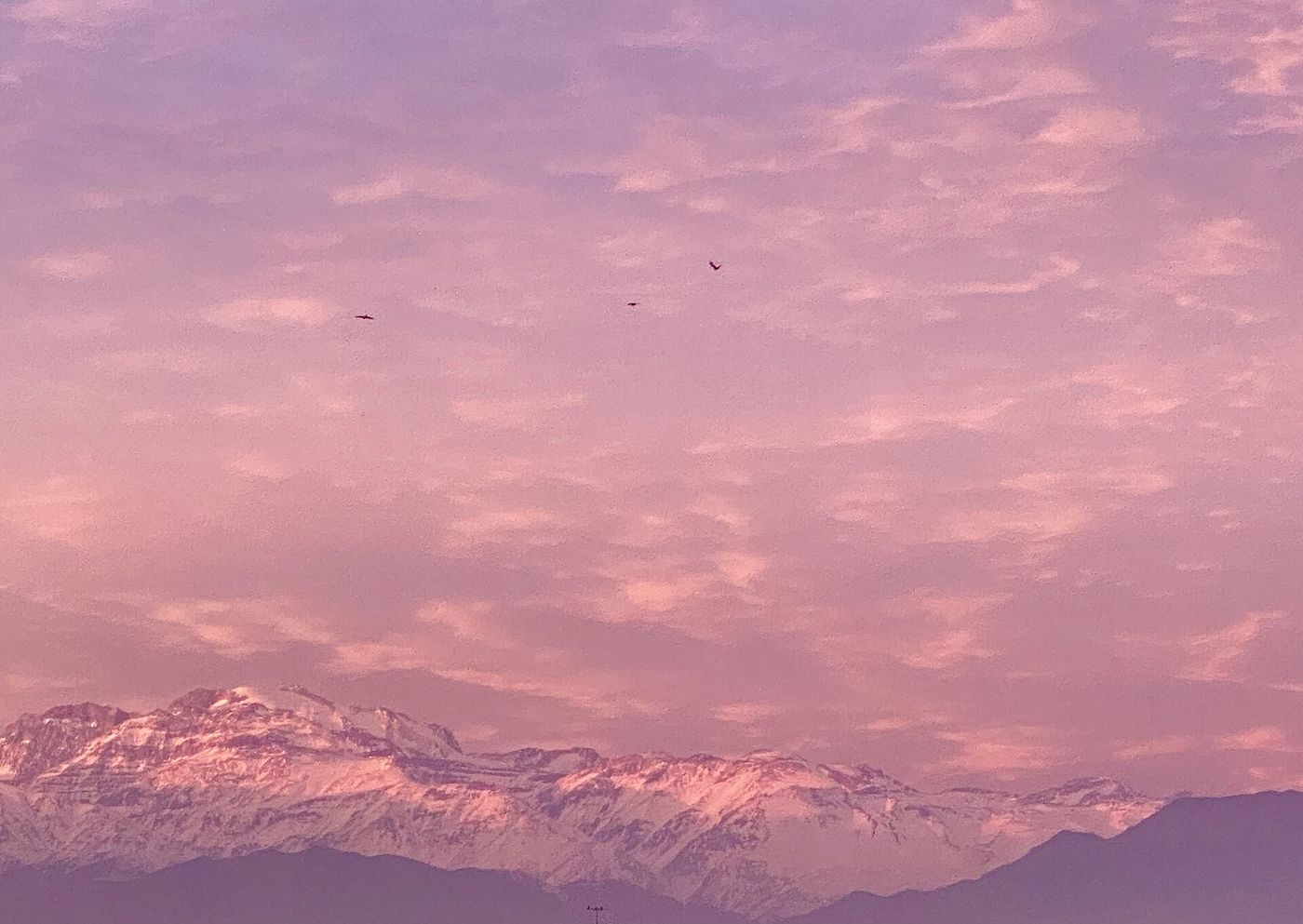
None of this makes winter unvisitable; it makes winter a museums-and-restaurants season rather than a mountains season. And there is one aesthetic consolation: the photochemical haze produces genuinely extraordinary pink and violet sunsets.
When can you see the Andes from Santiago?
Most reliably from October to April, and on the day after winter rain. Spring and autumn give you clear, dry air with snow still on the peaks, which is the combination that makes the city’s setting famous. Midwinter inversions can hide the cordillera for days at a time.
If mountain views are a priority, three tactics help:
- Go up early. Visibility is often best between 08:00 and 11:00 before the day’s haze builds, except in winter when the inversion is worst in the morning.
- Follow the rain. The clearest days of the entire year are the 24 hours after a winter front passes through, when the basin is scrubbed clean and the fresh snow comes right down the range.
- Go higher. Cerro San Cristóbal at 880 m sits above some of the shallower haze layers; the ski road above Farellones sits above all of it.
Month by month, in one table
| Month | Season | Crowds | Prices | The headline |
|---|---|---|---|---|
| January | Peak summer | Low in city, high at coast | Highest | Hot, dry, locals away |
| February | Late summer | Low in city | High | Restaurant closures |
| March | Early autumn | Moderate | Mid | Harvest, warm, excellent |
| April | Autumn | Low | Mid | Best light of the year |
| May | Late autumn | Low | Low | Cheap, cooling, first rain |
| June | Early winter | Low | Lowest | Cold, grey, ski season opens |
| July | Deep winter | Moderate (ski) | Low in city | Wettest, worst air |
| August | Late winter | Moderate (ski) | Low | Cold, best snow |
| September | Early spring | High 15-22 Sep | Spike mid-month | Fiestas Patrias |
| October | Spring | Moderate | Mid | The best month |
| November | Late spring | Moderate | Mid | Warm, dry, long evenings |
| December | Early summer | Rising | Rising | Hot, city emptying |
Every month in detail
January. The hottest month, with mean highs of 30.2°C and effectively no rain. Santiaguinos leave for the coast and the south, so the city is quiet, parking is easy and the traffic is tolerable for the only time all year. Against that, hotel rates are at their peak, the sun is punishing between 13:00 and 17:00, and the beaches at Viña and further north are packed. Santiago a Mil, the international theatre festival, runs through the month and is a real reason to be here. The high Andes are fully open: El Yeso, El Morado, the Cajón del Maipo road to Termas Valle de Colina.
February. Almost identical weather to January, one degree cooler at night. The difference is closures: February is when Chilean small businesses take their holiday, and a frustrating number of good restaurants, some galleries and the occasional small museum shut for two or three weeks. Check individual opening dates rather than assuming. If you are coming in February, weight the itinerary toward the outdoors and the big institutions, which stay open.
March. The month that has everything. Highs of 28.6°C, near-zero rain, the city fully back from holiday, and the grape harvest under way across the Maipo, Casablanca and Colchagua valleys. Vendimia festivals run most weekends, and the wineries are at their most interesting: fruit coming in, tanks filling, the whole place working rather than performing. Lollapalooza Chile usually lands in March and fills central hotels for one weekend, so check the dates if you are booking then.
April. Cool mornings, warm afternoons of around 25.7°C, clear air and the plane trees turning gold in Parque Forestal. Rain is still minimal at roughly 4 mm. This is the best month for photography in the city and the last comfortable month for the high Andes before the El Yeso vehicle ban starts. Hotel prices are at their most reasonable of the good-weather months.
May. The pivot. Highs fall to 21.7°C, lows to 5.2°C, and the first real rain arrives at around 13 mm across the month. The first snow settles on the cordillera, and the days between fronts are spectacularly clear. Prices drop. Día del Patrimonio, when hundreds of normally closed buildings open free to the public, usually falls at the end of the month and is the single best reason to visit in May.
June. Winter proper. Highs of 17.3°C, lows near 4°C, roughly 34 mm of rain, and the first inversions. The days are short, dark by about 18:00. Hotel rates hit their annual floor. The ski season opens, conditions permitting, and the resorts are quiet in the first weeks. In the city it is a museums-and-long-lunch month.
July. The wettest month at roughly 67 mm and the one with the worst air. Highs of 15.0°C feel colder because of under-heated buildings. It is also Chilean school holiday season, so the ski resorts and the roads to them are busy, and domestic flights fill up. The first day after a front passes is one of the best days of the year to be in Santiago: scrubbed air, fresh snow low on the range, and a city that looks like a postcard.
August. Marginally colder than July at 14.6°C but noticeably drier, at around 38 mm. The snow base at the resorts is usually at its best, and the city begins to lift toward the end of the month. Almond and early blossom appears in the parks. Prices are still low, crowds still thin.
September. The most variable month of the year. It can be 26°C and clear, or 12°C and raining, sometimes in the same week. Highs average 18.5°C with around 34 mm of rain. Everything is dominated by Fiestas Patrias in the middle of the month, and the effect on prices, transport and opening hours extends several days either side.
October. The best month, for the reasons set out above: 20.3°C, low rain, clean air, deep snow still on the peaks, wildflowers in the coastal range after a wet winter, and reasonable prices. If you can choose any two weeks of the year, choose these.
November. Warm and dry at 23.7°C, with long light evenings and outdoor dining at its best. Jacaranda and other flowering trees are out in Providencia and Ñuñoa. The high mountain trails are opening as the snow retreats. Prices begin to climb toward the summer peak in the second half of the month.
December. Hot at 27.6°C and drying out, with the city starting to empty from mid-month. The first half is excellent: long days, warm evenings, everything open. The last ten days run into Christmas and New Year, when rates jump, Valparaíso’s fireworks draw enormous crowds to the coast, and the roads out of the city on the 24th and 31st are best avoided.
Daylight, and what it does to a day
The daylight swing matters more than visitors expect, because it changes how much you can fit in.
In December and January, sunrise is around 06:45 and sunset around 20:50 with long twilight after it, which gives you fourteen hours of usable light and a city that eats outside until midnight. In June and July, sunrise is closer to 07:45 and sunset around 17:45, which means a museum-heavy day ends in the dark and the viewpoints have to happen before 17:00.
Chile also runs daylight saving, moving the clocks forward in early September and back in early April, which shifts sunset by an hour in each direction overnight. Two practical consequences: check your flight times carefully if you are travelling in the changeover weeks, and remember that a September trip booked on August’s daylight assumptions will have an extra hour of evening.
Events worth planning around
- Fiestas Patrias, 18-19 September. The national holiday, covered below.
- Vendimia, March-April. Harvest festivals across the wine valleys, with the Maipo and Casablanca events easiest to reach from Santiago.
- Lollapalooza Chile, usually March. A large international festival at Parque O’Higgins that fills the city’s hotels for a weekend.
- Día del Patrimonio, late May. A weekend when hundreds of normally closed buildings open free to the public, including government palaces and private mansions. If your dates are flexible in May, plan around it.
- New Year, 31 December. Fireworks in the city and, much bigger, in Valparaíso, which draws enormous crowds and full hotels along the coast.
- Santiago a Mil, January. A major international theatre and performing-arts festival, one of the reasons January is not a dead month culturally.
Public holidays that close things: 1 January, Good Friday, 1 May, 21 May, 18-19 September, 25 December, plus several religious dates. On any of them, expect museums closed and restaurants on reduced hours.
Fiestas Patrias: go, or avoid?
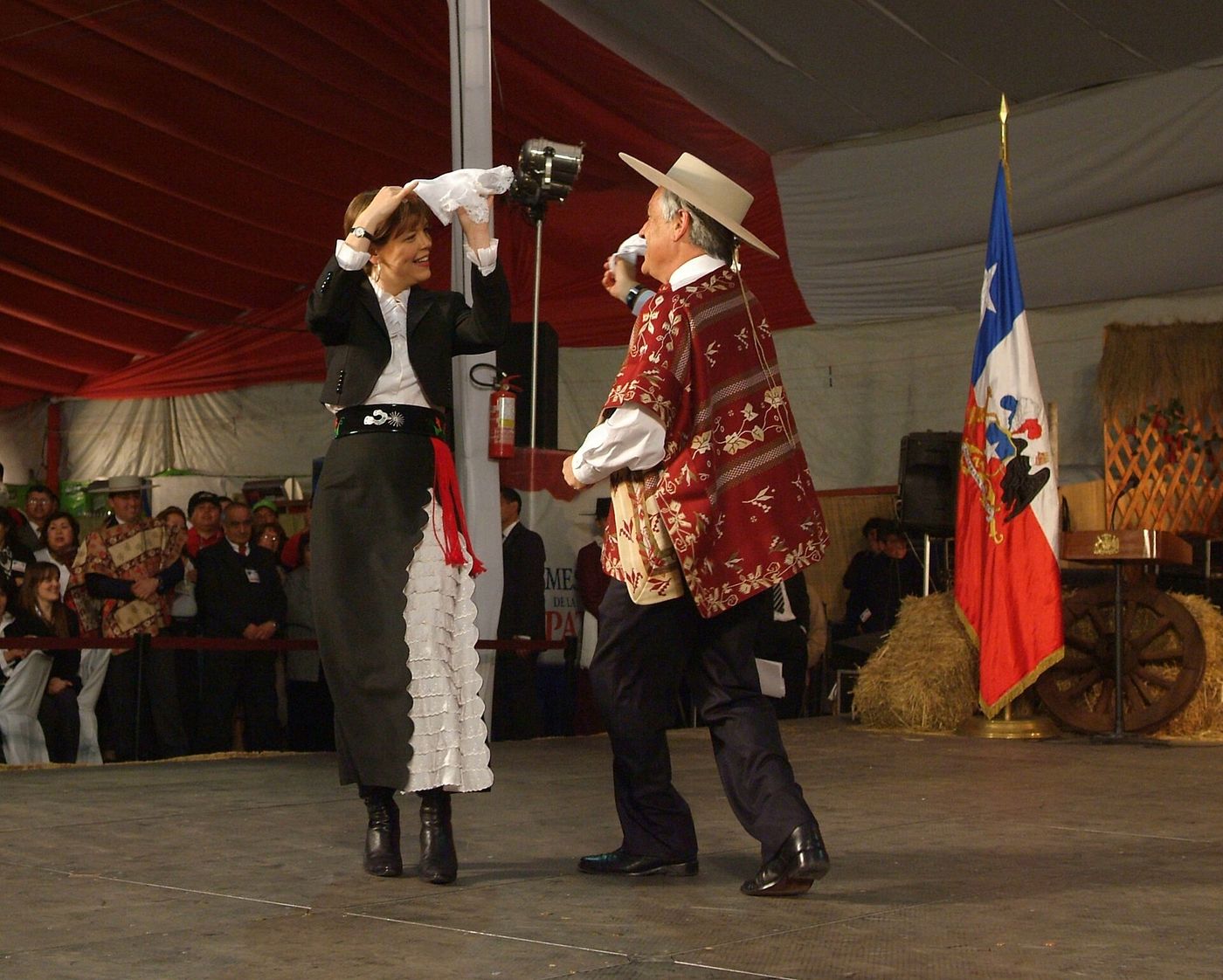
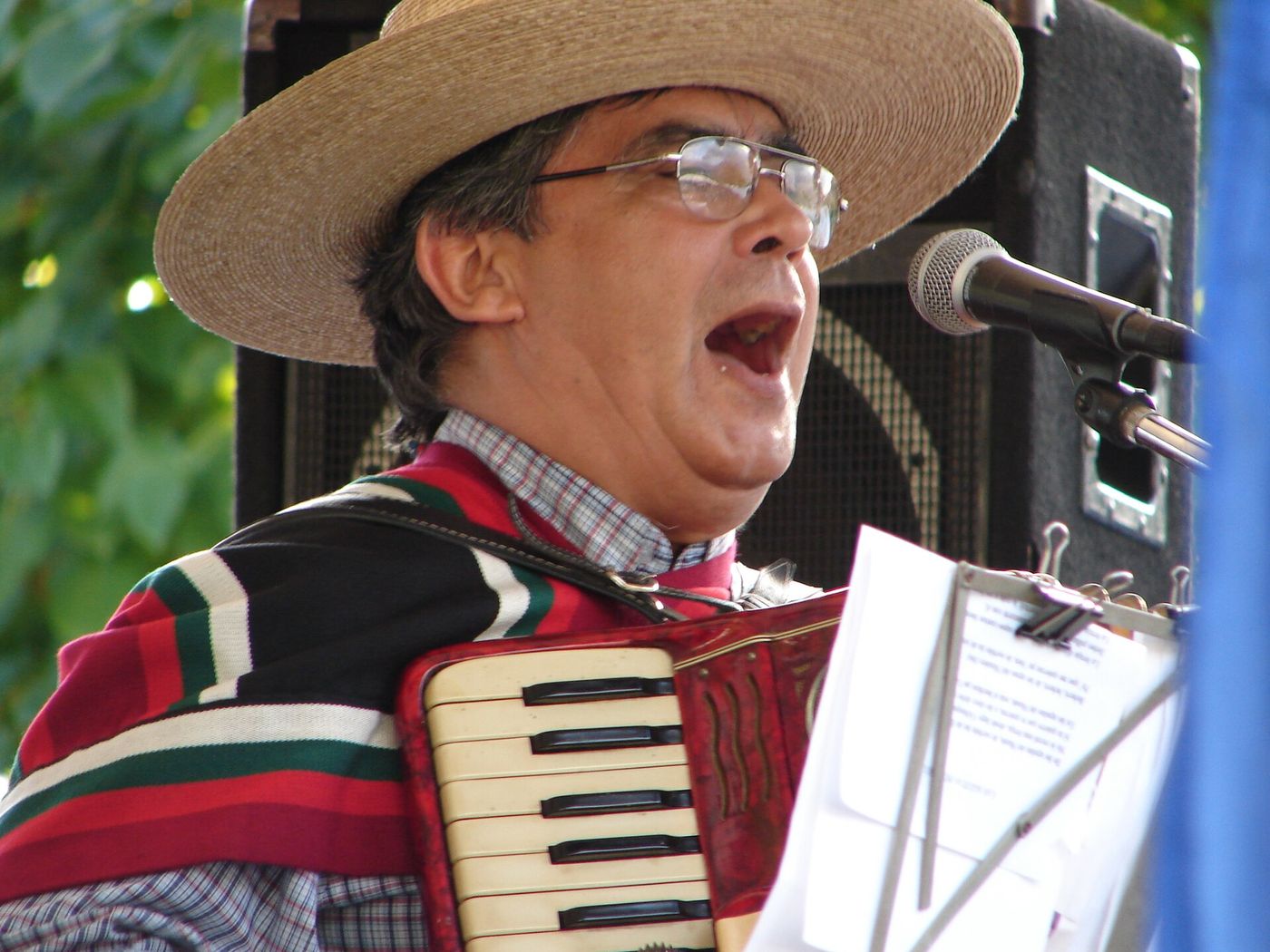
The 18th and 19th of September are Chile’s independence holidays, and they are the largest event in the national calendar by a wide margin. Fondas and ramadas — temporary open-air venues with live cueca, grilled meat, empanadas and terremotos — take over parks across the city, and the celebration realistically runs from about the 15th to the 20th.
Go if you want to see Chile being enthusiastically Chilean. It is genuine rather than staged for tourists, it is enormous fun, and the Parque O’Higgins fonda is the biggest in the country.
Avoid if your trip is about museums, galleries and organized sightseeing. On the 18th and 19th almost everything institutional is closed, many restaurants shut so staff can celebrate, the roads out of the city are the worst of the year, and hotel rates spike hard. Domestic travel is at its annual peak, so buses and flights sell out.
The pragmatic option is to arrive on the 19th or 20th: you catch the tail of the party, and the city returns to normal around you.
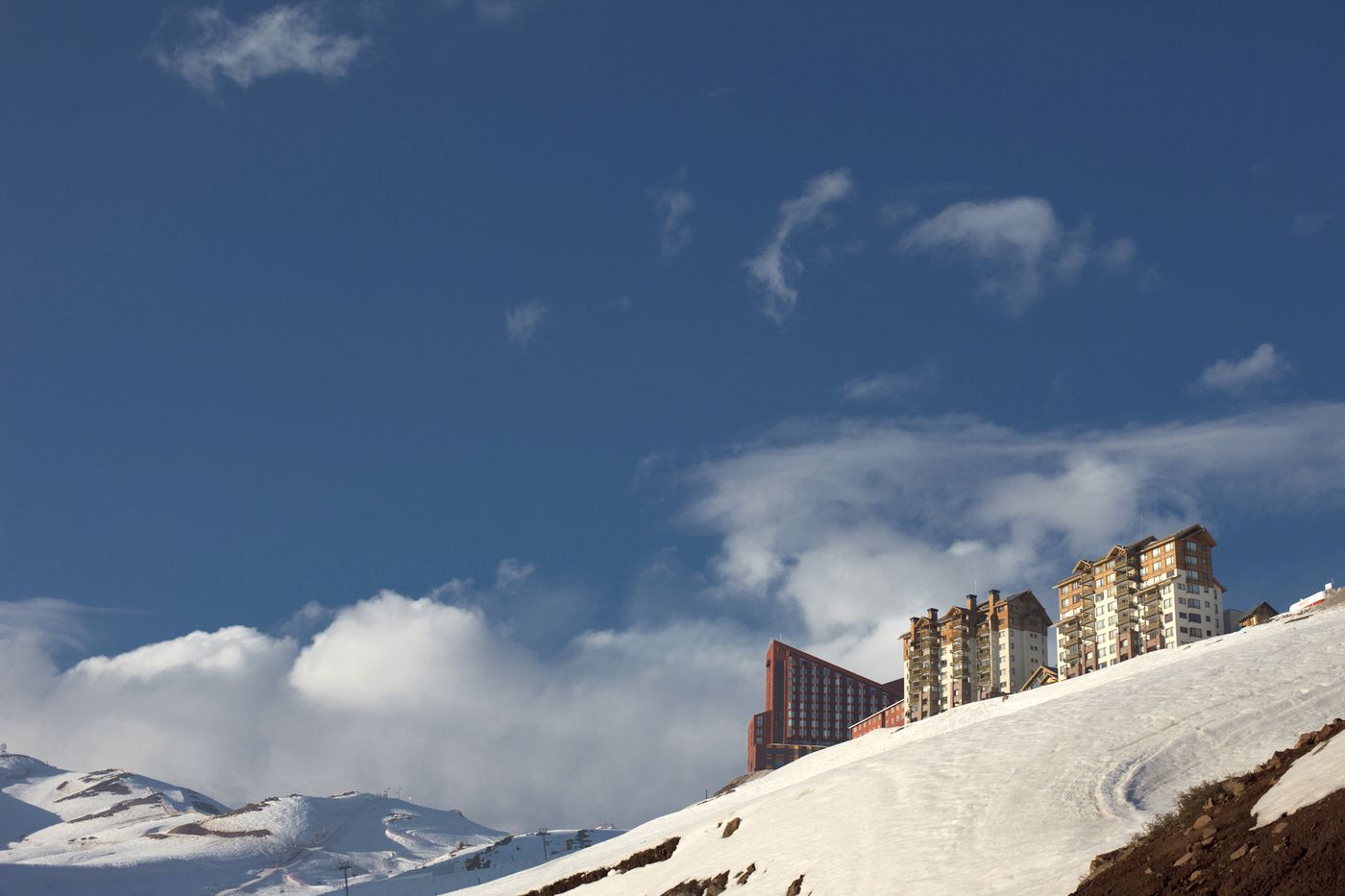
A note on what the calendar does to the ski season. Chilean resorts open when the snow allows rather than on a fixed date, and in dry years that has meant a late June or even July start. The long megadrought has made this less predictable than it used to be. If skiing is the purpose of the trip, book accommodation you can cancel and watch the resort snow reports rather than committing in March to a specific week in July.
Prices, crowds and how far ahead to book
Santiago is not a city that sells out, with three exceptions.
| Period | How far ahead | Why |
|---|---|---|
| 15-20 September | 2-3 months | Fiestas Patrias; domestic travel peak |
| Late December to mid-January | 6-8 weeks | Summer peak and New Year |
| Lollapalooza weekend | 6-8 weeks | Festival fills central hotels |
| Everything else | 3-6 weeks | Comfortable; last-minute often fine |
Room rates swing roughly 60% between low-season June and peak. A mid-range double that costs CLP 55,000-80,000 in June costs CLP 100,000-160,000 at peak. Flights follow the same shape, with the January and July school holidays driving domestic demand.
For the neighborhood-by-neighborhood version of those bands, see where to stay in Santiago.
Two smaller timing details. Chile’s academic calendar runs March to December, which means January and February are the domestic holiday months and July has a two-week winter break; both push up domestic travel prices and fill the ski resorts. And the long weekends created when a public holiday falls near a weekend, known here as fines de semana largos, empty Santiago and fill the coast, the Cajón del Maipo and the wine valleys. If your dates include one, do the city on those days and the day trips before or after.
Day trips by season
The city is visitable year-round. Its surroundings are not.
| Trip | Summer | Autumn | Winter | Spring |
|---|---|---|---|---|
| Valparaíso | Excellent | Excellent | Good, wetter | Excellent |
| Maipo wineries | Good | Best (harvest) | Good, quiet | Good |
| Cajón del Maipo (lower) | Excellent | Good | Variable | Good |
| Embalse El Yeso | Open | Closes in April | Vehicle ban | Reopens, check |
| Baños Morales / El Morado | Best | Good early | Road unreliable | Late spring |
| La Campana summit | Hot but open | Excellent | Trail closed | Excellent |
| Ski resorts | Closed | Closed | Season | Closing |
| Isla Negra / Pomaire | Year-round | Year-round | Year-round | Year-round |
The pattern is simple: the coast and the wine valleys work in any month, and the high Andes are a summer and early-autumn proposition unless you are skiing. The full comparison is in our guide to day trips from Santiago.
What to pack
Year-round, whatever the season: high-factor sunscreen and sunglasses. Santiago is at 570 m with thin, dry air and the UV index is higher than the temperature suggests. Also a refillable bottle; the tap water is safe.
Summer (December-February): light clothing, a hat, sandals plus one pair of proper shoes for the hills, and a light layer for evenings, which cool off quickly. Air conditioning is not universal in older hotels.
Autumn (March-May): layers. Mornings near 10°C, afternoons near 26°C in March, a 15-degree swing in a single day. A light jacket and a jumper cover it.
Winter (June-August): a proper coat, and warmer indoor clothing than you would expect for the temperature, because heating is weak. An umbrella for July. If you are skiing, rent the technical gear at the resort rather than flying with it.
Spring (September-November): the same layering as autumn, plus something waterproof for September, which is the most variable month of the year.
For the mountains in any season: a warm layer and a windproof. It can be 30°C in the city and 8°C at Embalse El Yeso on the same afternoon.
Putting it together
If you are choosing dates from scratch, the decision tree is short. Want the best overall trip? October, or March if you want wine. Want mountains and hiking? December to March. Want to ski? July or August. Want the lowest prices? June. Want the party? Book for 17 September and accept that the museums are shut.
And if your dates are already fixed and they fall in July, the trip is still worth taking. You lose the viewpoints and gain empty museums, cheap rooms, the best snow within 90 minutes of any capital in the Americas, and a city that does its indoor life very well. Build the itinerary around that rather than fighting it; our Santiago itineraries include wet-weather and bad-air alternatives for exactly this reason, and things to do in Santiago flags which attractions are weather-dependent.
Timing by traveler type
The right month depends less on the weather than on who you are.
First-time visitors on a short city trip. October or March. You want clear air for the viewpoints, warm enough evenings to sit outside, and no closures. Three or four days in either month gives you the city at its best with nothing working against you.
Wine travelers. March and April, without much argument. Vendimia turns the valleys from a tasting-room experience into a working harvest, the festivals are genuine, and the light on the vines in April is the best of the year. May and June are the quiet alternative if you want the winemaker’s full attention rather than the atmosphere.
Hikers and mountain people. December to March. The El Yeso road is open to private vehicles, the El Morado trail is clear of snow, Termas Valle de Colina is reachable, and the long daylight lets you start a high walk at 07:00 and still be back for dinner. April is possible at the margins; from May the high country closes down.
Skiers. July and August for the reliable base, with late June and September as the gambles at either end. Chilean resorts open on snow rather than on a date, and a dry year can push the opening into July. Book flexible accommodation.
Families with school-age children. Whatever your school holidays allow, with one caution: the northern-hemisphere summer break in July and August lands squarely in the Chilean winter, which means cold, short days and a smoggy city. If you are travelling then, build the trip around the snow, the museums and the food rather than the parks and the hills.
Budget travelers. June, then May and August. Rooms are 30-40% cheaper than shoulder season, the museums are free or nearly so and completely empty, and the food is unaffected by the calendar. You are trading views for money, which is a reasonable trade if the money matters.
Photographers. April for the autumn colour in Parque Forestal and the wine valleys, October for the snow-and-blossom combination, and any morning after a winter front for the single clearest air of the year.
What the weather does not change
Worth saying plainly, because seasonal guides can make a city sound unvisitable eleven months of the year. Santiago’s core experience holds up in any month.
The museums are indoor and open year-round, Mondays excepted: the Precolombino, the Museo de la Memoria, the Bellas Artes and the MAC do not care what the sky is doing. The food is seasonal in the good sense rather than the restrictive one, with shellfish at its best in the cooler months and stone fruit in high summer. The wine valleys are a 40-minute drive in any weather. The markets run all year. The neighborhoods, Lastarria, Barrio Italia, Yungay and Ñuñoa, are as good in a July drizzle as in an October afternoon, and better, because they are empty.
What genuinely changes with the season is a short list: the viewpoints, the high Andes, the ski resorts, the coast, and how much you enjoy walking at 14:00. Everything else is constant.
Frequently asked questions
What is the best month to visit Santiago, Chile?
October. Mean highs of 20.3°C, very little rain, clean air after the winter inversions have lifted, snow still on the Andes, and shoulder-season prices. March and April are close behind, and March adds the wine harvest across the Maipo and Casablanca valleys.
What is the rainy season in Santiago?
June to August, with July the wettest month at roughly 67 mm. Annual rainfall is only about 219 mm at the Pudahuel station under the 1991-2020 normals, which makes Santiago drier than Madrid. From November to March, meaningful rain is rare.
Does it snow in Santiago, Chile?
Almost never in the city itself, though it happens roughly once a decade and 2017 produced a memorable snowfall. The mountains immediately behind the city are covered from June, and the ski resorts 90 minutes away run a season from roughly June to September.
How bad is the smog in Santiago?
Bad enough to plan around between June and August. A winter temperature inversion traps pollution in the basin, hiding the Andes for days and triggering official environmental alerts. It is a strong argument for visiting in spring or autumn, and essentially a non-issue from October to April.
Is Santiago hot in summer?
Yes. Mean highs are 30.2°C in January and 30.1°C in February, with individual days passing 35°C, low humidity and fierce sun at altitude. The city adapts by moving activity to the early morning and after 18:00, and visitors should do the same.
Should I visit Santiago during Fiestas Patrias?
Only if you want the party. On 18 and 19 September almost every museum and many restaurants close, hotel rates spike and the roads are the worst of the year. The celebration itself is genuine and enormous. Arriving on the 19th or 20th gets you both.
When is the cheapest time to visit Santiago?
June and July. Low-season hotel rates run 30-40% below shoulder season, the city is quiet, and museums are empty. The trade-off is cold, rain and the winter inversion, which removes the mountain views that are much of Santiago’s appeal.
What should I pack for Santiago?
Layers in every season, because the daily temperature swing is large, plus strong sunscreen year-round. A proper coat and warmer indoor clothing for June to August, since Chilean buildings are under-heated. A warm windproof layer for any trip into the Andes, whatever the city forecast says.
Season matters even more if you are planning to be outside the city. The high Andes are effectively shut from May to October, the Embalse El Yeso road is closed to private vehicles between April and August, and the foothill trails swing from smoggy in winter to dangerously hot in January. Our guide to hiking and outdoor activities near Santiago breaks that calendar down trail by trail.
Winter is the one season with a genuine argument in its favour beyond low prices: you can be on a chairlift at 3,000 metres ninety minutes after leaving your hotel. If a June-to-September trip is on the table, our guide to skiing near Santiago covers which resort suits which skier, and what the 2026 season actually cost.
Weather is only half the question; the other half is what is happening. Two days in September close almost the entire city, one weekend in March fills every hotel in it, and the grape harvest festivals run on dates announced only weeks ahead. Our Santiago events and festivals calendar sets all of that out month by month.
If you want the underlying numbers rather than the verdict, our breakdown of Santiago weather by month sets out the official Chilean weather service normals for every month, from January’s 30.2C average high to August’s 14.6C, along with the rainfall split, the winter smog season and the months when the Andes are actually visible from the city.
Whichever month you settle on, the packing problem is the same one: an 18 degree gap between the average afternoon and the average night, in every season of the year. Our guide to what to pack for Santiago Chile works through the layering system that handles it, the dress codes in the eastern neighborhoods, and the gear that whole-country Chile lists tell you to bring and this city never needs.
January is the extreme case for everything on this page: the hottest month, the driest month, the emptiest month for locals and the most expensive for beds, with the country’s biggest arts festival running through it. If those are your dates, our guide to Santiago Chile in January works through the closures, the two-speed day and the day trips that get you out of the basin.
February deserves its own note, because it is the one month where the weather tells you almost nothing useful. The city is at its emptiest, the museums at their quietest and a large share of small restaurants closed for the holidays. Our guide to Santiago Chile in February works through that trade-off and compares the month directly with January and March.
For wine, the calendar is set by the grapes rather than the weather. The harvest near Santiago runs from late February into May, and the second half of March plus the first half of April catch the Maipo Valley’s cabernet harvest, the busiest festival weekends and some of the best weather of the year together. Our guide to the wine harvest season around Santiago breaks it down week by week.
Sources
- Dirección Meteorológica de Chile — climate normals, Pudahuel
- Dirección Meteorológica de Chile — climate normals, Quinta Normal
- Dirección Meteorológica de Chile
- SINCA — Sistema de Información Nacional de Calidad del Aire
- Ministerio del Medio Ambiente
- Visit Santiago
- Santiago Turismo
- Chile Travel — Santiago
- Valle Nevado
- Ski Portillo
- CONAF — Parque Nacional La Campana
- Santiago a Mil
- Día del Patrimonio
- Feriados legales de Chile
- Metro de Santiago
Image credits
| Photo | Credit |
|---|---|
| Snow on the Andes above Santiago (top of page) | Nbendersky, CC BY-SA 4.0, via Wikimedia Commons |
| Street view to the cordillera | CARLOS TEIXIDOR CADENAS, CC BY-SA 4.0, via Wikimedia Commons |
| Santiago park in summer | Luis Orellana from Santiago, Chile, CC BY 2.0, via Wikimedia Commons |
| Winter haze over Santiago | Nbendersky, CC BY-SA 4.0, via Wikimedia Commons |
| Winter sunset, Santiago | Nbendersky, CC BY-SA 4.0, via Wikimedia Commons |
| Chairlift at Valle Nevado | geo.edgonzalez, CC BY-SA 3.0, via Wikimedia Commons |
| Valle Nevado | Jimmy Baikovicius, CC BY-SA 2.0, via Wikimedia Commons |
| Fiestas Patrias musician | Flavio Bastos Amiel from Caracas, Venezuela, CC BY 2.0, via Wikimedia Commons |
| Cueca in a fonda | Ministerio Secretaria General de Gobierno, CC BY-SA 2.0, via Wikimedia Commons |