Shopping in Santiago Chile divides cleanly into four things: craft villages for souvenirs worth carrying home, food markets for the best hour you will spend in the city, flea markets for the things nobody planned to sell you, and malls for the stuff you forgot to pack. The mistake most visitors make is buying in the first of those from the wrong place — the stalls around Plaza de Armas sell dyed stone as lapis lazuli, and the real thing is a twenty-minute Metro ride away at a fair price.
Where should you shop in Santiago?
| Place | What it is | Best for | Hours | Metro |
|---|---|---|---|---|
| Pueblito Los Dominicos | Craft village, ~160 workshops | Lapis lazuli, ceramics, wool, leather | Daily 10:30–20:00 summer, to 19:00 winter | Los Dominicos (L1) |
| Mercado Central | Historic fish and seafood market | Eating, not shopping | Sun–Thu 07:30–17:00, Fri to 20:00, Sat to 19:00 | Puente Cal y Canto (L2) |
| La Vega Central | The city’s main produce market | Fruit, nuts, cheap lunch | Roughly Mon–Sat 07:00–17:00, Sun to 16:00 | Patronato (L2) |
| Persa Bío Bío / Franklin | Flea market sprawl | Antiques, vinyl, junk, furniture | Weekend-heavy; stall hours vary | Franklin (L2/L6) |
| Patronato | Wholesale clothing and fabric | Cheap clothes, Korean groceries | Daytime, quiet on Sundays | Patronato (L2) |
| Patio Bellavista | Covered courtyard of shops | Jewellery, gifts, evening browsing | Sun–Wed 10:00–01:00, Thu–Sat to 03:00 | Baquedano (L1/L5) |
| Centro Artesanal Santa Lucía | Craft stalls opposite the hill | Quick souvenirs, textiles | Daytime, most days | Santa Lucía (L1) |
| Costanera Center | South America’s largest mall | Brands, replacements, air conditioning | Roughly 10:00–21:00; confirm | Tobalaba (L1/L4) |
| Parque Arauco / Alto Las Condes | Upmarket malls | Fashion, electronics | Roughly 10:00–21:00; confirm | Manquehue (L1) + bus |
Hours checked September 2026 where the operator publishes them; mall and stallholder hours move, so confirm on the day. Nothing in this table is open on 18 and 19 September, and most of it shuts on 1 January, 1 May and 25 December.
The short version. Go to Los Dominicos for souvenirs. Go to La Vega for the experience and the fruit. Go to Franklin on a Saturday if you like rummaging. Ignore the stalls in the centre.
What should you actually buy in Chile?
Four things are genuinely Chilean, genuinely good and genuinely worth the suitcase space. Everything else is optional.
Lapis lazuli. Chile and Afghanistan hold the world’s only significant deposits, and the Chilean stone — mined in the Ovalle area north of Santiago — has a deep, slightly violet blue that collectors can identify on sight. It is the signature Chilean souvenir and the one most often faked.
Copper. Chile produces about a quarter of the world’s copper, and the craft version of that is bowls, plates, jewellery and kitchenware, usually hand-beaten. Heavy, but genuinely local and hard to fake.
Wool and textiles. Alpaca and sheep’s wool from the north and south — blankets, ponchos, chalones, hats. Check the label and the feel: acrylic blends are common and much cheaper to make.
Wine and pisco. The obvious one, and still the best value. A bottle that costs CLP 12,000 here would be three times that abroad, and the Maipo Valley carmenère is the thing Chile does that nobody else does as well. Our wine tours guide covers buying at the source.
Beyond those: Mapuche silverwork, which is beautiful and expensive done properly; rauli and lenga wood bowls; merkén, the smoked chilli seasoning, which is light and travels well; and horsehair crin figures from Rari, which are extraordinary and cost almost nothing.
What to skip. Moai statuettes made in China, “alpaca” scarves that squeak between your fingers, anything sold to you by someone who approached you first, and the mass-produced ceramic penguins that fill half the stalls in the centre.
Which market suits which kind of shopper?
Santiago’s markets are not interchangeable, and turning up at the wrong one for what you want is the most common wasted morning here.
| You want | Go to | Avoid | Why |
|---|---|---|---|
| Souvenirs to carry home | Pueblito Los Dominicos | Plaza de Armas stalls | Makers, fair prices, better quality |
| Food, fruit, spices | La Vega Central | Supermarkets | A third of the price, far better produce |
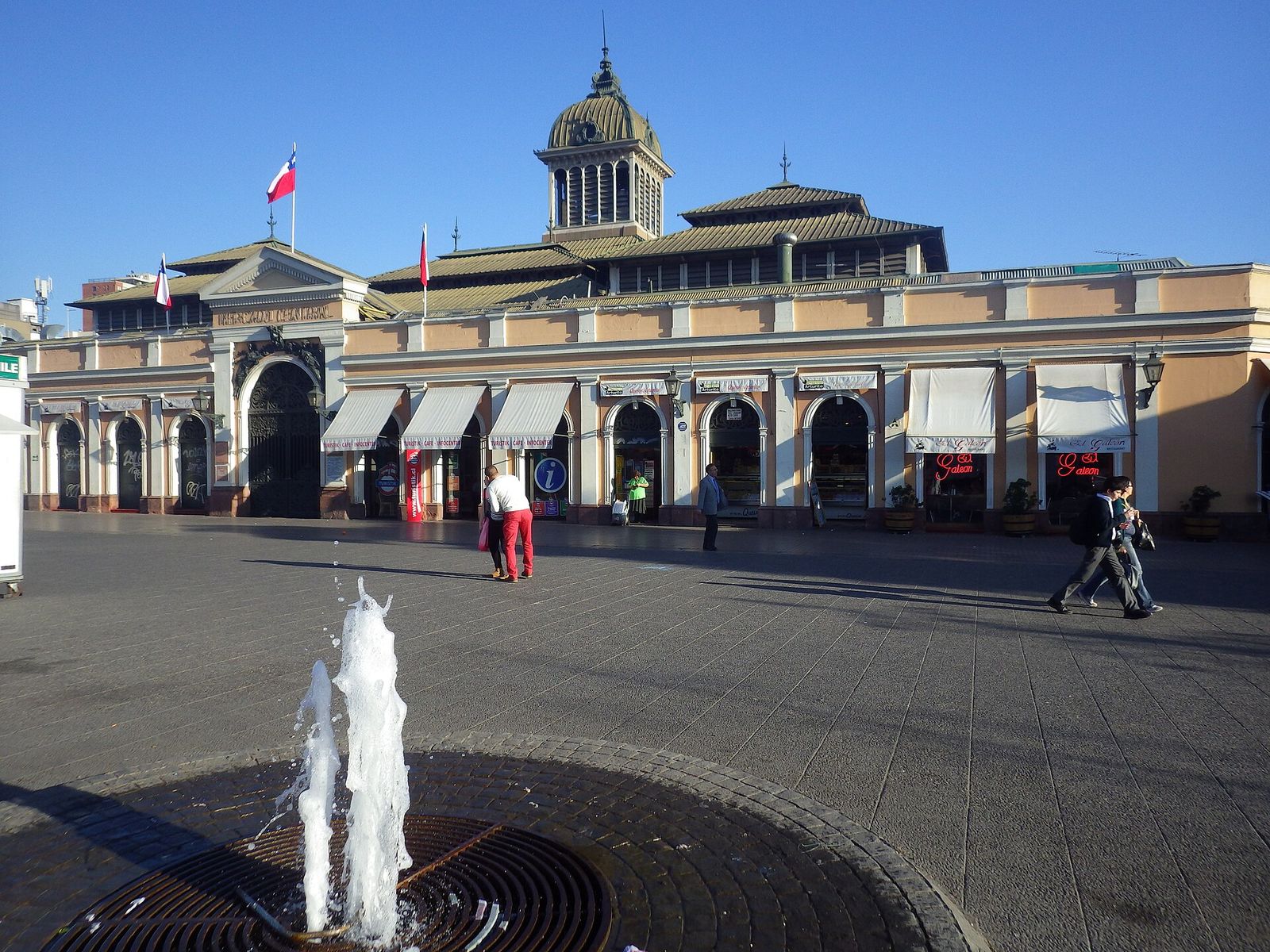
| A photograph of a market | Mercado Central | — | The 1870s roof is the sight |
| Antiques and junk | Persa Bío Bío, weekends | Weekday Franklin | Half the stalls shut midweek |
| Cheap clothes | Patronato | Malls | Wholesale prices, no fitting rooms |
| Gifts after dinner | Patio Bellavista | — | Open until 01:00, later at weekends |
| Something you forgot | Costanera Center | — | Everything under one roof |
| Wine to take home | A supermarket | Airport duty free | Same bottles, a third of the price |
The through-line: the places most visible to visitors are rarely the ones with the best prices. The Centro Artesanal Santa Lucía opposite the hill is convenient and fine for a quick scarf, but everything in it costs more than the same object at Los Dominicos, where the maker sets the price.
Pueblito Los Dominicos: the one place to buy souvenirs
At the eastern end of Metro Line 1, beside a colonial church in Las Condes, Pueblito Los Dominicos is a walled village of small workshops — around 160 of them — arranged along lanes with a fountain and a couple of cafés in the middle. It is open daily 10:30–20:00 in summer and 10:30–19:00 in winter (checked September 2026 against the municipality).
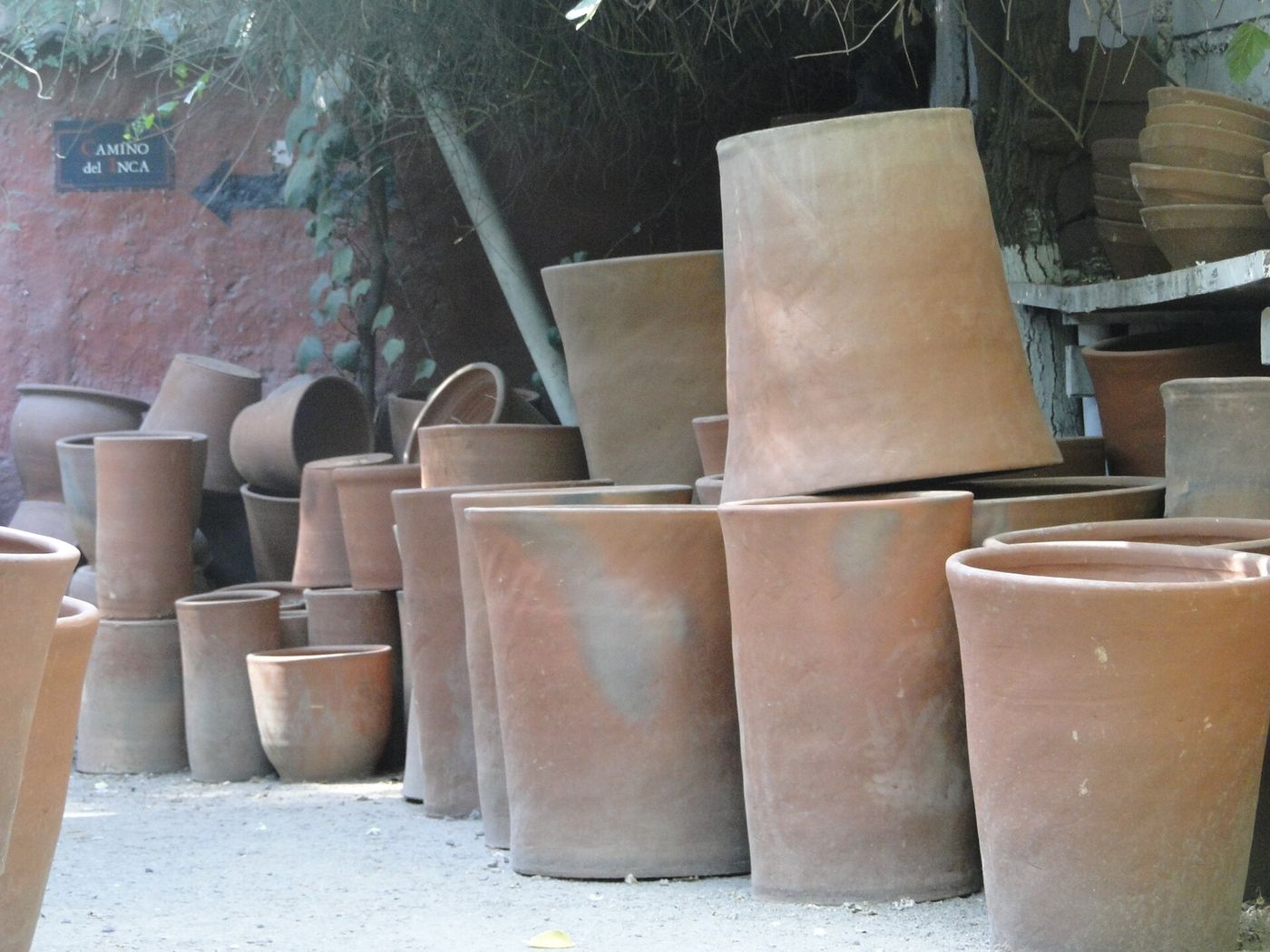
What makes it different from every other souvenir market in the city: in most of these workshops, the person behind the counter made the thing on the counter. You can watch silverwork, weaving, lapidary work and pottery happening in the back of the shop. Prices are set for Chileans, not cruise groups, and quality is visibly higher than in the centre.
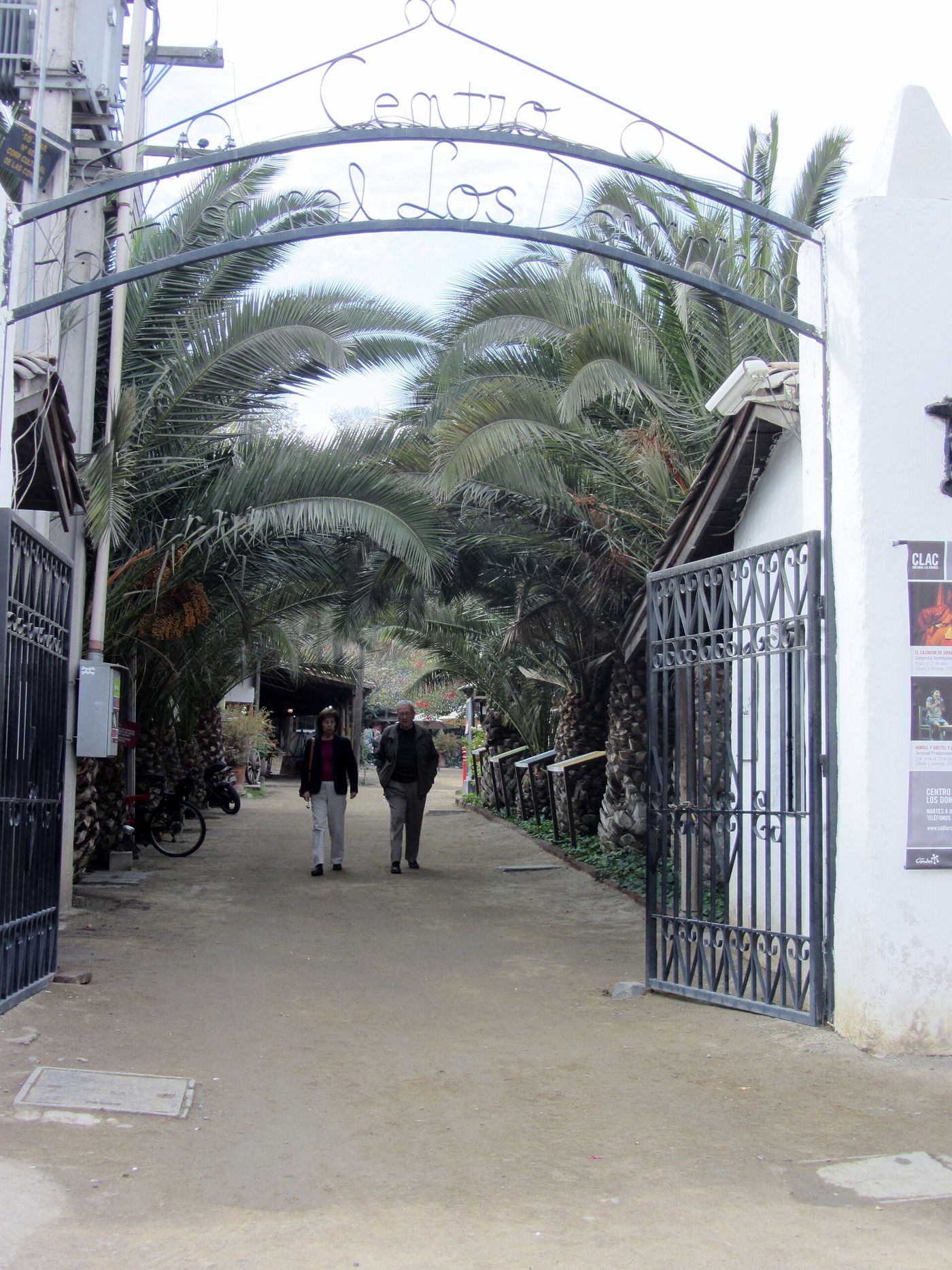
How to shop it. Walk the whole village once before buying anything — it is bigger than it looks and prices for similar pieces vary. The lapis lazuli workshops cluster near the entrance; the textile and leather workshops are deeper in. Allow ninety minutes.
Bargaining. Light, and only on bigger purchases. Chile is not a haggling culture in the way Peru or Morocco is. Asking for a small discount on a CLP 200,000 piece is normal; arguing over a CLP 8,000 keyring is not, and it will not land well.
Cards. Most workshops take them now, but not all, and the smaller ones sometimes have a minimum. Bring some cash.
Getting there is the whole length of Line 1 from the centre, about 35 minutes, and you end up at the terminus so there is no navigating. It pairs naturally with a morning in Las Condes.
How do you tell real lapis lazuli from fake?
Real Chilean lapis has uneven colour with white calcite veining and flecks of gold pyrite, feels cold and heavy for its size, and will not scratch easily with a fingernail. Dyed howlite or reconstituted stone looks too uniformly blue, feels light and warm, and may leave colour on a damp cloth.
The scam is not subtle and it is not universal — it is concentrated among street vendors around Plaza de Armas and the pedestrian streets in the centre, where someone approaches you with a tray. Established shops and the Los Dominicos workshops are not selling fakes; their whole business depends on not doing that.
Four practical checks:
- Look for imperfection. Genuine lapis is almost never a flat, even blue. The white calcite and gold pyrite flecks are the tell.
- Weigh it in your hand. Lapis is dense. Plastic and dyed magnesite are not.
- Ask where the stone came from. A workshop that cuts its own will tell you, usually Ovalle or the Coquimbo region.
- Buy where the work happens. Los Dominicos, Bellavista’s established lapis shops, or a proper jeweller.
Price gives you a rough guide too: small pendants and keyrings start around CLP 2,000–5,000, decent silver-set pieces run CLP 30,000–120,000, and serious jewellery or large carved objects go well beyond that. A “solid lapis” statue for CLP 6,000 is not solid lapis.
The food markets: Mercado Central and La Vega
These two face each other across the Mapocho and are among the best hours in Santiago, provided you understand what each one is for.
Mercado Central is the 19th-century iron-framed fish market, with a wrought-iron roof shipped from England in the 1870s. It opens Sun–Thu 07:30–17:00, Fri 07:30–20:00 and Sat 07:30–19:00. It is beautiful, and the central hall is a tourist trap: touts work the entrances steering visitors to the expensive restaurants under the dome, where a plate of congrio costs three times what it should.
The honest verdict on Mercado Central: go, look up at the roof, ignore the men who approach you, and eat in the outer aisles where the tiled counters are scuffed and the menu is handwritten in Spanish. Or don’t eat here at all.
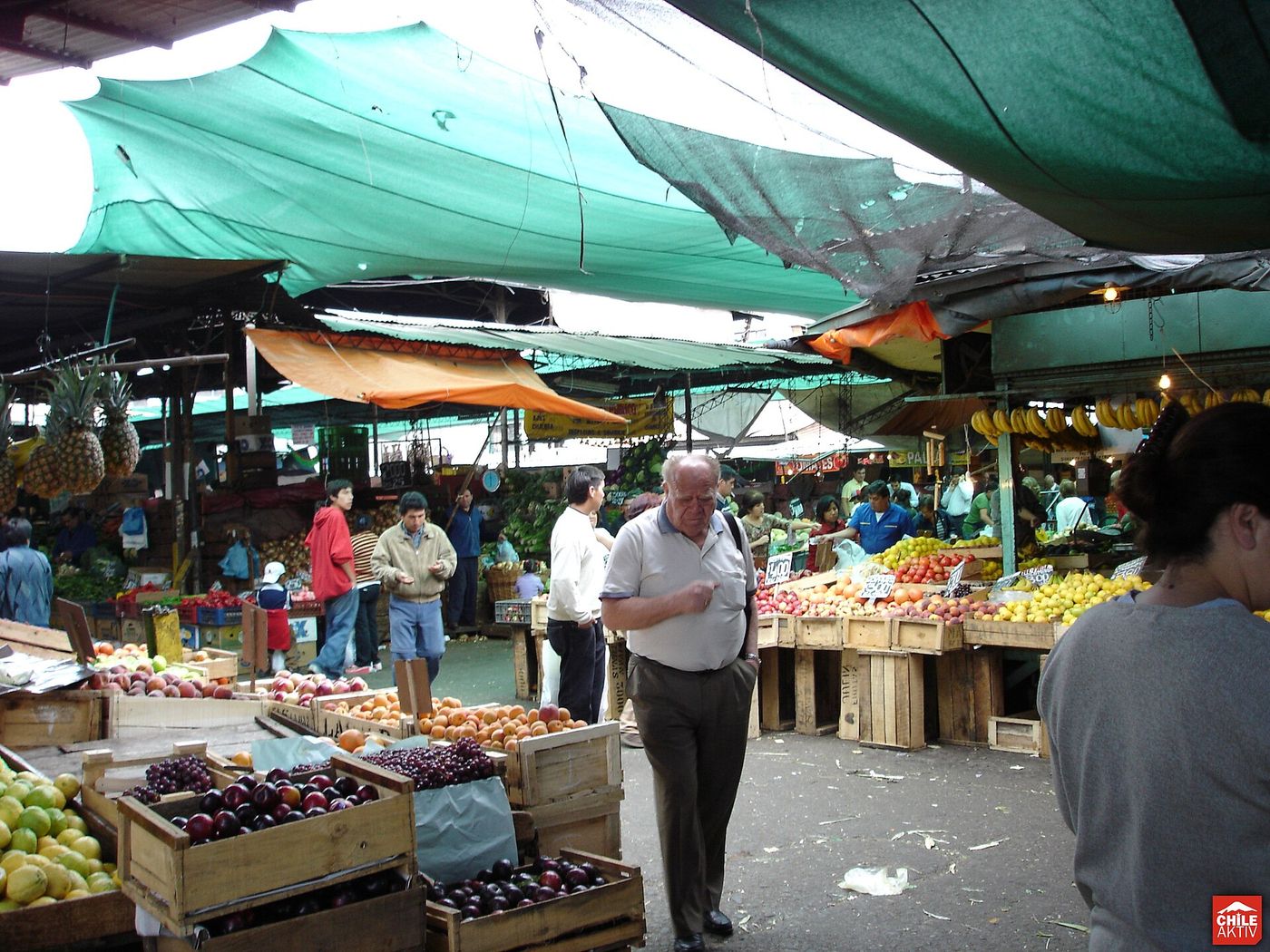
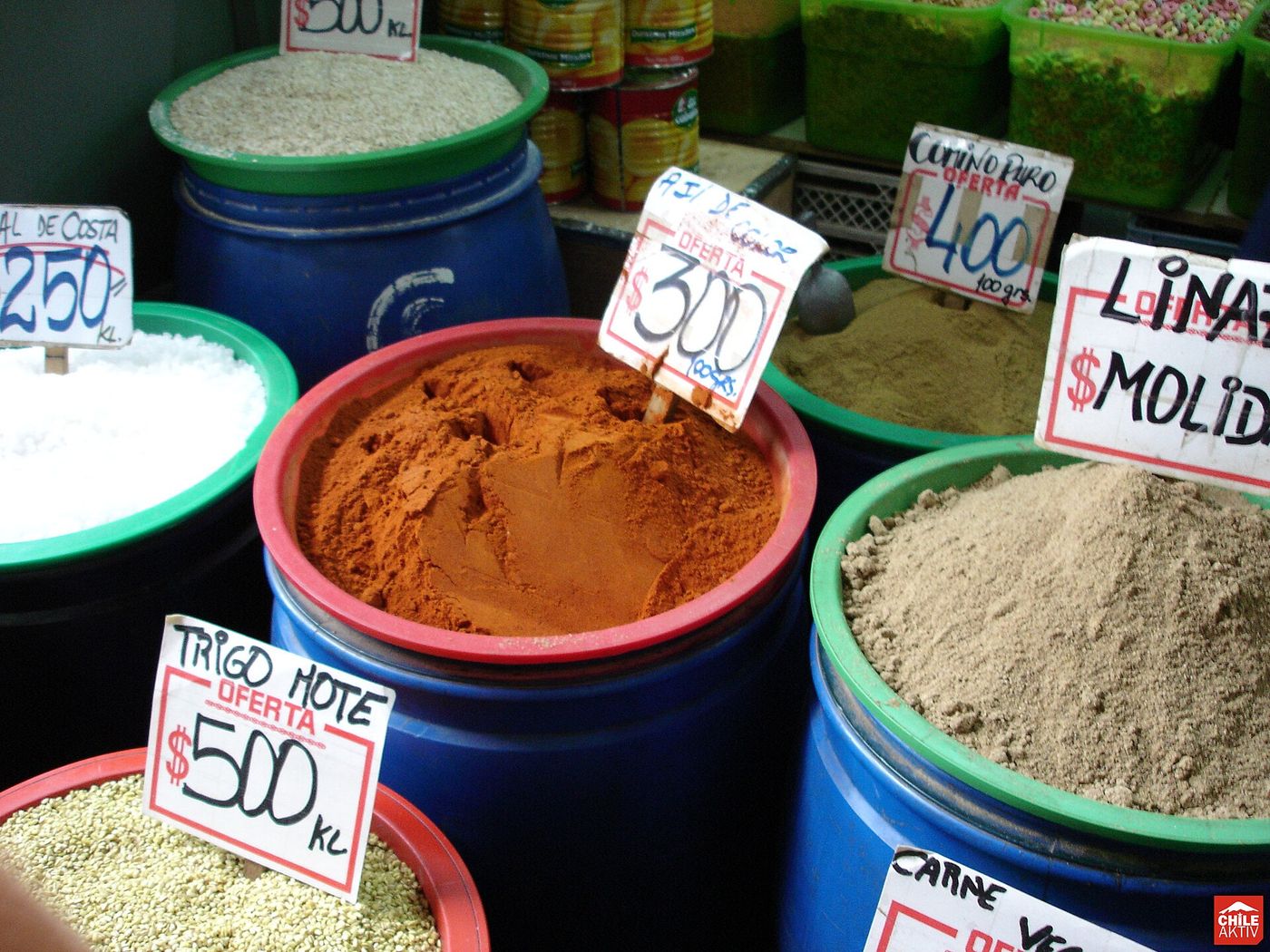
La Vega Central, five minutes north across the river, is where Santiago actually shops. It is a vast covered produce market — roughly Mon–Sat 07:00–17:00 and Sun until 16:00 — selling fruit, vegetables, nuts, cheese, spices and meat at a fraction of supermarket prices, with a ring of small comedores serving enormous, excellent, very cheap lunches.
This is the better of the two for a visitor who wants the real thing. Chilean fruit in season is exceptional — cherries, grapes, avocados, chirimoyas — and you can buy nuts, dried fruit and merkén to take home for very little.
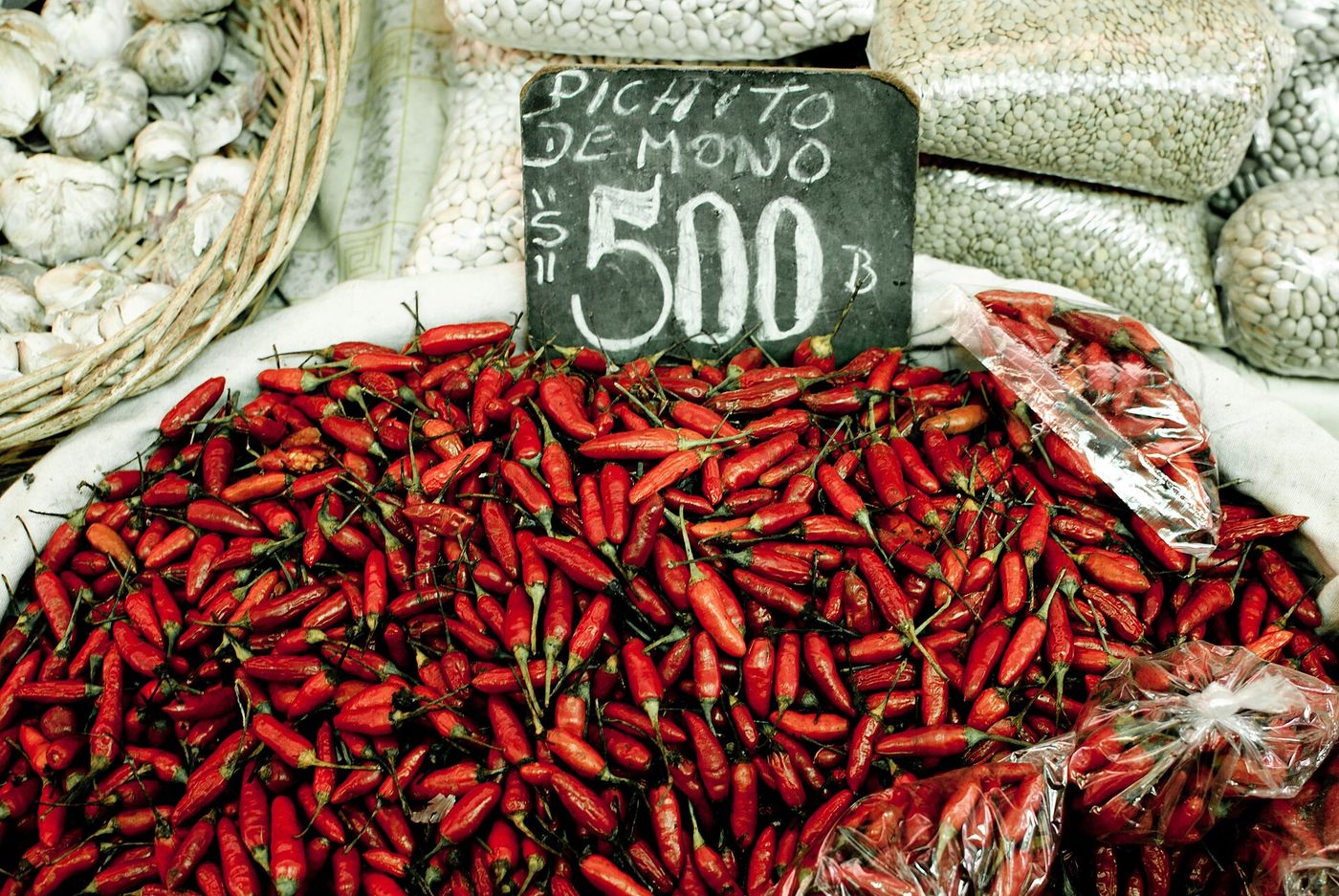
Practicalities for both. Go in the morning; both thin out by mid-afternoon. Take cash, in small notes. Keep your bag closed and in front of you — these are crowded markets and pickpocketing is the standard risk, as our Santiago safety guide covers. And do not photograph stallholders without asking.
Franklin and Persa Bío Bío: the flea markets
South of the centre at Metro Franklin, a sprawl of covered markets known collectively as the persas sells antiques, furniture, vinyl, tools, car parts, clothes and an enormous quantity of things whose purpose is unclear. Persa Bío Bío is the best known of them.
When to go. The weekend, and the morning of it. The persas fill out on Saturday and Sunday and are a fraction of themselves midweek; individual stall hours are set by the stallholders and are not published anywhere, which is why you should not build a weekday afternoon around this.
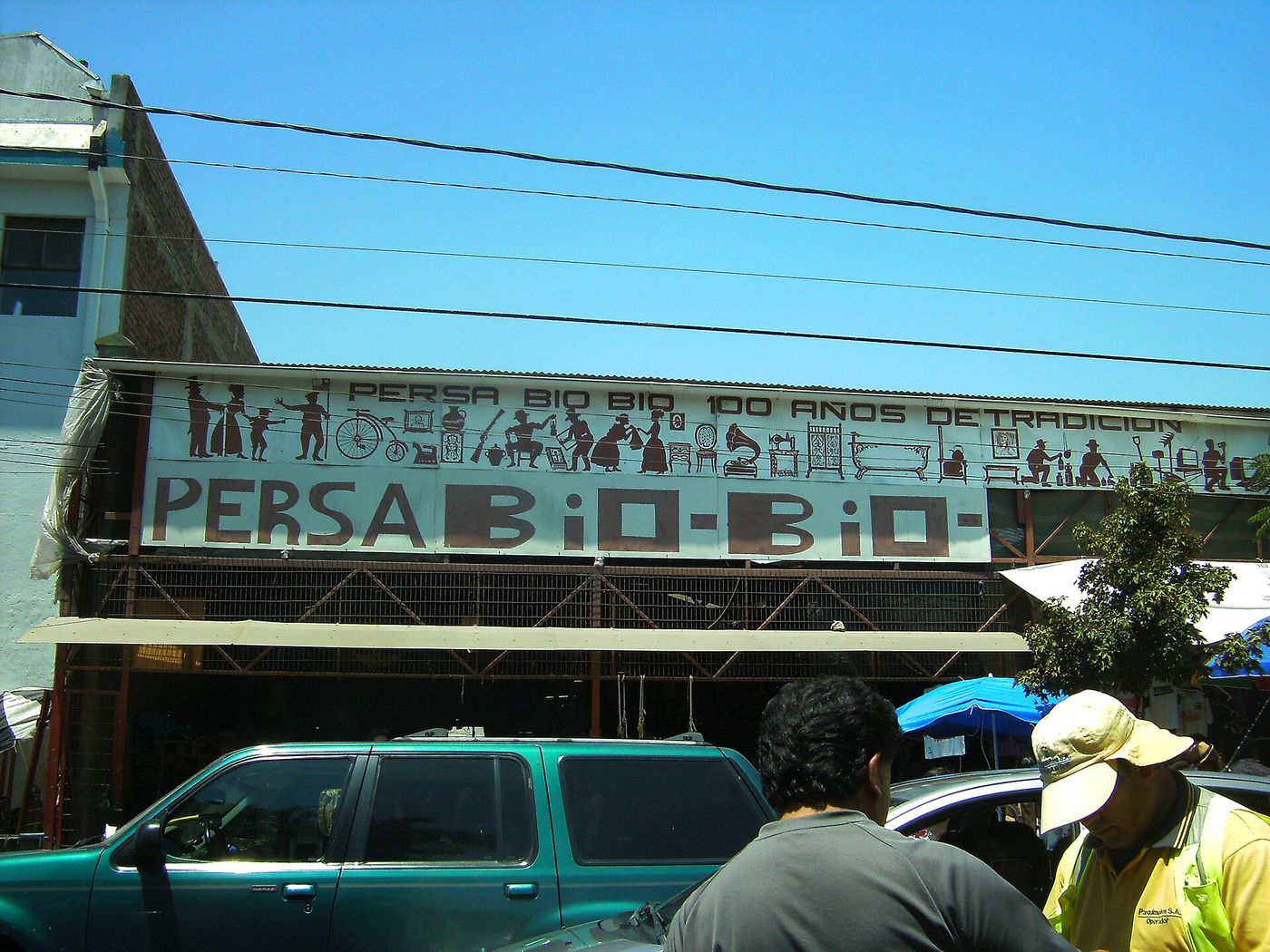
What people find. Mid-century Chilean furniture, old enamel signs, vinyl in genuinely good condition, cameras, tools, and a lot of 1970s and 1980s domestic objects. Prices are negotiable here in a way they are not at Los Dominicos, and haggling is expected and good-natured.
What to watch. Crowds mean pickpockets; keep bags zipped and in front. Provenance on “antiques” is whatever the seller says it is. And if you buy furniture, shipping it home will cost several times what the piece cost.
The same district has changed in the last few years, with bars, distilleries and restaurants opening in the old meat-market buildings, so a Saturday here can run from rummaging into lunch.
Patronato and the clothing trade
Immediately north of the river at Metro Patronato, this is Santiago’s wholesale clothing and fabric district — a dense grid of shops run largely by Korean and Palestinian Chilean families, selling clothes at prices the malls cannot touch. It is loud, fast, and entirely un-touristed.
Go for: cheap basics, fabric by the metre, and the best Korean food in the city in the restaurants scattered through it. Do not go for: quality, brands, or a relaxing afternoon. Sizes run small by North American and northern European standards, and most shops have no fitting rooms.
It sits directly beside La Vega, which makes an obvious half-day: market in the morning, lunch in Patronato, Metro home.
Malls: when they are actually the right answer
Santiago’s malls are large, modern and indistinguishable from malls anywhere, which is precisely their use. They are the right answer for four things: replacing something you forgot or broke, buying outdoor gear, escaping 33 °C in January, and shopping on a Sunday when the markets are closing early.
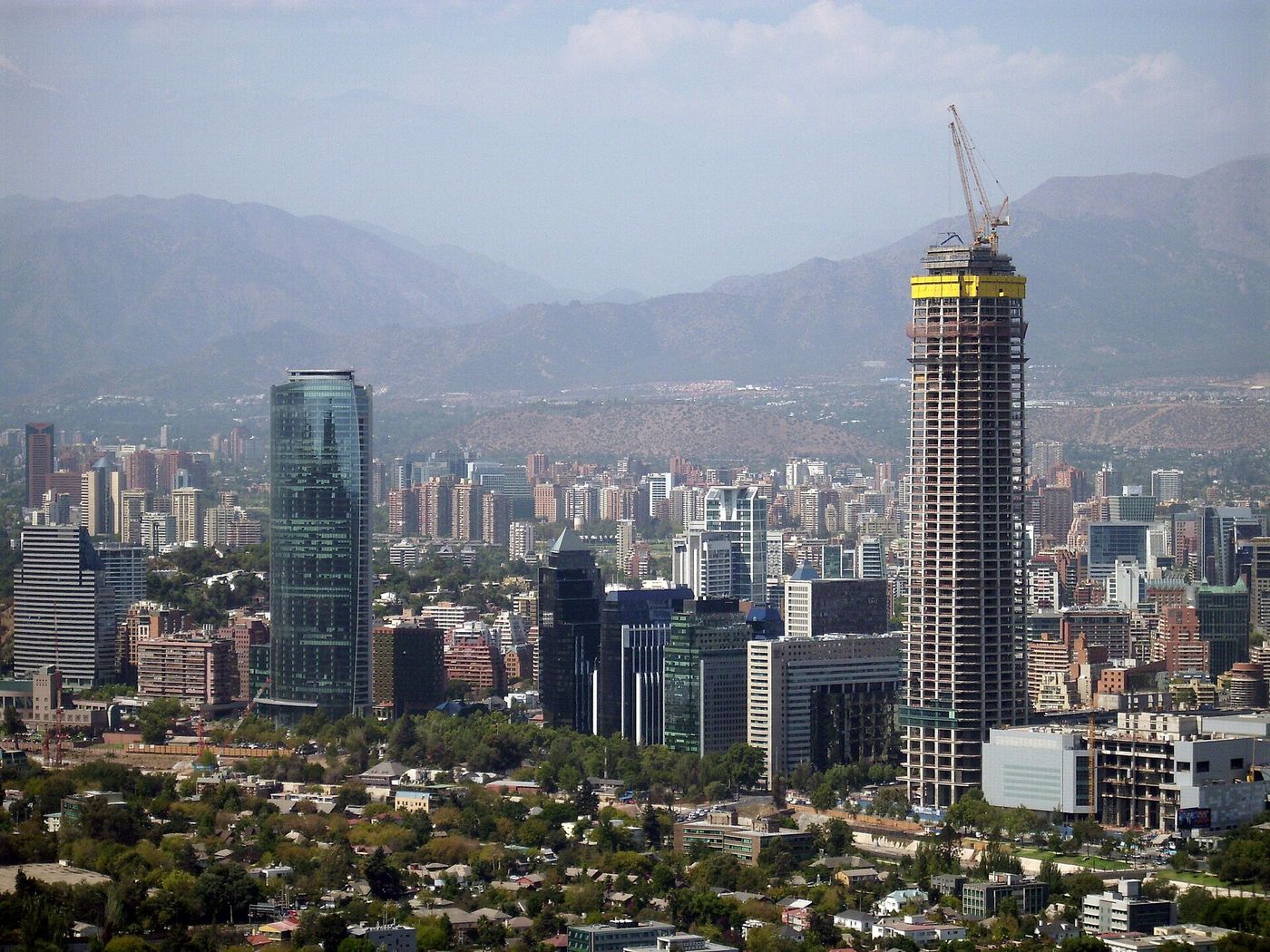
Costanera Center at Metro Tobalaba is the biggest, sitting under the Gran Torre and the Sky Costanera observation deck. Parque Arauco and Alto Las Condes are the upmarket pair further east, both requiring a bus or taxi from Line 1. Mall hours run roughly 10:00 to 21:00 with shorter Sundays, but they vary by centre and by season — check the specific mall rather than trusting a general figure.
Prices. Imported goods are expensive in Chile. Electronics, branded clothing and outdoor gear all cost more than in North America or Europe, sometimes considerably more, because of import duties and a small market. If you are deciding whether to buy a jacket here or carry one, carry one.
What malls are genuinely good for. Chilean outdoor brands, which are well made and reasonably priced; pharmacies, which are efficient and cheap; and supermarkets, where the wine aisle is better and cheaper than any shop aimed at tourists.
Where do Chileans actually shop?
Worth knowing, because it points you at better value and at a more interesting afternoon.
For food, the ferias libres. Every comuna in Santiago has street markets that set up on fixed days of the week — tarpaulin-covered rows of produce, fish and cheese that run from early morning until about two in the afternoon and then vanish completely. Ask at your hotel which day the local one runs. They are cheaper than La Vega and they are where the city genuinely buys its vegetables. Take cash in small notes and a bag.
For clothes, Patronato and the malls, depending on budget, with almost nothing in between. Santiago has surprisingly few independent clothing boutiques outside Barrio Italia and Lastarria, and the ones that exist are expensive.
For design, Barrio Italia. The converted houses along Avenida Italia and the passages off it hold furniture restorers, ceramicists, jewellers and small design studios. Prices are high by Chilean standards and it is not a bargain destination, but it is the best place in the city for contemporary Chilean design rather than traditional craft. Most of it opens late — after 11:00 or noon — and a good deal of it closes on Monday. The neighborhoods guide covers how to walk it.
For books, Barrio Lastarria and Bellas Artes. Sunday’s second-hand book and antiques market on Lastarria is small but genuine, and there are proper bookshops scattered through both barrios. Spanish-language stock overwhelmingly, with a small English section in the larger shops.
For everything else, the supermarket. Jumbo, Lider and Unimarc carry good wine, decent chocolate, merkén, dried fruit and nuts at prices no tourist-facing shop will match. If you want to bring food home and cannot face a market, this is the shortcut.
What does shopping cost?
Rough benchmarks, checked September 2026 at roughly CLP 950 to USD 1. Craft prices vary enormously with quality, so treat these as orders of magnitude.
| Item | Typical price (CLP) | Approx. USD |
|---|---|---|
| Lapis lazuli keyring or small pendant | 2,000–6,000 | 2–6 |
| Silver-set lapis jewellery | 30,000–120,000 | 32–126 |
| Hand-beaten copper bowl | 15,000–45,000 | 16–47 |
| Alpaca or wool scarf | 12,000–35,000 | 13–37 |
| Wool blanket or poncho | 40,000–150,000 | 42–158 |
| Bag of merkén | 2,000–4,000 | 2–4 |
| Good bottle of Chilean wine | 8,000–25,000 | 8–26 |
| Bottle of pisco | 6,000–20,000 | 6–21 |
| Kilo of cherries at La Vega, in season | 2,000–5,000 | 2–5 |
| Lunch at a La Vega comedor | 4,000–7,000 | 4–7 |
| T-shirt in Patronato | 5,000–10,000 | 5–11 |
Chile’s IVA (sales tax) is 19% and is already included in every marked price, so what you see is what you pay. There is no general retail tax-refund scheme for visitors of the kind the EU operates — do not go looking for a refund desk at the airport. The one exemption most travellers encounter is on hotel accommodation for non-resident foreigners, which the hotel applies at check-out rather than something you reclaim; ask your hotel how they handle it when you book. Budget planning across the whole trip is covered in more detail on our travel guide.
Buying wine, and buying it well
Chile’s wine is the best-value thing in the country and the easiest to get wrong, because the bottles that reach export markets are not the ones locals drink.
Where to buy. A supermarket for everyday bottles and for anything under CLP 15,000; a specialist wine shop in Providencia or Vitacura for the good stuff; or the winery itself if you are doing a Maipo Valley tour. Airport duty free is the one place not to buy — the same bottles cost two to three times as much.
What to look for. Carmenère is the grape Chile has to itself, rediscovered in the 1990s after a century of being mistaken for merlot, and the Maipo Valley versions are the benchmark. Beyond that: Maipo cabernet sauvignon, Casablanca and San Antonio sauvignon blanc, Limarí chardonnay, and old-vine país and cinsault from the Itata and Maule valleys, which are the most interesting thing happening in Chilean wine right now and almost impossible to find abroad.
Price bands worth knowing. Under CLP 5,000 is everyday drinking and perfectly decent. CLP 8,000–15,000 buys genuinely good wine that would cost three times that in London or New York. Above CLP 25,000 you are into icon bottles, which are excellent and which you can also buy at home.
Pisco. Chile and Peru argue about the origin and both make it well. Chilean pisco is sold by strength — 35°, 40°, 46° — and the aged reservado and gran reservado bottlings are worth the small premium. A good bottle costs under CLP 20,000.
Getting it home. Wine goes in checked baggage, never hand luggage. Buy the padded shipping boxes that wine shops sell, or wrap bottles in clothing in the middle of a suitcase. Check your airline’s allowance and your home country’s duty-free alcohol limit before buying a case. Our wine tours guide covers buying at the vineyards themselves, where the cellar-door selection is often better than anything in the shops.
How do you get your purchases home?
Three things catch people out.
Chilean customs on the way in, not out. Chile has genuinely strict agricultural controls — all food, plant and animal products must be declared on the arrival form, and the checks are real. This matters on the way home too if you are connecting through another country with its own rules. Dried fruit, nuts and sealed merkén are generally straightforward; fresh fruit is not.
Weight. Copper is heavy, ceramics are heavy, and wool blankets are bulky. A pair of copper bowls and a blanket can take five kilos out of your allowance without feeling like much.
Wine. Most airlines allow wine in checked baggage within the usual liquid rules for hold luggage, and wine shops in Santiago sell purpose-made padded shipping boxes. Buying at a supermarket and packing carefully costs less than buying at the airport. Do not put wine in hand luggage; it will be taken off you at security.
For anything large — furniture from Franklin, a big ceramic piece — ask the seller about shipping before you commit. Some of the Los Dominicos workshops arrange international shipping; most flea market stalls do not.
When are the shops open?
The pattern is straightforward once you know it, and it is not the same as Europe or North America.
- Markets start very early — La Vega and Mercado Central are busiest between 08:00 and 11:00 — and wind down by mid-afternoon.
- Craft villages and shops run more like 10:30 to 19:00 or 20:00.
- Malls run roughly 10:00 to 21:00, with shorter Sundays.
- Sundays are quieter across the board. Markets open but close earlier; some small shops do not open at all.
- Mondays are fine for shopping, which makes this a good Monday activity when the museums are all shut.
The closures that ruin plans: 18 and 19 September, Fiestas Patrias, when essentially everything shuts for two days, and 1 January, 1 May and 25 December. If your trip falls across Fiestas Patrias, do your shopping before the 17th.
Bargaining, cash and cards
Three practical things that shape every transaction here.
Bargaining is limited and situational. At the persas and flea markets it is expected, good-natured and part of the transaction — start at perhaps 70% of the asking price and settle in the middle. At craft villages it is acceptable on larger purchases and slightly rude on small ones. In shops, malls and supermarkets it does not happen at all. Chile is a formal retail culture by Latin American standards, and treating Los Dominicos like a souk marks you out.
Cash still matters. Cards are widely accepted in malls, mid-sized shops and most Los Dominicos workshops, but market stalls, ferias libres, comedores and smaller flea market sellers are cash-only or prefer it. ATMs are common; withdraw in the daytime, inside a bank or a mall rather than on the street, and be aware that many Chilean ATMs charge a fee to foreign cards.
Prices include tax and are rarely negotiable downward. The 19% IVA is baked into the displayed price, there is no tipping in shops, and the marked price is the price. Where you will see a discount is efectivo — a few small businesses shave a little for cash because card processing costs them.
One last note on street sellers. Santiago’s pavements, Metro carriages and pedestrian streets carry a large informal trade — people selling sweets, phone cables, umbrellas and ice cream. Buying is fine and often welcome. The distinction worth drawing is between someone selling from a fixed spot and someone who approaches you with a tray of “lapis lazuli” and a story; the first is a living, the second is a scam.
What’s not worth your money?
Being blunt about it:
- Souvenir stalls in the centre. Higher prices, lower quality, and the fake lapis problem concentrated in one place. Los Dominicos is twenty minutes away on Line 1.
- Anything from someone who approaches you. In Plaza de Armas, on Paseo Ahumada, outside Mercado Central. The good sellers wait for you to come to them.
- Airport wine. Two to three times the price of the same bottle in a Santiago supermarket.
- Imported electronics and outdoor brands. More expensive here than at home. Buy Chilean brands instead if you want gear.
- “Antique” anything at Persa Bío Bío bought as an investment. Buy it because you like it, not because you were told what it is.
- Duty-free on arrival. There is no meaningful saving on the things visitors actually want.
A shopping day that actually works
If you want to do this properly rather than picking things up between museums, this is the sequence with the fewest wasted minutes.
Morning, 08:30. Metro Line 2 to Patronato. Start at La Vega Central while the produce is still being laid out and the aisles are passable — buy nuts, dried fruit and merkén here, which are light, legal to carry and cheap. Cross into Patronato afterwards for fabric and clothes if you want them.
Late morning, 11:00. Walk south across the Mapocho to Mercado Central. Look at the roof, walk the outer aisles, decline the touts, and either eat here in a side aisle or hold out.
Lunch, 12:30. A comedor at La Vega or a picada in the centre. Both are better and cheaper than the dome restaurants.
Afternoon, 14:30. Metro Line 1 east, all the way to Los Dominicos. This is the buying part of the day, with roughly ninety minutes among the workshops and the light still good. Walk the whole village once, then go back for what you want.
Late afternoon, 17:00. Either the Pueblito’s café, or back down Line 1 to Barrio Italia for design shops, or Costanera Center at Tobalaba if you still need something practical.
On a Saturday, swap the morning: Metro Line 2 south to Franklin for the persas at 09:00, when the stalls are set up and the crowds have not arrived, then come back north for La Vega at 11:30.
Avoid: doing this on 18 or 19 September, when nothing opens; doing the flea markets midweek; and leaving Los Dominicos until after 18:00 in winter, when it closes at 19:00.
What is worth knowing about Chilean craft traditions?
A little context makes the shopping better, because you stop buying objects and start buying things with a place attached.
Mapuche silverwork comes from the south, worn traditionally by women as trarilonko headbands, trapelacucha chest pieces and heavy earrings. Genuine pieces are hand-worked in silver and carry real weight; the tourist versions are alpaca metal, which is a nickel alloy with no silver in it at all. Ask which it is — a good seller will tell you straight.
Crin de caballo, horsehair weaving, comes from the village of Rari near Linares. Women there weave dyed horsehair into tiny butterflies, flowers, witches and baskets, a craft with no real equivalent anywhere else in the world. Pieces cost a few thousand pesos, weigh nothing, and are the single best value souvenir in Chile.
Pomaire pottery comes from a village an hour west of Santiago and is the black-brown earthenware you see in every Chilean kitchen: pig-shaped jars, hand-thrown cazuela bowls, flat pans for pastel de choclo. Heavy to carry, cheap to buy, and genuinely used rather than decorative.
Chamanto, the reversible woven poncho from Doñihue, is the finest textile Chile produces and correspondingly expensive — a real one is months of work and priced accordingly. What you will usually be offered is a machine-made approximation.
Copper work reflects the industry that pays for a good deal of the country. Hand-beaten bowls and plates from small workshops are a world away from the stamped items in tourist shops; look at the hammer marks and the weight.
Lapis lazuli, covered above, is the one that gets faked, and the one that most repays buying from someone who cut the stone themselves.
You can find all six at Los Dominicos, which is the argument for going there rather than anywhere else. The Museo Chileno de Arte Precolombino’s shop is the other good source, with a smaller and more curated selection at higher prices, and the museums guide covers the museum itself.
Frequently asked questions
What is the best souvenir to buy in Chile?
Lapis lazuli, which is mined commercially in only two countries in the world and which Chile does better than anyone. Beyond that: hand-beaten copper, alpaca or wool textiles, merkén smoked chilli, and Chilean wine. Buy the first three at Pueblito Los Dominicos and the wine at a supermarket.
Where is the best place to buy souvenirs in Santiago?
Pueblito Los Dominicos at the eastern end of Metro Line 1, open daily from 10:30. It is a village of roughly 160 workshops where much of what is sold is made on site, prices are set for locals, and the quality is visibly better than the stalls in the historic centre.
Is lapis lazuli cheap in Santiago?
Cheaper than anywhere else, but not cheap. Small pendants and keyrings start around CLP 2,000–6,000, and decent silver-set pieces run CLP 30,000–120,000. Anything advertised as a large solid lapis object for a few thousand pesos is dyed stone, not lapis.
Can you bargain in Santiago?
At the flea markets, yes, and it is expected. At craft villages like Los Dominicos, only lightly and only on larger purchases. In shops and malls, no. Chile is not a haggling culture in the way that Peru or Bolivia is, and aggressive bargaining over small amounts reads as rude rather than shrewd.
Is there tax free shopping in Chile?
Not for retail goods. IVA is 19% and is already included in displayed prices, and Chile does not run an EU-style tourist refund scheme at shops or at the airport. The exemption most visitors encounter applies to hotel accommodation for non-residents, and the hotel applies it directly — ask when you book.
What are shop opening hours in Santiago?
Markets run early, roughly 07:00 or 07:30 until mid-afternoon. Craft markets and shops open around 10:30 and close between 19:00 and 20:00. Malls run roughly 10:00 to 21:00 with shorter Sundays. Almost everything closes on 18 and 19 September, 1 January, 1 May and 25 December.
Is Mercado Central worth visiting?
For the building and the atmosphere, yes. For eating in the central hall, no — that part is a tourist trap with touts working the doors and prices to match. Look at the 1870s iron roof, walk the outer aisles, and cross the river to La Vega for a better and much cheaper lunch.
Is it safe to shop in Santiago’s markets?
Yes, in daylight, with normal care. The risk is pickpocketing and bag-slashing in crowds, not violence — La Vega, Mercado Central, Persa Bío Bío and the pedestrian streets in the centre are all named in official advisories for petty theft. Keep bags zipped and in front of you, and carry cash in more than one place.
Shopping is only one line in a trip budget, and it is rarely the one that breaks it — day trips and accommodation do that. If you are working out what the whole trip will cost rather than just the souvenirs, our guide to Santiago travel costs sets out September 2026 prices in pesos and dollars across transport, food, attractions and tours.
Sources
- Municipalidad de Las Condes — Pueblito Los Dominicos
- Santiago Turismo — markets and shopping
- Visit Santiago — official city tourism
- Mercado Central de Santiago
- Patio Bellavista
- Metro de Santiago — fares and hours
- Servicio de Impuestos Internos — IVA
- SAG — agricultural import controls
- Chile Travel — official tourism board
- Costanera Center
- UK Foreign Office — Chile travel advice
- Government of Canada — Chile travel advice
Image credits
| Photo | Credit |
|---|---|
| Mercado Central (top of page) | usachino, CC BY-SA 3.0, via Wikimedia Commons |
| La Vega Central | chileaktiv, CC BY-SA 2.0, via Wikimedia Commons |
| Ceramics at Pueblito Los Dominicos | Pato Moris, CC BY-SA 3.0, via Wikimedia Commons |
| Entrance to Pueblito Los Dominicos | Rodrigo Fernández, CC BY-SA 4.0, via Wikimedia Commons |
| Chillies at La Vega Central | simenon, CC BY-SA 2.0, via Wikimedia Commons |
| Spice barrels, La Vega Central | chileaktiv, CC BY-SA 2.0, via Wikimedia Commons |
| Persa Bio-Bio, Franklin | Ciberprofe, CC BY-SA 3.0, via Wikimedia Commons |
| Costanera Center and Gran Torre Santiago | Jorgebarrios, CC BY-SA 3.0, via Wikimedia Commons |