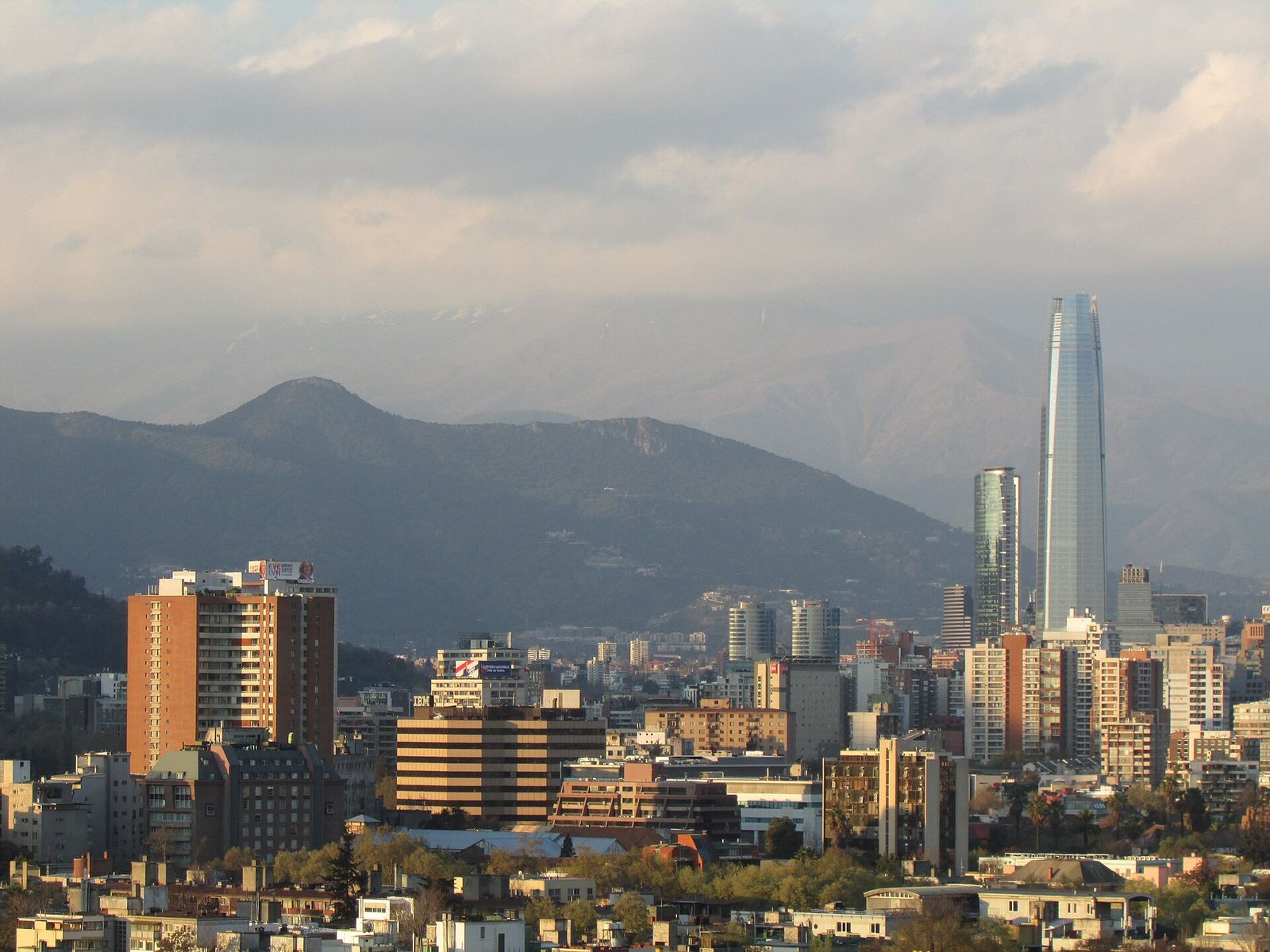
Most visitors give Santiago two days on the way to Patagonia or the Atacama, and most of them wish they’d stayed longer. The best things to do in Santiago Chile are a ride up Cerro San Cristóbal for the Andes view, the historic center around Plaza de Armas and La Moneda, the Museo de la Memoria, a seafood lunch at a market, and an evening in Lastarria or Bellavista. Add a winery you can reach by Metro, and you have a very good three days.
This guide is built for making decisions, not for ticking off a list. For every major sight you’ll find how long it takes, what it costs, the nearest Metro station and whether you need to book. It also says plainly when something isn’t worth your limited time. Prices and opening hours were checked in September 2026 against the operators’ own websites. Chilean pesos (CLP) are converted at roughly CLP 950 to the US dollar.
One scheduling fact shapes everything else: almost every museum in Santiago is closed on Monday. Put the hills, markets, parks and neighborhoods on Monday, and keep Tuesday to Sunday for the indoor sights.
Santiago’s top attractions at a glance
If you only read one section, make it this table. It covers the best tourist attractions in Santiago Chile, ranked roughly by how much they add to a first visit.
| Attraction | Time needed | Cost (checked Sept 2026) | Nearest Metro | Book ahead? |
|---|---|---|---|---|
| Cerro San Cristóbal (funicular or cable car) | 2-4 hours | Park free; rides from CLP 1,130 | Baquedano (L1/L5) or Pedro de Valdivia (L1), then walk | No, except the zoo |
| Plaza de Armas and Cathedral | 45 minutes | Free | Plaza de Armas (L3/L5) | No |
| Changing of the guard, La Moneda | 30-40 minutes | Free | La Moneda (L1) | No, but check the date |
| La Moneda palace tour | About 1 hour | Free | La Moneda (L1) | Yes, online, with ID |
| Museo de la Memoria y los Derechos Humanos | 2-3 hours | Free | Quinta Normal (L5) | No |
| Museo Chileno de Arte Precolombino | 1.5-2 hours | About CLP 12,000 for foreign visitors | Plaza de Armas (L3/L5) | No |
| Cerro Santa Lucía | 1 hour | Free | Santa Lucía (L1) | No |
| La Chascona (Neruda’s house) | 1-1.5 hours | CLP 11,000 | Baquedano, then 15-minute walk | No |
| Sky Costanera | 1 hour | CLP 25,000 (sunset CLP 30,000) | Tobalaba (L1/L4) | Optional |
| Mercado Central and La Vega | 1.5-2 hours with lunch | Free to walk; lunch varies | Puente Cal y Canto (L2/L3) | No |
| Museo Nacional de Bellas Artes | 1-1.5 hours | Free | Bellas Artes (L5) | No |
| Barrio Lastarria and Parque Forestal | 2 hours | Free | Bellas Artes (L5) or Universidad Católica (L1) | No |
| Winery visit (Cousiño Macul, Concha y Toro) | Half day | From CLP 25,000 | Varies | Yes |
What are the best things to do in Santiago, Chile?
Start with the Andes view from Cerro San Cristóbal, then walk the historic center from Plaza de Armas to La Moneda. Spend real time at the Museo de la Memoria. Eat at Mercado Central or La Vega, visit La Chascona, and wander Lastarria at dusk. Save one day for a winery or Valparaíso.
That’s the core. The rest of this guide goes through each part of the city in turn, starting with the old center.
The historic center: Plaza de Armas, La Moneda and the old city
Santiago’s center (el centro) is loud, a bit scruffy and packed with office workers on weekdays. It’s also where the city makes sense. Pedro de Valdivia founded Santiago here in 1541, and nearly five centuries of Chilean history sit within about 15 blocks. Go on a weekday morning, when the streets are busy for the right reasons, rather than on a Sunday afternoon when many shops are shuttered.
Plaza de Armas and the Catedral Metropolitana
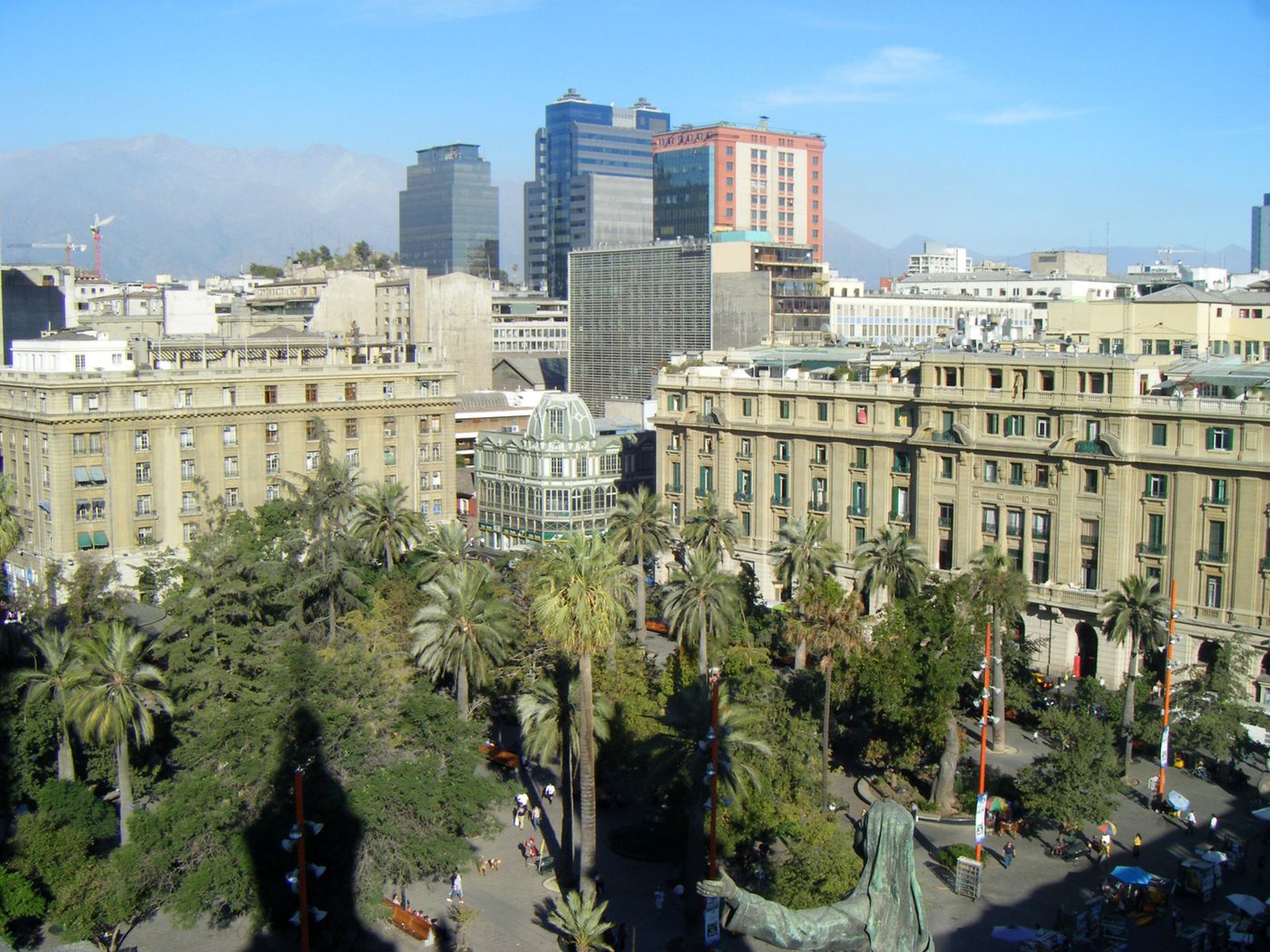
The main square is shaded by palms and ringed by the Catedral Metropolitana, the Correo Central (the old post office) and the colonial-era building that housed the Museo Histórico Nacional. You’ll see chess players under the arcades, street preachers, painters, and a steady flow of people cutting across on their lunch break. The cathedral is free to enter outside services. Masses run at 12:30 and 19:00 from Monday to Saturday, with more on Sunday morning.
A timely warning: the Museo Histórico Nacional closed on 2 August 2026 for about three years while its building is expanded. Many guides and tour itineraries haven’t caught up, so don’t plan your morning around it.
The square is also the meeting point for Free Tour Santiago, which leaves from the cathedral at 10:00 and 15:00 every day. More on walking tours below.
Museo Chileno de Arte Precolombino
One block from the square, on Calle Bandera, is the best museum in the center and one of the best of its kind in South America. The collection spans thousands of years of art from Mexico to southern Chile, with Andean textiles, Mesoamerican ceramics, gold work and carved stone in dark, beautifully lit rooms. The labels are bilingual, and the building is compact enough to see properly in 90 minutes.
It’s open Tuesday to Sunday, 10:00 to 18:00, with last entry at 17:15. The museum charges foreign visitors more than residents. Its ticket page listed CLP 12,000 for foreign tourists in September 2026, though parts of its own website still show older prices. Budget about USD 13 and you won’t be caught out. Our verdict: worth it even if you “don’t do museums.”
La Moneda and the changing of the guard
The Palacio de La Moneda is the presidential palace, a long neoclassical block finished in 1805 as the colonial mint. It’s where Salvador Allende died during the 1973 coup, when Hawker Hunter jets bombed the building. That history makes it more than a photo stop.
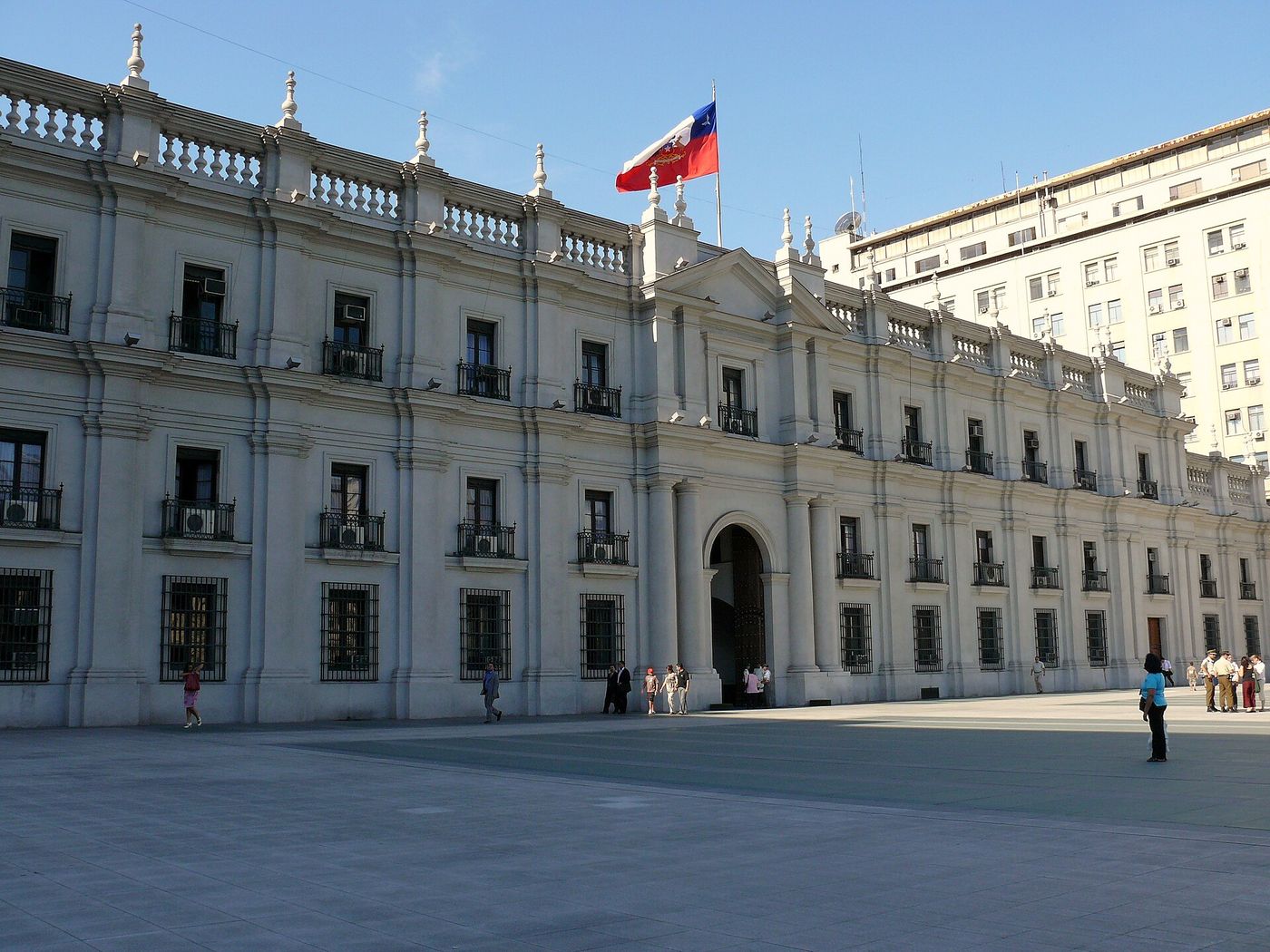
The changing of the guard (cambio de guardia) happens at 10:00 in Plaza de la Constitución on the north side, on alternate days. In 2026 the ceremony falls on even-numbered dates in September and October, and on odd-numbered dates in November and December. It lasts about half an hour, with a military band, carabineros in dress uniform and a lot of marching. Arrive by 9:45 for a spot on the rail. It can be cancelled at short notice for state visits, so treat it as a bonus rather than the anchor of your day.
Free guided visits inside the palace are available, but you must register in advance on the presidency’s heritage site (visitaspatrimonio.presidencia.cl). Everyone 16 and older needs a passport or national ID, and you should arrive 15 minutes early for security. Slots are limited and go quickly in summer.
Underneath the plaza on the south side is the Centro Cultural La Moneda, a large underground exhibition space with rotating shows, a good crafts shop and a café. It’s closed on Mondays. The main halls cost about CLP 3,000 (checked September 2026).
Palacio Cousiño and Barrio París-Londres
If you have a spare hour south of the Alameda, two things are worth it. Palacio Cousiño is a lavish 1870s mansion built with mining and wine money. It can only be seen on a guided tour, with English tours on weekdays at 11:00 and 14:00 and on Saturdays at 11:00. Book by phone, and note that it only takes cards (checked September 2026). Nearby, the two short cobbled streets of Barrio París-Londres look more like 1920s Europe than Chile. Go for a 15-minute photo stop. Londres 38, a former detention center that’s now a memorial site, is on the same corner.
Cerro San Cristóbal, Santa Lucía and the best views in Santiago
Santiago lies in a basin with the Andes along its whole eastern edge. On a clear day, especially the day after rain, the view is extraordinary. On a hazy winter afternoon, you might not see the mountains at all. Check the sky before you commit to any viewpoint, and go early when you can.
Cerro San Cristóbal (Parque Metropolitano)
The big hill north of the Mapocho River is Santiago’s main park and its best free viewpoint. A 14-meter white statue of the Virgin Mary stands on the summit, more than 800 meters above sea level. From there the city spreads west toward the coastal range and east to the snow line.
You can reach the top in three ways, and the choice matters:
- The funicular climbs from the Pío Nono entrance at the top of Bellavista. It’s a 1925 wooden car and a short, steep, fun ride. A return ticket cost CLP 2,250 on weekdays and CLP 2,060 at weekends (checked September 2026). It runs Tuesday to Sunday, 10:00 to 18:45, opens only in the afternoon on Mondays, and is closed on the first Monday of each month.
- The Teleférico (cable car) has two lines. The Pedro de Valdivia line runs from the Oasis station in Providencia via Tupahue to the summit. The new Pío Nono line, opened in February 2026, links the zoo station with the upper park. Both run Tuesday to Sunday, 10:00 to 19:45, and are closed on Mondays. Online fares start at CLP 1,130 for a Pío Nono return and CLP 2,630 for a Pedro de Valdivia return. Combination tickets cost CLP 3,760 to CLP 8,000, and prices vary by day.
- Walking up takes 45 to 75 minutes on paved roads and paths from Pío Nono. It’s free and popular with runners and cyclists, but it’s exposed, with little shade. Don’t walk the quieter trails alone, and come down well before dark.
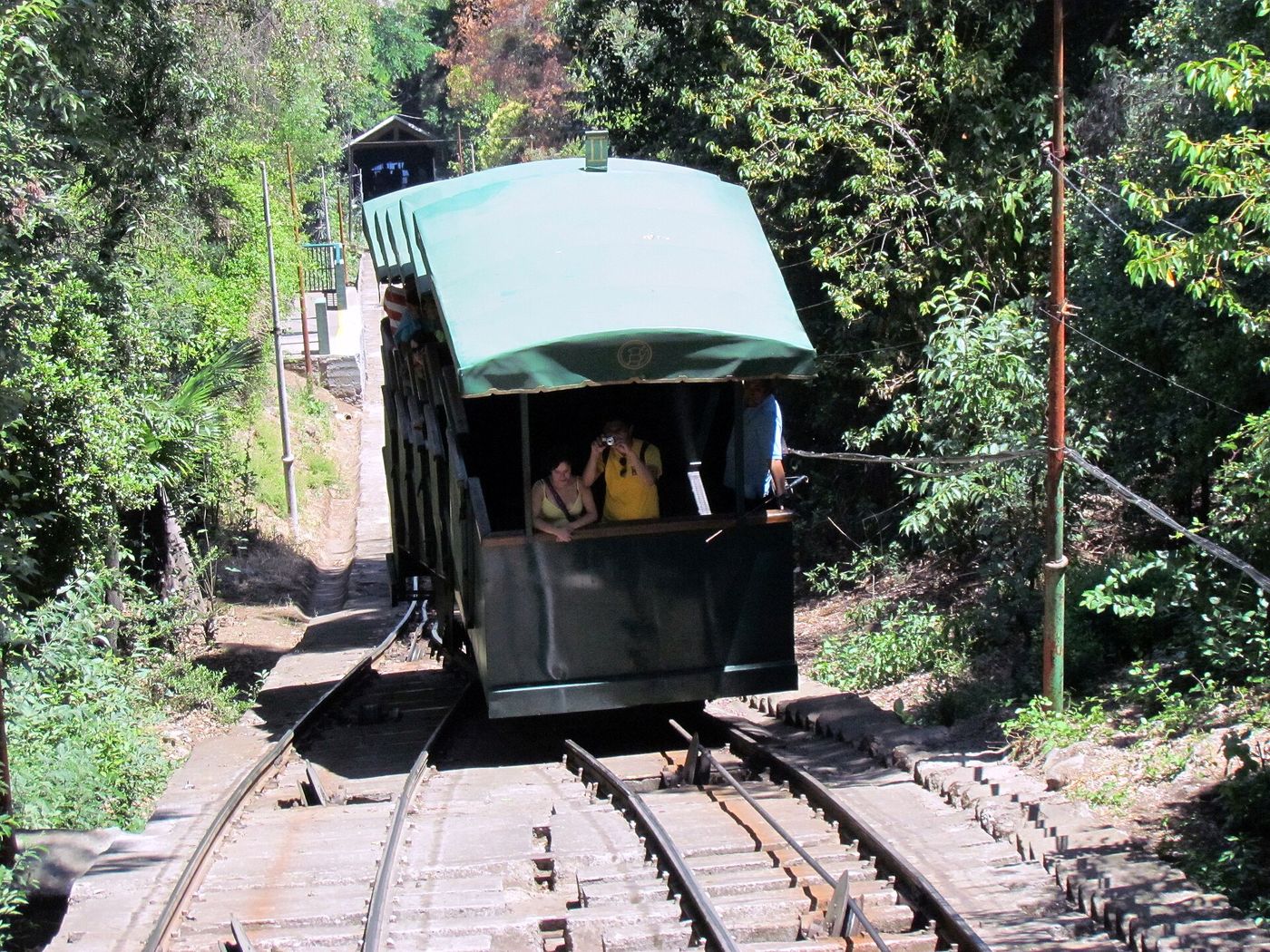
The best way to do it: take the funicular up from Bellavista, walk to the Teleférico’s Tupahue station, and ride down to Oasis on the Providencia side. You’ll see both faces of the park and finish near Pedro de Valdivia Metro. Allow three hours with stops.
Inside the park, the Jardín Japonés is free and quiet (Tuesday to Sunday, 09:00 to 18:00). The Zoológico Nacional reopened in January 2026 and is free for now, but you must book a slot online in advance. It’s a modest zoo, fine with children and skippable without them. The Tupahue and Antilén swimming pools open in summer only.
Cerro Santa Lucía
This small rocky hill in the center is where Valdivia founded the city. In the 1870s it was landscaped into a romantic fantasy of terraces, fountains, stone staircases and a mock castle. It’s free. In winter it opens Tuesday to Sunday from 08:00 and Monday from noon, closing at 19:30 (20:30 in summer). It closes when it rains.
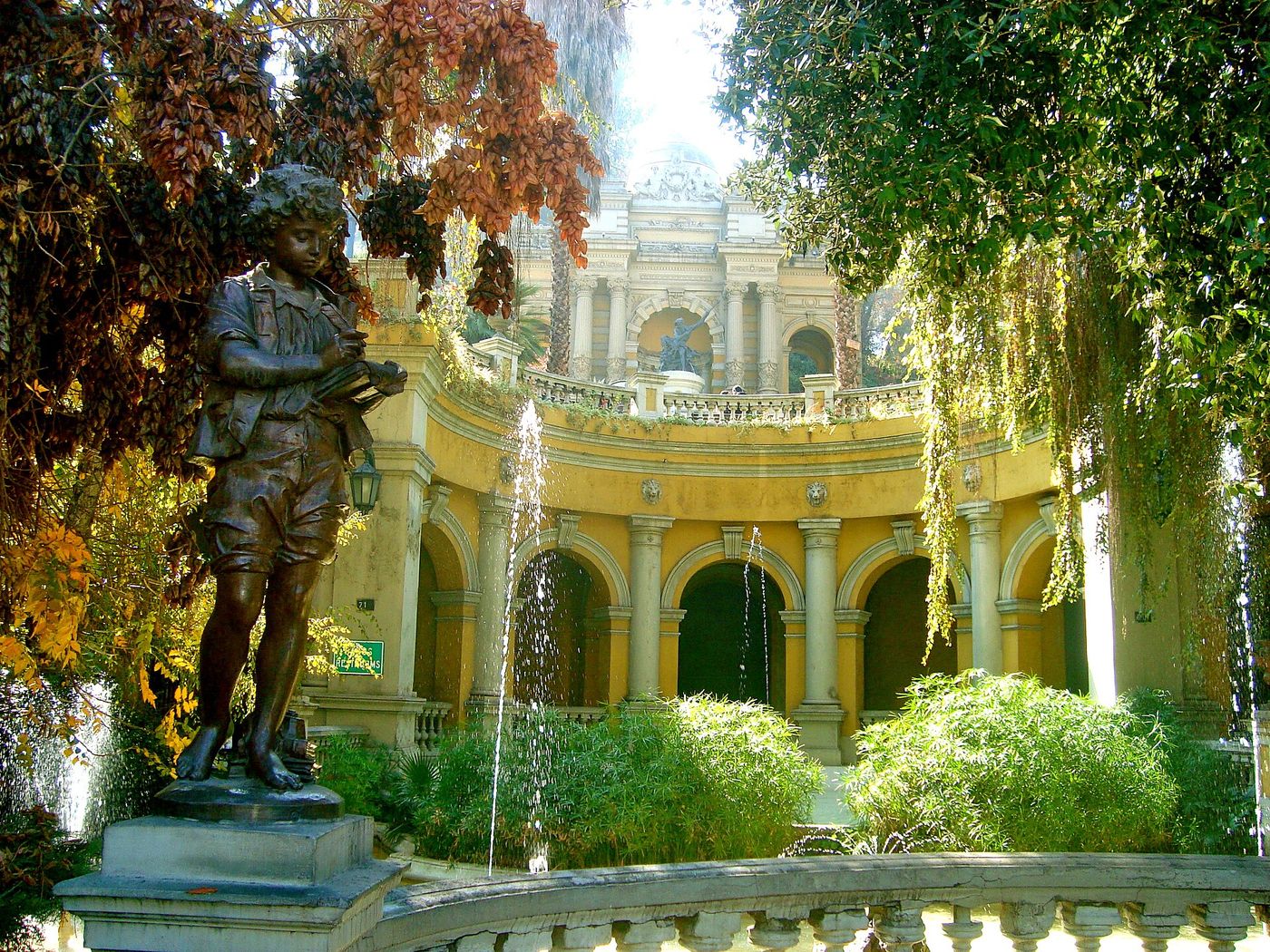
Enter from the Alameda side by the Neptune terrace and climb to the Torre Mirador at the top. The last stretch is narrow and uneven, with worn steps. The view is closer and more urban than San Cristóbal’s: church domes, tower blocks and, on a good day, the Andes above them. The noon cannon, silent since 2019, is due back soon. The city confirmed its return in September 2026 but hadn’t set a start date.
It takes about an hour, and it pairs naturally with Lastarria next door. Be alert with your phone near the top. The US Embassy names both Santa Lucía and San Cristóbal among the city’s pickpocketing hot spots.
Is Sky Costanera worth it?
Only on a clear day, and only if you won’t also ride up San Cristóbal. Sky Costanera is the open-air deck on floors 61 and 62 of the Gran Torre Santiago, roughly 300 meters up and the highest viewpoint in South America. Adults pay CLP 25,000, or CLP 30,000 for sunset.
That’s about USD 26, or USD 32 for sunset, for a view that San Cristóbal gives you for the price of a funicular ticket. The deck is open daily from 10:00 to 22:00, with last entry at 21:00, above Costanera Center mall at Tobalaba Metro (checked September 2026). The argument for going is the night view. Santiago’s grid of lights against the black mass of the Andes is striking, and the cable cars don’t run after dark. If you go, make it a clear evening after rain, and skip the sunset premium unless the timing really matters to you.
Museums that explain Chile
Santiago’s museums are one of its quiet strengths. Several of the best are free, most have English labels, and a couple of them will change how you see the rest of the country. Again: closed on Mondays.
Museo de la Memoria y los Derechos Humanos
If you only visit one museum, make it this one. It documents the 1973 coup and the 17 years of dictatorship that followed: the detentions, torture and disappearances, and the long fight for truth afterward. The material is handled with restraint. A wall of photographs of the disappeared, the original radio broadcasts from 11 September 1973, and letters written by children to their detained parents do the work without sensationalism.
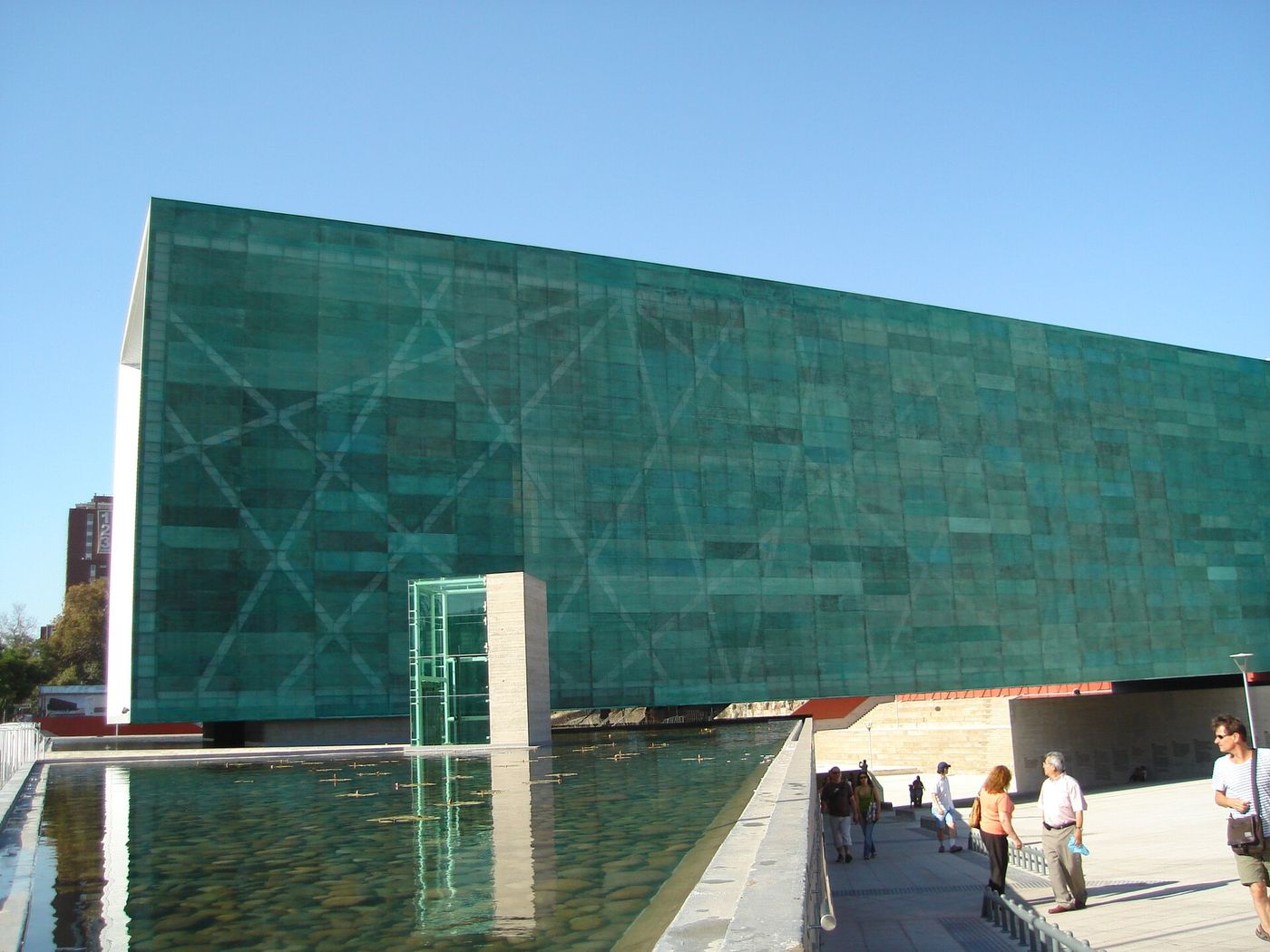
Entry is free, Tuesday to Sunday, 10:00 to 18:00, with last entry at 17:30 (checked September 2026). It’s directly opposite Quinta Normal Metro station on Line 5. Allow at least two hours, and use the free audio guide if English labels are sparse in a room you care about. It’s emotionally heavy. Plan something gentler afterward, such as a walk through Parque Quinta Normal next door, or lunch in Barrio Yungay.
Museo Nacional de Bellas Artes and the MAC
The fine arts museum occupies a grand 1910 Beaux-Arts building in Parque Forestal, with a glass-domed central hall that’s worth seeing on its own. The permanent collection is a solid survey of Chilean painting. Temporary shows are hit-and-miss, but usually interesting. The Museo de Arte Contemporáneo occupies the back half of the same building. Both are free and open Tuesday to Sunday; Bellas Artes runs 10:00 to 18:30 and the MAC 10:30 to 17:30. The Metro station is Bellas Artes on Line 5.
La Chascona
Pablo Neruda built this house in Bellavista in the 1950s for Matilde Urrutia, then his secret lover and later his wife. The name means “tangle-haired,” after her red hair. Like his houses at Isla Negra and in Valparaíso, it’s built like a ship, with narrow stairs, porthole windows, and rooms stacked up the slope of the hill. It’s full of his collections.
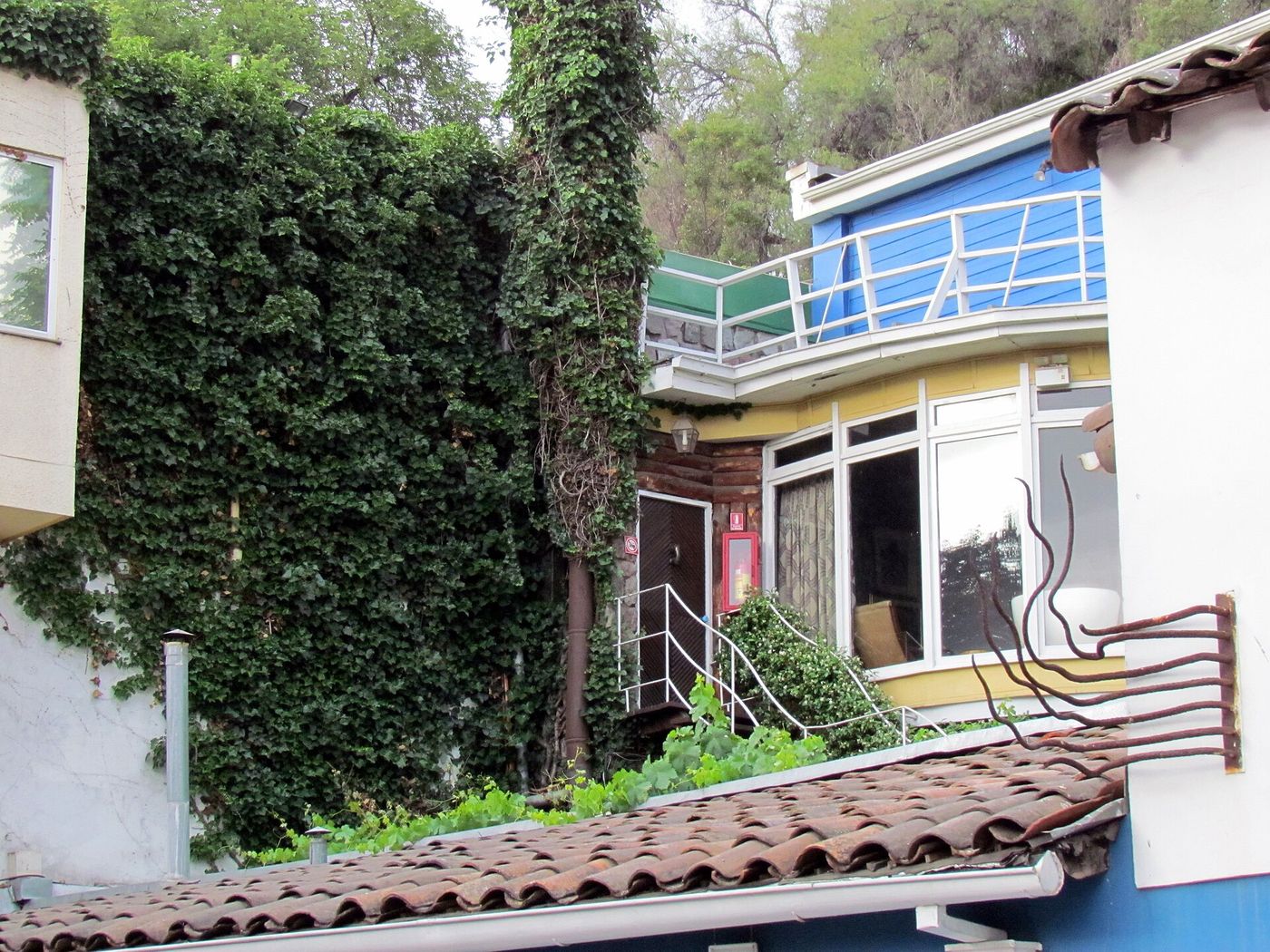
Entry is CLP 11,000 with an audio guide in English and five other languages. It’s open Tuesday to Sunday, 10:00 to 18:00, and until 19:00 in January and February. There’s no booking, so go at opening time in summer to beat the tour groups. Throughout September 2026, Tuesday entry was reduced to CLP 4,500. Is it worth it? Yes if you have any interest in Neruda or eccentric houses. If you’re also going to Valparaíso, La Sebastiana there has the better view, and one Neruda house is enough for most people.
Cementerio General
Chile’s main cemetery in Recoleta is a city of mausoleums: Greek temples, Egyptian pyramids and art deco tombs of the old oligarchy, next to Allende’s grave and a long, moving memorial wall to the victims of the dictatorship. It’s open daily from 08:00 to 17:00 and is free to walk. The Metro station is Cementerios on Line 2. The cemetery runs its own themed day and night tours, bookable online. Pick up a map at the entrance, because it’s huge.
Other museums worth knowing about
- MAVI UC (Museo de Artes Visuales) in Lastarria shows contemporary Chilean art. It costs CLP 2,000 and is free on the last Sunday of the month.
- Museo Nacional de Historia Natural in Parque Quinta Normal is free and a good rainy-day option with kids. Its second floor was closed in September 2026.
- Estadio Nacional Memoria Nacional is the stadium used as a detention camp in 1973, with free guided visits of the preserved Escotilla 8 on Saturday mornings. Confirm the start time before going.
- GAM (Centro Cultural Gabriela Mistral) is an arts center on the Alameda with free exhibitions, a theater program, and a good place to sit in its plazas.
Neighborhoods worth walking
Many of the best experiences in Santiago happen between the attractions: coffee in a courtyard, a bookshop, a street that turns out to be lined with 1920s mansions. These are the four barrios that repay an unplanned afternoon.
Barrio Lastarria
Lastarria is compact and walkable, just east of Cerro Santa Lucía, with cobbled lanes, cafés, wine bars, bookshops and the MAVI museum. A vintage and book market sets up on weekends along the pedestrian stretch. It’s at its best from late afternoon into the evening, when the terraces fill up. It can feel a little polished for some tastes, but for a first evening in Santiago it’s hard to beat.
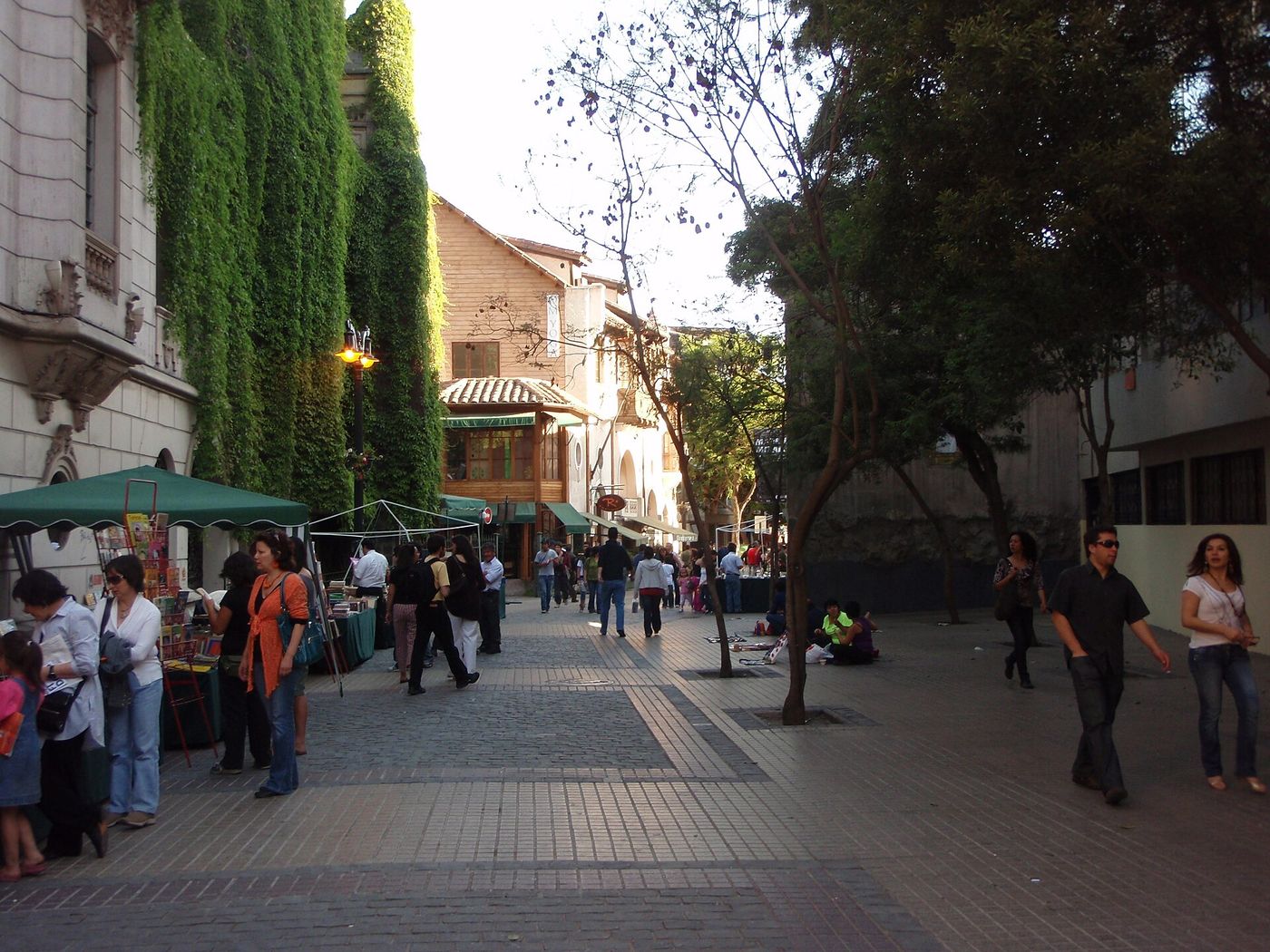
Walk it together with Parque Forestal, the long, leafy park along the south bank of the Mapocho. It links Lastarria to Bellas Artes and on to the markets in about 20 minutes on foot.
Barrio Bellavista
Across the river, at the foot of San Cristóbal, Bellavista has two faces. By day it’s La Chascona, murals, craft shops and the funicular. By night it’s Santiago’s busiest nightlife district, with Patio Bellavista, a food and bar courtyard open until 01:00 early in the week and 03:00 from Thursday to Saturday, plus dozens of bars along Pío Nono and Constitución.
Constitución and the streets around La Chascona are more interesting and less rowdy than Pío Nono, which is mostly cheap beer and loud music. The UK Foreign Office warns of drink spiking in Bellavista bars, so keep your glass with you.
Barrio Italia
Barrio Italia is in Providencia, between Avenida Italia and Condell. It’s the city’s design-and-brunch quarter: old single-story houses converted into galleries, furniture workshops, specialty coffee shops and good restaurants. There’s no big sight here, and that’s the point. Come on a weekday afternoon or Saturday, and budget more than you think for coffee.
Barrio Yungay and Barrio Brasil
West of the center, these are Santiago’s oldest planned residential neighborhoods. They’re full of faded 19th-century mansions, street art, cheap picadas (neighborhood eateries), and a strong local identity. They’re not polished and not for night wandering, but by day they’re the best place to see how central Santiago actually lives. They combine well with the Museo de la Memoria.
Markets and food: where Santiago eats
Mercado Central
The cast-iron hall was prefabricated in Britain and opened in 1872, and it’s a national monument. It’s also a working fish market. The stalls around the edges sell sea urchins, machas (razor clams), locos (Chilean abalone) and conger eel. The center of the hall is given over to a handful of large restaurants.
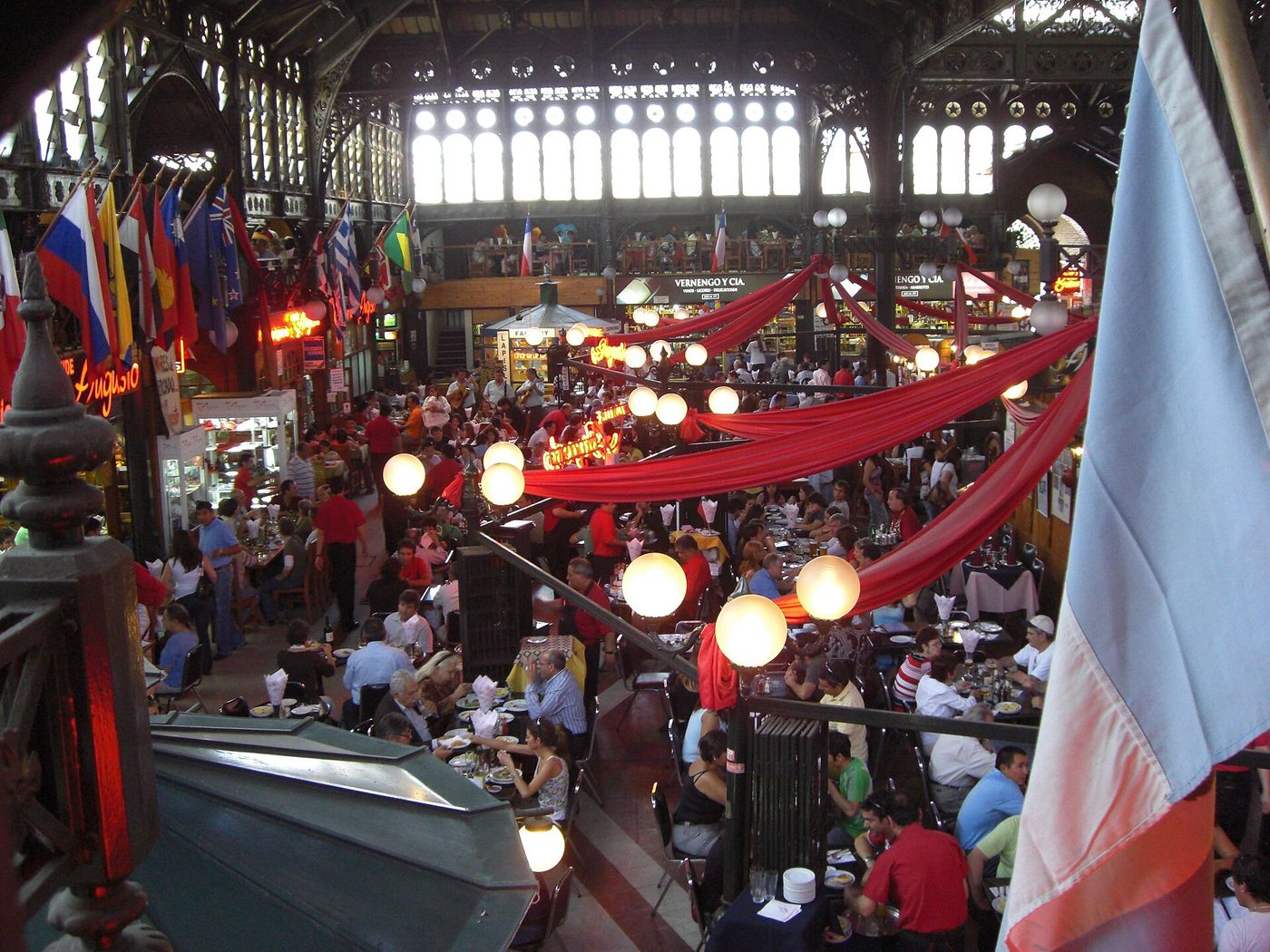
It’s open Sunday to Thursday from 07:30 to 17:00, on Friday until 20:00 and on Saturday until 19:00. Go for lunch, not dinner.
Here’s the honest part. The big restaurants in the middle of the hall are the most expensive and most touristy. Their waiters work the aisles hard, and the lunch “specials” they advertise can turn into a much bigger bill once you’re seated. The small cocinerías (simple lunch counters) around the outer walls serve the same caldillo de congrio (conger eel soup, Neruda’s favorite) or paila marina (seafood stew) for less, with less theater. Read the menu price before you sit down.
La Vega Central and Tirso de Molina
Cross the river on the footbridge and you’re in La Vega, a huge, chaotic, very real produce market. It’s piled with avocados, chirimoyas, dried chiles, cheap sopaipillas and a maze of stalls. It’s open from early morning until late afternoon every day, with shorter hours on Sunday. The ground floor of the Tirso de Molina market next door has dozens of cheap food stalls. The atmosphere beats Mercado Central for many people, and the prices are far lower.
This is also a place to keep your phone in your pocket and your bag in front of you. Go in the morning, when it’s busiest and most photogenic.
What to eat in Santiago
- Completo: a hot dog buried under avocado, tomato and mayonnaise, eaten standing up.
- Pastel de choclo: a corn-crust pie over beef, chicken, olive and egg, best in summer.
- Empanadas de pino: baked, with beef, onion, raisin and olive filling.
- Chorrillana: a mountain of fries, beef, onion and egg, meant for sharing and usually after a few drinks.
- Mote con huesillo: a sweet summer drink of peach nectar with dried peaches and husked wheat. You’ll find it at stands on San Cristóbal.
- Pisco sour and terremoto: the famous pisco sour, and the “earthquake,” a sweet wine punch topped with pineapple ice cream, best tried at a traditional bar such as La Piojera near the markets.
Free things to do in Santiago, Chile
Santiago isn’t a cheap city by South American standards, but a surprising number of its best experiences cost nothing. Here are the best free things to do in Santiago Chile (checked September 2026):
- Cerro San Cristóbal on foot. The park and the summit are free if you walk up.
- Cerro Santa Lucía, including the view from the top.
- The changing of the guard at La Moneda, on its alternate days.
- A free guided tour of La Moneda. You need to register in advance.
- Museo de la Memoria y los Derechos Humanos.
- Museo Nacional de Bellas Artes and the MAC in the same building.
- Museo Nacional de Historia Natural in Parque Quinta Normal.
- Cementerio General, walked on your own.
- Plaza de Armas and the Catedral Metropolitana.
- Parque Forestal and Parque Bicentenario, a riverside park in Vitacura with a lagoon, black-necked swans and sculptures. Bicentenario is the city’s best spot for a picnic.
- Pueblito Los Dominicos, a craft village of adobe workshops around an old church at the far end of Metro Line 1. It’s free to browse and open daily from 10:30.
- The Jardín Japonés on San Cristóbal.
- A tip-based walking tour, where you decide what it was worth.
Santiago Chile walking tours and guided tours
A walking tour on your first morning is the most efficient way to understand the center. Several companies run tip-based tours. Free Tour Santiago meets daily at 10:00 and 15:00 outside the cathedral in Plaza de Armas (look for red shirts). The walk lasts around four hours, which is long, and covers the center, the markets and a lot of modern history. Tours 4 Tips runs a similar morning and afternoon schedule, with one tour focused on markets and neighborhoods. Tip what you think it was worth; CLP 10,000 to CLP 15,000 per person is common for a good tour.
Paid city tours make most sense for places that are hard to reach without a car, such as wineries, Cajón del Maipo or the coast. For the center itself, the Metro and your own feet do the job better than a minibus.
Things to do in Santiago at night
Dinner in Santiago starts late, around 21:00, and bars fill after 23:00. The main nightlife areas are Bellavista (bars and clubs, loud and young), Lastarria (wine bars and cocktail places), Barrio Italia (restaurants), and Providencia and Vitacura (upscale cocktail bars and restaurants).
Here are the best things to do in Santiago at night:
- See the lights from Sky Costanera on a clear night.
- Catch a play, concert or dance show at GAM or the Teatro Municipal, Santiago’s opera house, which has one of the continent’s best-regarded seasons.
- Listen to live cueca or Latin jazz in a Bellavista or Barrio Brasil bar. Look at the listings for the week you’re there.
- Eat late in Lastarria, then walk back through Parque Forestal while it’s still busy.
A night safety note. The UK Foreign Office says pickpocketing and mugging are very common in Santiago, and that armed muggings have been increasing. It advises against walking alone late at night and recommends booking taxis through an app or your hotel rather than hailing one on the street. The Metro stops running at 23:00, so plan how you’ll get home before you go out.
Things to do in Santiago on Sunday, on a Monday, and when it rains
Santiago’s opening days trip up a lot of visitors. Use this as a cheat sheet.
On Sunday, museums are open, and MAVI is free on the last Sunday of the month. The center goes quiet and many shops close. It’s the best day for Parque Bicentenario, the markets in the morning, Pueblito Los Dominicos, and Cerro San Cristóbal, which is busy with families. Some roads through the park are closed to cars for cyclists. Avoid planning a shopping afternoon downtown.
On Monday, most museums, La Chascona, the Centro Cultural La Moneda, the Teleférico and the zoo are all closed. This is the day for walking tours, markets, Cerro Santa Lucía (from noon), the funicular (afternoon only, and not the first Monday of the month), neighborhoods, Sky Costanera, or a day trip to Valparaíso.
When it rains, Santa Lucía closes, San Cristóbal loses its view, and the upside is spectacular clarity the next morning. Rain falls mostly between May and August. Go for museums: Precolombino, Memoria and Bellas Artes can fill a whole day. The Centro Cultural La Moneda and Costanera Center mall are covered too. If the sky clears after the rain, drop everything and go up a hill.
Fiestas Patrias closures
Chile’s national holidays on 18 and 19 September close almost every museum and cultural center. The same goes for 1 January, 1 May and 25 December. If you’re in town for the fiestas, go to a fonda, the temporary fairground-style party where you can eat empanadas and watch cueca dancing, and save the museums for later in the week.
Wineries and day trips from Santiago
The Maipo Valley starts at the edge of the city, and the Pacific coast is less than two hours away. Some day trips are easy by public transport and some really do need a tour. Here’s which is which.
Wineries you can reach without a tour
- Viña Cousiño Macul in Peñalolén is inside the city limits and has vineyards backing onto the Andes. The traditional tour with tasting costs CLP 25,000. Book online, then take a taxi or rideshare from the nearest Metro station.
- Concha y Toro in Pirque is Chile’s largest winery and home of the Casillero del Diablo cellar story. Take Metro Line 4 to Plaza de Puente Alto, then a colectivo or local bus for about 10 minutes. It’s busy and polished, very popular, and the tour price wasn’t confirmed at the time of writing, so check and book 48 hours ahead.
- Undurraga in Talagante runs English tours daily at 10:00 and 15:00. The Sibaris tour costs CLP 29,500. Buses to Talagante leave from near Estación Central.
- Santa Rita in Buin has historic grounds and a museum of Andean art. The classic tour costs CLP 31,000. It’s easier by car or tour.
Verdict: if you want one winery without a car, Cousiño Macul is the least hassle. If you want a full day of wine, a small-group tour covering two wineries beats juggling buses.
Cajón del Maipo and Embalse El Yeso
The Maipo River canyon runs straight into the Andes southeast of the city. It offers hiking, rafting in season, hot springs, and the turquoise Embalse El Yeso reservoir at about 2,500 meters.
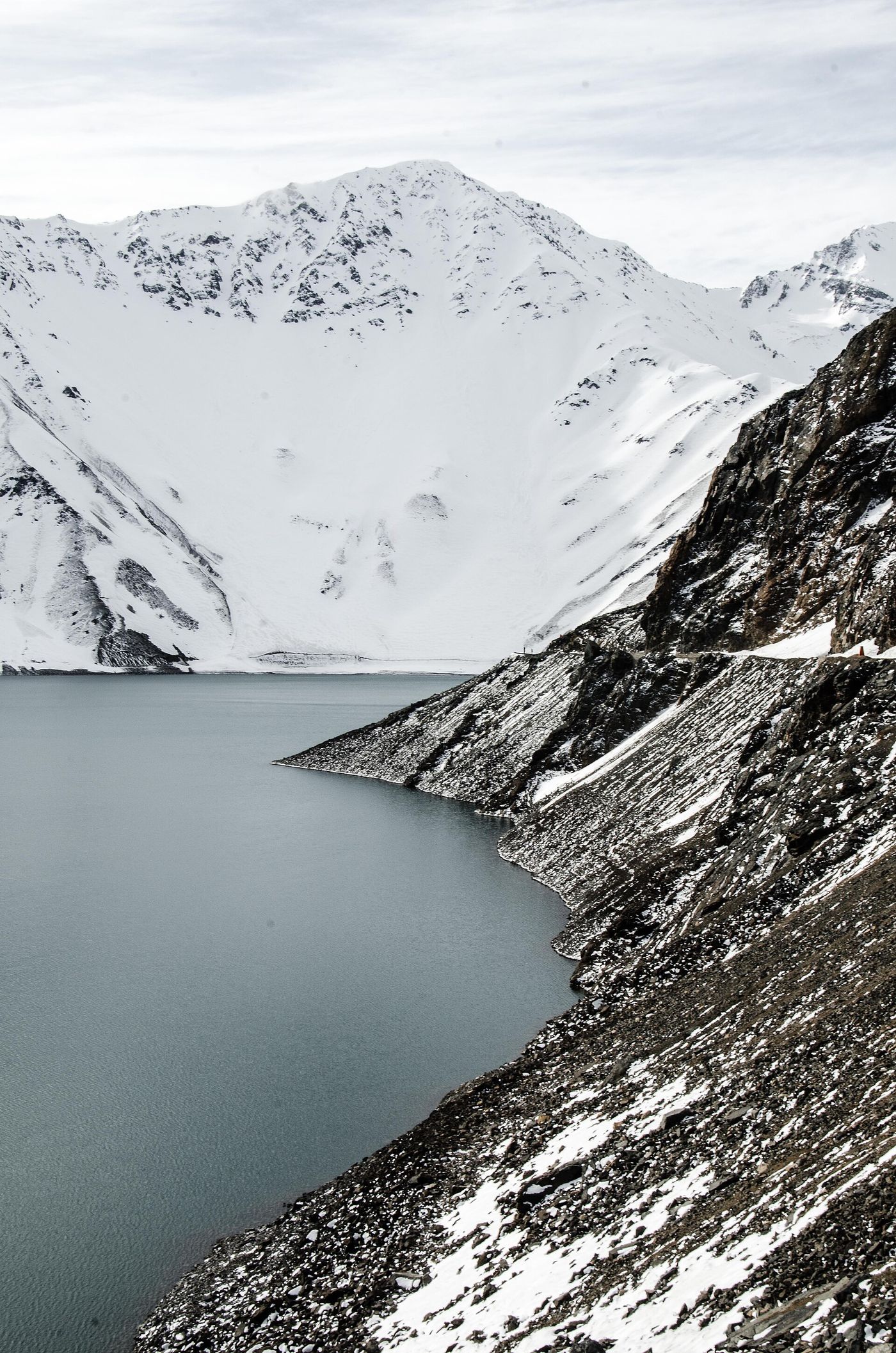
Timing is everything here. The road to El Yeso is closed to private vehicles from April to August. In mid-September 2026 the park operator still listed the reservoir as winter mode, with entry only with a certified guide. When the park is fully open, it runs Thursday to Monday with last entry at 11:00. Adult entry costs CLP 3,450. A tour is the sensible choice outside high summer. The unpaved upper road is rough, snow and ice linger into spring, and there’s no phone signal in much of the canyon. The lower valley towns of San José de Maipo and San Alfonso are easier to reach by bus from Metro Las Mercedes on Line 4.
Valparaíso
Chile’s port city of painted hills, funiculars and street art is the classic day trip. Buses leave every 10 to 20 minutes from Terminal Pajaritos and Terminal Alameda. The trip takes about 1.5 to 2 hours and costs from roughly CLP 5,000 to CLP 6,200 each way (checked September 2026). It works fine as a DIY day. It’s better still with a night there, because a day trip gives you about five hours on the hills. Neighboring Viña del Mar has the beaches. Watch your belongings in Valparaíso’s port area in particular.
How many days do you need in Santiago?
Three full days is the sweet spot for a first visit: one day for the center and museums, one for the hills and neighborhoods, and one for a winery or Valparaíso. Two days covers the highlights at a brisk pace. With five days, add Cajón del Maipo and a slower second museum day.
Here’s a realistic three-day plan that respects the Monday closures.
| Day | Morning | Afternoon | Evening |
|---|---|---|---|
| Day 1 (not Monday) | Free walking tour from Plaza de Armas, or Precolombino museum and the changing of the guard | Lunch at Mercado Central or Tirso de Molina, then the Museo de la Memoria | Dinner and a drink in Lastarria |
| Day 2 | Cerro San Cristóbal: funicular up, cable car down | La Chascona, then Bellavista murals; or Barrio Italia | Sunset from Santa Lucía, or night view from Sky Costanera |
| Day 3 | Winery (Cousiño Macul or Concha y Toro), or an early bus to Valparaíso | Winery lunch, or Valparaíso’s hills and ascensores | Late dinner back in Providencia |
Getting around between the sights
Santiago’s Metro is clean, fast and the best way to move between everything in this guide. Fares depend on the time of day. In September 2026 a weekday ride cost CLP 895 at peak times (07:00 to 08:59 and 18:00 to 19:59), CLP 815 in the middle of the day, and CLP 735 early and late. It runs from 06:00 to 23:00 on weekdays, with later starts on weekends.
Since February 2026 you can tap a contactless Visa or Mastercard at Metro gates instead of buying a bip! card. That doesn’t work on the red city buses yet, which still need bip!. Use the same card or phone for your whole journey. If your foreign card is refused, a bip! card from any station ticket office solves it.
The center, Lastarria, Bellavista and Parque Forestal are all walkable from one another. For Barrio Italia, Parque Bicentenario and anything after dark, a rideshare app is usually quicker and cheaper than it sounds.
Is Santiago safe for sightseeing?
Mostly yes, with city smarts. Violent crime against tourists is uncommon, but phone snatching and pickpocketing are common in the center, on the hills and in Bellavista. The US rates Chile Level 2, “exercise increased caution.” Keep your phone away on the street, carry little, and use app taxis at night.
In practice, most visitors who have problems lose a phone. The US Embassy names Cerro Santa Lucía, Cerro San Cristóbal, Plaza de Armas, Bellavista and Barrio Yungay as places where thieves work, often in teams using distractions, such as someone “helpfully” pointing out a stain on your jacket. Don’t take calls standing at the curb, don’t hang a bag on the back of a café chair, and don’t resist if someone does rob you. Protests happen, most often around Plaza Baquedano (Plaza Italia) and the Alameda. Walk away from them.
Frequently asked questions
What is Santiago, Chile best known for?
Santiago is best known for its setting at the foot of the Andes, its wine valleys, and its role in Chile’s modern history, from the 1973 coup at La Moneda to the return of democracy. Visitors know it for Cerro San Cristóbal, its free museums, its markets and its ski resorts, which are under two hours away in winter.
Is Santiago worth visiting or just a stopover?
It’s worth at least two or three days. The city isn’t as immediately pretty as Buenos Aires, but its museums, food, wine and mountain setting are excellent. Day trips to the Maipo Valley, the Andes and Valparaíso make it a strong base in its own right.
What is free to do in Santiago, Chile?
Cerro San Cristóbal on foot, Cerro Santa Lucía, the changing of the guard, La Moneda palace tours with advance registration, the Museo de la Memoria, Bellas Artes, the MAC, the Natural History Museum, the Cementerio General, the city’s parks, Pueblito Los Dominicos, and tip-based walking tours are all free (checked September 2026).
Are museums in Santiago open on Monday?
Generally no. The Museo de la Memoria, Bellas Artes, the Precolombino museum, La Chascona, the Centro Cultural La Moneda and most others close on Mondays. The Teleférico and the national zoo are also closed. Use Mondays for markets, neighborhoods, Santa Lucía from noon, Sky Costanera or a day trip.
What is the best month to visit Santiago for sightseeing?
September to November and March to May are the most comfortable months, with mild days and clearer skies than winter. January and February are hot and dry, and many locals leave the city. June to August brings rain, cold mornings and poorer air quality, but also snow on the Andes and the ski season.
How much does the funicular up Cerro San Cristóbal cost?
A return funicular ticket was CLP 2,250 from Tuesday to Friday and CLP 2,060 on weekends and holidays (checked September 2026). Cable car fares start at CLP 1,130 for a Pío Nono return, and combination tickets for funicular and cable car cost more. Walking up is free.
Can you do a wine tour from Santiago by public transport?
Yes. Cousiño Macul is inside the city, Concha y Toro is reachable by Metro Line 4 plus a short colectivo ride from Plaza de Puente Alto, and Undurraga is a bus ride to Talagante. Book tours ahead, and don’t drive afterward. Chile’s drink-driving limits are strict and enforced.
Everything above assumes you have the practical side sorted already. If you are still working out how many days to give the city, what a day costs in pesos, which neighborhood to sleep in and how the Metro fare bands work, start with our Santiago travel guide, which carries the entry rules, budgets and opening-hour traps that decide how much of this list you can actually fit in.
How much of this list you can fit into a day depends heavily on where you sleep. A base in Lastarria or the centro puts most of it within walking distance; a room in Las Condes adds close to an hour of travel to every outing. Our guide to the best areas to stay in Santiago sets out the trade-offs, with Metro walk times for each neighborhood.
Knowing what is worth seeing is one thing; fitting it into the days you actually have is another, particularly in a city where the museums close on Mondays and dinner does not start until 21:00. Our timed Santiago itineraries turn this list into routes, from a six-hour layover to a full week, with Metro legs and booking lead times for each stop.
Once the city itself is covered, the Andes are 90 minutes east and the Pacific two hours west. We compare twelve day trips from Santiago on transport, season and cost, including the vehicle ban that closes the road to Embalse El Yeso for five months of the year.
Eating is half of what you will actually do here, and the good version of it is cheaper than the guidebooks suggest. Our guide to the best food in Santiago covers the dishes worth ordering, the CLP 7,000 set lunch that locals live on, where to eat by neighborhood, and why the restaurants in the middle of the Mercado Central are the one place to walk past.
Sources
- Visit Santiago, official destination site
- Metro de Santiago, schedules and fares and contactless card payment
- Teleférico Santiago, tickets
- Sky Costanera, rates and schedules
- Presidencia de Chile, La Moneda heritage visits
- Centro Cultural La Moneda, plan your visit
- Museo Chileno de Arte Precolombino, tickets
- Museo de la Memoria y los Derechos Humanos, visit
- Museo Nacional de Bellas Artes, plan your visit
- Museo Histórico Nacional
- Fundación Pablo Neruda, visitor information
- Parque Natural Embalse El Yeso, Asociación Parque Cordillera
- ChileAtiende, Parquemet hours and fees
- UK Foreign Office, Chile safety and security
- US State Department, Chile travel advisory
Image credits
| Photo | Credit |
|---|---|
| Santiago skyline and the Gran Torre (top of page) | 3BRBS, CC BY-SA 3.0, via Wikimedia Commons |
| Plaza de Armas | Apincheira, CC BY-SA 3.0, via Wikimedia Commons |
| Palacio de La Moneda | Marcelo Ois Lagarde, CC BY-SA 3.0, via Wikimedia Commons |
| Mercado Central interior | Diego Delso, CC BY-SA 3.0, via Wikimedia Commons |
| Cerro San Cristóbal funicular | David Berkowitz from New York, NY, USA, CC BY 2.0, via Wikimedia Commons |
| Cerro Santa Lucía terraces | RuthJaell, CC BY-SA 3.0, via Wikimedia Commons |
| Barrio Lastarria | AlBustos, CC BY-SA 3.0, via Wikimedia Commons |
| La Chascona | David Berkowitz, CC BY 2.0, via Wikimedia Commons |
| Museo de la Memoria | Warko, CC BY-SA 3.0, via Wikimedia Commons |
| Embalse El Yeso | gaspar abrilot from Santiago, Chile, CC BY-SA 2.0, via Wikimedia Commons |